




The United Nations Relief and Works Agency for Palestine Refugees in the Near East (UNRWA, pronounced ) is a UN agency that supports the relief and human development of Palestinian refugees. UNRWA's mandate encompasses Palestinians who fled or were expelled during the Nakba, the 1948 Palestine war, and subsequent conflicts, as well as their descendants, including legally adopted children. As of 2026, more than 5.9 million Palestinians are registered with UNRWA as refugees.
UNRWA was established in 1949 by the UN General Assembly (UNGA) to provide relief to all refugees resulting from the 1948 conflict; this initially included Jewish and Arab Palestine refugees inside the State of Israel until the Israeli government took over this responsibility in 1952. As a subsidiary body of the UNGA, UNRWA's mandate is subject to periodic renewal every three years; it has consistently been extended since its founding, most recently until 30 June 2026.
UNRWA employs over 30,000 people, most of them Palestinian refugees, and a small number of international staff. Originally intended to provide employment and direct relief, its mandate has broadened to include providing education, health care, and social services to its target population. UNRWA operates in five areas: Jordan, Lebanon, Syria, the Gaza Strip, and the West Bank (including East Jerusalem). Aid for Palestinian refugees outside these five areas is provided by the United Nations High Commissioner for Refugees (UNHCR), established in 1950 as the main agency to aid all other refugees worldwide. UNRWA is the only UN agency dedicated to helping refugees from a specific region or conflict.
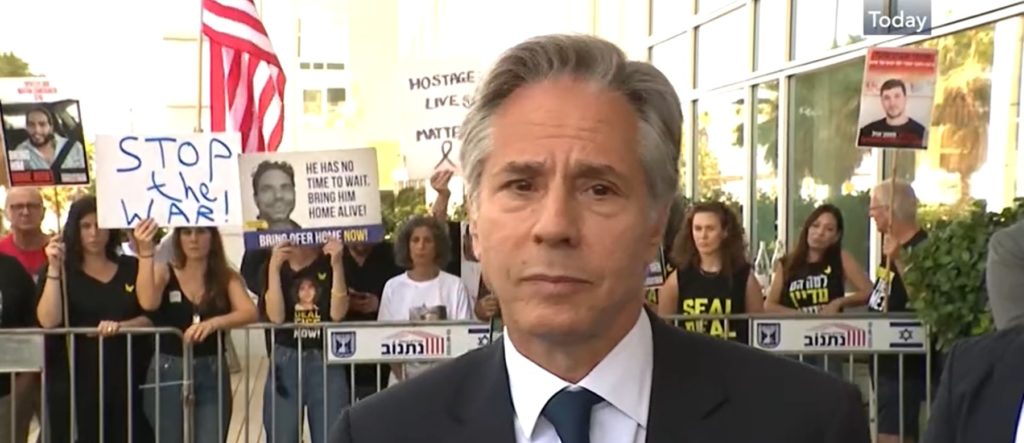
UNRWA has received praise and recognition for its work by various governments, public figures, and independent monitors. It has also been subject to controversy related to its operations, role in the Gaza Strip, relationship with Hamas and terrorism, and textbook content. Most recently, the agency faced allegations by the Israeli government that twelve of its employees were involved in the October 7 attacks, leading to lay-offs, an investigation, and the temporary suspension of funding by numerous donors. As of May 2024, several major donors have since resumed funding as the investigation remains ongoing. In October 2024, Israel's parliament passed a bill designating UNRWA as a terrorist group and prohibiting it from operating within the country. Israel has long opposed the Palestinian right of return and has accused UNRWA of "perpetuating the refugee issue". In January 2025, Israel's UNRWA ban went into effect.
In October 2025, the International Court of Justice (ICJ) found that "Israel has not substantiated its allegations that a significant part of UNRWA’s employees are ‘members of Hamas… or other terrorist factions”.
Contents
History and operations
Following the outbreak of the 1948 Palestine war and the 1948 Palestinian expulsion and flight, which displaced approximately 750,000 Palestinian Arabs, the United Nations General Assembly passed Resolution 212 (III), dated 19 November 1948, which established the UN Relief for Palestine Refugees (UNRPR) to provide emergency relief to Palestinian refugees in coordination with other UN or humanitarian agencies. In response to the political aspects of the conflict, less than a month later the General Assembly adopted Resolution 194, creating the United Nations Conciliation Commission for Palestine (UNCCP), mandated to help achieve a final settlement between the warring parties, including facilitating "the repatriation, resettlement and economic and social rehabilitation of the refugees" in collaboration with the UNRPR. By that time, the conflict had displaced over 700,000 people.
Unable to resolve the "Palestine problem" which required political solutions beyond the scope of its mandate, the UNCCP recommended the creation of a "United Nations agency designed to continue relief activities and initiate job-creation projects" while an ultimate resolution was pending. Pursuant to this recommendation and to paragraph 11 of Resolution 194 which concerned refugees, on 8 December 1949 the General Assembly adopted Resolution 302(IV) which established the United Nations Relief and Works Agency for Palestine Refugees in the Near East (UNRWA). The resolution was adopted and passed unopposed, supported by Israel and the Arab states with only the Soviet bloc and South Africa abstaining.
UNRWA succeeded the UNRPR with a broader mandate for humanitarian assistance and development and the requirement to function neutrally. When it began operations in 1950 the initial scope of its work was "direct relief and works programmes" to Palestine refugees in order to "prevent conditions of starvation and distress… and to further conditions of peace and stability". UNRWA's mandate was expanded in December 1950 through Resolution 393(V) which instructed the agency to "establish a reintegration fund which shall be utilized ... for the permanent re-establishment of refugees and their removal from relief". A 26 January 1952 resolution allocated four times as much funding on reintegration than on relief, requesting UNRWA to otherwise continue providing programs for health care, education, and general welfare.
Definition of refugee
UNRWA has developed its own working definition of "refugee" to allow it to provide humanitarian assistance. Its definition does not cover final status.
Palestine refugees are "persons whose regular place of residence was Palestine during the period 1 June 1946 to 15 May 1948, and who lost both home and means of livelihood as a result of the 1948 conflict."
The Six-Day War of 1967 generated a new wave of Palestinian refugees who could not be included in the original UNRWA definition. Since 1991, the UN General Assembly has adopted an annual resolution allowing the 1967 refugees within the UNRWA mandate. UNRWA's "mandate" is not a single document but the sum of all relevant resolutions and requests of the General Assembly. While focused on Palestine refugees, it also extends to persons displaced by "the 1967 and subsequent hostilities" and occasionally to a broader cross-section of the local community. Several categories of persons have long been registered as eligible to receive UNRWA services although not "Palestine refugees". The descendants of Palestine refugee males, including adopted children, are also eligible for registration as refugees.
Organisation and mandate
UNRWA is a subsidiary organ of the United Nations General Assembly, established pursuant to Articles 7(2) and 22 of the UN Charter. It is one of two UN agencies that reports directly to the General Assembly. The scope and renewal of UNRWA's mandate is determined primarily by resolutions of the General Assembly; unlike other UN agencies, such as the World Health Organization or the Office of the UN High Commissioner for Refugees, it lacks a constitution or statute. The mandate may also be shaped by requests from other UN organs, such as the Secretary-General. The General Assembly passes a series of resolutions annually that address UNRWA's responsibilities, functions, and budget. As it is technically a temporary organisation, the agency's mandate is extended every three years.
UNRWA is led by a Commissioner-General responsible for managing all of the agency's activities and personnel. The Commissioner-General selects and appoints all the agency's staff, pursuant to internal rules and regulations, and reports directly to the General Assembly. Since 1 April 2026, UNRWA has been led by a Commissioner-General ad interim, Christian Saunders. UNRWA's operations are organised into five fields—Jordan, Syria, Lebanon, West Bank, and Gaza—each led by a director who is in charge of distributing humanitarian aid and overseeing general UNRWA operations. The agency's headquarters are divided between the Gaza Strip and Amman, with the latter hosting the Deputy Commissioner-General, currently Leni Stenseth of Norway, who administers departmental activities such as education, healthcare, and finance. UNRWA is the largest agency of the United Nations, employing over 30,000 staff, 99% of which are locally recruited Palestinians.
Advisory Commission
Concurrent with the creation of UNRWA, the UN General Assembly established an Advisory Commission (AdCom) to assist the Commissioner-General in carrying out UNRWA's mandate. Created with four members, the AdCom currently has 28 members and four observers. Membership is obtained via General Assembly resolutions, with all host countries of Palestinian refugees (Jordan, Syria, Lebanon) sitting on the commission followed by the 24 leading donors and supporters of UNRWA. Palestine, the European Union (EU), and the League of Arab States have had observer status since 2005, with the Organisation for Islamic Cooperation joining as an observer in 2019.
Members of the AdCom, including the year they joined, are: Australia (2005), Belgium (1953), Brazil (2014), Canada (2005), Denmark (2005), Egypt (1949), Finland (2008), France (1949), Germany (2005), Ireland (2008), Italy (2005), Japan (1973), Jordan (1949), Kazakhstan (2013), Kuwait (2010), Lebanon (1953), Luxembourg (2012), Netherlands (2005), Norway (2005), Qatar (2018), Saudi Arabia (2005), Spain (2005), Sweden (2005), Switzerland (2005), Syria (1949), Turkey (1949), United Arab Emirates (2014), the United Kingdom (1949), and the United States (1949).
The Advisory Commission is led by a chair and a vice-chair, representing a host country and a donor country, respectively. Each is appointed annually in June from among the Commission members according to the alphabetical rotation, serving for one year beginning 1 July. At each appointment, the chair will alternate between a host and a donor country.
The AdCom meets twice a year, usually in June and November, to discuss important issues of UNRWA and develop a consensus-based guidance for the Commissioner-General. Additionally, members and observers convene more regularly through sub-committee meetings. The AdCom also conducts periodic field visits to UNRWA's area of operations.
Areas of operation
UNRWA services are available to all registered Palestine refugees living in its area of operations who need assistance. When UNRWA began operations in 1950, it was responding to the needs of about 700,000 Palestinian refugees. By 2023, some 5.9 million people were registered as eligible for UNRWA services. UNRWA provides facilities in 59 recognized refugee camps in Jordan, Lebanon, Syria, the West Bank, and the Gaza Strip, and in other areas where large numbers of registered Palestine refugees live outside of recognized camps.
For a camp to be recognized by UNRWA, there must be an agreement between the host government and UNRWA governing the use of the camp. UNRWA does not itself run camps, has no police powers or administrative role, but simply provides services in the camp. Refugee camps, which developed from tent cities to dense urban dwellings similar to their urban surroundings, house around one-third of all registered Palestine refugees.
Funding
UNRWA's budget is set by the UN General Assembly and derives almost entirely from voluntary contributions by UN member states. It also receives some revenue from the regular UN budget, mostly for international staffing costs. In addition to its regular budget, UNRWA receives funding for emergency activities and special projects, such as in response to the Syrian civil war and the COVID-19 pandemic.
Historically, most of the agency's funds came from the United States and the European Commission; in 2019, close to 60 percent of its pledge of $1 billion came from EU countries, with Germany being the largest individual donor. The next largest donors were the EU, United Kingdom, Sweden, and the United Arab Emirates, followed by Saudi Arabia, France, Japan, Qatar, and the Netherlands. UNRWA also establishes partnerships with nongovernmental donors, including nonprofit "national committees" based in donor countries.
The voluntary nature of UNRWA funding has led to budgetary problems due to acute emergencies or political developments in donor countries. In 2009, officials spoke of a "dire financial crisis", including a funding shortfall of $200 million, in the wake of the Israeli offensive in Gaza. In August 2018, the U.S. ceased its contributions, arguing that UNRWA's mandate should be reduced to the few hundred thousand Palestinians alive when the agency was created. The U.S. decision resulted in the loss of $300 million out of the $1.2 billion budget, contributing to an overall deficit of $446 million. The shortfall was covered with increased contributions from elsewhere.
In mid-2019, the Netherlands, Belgium, and Switzerland temporarily suspended funding to UNRWA, citing ethics report that alleged mismanagement, corruption, and discrimination among the agency's leadership. In December 2019, the Netherlands restored its funding, increasing its donation by €6 million for 2019, to €19 million. The EU increased its contribution from €82 million ($92.2 million) by €21 million ($23.3 million), and Germany agreed to fund four new UNRWA projects, totaling €59 million ($65.6 million). Qatar increased its donation for Palestinians in Syria by $20.7 million, bringing the 2019 total to $40 million.
The funding situation for 2019 and beyond was discussed in April at a "Ministerial Strategic Dialogue" attended by representatives from Egypt, France, Germany, Japan, Kuwait, Norway, United Kingdom, the European External Action Service, and the European Commission. At the annual meeting of the General Assembly that year, a high-level ministerial meeting was held regarding UNRWA funding. In July 2020 Commissioner-General Lazzarini warned that UNRWA's budget was "not sustainable", with shortfalls in four out of the five previous years, and funding at its lowest point since 2012. According to the World Bank, for all countries receiving more than $2 billion in international aid in 2012, Gaza and the West Bank received a per capita aid budget over double the next largest recipient, at a rate of $495.
Operations
UNRWA provides a wide variety of social and humanitarian services, as determined by resolutions of the UN General Assembly. Since its initial establishment in 1949, its operations have expanded beyond immediate relief and social services; as of 2019, the bulk of its budget is spent on education (58 percent), followed by health care (15 percent), and general support services (13 percent).
Education programme
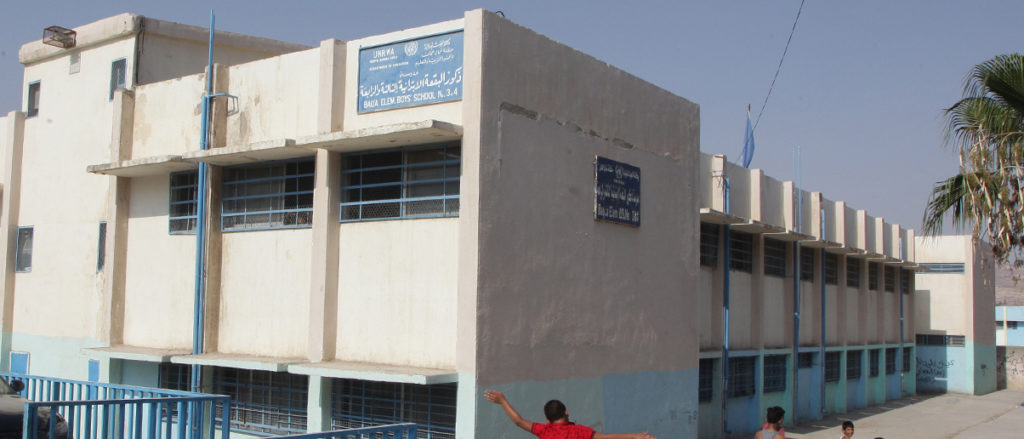
Education is UNRWA's largest area of activity, accounting for more than half its regular budget and the majority of its staff. It operates one of the largest school systems in the Middle East, spanning 711 elementary and preparatory schools, eight vocational and technical schools, and two teacher training institutes. It has been the main provider of basic education to Palestinian refugee children since 1950. Free basic education is available to all registered refugee children, currently numbering 526,000. In the 1960s, UNRWA schools became the first in the region to achieve full gender equality, and a slight majority of enrolled students are female.
Half the Palestine refugee population is under 25. Overcrowded classrooms containing 40 or even 50 pupils are common. Almost three-quarters run on a double-shift system, where two separate groups of pupils and teachers share the same buildings, thus reducing teaching time. The school year is often interrupted by conflicts, prompting UNRWA to develop a special programme that provides education in emergency situations.
Per the longstanding agreement, UNRWA schools follow the curriculum of their host countries. This allows UNRWA pupils to progress to further education or employment holding locally recognised qualifications and complies with the sovereignty requirements of countries hosting refugees. Wherever possible, UNRWA students take national exams conducted by the host governments.
Relief and social services programme
UNRWA provides food aid, cash assistance, and help with shelter repairs to these families. In addition, children from special hardship case families are given preferential access to the Agency's vocational training centres, while women in such families are encouraged to join UNRWA's women's programme centres. In these centres, training, advice, and childcare are available to encourage female refugees' social development. In Palestinian refugee society, families without a male head of household are often vulnerable. Those headed by a widow, a divorcee, or a disabled father often live in dire poverty. These families are considered "hardship cases" and constitute less than 6% of UNRWA beneficiaries.
UNRWA has created community-based organizations (CBOs) to target women, refugees with disabilities, and to look after the needs of children. The CBOs now have their own management committees staffed by volunteers from the community. UNRWA provides them with technical and small sums of targeted financial assistance, but many have formed links of their own with local and international NGOs.
Health program
Since 1950, UNRWA has been the main healthcare provider for Palestinian refugees. Basic health needs are met through a network of primary care clinics, providing access to secondary treatment in hospitals, food aid to vulnerable groups, and environmental health in refugee camps.
Key figures for 2014 are:
139 primary health facilities based in or near UNRWA settlements/camps
3,107 health staff
3,134,732 refugees accessing health services
9,290,197 annual patient visits
The health of Palestine refugees has long resembled that of many populations in the transition from developing world to developed world status. However, there is now a demographic transition.
People are living longer and developing different needs, particularly those related to non-communicable diseases (NCDs) and chronic conditions that require lifelong care, such as diabetes, hypertension, and cancer. A healthy life is a continuum of phases from infancy to old age, each of which has unique, specific needs, and our programme therefore takes a 'life-cycle approach' to providing its package of preventive and curative health services.
To address the changing needs of Palestine refugees, we undertook a major reform initiative in 2011. We introduced the Family Health Team (FHT) approach, based on the World Health Organization-indicated values of primary health care, in our primary health facilities (PHFs).
The FHT offers comprehensive primary health care services based on wholistic care of the entire family, emphasizing long-term provider-patient relationships and ensuring person-centeredness, comprehensiveness, and continuity. Moreover, the FHT helps address intersectional issues that impact health, such as diet and physical activity, education, gender-based violence, child protection, poverty, and community development.
Microfinance Department
UNRWA's Microfinance Department (MD) aims to alleviate poverty and support economic development in the refugee community by providing capital investment and working capital loans at commercial rates. The programme seeks to be as close to self-supporting as possible. It has a strong record of creating employment, generating income, and empowering refugees.
The MD is an autonomous financial unit within UNRWA, established in 1991 to provide microfinance services to Palestine refugees, as well as poor or marginal groups living and working in close proximity to them. With operations in three countries, the MD currently has the broadest regional coverage of any microfinance institution in the Middle East. Having begun its operations in the Palestinian territories, it remains the largest non-bank financial intermediary in the West Bank and Gaza.
Key figures, cumulative as of 2023 are:
29,000 number of loans awarded
US$531.41 million value of loans awarded
25% youth outreach
48% women outreach
Emergency operations
UNRWA takes a wide variety of actions to mitigate the effects of emergencies on the lives of Palestine refugees. Particularly in the West Bank and the Gaza Strip (occupied Palestinian territory) there has been ongoing intervention made necessary by, e.g., the 1967 War as well as the first and second intifadas, and the 2014 Gaza War. The reconstruction work at Nahr el-Bared Palestine refugee camp in Lebanon has been the largest reconstruction project ever undertaken by UNRWA. This work began in 2009 and was made necessary when the camp was destroyed in the fighting between the Lebanese Armed Forces and Fatah al-Islam in 2007.
Services range from supplying temporary shelter, water, food, clothing, and blankets to temporary job-creation and help for rebuilding. There is extensive cooperation with other international NGOs and local actors.
Infrastructure and camp/settlement improvement
As of 2023, there are 58 official refugee camps for Palestinians, of which nine are undergoing active improvement. 6 million refugees were registered with UNRWA, with 1.37 million in Gaza using a UNRWA camp. The camps are neither owned nor administered by the Agency; host governments are responsible for allocating land (mostly of which is privately owned) and providing security and order. Rather, UNRWA is responsible for operating education, health, relief and social services, microfinance, and emergency assistance programmes, some of which may be located outside the camps.
However, as the camps have gradually transformed from temporary "tent" cities to semi-permanent and dense urban environments, UNRWA has characterized them as "hyper-congested" and "overcrowded" with "critically substandard and in many cases life-threatening" infrastructure. In response, in 2007 the Agency launched the Infrastructure and Camp Improvement Programme (ICIP) to improve spatial and environmental conditions through comprehensive urban planning methods and community engagement. ICIP is implemented differently in each host country based on local needs, resources, and priorities, albeit with a broader focus on rehabilitating or reconstructing existing shelters, building new housing or service centers, providing maintenance, and improving public infrastructure such as sanitation and water drainage.
Following the destruction of much of the Nahr al-Bared refugee camp in northern Lebanon in 2007, resulting from months of fighting between Fatah al-Islam militants and the Lebanese Armed Forces, UNRWA led the initiative to rebuild the camp, in what has become the largest project in its history. As of April 2021, nearly two-thirds (72 percent) of the camp has been reconstructed, including 386 shops and businesses, enabling 3,550 families to return. Special funding has been provided by Saudi Arabia, Japan, the Netherlands, and the United Arab Emirates.
Photo and film archives
Throughout its history, UNRWA has collected photographs and film to document the lives of refugees as well as relief efforts. These materials are produced by UNRWA staff or by external contractors, including photographers working for other UN agencies. An initial batch of photographs were provided by staff of the Red Cross, covering a period before UNRWA was active. As of 2008, the collection had grown to around 10,000 photographs, 400,000 negatives, 15,000 colour slides, 75 films, and 400 videotapes. These are stored in UNRWA facilities in Gaza and Amman. The images and films come from the five areas where the agency is active: Gaza, Jerusalem, the West Bank, Lebanon, and Syria. In 2009, UNESCO added this collection to its Memory of the World International Register, recognising it as documentary heritage of global importance. In 2012, UNRWA began digitising this archive and making images available online.
Assessment
UNRWA has received praise from Nobel Peace laureates Mairéad Corrigan Maguire and Kofi Annan, the president of the UN General Assembly, former UN Secretary-General Ban Ki-moon, and representatives from the European Union, the United States, the Netherlands, Japan, Bangladesh, Cyprus, Jordan, Ghana, and Norway, among others. In 2007, the permanent representative of Norway to the United Nations described his country as a "strong supporter" of UNRWA, which acts as "a safety net" for the Palestine refugees, providing them with "immediate relief, basic services and the possibility of a life in dignity". The same day, the representative of Iceland praised the agency's ability to "deliver substantial results" despite "often life-threatening conditions".
In 2007, Israel expressed its continued support for UNRWA, noting that despite "concerns regarding the politicization" of the agency, the country supports its humanitarian mission.
On 17 January 2024, US State Department spokesperson Matthew Miller rejected calls to defund UNRWA, saying:UNRWA has done and continues to do invaluable work to address the humanitarian situation in Gaza at great personal risk to UNRWA members. I believe it’s over 100 UNRWA staff members have been killed doing this lifesaving work, and we continue to not only support it but we continue to commend them for the really heroic efforts that they make oftentimes while making the greatest sacrifice.
Independent evaluations
In 2011, UNRWA agreed to be assessed by the Multilateral Organisation Performance Assessment Network (MOPAN), a network of donor countries established to determine the organisational effectiveness of multilateral organisations. Based on four dimensions of organisational effectiveness—strategic management, operational management, relationship management, and knowledge management—MOPAN concluded that the agency performs adequately or well in most key indicators, particularly within strategic management. UNRWA responded to the result positively, noting that "many of the challenges highlighted in the report reflect challenges within most, if not all, multilateral organisations." In its most recent assessment in 2019, MOPAN commended UNRWA for continuing to increase the efficiency of its programmes, recognizing the agency as "competent, resilient and resolute".
Criticism and issues
In 2004, Emanuel Marx and Nitza Nachmias pointed out that many criticisms of the agency corresponded to its age, "including symptoms of inflexibility, resistance to adjust to the changing political environment, and refusal to phase out and transfer its responsibilities to the Palestinian Authority".
In 2007, UNRWA initiated a reform program to improve efficiency. However, an internal ethics report leaked to Al Jazeera in 2019 alleged that, since 2015, the agency's senior management have consolidated power at the expense of efficiency, leading to widespread misconduct, nepotism, and other abuses of power among high ranking personnel. Responding to the Al Jazeera report, UNRWA issued a statement that both internal and external assessments of its management have been "positive":A recent report by an external group of experts (MOPAN) [Multilateral Organisation Performance Assessment Network] has just shown satisfactory (and at times very satisfactory) results of UNRWA's management and impact - which is particularly important for us during these times of intense political and financial pressure on the agency ... Similarly, the United Nations Board of Auditors recognized the quality of the management and leadership of UNRWA. Finally, the 2018 annual report recently presented by UNRWA's Department of Internal Oversight Services and Ethics Division - both independent bodies - to UNRWA's Advisory Commission (host countries and largest donors) confirmed these positive assessments. These reports testify to the strength of this Agency and are a matter of public record.
Mandate
Some critics of UNRWA have argued that it serves to perpetuate the conflict. Although UNRWA's mandate is only for relief works, The Wall Street Journal Europe, published an op-ed by Asaf Romirowsky and Alexander H. Joffe in April 2011 saying that "it is hard to claim that the UNRWA has created any Palestinian institutions that foster genuinely civil society. Ideally, the UNRWA would be disbanded and Palestinians given the freedom – and the responsibility – to build their own society."
The UNHCR is mandated to help refugees get on with their lives as quickly as possible and works to settle them rapidly, most frequently in countries other than those they fled. UNRWA policy, however, states that the Palestinian Arabs who fled from Israel in the course of the 1948 war, plus all of their descendants, are to be considered refugees until political actors can find a just and durable solution. UNRWA was specifically designed not to prescribe how the outcome of an agreement would take shape.
James G. Lindsay, a former UNRWA general counsel and fellow researcher for Washington Institute for Near East Policy, published a report for in 2009 in which he criticized UNRWA practices. One of his conclusions was that UNRWA's failure to match the UNHCR's success in resettling refugees "obviously represents a political decision on the part of the agency" and "seems to favor the strain of Palestinian political thought espoused by those who are intent on a 'return' to the land that is now Israel".
Operations
Asem Khalil, Associate Professor of Law at Birzeit University and dean of the Faculty of Law and Public Administration, has focused on human rights issues for Palestinians in host countries. After systematically documenting the human rights situation for Palestinians in Egypt, Jordan, Lebanon, and Syria, he concludes:
The point this approach is stresses, I believe, is not that UNRWA is not necessary or that Palestinian refugeehood is not unique and special, but rather that UNRWA is not currently capable of ensuring necessary protection for Palestinian refugees, and that host Arab states cannot use the uniqueness of Palestinian refugeehood to continue upholding discriminatory laws and policies towards Palestinian refugees. ...
The global financial crisis may result in decreasing international funds to UNRWA, and UNRWA may be pushed towards reducing its services. Such a scenario will be felt by Palestinian refugees in particular ways, seeing the absence of alternative sources of income and the restrictive laws and policies that exist in some host countries. UNRWA is a main service provider for Palestinian refugees in host countries. It provides jobs for thousands of refugees, education, health care, and various other services that are extremely valuable and necessary.
... The issue at stake here is that UNRWA is not enough, but the alternative is not the replacement of UNRWA by
UNHCR, rather the enhancement of the protection role of UNRWA, or the extension of protection mandate of UNHCR
to Palestinian refugees besides (not instead) existing agencies dealing with Palestinian refugees ...
In 2005, Nathan Brown, Professor of Political Science at George Washington University, reviewed textbooks used by Palestinians, focusing especially on changes that began in 1994.
The Oslo agreements resulted in the dismantling of the Israeli office responsible for censorship of textbooks. Administration of the education system for all Palestinian students in the West Bank and Gaza was taken over by the Palestinian Authority. Other Palestinian schools administered by UNRWA in neighboring countries were unaffected. With the end of UNESCO monitoring of the books, UNRWA moved to develop supplementary materials to teach tolerance in the schools it administered.
Investigations and calls for accountability and reform
Many critics of UNRWA, while generally recognizing the importance of its work and the infeasibility of disbanding it, believe it requires more transparency, oversight, and support. Writing in the Middle East Monitor in April 2012, Karen Koning AbuZayd, a former Commissioner-General of the UNRWA (2005–2009), argued that "UNRWA needs support not brickbats". She concluded that:
... even those who scrutinise [UNRWA] most closely and challenge it most severely are those who also ensure that its programmes receive adequate funding. They, like others who view the agency more positively, realise that UNRWA makes a major contribution to stability in the Middle East.
Writing in the Times of Israel on 31 July 2014, David Horovitz said that Israel's complaints against UNRWA included that its definition of "refugee" included the descendants of the original Palestinian refugees, that it was "closely watched by Hamas for signs that it is not sufficiently critical of Israel", and that stockpiles of rockets had been found in its school. He wrote that Israel wanted UNRWA abolished but believed that no one would take over the agency's duties, including administering the more than 200,000 Gazans internally displaced during the then-ongoing 2014 Gaza War. He said that, as a result, Israel had never "launched a no-holds-barred effort to bring UNRWA down". In a January 2025 piece titled "Gaza after UNRWA", Horovitz listed alleged ties between UNRWA and Hamas, including allegations of its staff's "complicity in the mass murder in Israel that caused the war and devastation in Gaza". Horovitz also criticised the agency for having "perpetuated a fundamental intolerance for the simple fact of Israel’s existence" and having "helped Hamas and by extension doomed Gaza".
Repeated calls for investigation by the United States
The United States government financed a programme of "Operations Support Officers" whose responsibilities including undertaking random and unannounced inspections of UNRWA facilities to ensure their sanctity from militant operations. In 2004, the U.S. Congress asked the General Accounting Office (GAO) to investigate media claims that government funding given to UNRWA had been used to support individuals involved in militant activities. During its investigation, the GAO discovered several irregularities in its processing and employment history.
In August 2014, several US Senators demanded an impartial investigation into UNRWA's alleged participation in the 2014 Gaza-Israel conflict, accusing UNRWA of being complicit with Hamas.
... While the letter does not call on the State Department to cut aid, the senators write that the American taxpayers "deserve to know if UNRWA is fulfilling its mission or taking sides in this tragic conflict."
... Responding to the letter, a State Department spokesman said that the UN is taking "proactive steps to address this problem," including deploying munitions experts to the strip in search of more weapons caches.
"The international community cannot accept a situation where the United Nations – its facilities, staff, and those it is protecting – are used as shields for militants and terrorist groups," State Department spokesone Edgar Vasquez told The Jerusalem Post. "We remain in intensive consultations with UN leadership about the UN's response."
...
"There are few good solutions given the exceptionally difficult situation in Gaza," Vasquez continued, "but nonetheless we are in contact with the United Nations, other UNRWA donors, and concerned parties – including Israel – on identifying better options for protecting the neutrality of UN facilities and ensuring that weapons discovered are handled appropriately and do not find their way back to Hamas or other terrorist groups."In 2018, citing a "failure to mobilize adequate and appropriate burden sharing," the Trump administration stopped funding UNRWA, calling its fundamental business model and fiscal practices "simply unsustainable". Secretary of State Mike Pompeo maintained that "most Palestinians under UNRWA's jurisdiction aren't refugees, and UNRWA is a hurdle to peace." The Biden administration restarted funding in April 2021 and as of 2024 provided almost $1 billion to UNRWA. In 2024, during the Gaza war, the Biden administration halted funding for UNRWA after the Israeli government alleged that some UNRWA staffers took part in the October 7 attacks.
James G. Lindsay
On the basis of his 2009 analyses for WINEP, referred to in previous sections, former UNRWA general-counsel James G. Lindsay and fellow researcher for Washington Institute for Near East Policy made the following suggestions for improvement:
UNRWA should make the following operational changes: halt its one-sided political statements and limit itself to comments on humanitarian issues; take additional steps to ensure the agency is not employing or providing benefits to terrorists and criminals; and allow the UN Educational, Scientific and Cultural Organization (UNESCO), or some other neutral entity, to provide balanced and discrimination-free textbooks for UNRWA schools.
Andrew Whitley, director of the UNRWA representative office at UN headquarters in New York, criticized the report as biased and relying on limited sources. Additionally, he noted: "Someone reading this paper with no background would assume that the Israeli government was a benign actor. No mention is made of the occupation of the West Bank and the Gaza Strip."
UNRWA's Jerusalem spokesperson Chris Gunness stated that UNRWA rejects Lindsay's report and its findings and said that the study was inaccurate and misleading, since it "makes selective use of source material and fails to paint a truthful portrait of UNRWA and its operations today".
In response to the criticism of his report from UNRWA, Lindsay writes:
Despite repeated requests from the author, the agency declined to identify the alleged weaknesses on the grounds that "our views—and understanding—of UNRWA's role, the refugees and even U.S. policy are too far apart for us to take time (time that we do not have) to enter into an exchange with little likelihood of influencing a narrative which so substantially differs from our own." Thus, the paper has not benefited from any input by UNRWA, whether a discussion of policy or even correction of alleged errors.
Reform initiative
An initiative to reform UNRWA was announced by the Center for Near East Policy Research in March 2014. The center carries out research and (through its "Israel Resource News Agency") investigative journalism and research in cooperation with a wide variety of organisations and researchers, such as The Middle East Forum, which has published an entire issue of Middle East Quarterly discussing the challenges facing UNRWA.
The main thrust of the UNRWA Reform Initiative is to present documentation of problems with UNRWA to sponsor nations and organisations with the aim of increasing sponsor demands for accountability. UNRWA has stated on multiple occasions that the head of this initiative, David Bedein, fabricates the information he publishes.
EU conditions funding 2021
In September 2021, the European Parliament's Budgetary Control Committee approved withholding 20 million Euros in aid to UNRWA if immediate changes to UNRWA's education curriculum are not made. According to the resolution, the Parliament "is concerned about the hate speech and violence taught in Palestinian school textbooks and used in schools by UNRWA... [and] insists that UNRWA acts in full transparency... to ensure that content adheres to UN values and does not encourage hatred."
Funding for UNRWA was reinstated by the EU on 1 March 2024.
2025 lawsuit
In April 2025, the Trump administration's Department of Justice reversed a Biden administration position that UNRWA held immunity from lawsuits in United States courts due to its affiliation with the United Nations. In July 2025, more than 200 plaintiffs sued UNRWA in a Washington, D.C., district court, accusing the organization of violating US anti-terrorism laws by supporting Hamas and Hezbollah. They also accused agency staff of direct involvement in terrorist attacks. UNRWA called the suit "meritless, absurd, dangerous, and morally reprehensible" in a press release.
Relations with Israel
After Israel captured the West Bank and Gaza in the Six-Day War, it requested that the UNRWA continue its operations there, which it would facilitate. Since then the relationship has been characterized by two-state advocate Baruch Spiegel, as "an uneasy marriage of convenience between two unlikely bedfellows that have helped perpetuate the problem both have allegedly sought to resolve."
Immediately following the Six-Day War, on 14 June UNRWA Commissioner-General Dr. Laurence Michelmore and political advisor to the Israeli Foreign Minister Michael Comay exchanged letters that has since served as much of the basis for the relationship between Israel and UNRWA. Commonly referred to the Comay-Michelmore Exchange of Letters, the initial letter from Michelmore reiterates a verbal conversation between the two, stating that:
at the request of the Israel Government, UNRWA would continue its assistance to the Palestine refugees, with the full co-operation of the Israel authorities, in the West Bank and Gaza Strip areas. For its part, the Israel Government will facilitate the task of UNRWA to the best of its ability, subject only to regulations or arrangements which may be necessitated by considerations of military security.
In his responding letter, Comay wrote:
I agree that your letter and this reply constitute a provisional agreement between UNRWA and the Government of Israel, to remain in force until replaced or cancelled.
UNRWA has been criticised by the Israeli government and politicians for alleged involvement with Palestinian militant groups, such as Hamas. Israeli media organizations have claimed that Peter Hansen, UNRWA's former Commissioner-General (1996–2005) "consistently adopted a trenchant anti-Israel line" which resulted in biased and exaggerated reports against Israel.
Israeli ban and ICJ case
On 28 October 2024, the Knesset passed legislation that orders UNRWA to cease "any activity" in territories claimed by Israel within 90 days. The Israeli government, for its part, declared that it will terminate all collaboration, communication and contact with UNRWA beginning on 30 January 2025. On 30 January, Israel's UNRWA ban went into effect.
As a result of the ban on UNRWA, the UN General Assembly voted to request an advisory opinion from the International Court of Justice (ICJ) regarding "Obligations of Israel in relation to the Presence and Activities of the United Nations, Other International Organizations and Third States in and in relation to the Occupied Palestinian Territory" in December 2024. Israel’s foreign minister, Gideon Sa'ar, criticized the decision saying that "it is not Israel that should be on trial. It is the UN and Unrwa".
In October 2025, the ICJ issued an advisory opinion finding that Israel's claims that UNRWA had been infiltrated by Hamas were unsubstantiated. The court also ruled that Israel's decision to end cooperation with UNRWA and restrict humanitarian aid to Gaza breached its obligations under the Geneva Conventions and the UN Charter. It furthermore found that Israel's Gaza Humanitarian Foundation was not an adequate substitute, noting that more than 2,100 Palestinians had been killed near its distribution points and that conditions in Gaza had deteriorated to the point that international experts declared a famine in some areas in August. The ICJ further held that the mass transfer or deportation of civilians within occupied territory is prohibited, citing Israeli measures that forced large populations into overcrowded areas and severely restricted UN access. It also ruled that the two Knesset laws ending cooperation with UNRWA in the occupied territories were unlawful, noting that 360 UNRWA staff had been killed during the conflict. The court concluded that Israel, as an occupying power, had unlawfully impeded aid delivery, used starvation as a method of warfare, and failed to respect the immunities of UN personnel and premises. The opinion required Israel to allow UNRWA and other UN agencies to operate freely in the Occupied Palestinian Territories and to permit the International Committee of the Red Cross access to Palestinian prisoners held inside Israel.
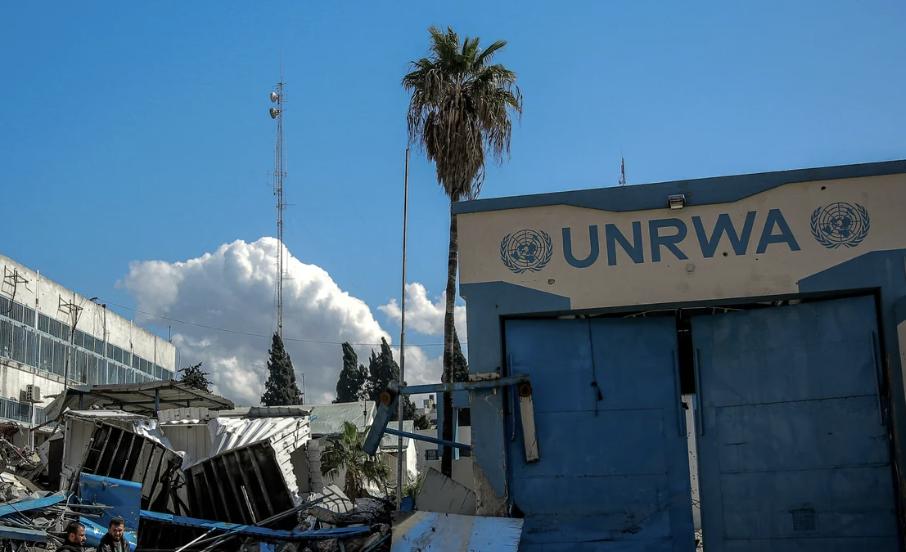
In January 2026, Israel demolished the former UNRWA headquarters in East Jerusalem. The demolition followed the implementation of 2024 Knesset legislation that designated UNRWA as a hostile entity, banned its operations within Israeli-controlled territory, and authorized the expropriation of its properties. Previously, UN Secretary-General António Guterres had informed Israeli Prime Minister Benjamin Netanyahu of possible legal proceedings against the latter's government at the International Court of Justice. Israeli authorities justified the action by alleging that UNRWA facilities were being used by militant groups and citing millions of dollars in unpaid property taxes, claims which the agency has repeatedly denied. UNRWA officials condemned the demolition as an "unprecedented attack" on a United Nations body, asserting that the compound was protected by international diplomatic immunity under the 1946 Convention on the Privileges and Immunities of the United Nations. National Security Minister Itamar Ben-Gvir, who personally oversaw the operation, characterized the event as a "historic day" for reasserting Israeli sovereignty over the entirety of Jerusalem.