



Tomisaburō Wakayama (若山 富三郎, Wakayama Tomisaburō; September 1, 1929 – April 2, 1992), born Masaru Okumura (奥村 勝), was a Japanese actor best known for playing Ogami Ittō, the scowling ronin warrior in the six Lone Wolf and Cub samurai films.
Contents
Biography
Wakayama (his stage name) was born on September 1, 1929. Born in Chiba, he was brought to the Okumura family's ancestral home in Fukagawa, Tokyo at around two years of age, where he was raised. His father was Minoru Okumura (奥村 実), a noted kabuki performer and nagauta singer who went by the stage name Katsutōji Kineya (杵屋 勝東治), and the family as a whole were kabuki performers. He and his younger brother, Shintaro Katsu, followed their father in the theater. Wakayama tired of this; at the age of 13, he began to study judo, eventually achieving the rank of 4th dan black belt in the art.
In 1952, as part of the Azuma Kabuki troupe, Wakayama toured the United States of America for nine months. He gave up theater performance completely after his two-year term with the troupe was over. Wakayama taught judo until Toho recruited him as a new martial arts star in their jidaigeki movies, originally using the stage name "Jō Kenzaburō". He prepared for these movies by practicing other disciplines, including kenpō, iaidō, kendo, and bōjutsu. All this helped him for roles (now using the stage name "Wakayama Tomisaburō") in the television series The Mute Samurai, the 1975 television series Shokin Kasegi (The Bounty Hunter), and his most famous film role: Ogami Ittō, the Lone Wolf.
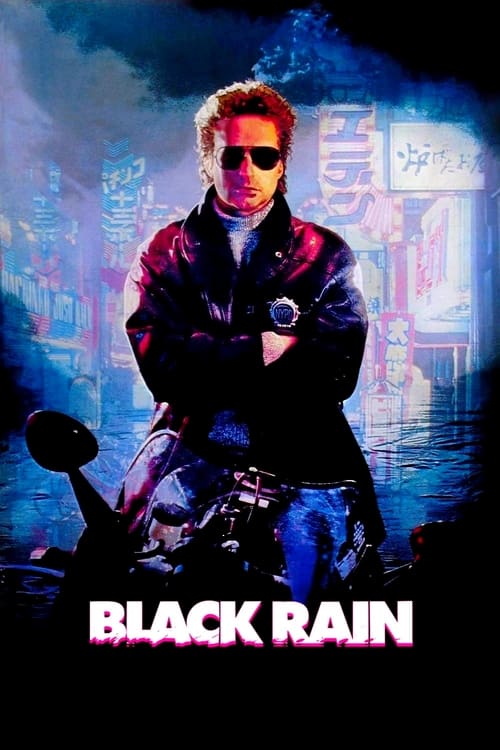
Wakayama went on to star in many films, performing in a variety of roles. It has been estimated that he appeared in between 250 and 500 films. His only roles in American movies were as a baseball coach in The Bad News Bears Go to Japan (1978) and as a yakuza boss, Sugai, in Ridley Scott's Black Rain (1989) that delivers a memorable English monologue that becomes a defining moment for the film, and the film's title.
Wakayama died of acute heart failure on April 2, 1992, in a hospital in Kyoto. He was survived by a son, Kiichirō Wakayama (若山 騎一郎) born in 1964, also an actor.
Personal life
Marriages and family
Wakayama was married twice. On 26 March 1960, his eldest daughter, Kayoko Okumura, was born to his first wife, Ginko. However, after a period of separation, the couple divorced in late 1962. From early childhood (around the age of one and a half), Kayoko was raised by her paternal grandparents, Kineya Katsutōji and his wife. At age 16, after dropping out of high school, she joined Katsu Production upon the recommendation of her uncle, Shintaro Katsu, and made her acting debut in 1977.
In August 1962, shortly before his first divorce was finalized, Wakayama transferred to Daiei Film, where he met Daiei actress Reiko Fujiwara through his younger brother, Shintaro Katsu. Wakayama fell in love with her at first sight, leading to a romantic relationship. The two married on 6 January 1964, following the completion of his divorce. Later that year, they had a son, Kiichiro Wakayama. However, due to financial hardship caused by Wakayama's spending habits, the marriage ended in divorce in 1965. Despite Wakayama's attempts to persuade her to stay, Fujiwara declined and raised Kiichiro as a single mother.
Filmography
Film
Wakayama appeared in the following films, amongst others.
1955–1959
Banba no Chûtarô (1955) - Banba no Chutaro
Uta matsuri mangetsu tanuki-gassen (1955)
Gyakushu orochimaru (1955) - Toyama Yunosuke
Silver Snake Iwashiya (1956)
Yotsuya kaidan (1956) - Iemon Tamiya
Ningyô Sashichi torimonochô: Yôen roku shibijin (1956) - Ningyo Sashichi
Yôun Satomi kaikyoden (1956) - Inuzuka Shino
Ningyô Sashichi torimonochô: Ôedo Ushimitsudoki (1957) - Ningyo Sashichi
Ningyô Sashichi torimonochô: Hanayome Satsujinma (1957) - Ningyo Sashichi
Kanhasshû ken kajin (1958)
Ningyô Sashichi torimonochô: Ukiyoburo no Shibijin (1958) - Ningyo Sashichi
Ningyô Sashichi torimonochô: Koshimoto Irezumi Shibijin (1958) - Ningyo Sashichi
Doto no taiketsu (1959)
Fukaku hichô (1959)
Fukaku hichô: kanketsuhen (1959)
Chiyari musô (1959)
Hibari torimonochô: furisode koban (1959)
Yukinojô henge (1959)
Hayate monzaburo (1959)
1980–1989
Chichi yo haha yo! (1980) - Asakawa Senjo
Shogun Assassin (1980) - Lone Wolf
Seishun no mon ("The Gate of Youth") (1981) - Ryugoro Hanawa
Flames of Blood (1981) - Seihachi
Makai Tenshō ("Samurai Reincarnation") (1981) - Lord Tajima no Kami Munenori Yagyu
Moeru yusha (1981) - Goro Kaji
The Shootout (1982) - Yabuki
Conquest (1982) - Tsuyoshi Gonno
Irezumi: Spirit of Tattoo (1982) - Kyogoro / the Tatto Artist
Shōsetsu Yoshida gakkō (1983) - Bukichi Miki
Hakujasho (1983) - Ekai Kanamishima
Theater of Life (1983) - Kiratsune
Shura no mure (1984)
Story of the Yamashita Boy (1985) - Yamashita Taizo, Cho's father
A Promise (1986) - Detective Tagami
Michi (1986) - Naokichi Sakura
Shinran: Shiroi michi ("Shinran: Path to Purity") (1987) - Homen
Daireikai: Shindara dou naru (1989)
Shaso (1989) - Kazuo Otagaki
Black Rain (1989) - Sugai Kunio
1990
Jotei: Kasuga no tsubone (1990)
Checkmate (1991) - Sanae Mitamura
Television
Oshizamurai Kiichihōgan (1973-1974) - Kiichihōgan
Akuma no Yoūna Aitsu (1975) - Detective Shirato
Shokin Kasegi (1975) - Shikoro Ichibei
Tsūkai! Kōchiyama Sōshun (1975–76) - Tōyama Kinsirō
Fumō Chitai (1979) - Ichizo Daimon
Ōoku (1983) - Tokugawa Ieyasu
Kozure Ōkami Meifumadō no Shikyakunin Hahakoishi Daigoro Zetsushou (1989) - Yagyū Retsudō