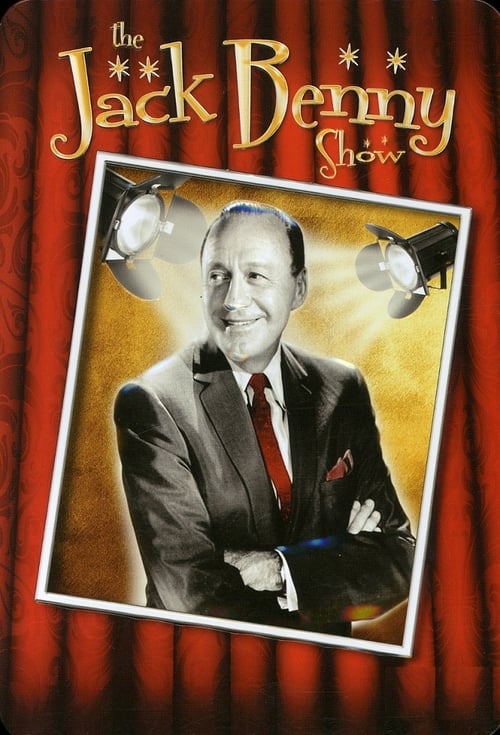
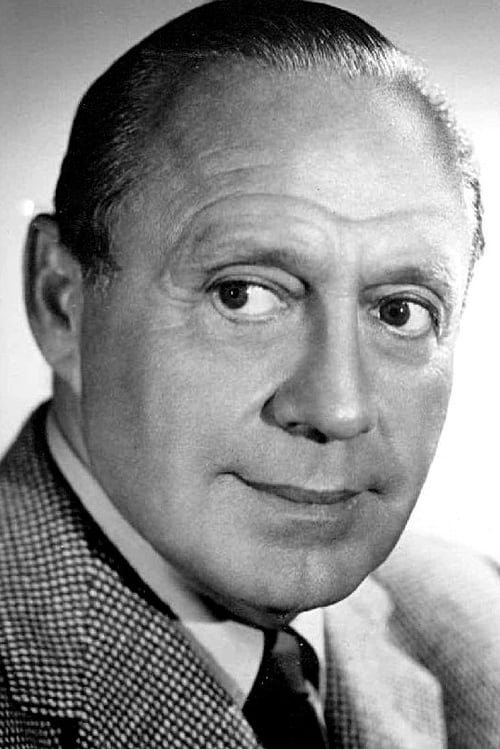


The Jack Benny Program, starring Jack Benny, is a radio and television comedy series. The show ran for over three decades, from 1932 to 1955 on radio, and from 1950 to 1965 on television. It won numerous awards, including the 1959 and 1961 Emmy Awards for Best Comedy Series, and is generally regarded as a high-water mark in 20th-century American comedy.
Throughout his career, Jack Benny played the same character: A pompous, vain, and stingy man who played the violin badly but was convinced of his own talent. Although technically the star of his show, Benny was constantly the butt of jokes from his cast members, including Mary Livingstone (Sayde Marks Benny, his real-life wife); Phil Harris, his band leader; Kenny Baker or Dennis Day, his tenors; Don Wilson, his portly announcer; and Rochester Van Jones (Eddie Anderson), his African American valet.
As radio historian John Dunning explains, "Unlike Bob Hope, Jack Benny didn't tell jokes. On his show, Jack was the joke. Everything revolved around him and his comic foibles, with Benny serving as 'straight man.' The other characters on the show were the comedians, making wisecracks, remarks, and asides about Benny's stinginess, his vanity, or his lousy violin-playing."
Contents
Format
On both television and radio, The Jack Benny Program used a loose show-within-a-show format, wherein the main characters were playing versions of themselves. The show often broke the fourth wall, with the characters interacting with the audience and commenting on the program and its advertisements.
In his first years on radio (c. 1932–1935), Jack Benny followed the format of many other radio comedians, standing at the microphone, telling jokes and stories, and introducing band numbers. As the characters of Jack and his cast became more defined, the show took on a "variety show" format, blending sketch comedy and musical interludes.
The show usually opened with announcer Don Wilson doing a commercial for the sponsor (e.g. Jell-O or Grape Nuts Flakes), accompanied by a musical number from the orchestra. Wilson would then introduce Jack Benny as the "Master of Ceremonies" and banter with him. Gradually, the rest of the cast members—including Mary Livingstone, bandleader Phil Harris, and tenor Kenny Baker or Dennis Day—would "walk on" to join the conversation. The banter between Benny and the regulars generally covered the news of the day, Jack's latest exchange in his ongoing feud with Fred Allen, or one of the running jokes on the program, such as Jack's stinginess, his age, or his vanity, Phil's habitual drunkenness, egotism, or illiteracy, Don's obesity, Dennis's stupidity, or Mary's letters from her mother.
As the show progressed, Jack might be interrupted by a phone call from his valet, Rochester (Eddie Anderson), reporting some problem at Benny's home (e.g. with Jack's pet polar bear, Carmichael, or with his crazy wartime boarder, Mr. Billingsley). Occasionally, Andy Devine or the Jewish character, Schlepperman (Sam Hearn), would make an appearance. At some point, Jack would tell the tenor that it was time for their singing number ("Sing, Kenny!" or "Dennis, let's have your song."). Don Wilson would insert another commercial for the sponsor, and the band would do a "Big Band" number (ostensibly led by Phil Harris, although conductor Mahlon Merrick actually led the band).
The second half of the show would be devoted to a comedy sketch. Jack might leave the studio and go home to handle some problem (e.g. getting Carmichael to take his medicine). Or there would be a miniplay (e.g., "Buck Benny Rides Again" or a murder mystery starring Jack as Police Captain O'Benny), or a satire of a current movie (e.g., "Snow White and the Seven Gangsters"). In some episodes, Jack closed the show with brief instructions to his band leader ("Play, Phil."), and the band would play a final musical number, as Don Wilson did a final commercial.
Radio
Jack Benny first appeared on radio as a guest of Ed Sullivan in March 1932. He was then given his own show later that year, with Canada Dry Ginger Ale as a sponsor – The Canada Dry Ginger Ale Program, beginning May 2, 1932, on the NBC Blue Network and continuing there for six months until October 26, moving the show to CBS on October 30. With Ted Weems leading the band, Benny stayed on CBS until January 26, 1933.
Arriving at NBC on March 3, Benny did The Chevrolet Program until April 1, 1934, with Frank Black leading the band. He continued with The General Tire Revue for the rest of that season, and in the fall of 1934, for General Foods as The Jell-O Program Starring Jack Benny (1934–42), and when sales of Jell-O were affected by sugar rationing during World War II, The Grape Nuts Flakes Program Starring Jack Benny (later the Grape Nuts and Grape Nuts Flakes Program) (1942–44).
On October 1, 1944, the show became The Lucky Strike Program Starring Jack Benny, when American Tobacco's Lucky Strike cigarettes took over as his radio sponsor, through to the mid-1950s. By that time, the practice of using the sponsor's name as the title began to fade.
The show returned to CBS on January 2, 1949, as part of CBS president William S. Paley's "raid" of NBC talent in 1948–49. There it stayed for the remainder of its radio run, which ended on May 22, 1955. CBS aired repeats of previous 1953–55 radio episodes from 1956 to 1958 as The Best of Benny for State Farm Insurance, which later sponsored his television program from 1960 through 1965.
In October, 1934, General Foods agreed to take up sponsorship from the struggling tire-maker, using the show (now airing on the Blue network) to promote its low-selling Jell-O desserts. Beginning from this point, Benny was heard Sunday evenings at 7, at the time seen as a "graveyard slot". However, this was eventually associated with Benny, who appeared in that very time spot for his remaining 21 years on radio (counting his TV shows, he would broadcast on Sundays for a record 28 consecutive years).
In the fall of 1935, Don Bestor was replaced by Johnny Green as the maestro, while Parker was replaced by Michael Bartlett, who himself left after 13 weeks, with Kenny Baker taking over. In early 1936, Harry Conn left the program after creative conflicts with Benny, who had to resort to vaudeville writers Al Boasberg and Edmund Beloin through the end of the season.
Sponsors
In the early days of radio and in the early television era, airtime was owned by the sponsor, and Benny incorporated the commercials into the body of the show. Sometimes, the sponsors were the butt of jokes, though Benny did not use this device as frequently as his friend and "rival" Fred Allen did then, or as cast member Phil Harris later did on his successful radio sitcom. Nevertheless, for years, Benny insisted in contract negotiations that his writers pen the sponsor's commercial in the middle of the program (leaving the sponsor to provide the opening and closing spots) and the resulting ads were cleverly and wittily worked into the storyline of the show. For example, on one program, Don Wilson accidentally misread Lucky Strike's slogan ("Be happy, go Lucky") as "Be Lucky, go happy", prompting a story arc over several weeks that had Wilson unable to appear on the show due to being traumatized by the error.
In fact, the radio show was generally not announced as The Jack Benny Program. Instead, the primary name of the show tied to the sponsor. Benny's first sponsor was Canada Dry Ginger Ale from 1932 to 1933. Benny's sponsors included Chevrolet from 1933 to 1934, General Tire in 1934, and Jell-O from 1934 to 1942.
The Jell-O Program Starring Jack Benny was so successful in selling Jell-O, that General Foods could not manufacture it quickly enough when sugar shortages arose in the early years of World War II, and the company stopped advertising the dessert mix. General Foods switched the Benny program from Jell-O to Grape-Nuts from 1942 to 1944, and it was The Grape Nuts Program Starring Jack Benny. Benny's longest-running sponsor, was the American Tobacco Company's Lucky Strike cigarettes, from 1944 to 1955, when the show was usually announced as The Lucky Strike Program starring Jack Benny.
Writers
Benny employed a small group of writers, most of whom stayed with him for many years. This was in contrast to many successful radio or television comedians, such as Bob Hope, who changed writers frequently. One of Benny's writers, George Balzer, noted: "One of the nice things about writing for Jack Benny was that he never denied your existence. On the contrary, he publicized it – not just in conversations, but in interviews and on the air."
Historical accounts like those by longtime Benny writer Milt Josefsberg indicate that Benny's role was essentially as head writer and director of his radio programs, though he was not credited in either capacity. In contrast to Fred Allen, who initially wrote his own radio scripts and extensively rewrote scripts produced in later years by a writing staff, Jack Benny was often described by his writers as a consummate comedy editor rather than a writer per se. George Burns described Benny as "the greatest editor of material in the business. He's got the knack of cutting out all the weak slush and keeping in only the strong, punchy lines."
Jack Benny has a reputation as a master of timing. Since his days in radio, he often explored the limits of timing for comedic purposes, like pausing a disproportionate amount of time before answering a question. Balzer described writing material for Benny as similar to composing music, with one element being the rhythm of delivery as equivalent to musical tempo.
Theme music
During his early radio shows, no recurring theme was used, with the program instead opening each week with a different then-current popular song. Throughout the Jell-O and Grape-Nuts years, announcer Don Wilson would announce the name of the show, some of the cast, then state "The orchestra opens the program with [name of song]." The orchestra number would continue softly as background for Don Wilson's opening commercial.
Starting in the Lucky Strike era, Benny adopted a medley of "Yankee Doodle Dandy" and "Love in Bloom" as his theme music, opening every show. "Love in Bloom" was later the theme of his television show. His radio shows often ended with the orchestra playing "Hooray for Hollywood". The TV show ended with one of two bouncy instrumentals written for the show by his musical arranger and conductor, Mahlon Merrick.
Benny sometimes joked about the propriety of "Love in Bloom" as his theme song. On a segment often played in Tonight Show retrospectives, Benny talks with Johnny Carson about this. Benny says he has no objections to the song in and of itself, only as his theme. Proving his point, he begins reciting the lyrics slowly and deliberately: "Can it be the trees. That fill the breeze. With rare and magic perfume. Now what the hell has that got to do with me?"
Racial attitudes
Eddie Anderson was the first black man to have a recurring role in a national radio show, which was significant because at the time, black characters were not uncommonly played by white actors in blackface. Although Eddie Anderson's Rochester may be considered a stereotype by some, his attitudes were unusually sardonic for such a role. As was typical at the time in depicting class distinctions, Rochester always used a formal mode of address to the other (White) characters ("Mr. Benny", "Miss Livingstone") and they always used a familiar mode in speaking to him ("Rochester"), but the formal mode when speaking to him about another White character ("Mr. Benny" when speaking to Rochester but "Jack" when speaking to Jack).
In many routines, Rochester gets the better of Benny, often pricking his boss' ego, or simply outwitting him. The show's portrayal of black characters could be seen as advanced for its time. In a 1956 episode, African American actor Roy Glenn plays a friend of Rochester's, and he is portrayed as a well-educated, articulate man not as the typical "darkie stereotype" seen in many films of the time.
Glenn's role was a recurring one on the series, where he was often portrayed as having to support two people on one unemployment check (i.e., himself and Rochester). Black talent was also showcased, with several guest appearances by The Ink Spots and others. Once, when Benny and his cast and crew were doing a series of shows in New York, the entire cast, including Eddie Anderson, stayed in a prominent New York hotel. Shortly after they decamped at the hotel, a manager told Benny that some White guests from Mississippi had complained to him about Anderson staying in the hotel. He asked Benny to please "do something about it." Benny assured him that he would fix the matter. That evening, Benny moved all his people into another hotel, where Anderson would not be made to feel unwelcome.
Line flubs
In the Golden Age of Radio, line flubs were common during live broadcasts, especially on a show like The Jack Benny Program, which used sophisticated humor and complex, well-written scripts. When they happened, Jack would laugh along with the audience, ad lib a joke or two, and continue on with the show, although the line flubs clearly annoyed him. When Eddie Anderson, who had a habit of missing rehearsals, would flub his lines on the air, Jack would sometimes shout in mock indignation, "Just one rehearsal! That's all I ask!"
As professional as he was, even Jack himself was not immune to flubs. On the November 6, 1949 episode, in a sketch where he was on a yacht cruise, Jack told the boat captain that he had been "on the Navy" during World War I, instead of "in the Navy." The episode featured so many line flubs that the following week's episode, November 13, was built around Jack calling a meeting of his cast to discuss their mistakes in the previous week's episode.
Mary Livingstone had several flubs that became notorious running gags for weeks after they happened. On the October 27, 1946 episode, during a lunch counter sketch, Mary mistakenly ordered a "chiss sweeze sandwich," instead of a "Swiss cheese sandwich." On the December 3, 1950 episode, Jack told the story of how he met his valet, Rochester. According to Jack, he was driving his car, made a turn into a garage owned by Amos 'n' Andy, and accidentally hit Rochester's car – while it was up on the grease rack. At the end of the show, Mary asked Jack, "How could you possibly hit a car when it was up on the grass reek?"
Unfortunately, these line flubs may have contributed to Mary Livingstone developing a bad case of "mike fright." In the radio show's final years (1952–1955), Mary's character appeared less and less. When the show was transcribed (pre-recorded), Mary's daughter, Joan Benny, would fill in for her mother when the cast recorded the episode in front of a live studio audience, and Mary would later dub in her lines from the safety of her living room at home.
On the broadcast of January 8, 1950, journalist Drew Pearson was the subject of a joke gone wrong. Announcer Don Wilson was supposed to say he heard that Jack bought a new suit on Drew Pearson's broadcast, but accidentally said "Dreer Pooson". Later in the show, comedic actor Frank Nelson was asked by Benny if he was the doorman. Changing his original response at the suggestion of the writers, Nelson said, "Well, who do you think I am, Dreer Pooson?" The audience laughed for almost 30 seconds. (According to several sources on the show, including writer Sam Perrin, Jack collapsed in laughter on hearing Nelson's ad lib, and it was several minutes before he could continue. On the recording of the January 8, 1950 episode, Jack's laughter is not heard. However, since the show was transcribed, it may have been edited out of the final broadcast.)
Running gags
Benny teamed with Fred Allen for the best-remembered running gag in classic radio history, in terms of character dialogue. Benny alone sustained a classic repertoire of running gags in his own right, though, including his skinflint radio and television persona, regular cast members' and guest stars' reference to his "baby blue" eyes, always sure to elicit a self-satisfied smirk or patently false attempt at modesty from Benny, perpetually giving his age as 39, and ineptitude at violin playing, most frequently demonstrated by futile attempts to perform Rodolphe Kreutzer's Étude No. 2 in C major.
In fact, Benny was a quite good violinist who achieved the illusion of a bad one, not by deliberately playing poorly, but by striving to play pieces that were too difficult for his skill level. In one of his show's skits, Benny is a USO performer in the Pacific playing his violin when he comes under fire; Benny still plays his violin when two Japanese surrender to him – all the other enemy soldiers committed suicide rather than endure listening to Benny's terrible music.
A skit heard numerous times on radio, and seen many times on television, had Mel Blanc as a Mexican in a sombrero and serape sitting on a bench. Jack Benny sits down and begins a conversation. To each question asked by Benny, Blanc replies Sí. When Benny asks his name, Blanc replies Sy, which would prompt the exchange, Sy?, Sí. And when Benny asks where Blanc is going, Blanc replies, "to see his sister", Sue (Sue?, Sí.), who of course sews for a living (Sew?, Sí.).
A running gag was Benny age always being 39 – a guest on the show was Rod Serling who is the mayor of a town where no one recognizes Benny; Jack runs off screaming for help while Serling breaks the fourth wall and remarks to the audience that anyone who has been 39 for as long as Benny has is a resident of this "Zone" (i.e., Twilight Zone).
A running gag in Benny's private life concerned George Burns. To Benny's eternal frustration, he could never get Burns to laugh. Burns, though, could crack Benny up with the least effort. An example of this occurred at a party when Benny pulled out a match to light a cigar. Burns announced to all, "Jack Benny will now perform the famous match trick!" Benny had no idea what Burns was talking about, so he proceeded to light up. Burns observed, "Oh, a new ending!" and Benny collapsed in helpless laughter.
Preservation
The radio series was one of the most extensively preserved programs of its era, with the archive almost complete from 1936 onward and several episodes existing from before that (including the 1932 premiere).
A few episodes from the series' later years remain missing, however, such as the shows from September 30 and October 7, 1951.
The March 28, 1948 episode of the radio series was chosen by the Library of Congress as a 2004 selection for preservation in the National Recording Registry.
Television
Jack Benny made his TV debut in 1949 with a local appearance on Los Angeles station KTTV, then a CBS affiliate. On October 28, 1950, he made his full network debut over CBS Television.
The regular and continuing Jack Benny Program was telecast on CBS from October 28, 1950, to September 15, 1964. Benny's television shows were occasional broadcasts in his early seasons on TV, as he was still firmly dedicated to radio. It became a bi-weekly show in the 1954–55 season, then a weekly show in the 1960–1961 season, and moved to NBC for its final season, airing from September 25, 1964, to September 10, 1965.
343 episodes were produced. His TV sponsors included American Tobacco's Lucky Strike (1950–59), Lever Brothers' Lux (1959–60), State Farm Insurance (1960–65), Lipton Tea (1960–62), General Foods' Jell-O (1962–64), and Miles Laboratories (1964–65).
The television show was a seamless continuation of Benny's radio program, employing many of the same players, the same approach to situation comedy, and some of the same scripts. The suffix "Program" instead of "Show" was also a carryover from radio, where "program" rather than "show" was used frequently for presentations in the nonvisual medium. Occasionally, in several live episodes, the title card read The Jack Benny Show.
The Jack Benny Program appeared infrequently during its first two years on CBS-TV. Benny moved into television slowly. In his first season (1950–1951), he only performed on four shows, but by the 1951–1952 season, he was ready to do one show roughly every six weeks. In the third season (1952–1953), the show was broadcast every four weeks. During the 1953–1954 season, the Jack Benny Program aired every three weeks.
From 1954 to 1960, the program aired every other week, rotating with such shows as Private Secretary and Bachelor Father. After the radio show ended in 1955, Benny took on another biweekly series, becoming a regular on Shower of Stars, CBS's hourlong comedy/variety anthology series. He effectively appeared almost every week on one of the two series. On Shower of Stars, Benny's character finally turned 40, throwing a large birthday party for the occasion.
End
James T. Aubrey, the president of CBS Television and a man known for his abrasive and judgmental decision-making style, infamously told Benny in 1963, "you're through." Benny was further incensed when CBS placed an untested new sitcom, the Beverly Hillbillies spinoff Petticoat Junction, as his lead in. Benny had had a strong ratings surge the previous year when his series was moved to Tuesday nights with the popular Red Skelton Hour in the time slot prior to his.
He feared a separation of their two programs might prove fatal. Early that fall, he announced his show was moving back to NBC, where he was able to get the network to pick up another season. Benny's fears proved to be unfounded; his ratings for the 1963–64 season remained strong, while Petticoat Junction emerged as the most popular new series that fall.
In his unpublished autobiography, I Always Had Shoes (portions of which were later incorporated by Benny's daughter, Joan, into her memoir of her parents, Sunday Nights at Seven), Benny said that he made the decision to end his TV series in 1965. He said that while the ratings were still good (he cited a figure of some 18 million viewers per week, although he qualified that figure by saying he never believed the ratings services were doing anything more than guessing), advertisers complained that commercial time on his show was costing nearly twice as much as what they paid for most other shows, and he had grown tired of what was called the "rate race".
Syndication
As with the radio shows, most of the television series has lapsed into the public domain, although several episodes (particularly those made from 1961 onward, including the entire NBC-TV run) remain under copyright. During his lone NBC season, CBS aired repeats on weekdays and Sunday afternoons. 104 episodes personally selected by Benny and Irving Fein, Benny's associate since 1947, were placed into syndication in 1968 by MCA TV. Telecasts of the shows in the late evening were running as late as 1966.
Four early-1960s episodes were rerun on CBS during the summer of 1977. Edited 16mm prints ran on the CBN Cable Network in the mid-1980s. Restored versions first appeared on the short lived HA! network in 1990. From 2011 to 2025, the series has run on Antenna TV, part of a long-term official syndication distribution deal. The public domain television episodes have appeared on numerous stations, including PBS, while the radio series episodes have appeared in radio drama anthology series such as When Radio Was.
Home media
Public-domain episodes have been available on budget VHS/Beta tapes (and later DVDs) since the late 1970s. MCA Home Video issued a 1960 version of the classic "Christmas Shopping" show in 1982 and a VHS set of 10 filmed episodes in 1990. In 2008, 25 public-domain episodes of the show, long thought lost, were located in a CBS vault. The Jack Benny Fan Club, with the blessing of the Benny estate, offered to fund the digital preservation and release of these sealed episodes. CBS issued a press statement that any release was unlikely.
June 2013 had the first official release of 18 rare live Benny programs from 1956 to 1964 by Shout! Factory. This set, part of Benny's private collection at the UCLA film and television library, included guest shots by Jack Paar, John Wayne, Tony Curtis, Gary Cooper, Dick Van Dyke, Rock Hudson, Natalie Wood, and President Harry Truman, and the only TV appearance with longtime radio foe Ronald Colman.
Cast and characters
Main cast
Jack Benny as himself – The protagonist of the show, Benny is a comic, vain, penny-pinching miser, insisting on remaining 39 years old on stage despite his actual age, and often playing the violin badly.
Eddie Anderson as Rochester Van Jones, Jack's valet and chauffeur – Early in the show's run, he often talked of gambling or going out with women. Later on, he complained about his salary.
Don Wilson as himself – Don generally opened the show and also did the commercials. He was the target of Jack's jokes, mostly about his weight.
Eugene McNulty as Dennis Day – A vocalist perpetually in his 20s (by the time of the last television series, McNulty was 49 years old), he was sweet but not very bright. When called upon, he could use a wide variety of accents, which was especially useful in plays. He usually sang a song about 10 minutes into the program. If the episode was a flashback to a previous time, a ruse would be used such as Dennis singing his song for Jack so he could hear it before the show. McNulty adopted the name "Dennis Day" as his stage name for the rest of his career.
Sadie Marks as Mary Livingstone – A sarcastic comic foil, her varying roles all served as, to use the description of Fred Allen, "a girl to insult (Jack)." Marks, who in real life was Benny's wife, later legally changed her name to "Mary Livingstone" in response to the character's popularity. Her role on the program was reduced in the 1950s due to increasing stage fright, and Livingstone finally retired from acting in 1958.
Phil Harris as himself – A skirt-chasing, arrogant, hip-talking bandleader, he constantly put Jack down (in a mostly friendly way). He referred to Mary as "Livvy" or "Liv", and Jack as "Jackson". Harris explained this once by saying it's "as close as I can get to jackass and still be polite" Spun off into The Phil Harris–Alice Faye Show (1946–1954) with his wife, actress Alice Faye. Harris left the radio show in 1952 and his character did not make the transition to television apart from a guest appearance.
Mel Blanc as Carmichael the Polar Bear, Professor Pierre LeBlanc, Sy the Mexican, Polly (Jack's parrot; originally Purv Pullen), the Maxwell (originally Pinto Colvig), and many other assorted voices – An occasional running gag went along the lines of how the various characters that Blanc portrayed all looked alike. He was also the sound effects of Jack's barely functional Maxwell automobile – a role he inherited from Colvig and played again in the Warner Bros. cartoon The Mouse that Jack Built. Another participating voice actor was Bert Gordon. Blanc also played a train-station announcer, whose catchphrase was, "Train leaving on Track Five for Anaheim, Azusa, and Cuc-amonga."
Other cast members include
Ronald Colman and his wife, Benita as themselves – They were among Benny's most popular guest stars on the radio series, portraying his long-suffering next-door neighbors. On the show, the Colmans were often revolted by Jack's eccentricities and by the fact that he always borrowed odds and ends from them (at one point, leading Ronald to exclaim, "Butter? Butter, butter!!! Where does he think this is, Shangri-La?"). Dennis Day often impersonated Ronald Colman.
James Stewart and his wife, Gloria as themselves – Recurring guest stars on the television series, they played Benny's often-imposed-upon neighbors, in roles similar to those performed by Ronald and Benita Colman.
Frank Parker was the show's singer during the early seasons on radio from New York.
Kenny Baker – The show's tenor singer during the second half of the 1930s, he originally played the young, dopey character. He left and was replaced by Dennis Day in a similar role.
Andy Devine – Jack's raspy-voiced friend, he lived on a farm with his ma and pa. He usually told a story about his folks and life around the farm. His catchphrase was "Hiya, Buck!"
Sam Hearn as Schlepperman – A Jewish character, he spoke with a Yiddish accent (his catch phrase: "Hullo, Stranger!"). He would return again as the "Hiya, Rube!" guy, a hick farmer from the town of Calabasas, who always insisted on referring to Jack as "rube".
Ed Beloin as Mr. Billingsley – He was Benny's polite but eccentric boarder. He appeared in the early 1940s.
Larry Stevens – A tenor singer, he substituted for Dennis Day from November 1944 to March 1946, when Dennis served in the Navy.
Mary Kelly as the Blue Fairy – A clumsy, overweight fairy, she appeared in several storytelling episodes. Kelly had been an old flame of Jack's, who had fallen on hard times. Benny was unsure of whether to give Kelly a regular role and instead appealed to friend George Burns, who put her on his show in 1939 as Mary "Bubbles" Kelly, best friend to Gracie.