


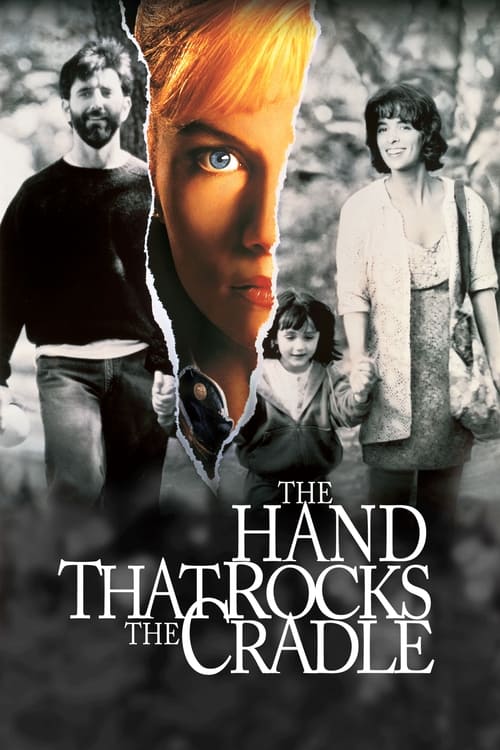
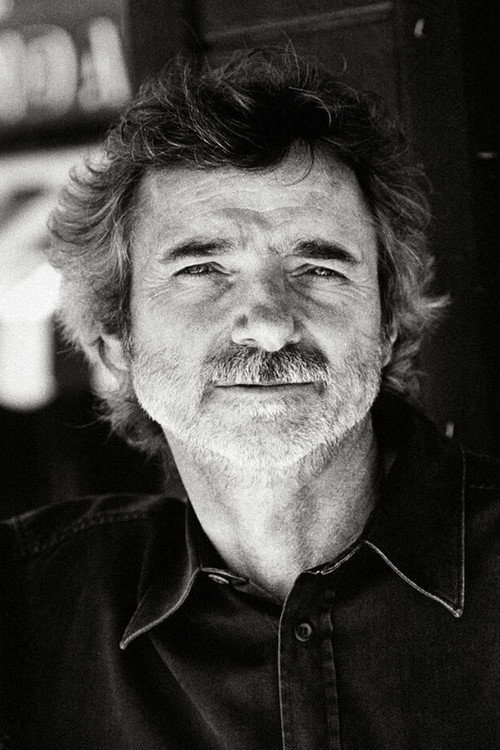












The Hand That Rocks the Cradle is a 1992 American psychological thriller film directed by Curtis Hanson, written by Amanda Silver, and starring Annabella Sciorra, Rebecca De Mornay, Matt McCoy, Ernie Hudson, Julianne Moore, and Madeline Zima. The plot follows the pregnant wife of a Seattle obstetrician, who dies by suicide after he is accused of sexual misconduct by some of his patients. The shock leads the wife to miscarry, after which she poses as a nanny for one of her late husband's accusers and slowly begins to infiltrate the family. The film's title is taken from the 1865 poem by William Ross Wallace, and it features several musical pieces drawn from the 1879 comic opera The Pirates of Penzance.
The Hand That Rocks the Cradle had a sneak preview for over 100 theaters on December 31, 1991, and was theatrically released in the United States on January 10, 1992, by Buena Vista Pictures through its Hollywood Pictures label. The film was a box office success, grossing approximately US$140 million worldwide against a budget of $11.9 million, subsequently becoming one of the year's most profitable films. In the home video market, it became the top rental in July 1992, and was the seventh-most rented film of 1992 in the United States. The film received numerous accolades, including Saturn Award nominations for Best Horror Film, Best Actress (De Mornay), and Best Supporting Actress (Moore).
The Hand That Rocks the Cradle was remade as the Bollywood film Khal-Naaikaa (1993), and later adapted into another American film (2025).
Contents
Plot
Claire Bartel, a Seattle housewife pregnant with her second child, is sexually assaulted by her new obstetrician, Dr. Victor Mott, during a routine check-up. Her husband Michael encourages her to report Dr. Mott to the state medical board, which results in other women coming forward with accusations. After a news telecast reports these accusations, Dr. Mott dies by suicide to avoid arrest. His pregnant widow is informed that his life insurance has been voided due to his suicide. Additionally, his assets have been frozen because of numerous lawsuits, leaving her penniless and forcing the sale of her lavish home. Traumatized, Mrs. Mott goes into pre-term labor and suffers a miscarriage that necessitates an emergency hysterectomy. While recovering, she sees a news story identifying Claire as the first woman who came forward with allegations against her husband.
Six months later, Claire has given birth to her son, Joey, and is in the midst of building her own personal greenhouse with the help of an intellectually disabled handyman named Solomon, who has bonded with their young daughter Emma. While searching for a nanny, Claire is met by a woman
named Peyton Flanders, who makes a good impression. The couple hire her, not knowing that Peyton is really Mrs. Mott.
Once inside the house, Mrs. Mott begins taking revenge on the Bartels by degrees. She frequently breastfeeds Joey in secret, causing him to reject Claire's milk, manipulates Emma into keeping secrets from Claire, and surreptitiously destroys Michael's workplace proposal. After Solomon discovers Mrs. Mott breastfeeding Joey, she places a pair of Emma's underwear in his toolbox, resulting in Claire firing him, believing he is a pedophile preying on Emma; Solomon's firing causes Emma to turn against her mother. Despite being fired, Solomon continues to return to the home secretly to watch over the family.
Mrs. Mott arranges a surprise birthday party for Claire, which is attended by Claire's friend, Marlene, a real estate agent and former girlfriend of Michael. Mrs. Mott steals Marlene's cigarette lighter and places it in Michael's coat pocket. On the day of the party, Claire finds the lighter and vocally and vulgarly accuses Michael of having an affair with Marlene, only to find her and the partygoers in the next room. Marlene leaves hurt and humiliated.
Production
Development
The Hand That Rocks the Cradle originated as Amanda Silver's film school thesis. Silver completed approximately thirty drafts of the screenplay over a two-year period. Commenting on her inspiration, she said: "I was fascinated with [the idea of] what happens when people give their trust over to someone who's out to destroy them." The film takes its title from the 1865 poem by William Ross Wallace.
In August 1990, it was reported Interscope Communications was preparing the film for Hollywood Pictures. By October 1990 Curtis Hanson was hired to direct. The setting and location was originally meant to be in Atlanta, Georgia, but was changed to the Seattle metropolitan area.
Casting
Rebecca De Mornay read the screenplay for the film and sought to play the role of Peyton, as she was "haunted" by the story. De Mornay commented that the producers considered her for the project because "they wanted someone who is likable" and the part was against type for the roles she had become known for.
Filming
Principal photography of The Hand That Rocks the Cradle began on April 15, 1991, after being rescheduled from February 22. The film shoot was delayed due to the casting of the female leads. The film was shot on location in Washington state in Issaquah, Seattle, and Tacoma.
The Motts' residence is located at 2502 37th Avenue West in Seattle, and the Bartels' residence at 808 North Yakima Avenue in Tacoma.
Release
The Hand That Rocks the Cradle had a sneak preview for over 100 theaters across the United States and Canada on December 31, 1991. Due to the enthusiastic audience response to the advanced screening Disney held another sneak preview for a larger amount of theaters on January 4, 1992. The film had its nationwide theatrical premiere on January 10, 1992.
Home media
The Hand That Rocks the Cradle was released on VHS on July 8, 1992, on DVD on December 8, 1998, with the original theatrical trailer as the sole special feature. On September 4, 2012 Disney/Buena Vista released the film on Blu-ray disc with the same theatrical trailer as the previous releases.
The film was presented in its original widescreen aspect ratio, approximately 1.85:1.
Reception
Box office
The Hand That Rocks the Cradle grossed $7.7 million during its opening weekend, ranking number one at the U.S. box office over Hook, which had held the number one spot for four weeks. It remained the number one film at the U.S. box office for four consecutive weeks, then was upended by Medicine Man, which was also released by Hollywood Pictures. By the end of its run, the film earned a total of $88 million in the United States and Canada and $52 million internationally, for a worldwide total of $140 million.
Critical response
On Rotten Tomatoes, 67% of 54 reviews are positive. The consensus summarizes: "Thanks largely to Rebecca De Mornay's delightfully villainous turn in the central role, The Hand That Rocks the Cradle is an entertaining—albeit rather silly—domestic thriller." On Metacritic, the film has a score of 64 out of 100, based on reviews from 26 critics. Audiences polled by CinemaScore gave the film an average grade of "A−" on an A+ to F scale.
Gene Siskel stated that he "had trouble accepting the premise of this picture because of the casual way in which the nanny is hired in an early scene by the mother," citing that the premise is unrealistic. However, he gave praise to Julianne Moore's character, saying, "Much more believable is the supporting character of the mother's best friend" and that "the friend is a terrific character, it's too bad she doesn't have more scenes in the picture." He mentioned that his "biggest objection to The Hand That Rocks the Cradle is to its scenes with the children in jeopardy or psychic pain." Siskel finally remarked that "there are some fun thrills in The Hand That Rocks the Cradle to be sure, but I found a lot of it distasteful, too." Roger Ebert had a higher opinion of the film, stating that he "found this film worked" and that "It touches on a fear and that's why it appeals to us." Ebert praised De Mornay's performance in the film, saying, "She does, I think, a very good job, a very, very sound job of being the villainess in this film and I think it's an effective performance", a statement which Siskel agreed with, and that he found the scenes of the children "very interesting because I saw them as a portrait of the evil of that woman."
Vincent Canby of The New York Times said of the film that "The Hand That Rocks the Cradle is meant to scare audiences more or less in the way that the patrons of the early nickelodeons were frightened when they saw the image of a train rushing at them. Audiences aren't asked to think, only to react" and that "The Hand That Rocks the Cradle proves again that not thinking isn't especially easy even today. Though Mr. Hanson is a slick movie maker, he is not an especially persuasive one here. Don't be gulled by those who would compare The Hand That Rocks the Cradle to Fatal Attraction, which features three strong characters who, in one way or another, are ready to answer for their actions." He added that "Mr. Hanson creates the occasionally effective shock effect to satisfy those who want to squeal in mock fright. More often the devices he uses are such tired tricks as the crosscutting between two sets of simultaneous, often innocent, actions to create the illusion of suspense that can't be sustained." Rebecca Hawkes of The Daily Telegraph gave the film a rating a 3 stars out of 5 and said that "It's a tense, viscerally unsettling moment, that helps make the film into something more than just a fun, formulaic thriller", while Sue Heal of The Radio Times rated the film 4 stars out of 5, stating that "This is pure unbridled hokum, of course, but extremely effective until the last 30 minutes, when the plot rapidly self-destructs."
Criticism from feminists
The Hand That Rocks the Cradle received criticism from some feminists for its depiction of sexual assault and of violence between women. The Washington Post reviewer Rita Kempley criticized the film, arguing that it is anti-feminist. De Mornay challenged these accusations, saying: "This is a compelling story, and a compelling thriller... We have a lack of women writers and a lack of good roles for women. Because of this shortage, there's the belief in some circles that when women are portrayed in the film, they must always be portrayed as wonderful human beings. This is a kind of minority thinking I don't like. It's counterproductive."
Remakes
The film was remade as Khal-Naaikaa, an Indian film which was released on August 6, 1993.
Supernatural writer Daniel Loflin was set to executive produce and write an adaptation for ABC Family in 2014, alongside Ted Field, a producer on the original film, but it did not move forward.
On September 26, 2024, it was announced that a new remake was in development with Walt Disney Studios Motion Pictures under 20th Century Studios, starring Maika Monroe with Michelle Garza Cervera directing and Micah Bloomberg writing the script. The film was released directly to streaming on Hulu on October 22, 2025.