






.jpg?width=400)



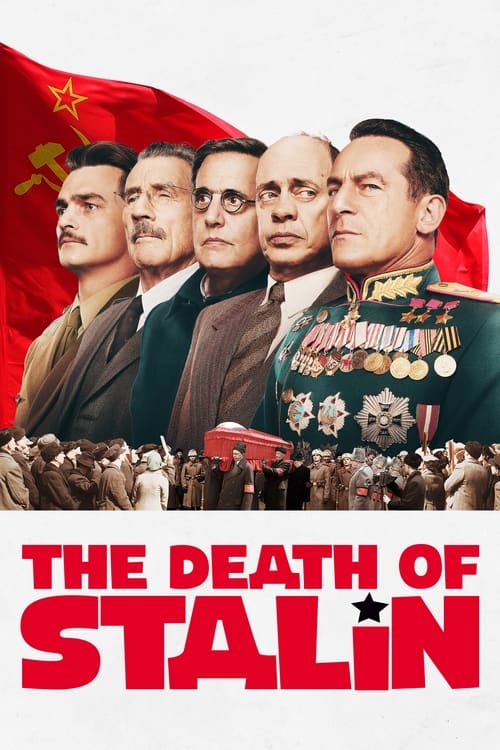
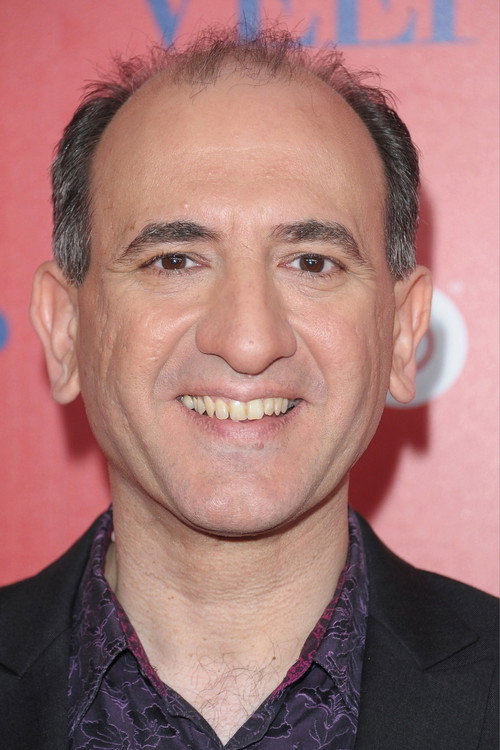
The Death of Stalin is a 2017 British-French-Belgian political satire black comedy film directed by Armando Iannucci and written by Iannucci, David Schneider and Ian Martin with Peter Fellows. Based on the French graphic novel La Mort de Staline (2010–2012), the film depicts the internal social and political power struggle among the members of the Soviet Politburo following the death of leader Joseph Stalin in 1953.
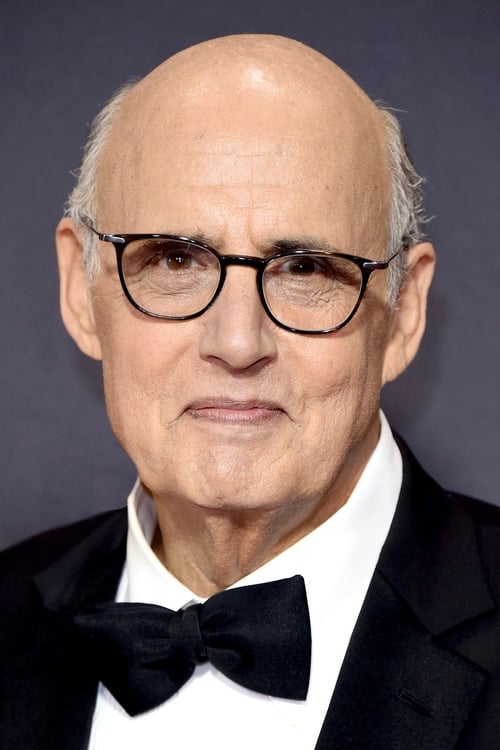
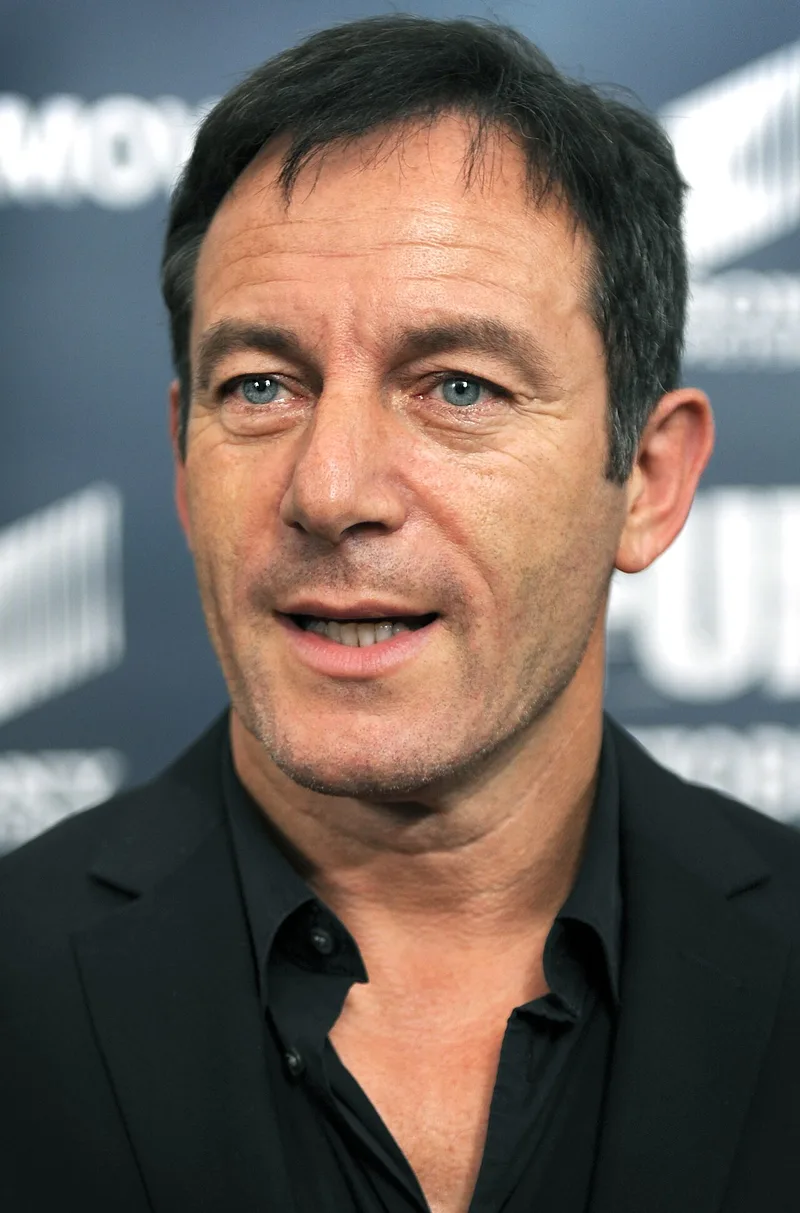
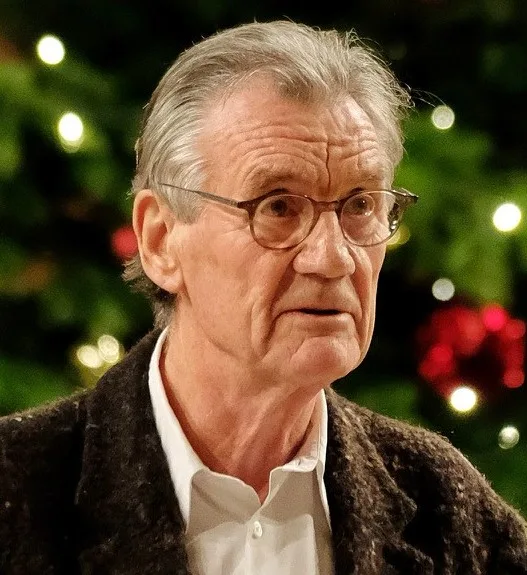
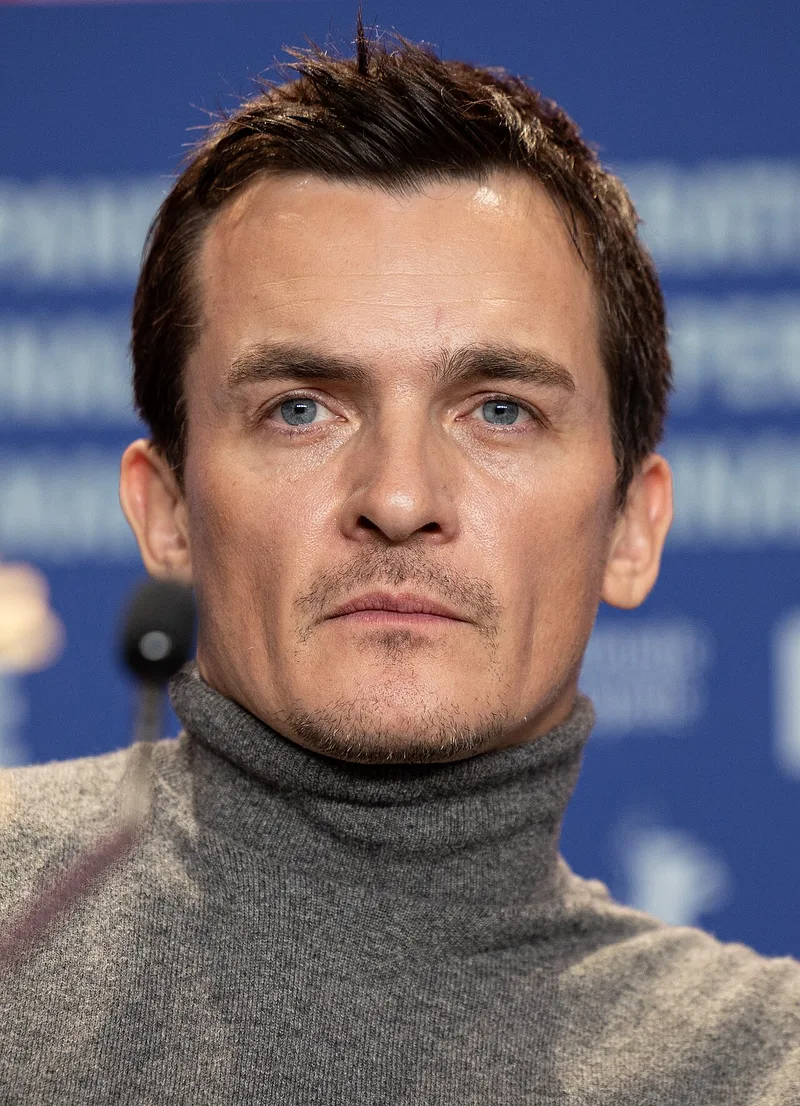
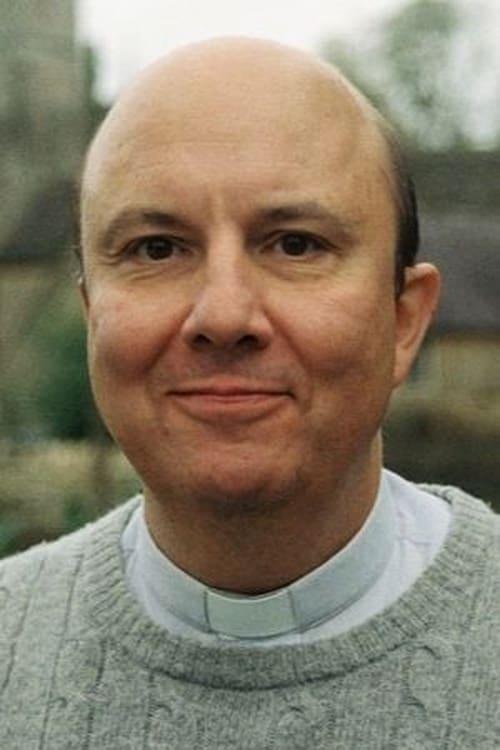
The French-British-Belgian co-production stars an ensemble cast that includes Steve Buscemi, Simon Russell Beale, Paddy Considine, Rupert Friend, Jason Isaacs, Olga Kurylenko, Michael Palin, Andrea Riseborough, Dermot Crowley, Paul Chahidi, Adrian McLoughlin, Paul Whitehouse, and Jeffrey Tambor.
The film premiered on 8 September 2017 at the Toronto International Film Festival. It was released theatrically in the United Kingdom by Entertainment One Films on 20 October 2017, in France by Gaumont on 4 April 2018, and in Belgium by September Film Distribution on 18 April 2018. It received critical acclaim and various accolades, including nominations for two British Academy Film Awards, one of which was for Outstanding British Film, and 13 British Independent Film Awards, four of which it won. There was fierce opposition to the film in Russia, where it was seen as "anti-Russian propaganda", and it was banned there, as well as in Kyrgyzstan, for allegedly mocking the Soviet Union and its past.
Contents
Plot
For 20 years, Stalin's NKVD security forces have imposed The Great Terror. Those on Stalin's list of 'enemy' names are arrested, exiled or shot.
On the night of 1 March 1953, Joseph Stalin demands the director of Radio Moscow provide a recording of a live recital of Mozart's Piano Concerto No. 23 after the show has concluded. The director recalls the audience and orchestra and records the recreated concert. Pianist Maria Yudina, who hates the cruel dictator, only complies after being bribed and slips a note into the recording before it is couriered to Stalin.
Stalin is hosting a tense, but rowdy, gathering of Central Committee members at Kuntsevo Dacha. As Foreign Minister Vyacheslav Molotov leaves, NKVD head Lavrentiy Beria reveals to Nikita Khrushchev and Deputy Chairman Georgy Malenkov that Molotov is to be part of the latest purge. The concert recording arrives and Maria's note, admonishing Stalin and wishing him dead, causes him to suffer a cerebral haemorrhage as he laughs at the note. Stalin's guards hear him fall in his office but fear disturbing him.
Stalin's housemaid discovers him unconscious the next morning and members of the Central Committee rush to the dacha. Beria finds Maria's note but only after Malenkov, Khrushchev, Lazar Kaganovich, Anastas Mikoyan, and Nikolai Bulganin arrive, does the Committee finally decide to send for medical help. The best doctors in Moscow have been arrested after the "Doctors' plot". When Stalin dies under the care of mediocre doctors, Beria orders the NKVD to relieve the Soviet Army of control of Moscow.
Beria and Khrushchev vie for the support of Molotov and of Stalin's children, Svetlana and her unstable, alcoholic brother Vasily. Beria removes Molotov's name from the impending purge and releases Polina Zhemchuzhina, Molotov's wife, from prison. The Committee names Malenkov, a puppet of Beria, as chairman. He hijacks Khrushchev's proposed reforms, such as releasing political prisoners and loosening clerical restrictions, relegating Khrushchev to planning Stalin's funeral.
Beria threatens Khrushchev with Maria's note, and Khrushchev reverses Beria's order to halt all transport into Moscow. When 1,500 arriving mourners are killed, the Committee wants to blame junior NKVD officers. In an effort to deflect blame, Beria threatens his colleagues with documents detailing their involvement in various purges.
Cast
Note: At the time of the film's events, many of the characters' real counterparts did not hold the positions listed in the film, although they did often hold a similar position at a similar period.
Production
During the 2016 Cannes Film Festival, it was announced that production on the film was set to begin in June, and that Jeffrey Tambor, Steve Buscemi, Olga Kurylenko, Timothy Dalton, Toby Kebbell, Michael Palin, Simon Russell Beale, Paddy Considine and Andrea Riseborough were in "advanced talks to join the project." By the time filming started on 20 June, Adrian McLoughlin and Paul Whitehouse had joined the cast, and Jason Isaacs had replaced Dalton as Georgy Zhukov, while Rupert Friend had replaced Kebbell as Vasily Stalin. Production wrapped on 6 August 2016.
Scenes were shot on location in Kyiv (exterior scenes and the exteriors of the Public Enemies building and the NKVD building), Moscow (the Red Gate Building), and the United Kingdom (Blythe House, Battersea Park, Mansion House, Fulham Town Hall, Goldsmiths' Hall, Shoreditch Town Hall, Freemasons' Hall, Alexandra Palace, and Hammersmith Town Hall in London, Mongewell Park in Oxfordshire, Black Park in Buckinghamshire, and Wrest Park in Bedfordshire). The film's score was composed by Christopher Willis, who tried to write in the style of Soviet composer Dmitri Shostakovich.
Release and reception
Box office
The Death of Stalin was screened in the Platform section at the 2017 Toronto International Film Festival. It was released in theatres by eOne Films in the United Kingdom on 20 October 2017, and by IFC Films in the United States on 9 March 2018. The film grossed $8 million in the United States and Canada and $16.6 million in other territories (including $7.3 million in the UK), for a worldwide box office total of $24.6 million.
Critical response
On the review aggregator website Rotten Tomatoes, the film holds an approval rating of 94% based on 254 reviews, with an average score of 8/10; the site's critics consensus reads: "The Death of Stalin finds director/co-writer Armando Iannucci in riotous form, bringing his scabrous political humor to bear on a chapter in history with painfully timely parallels." On Metacritic the film has a weighted average score of 88 out of 100 based on 43 critics, indicating "universal acclaim".
Peter Bradshaw of The Guardian gave the film 5/5 stars, writing that "fear rises like gas from a corpse in Armando Iannucci's brilliant horror-satire" and that it "is superbly cast, and acted with icy and ruthless force by an A-list lineup. There are no weak links. Each has a plum role; each squeezes every gorgeous horrible drop." Sandra Hall of The Sydney Morning Herald gave the film 4.5/5 stars, describing it as "a devastatingly funny dissection of power politics, stripping the mystique from it and those who worship it." Donald Clarke of The Irish Times gave the film 4/5 stars, writing that it "starts in a state of mortal panic and continues in that mode towards its inevitably ghastly conclusion".
Tim Robey of The Daily Telegraph also gave the film 4/5 stars, writing: "Depending on your point of view, The Death of Stalin is either a sly, wintry satire on Armando Iannucci's usual theme of squawking political idiocy, or an insidious attempt to destabilise the Russian establishment with relentless dagger-blows." Peter Howell of the Toronto Star gave the film 3.5/4 stars, writing: "Shifting eastwards from the Anglo-American japes of In the Loop and Veep, director/co-writer Armando Iannucci doesn’t stint on brutal truth — or lethal legend."
Christopher Orr of The Atlantic praised the film's humour and performances and wrote that it "seems precisely attuned to the current moment: a capricious, unpredictable leader, basking in a cult of personality; the introduction of 'alternative facts'; the swift, party-wide swerves on subjects as various as negotiating with North Korea, paying off porn stars, and even Russian efforts to subvert a U.S. election." Anthony Lane of The New Yorker wrote that the film was "ten times funnier, by my reckoning, than it has any right to be, and more riddled with risk than anything that Iannucci has done before, because it dares to meet outrage with outrage."
Raphael Abraham of the Financial Times wrote: "As this coven of vampiric apparatchiks feasts on the remains of Stalinism, the unremitting blackness of the situation at times threatens a full comedy eclipse. But the discomfiting balancing act of humour and horror is precisely Iannucci's game—and only he could pull it off with such skill." Thomas Walker, in The Objective Standard, agreed, adding that the film "dives deep into the psychology of those living under such a system and lays bare the self-destructive mind-set of those who grasp wildly for power."
Russia and former Soviet bloc
Nikolai Starikov, head of the Russian Great Fatherland Party, called The Death of Stalin an "unfriendly act by the British intellectual class", and part of an "anti-Russian information war". In September 2017, the head of the Public Council of the Russian Ministry of Culture said Russian authorities were considering a ban on the film, alleging that it could be part of a "western plot to destabilise Russia by causing rifts in society". Russian online newspaper Vzglyad called the film "a nasty sendup by outsiders who know nothing of our history". The Communist Party of the Russian Federation called the film "revolting", and Alexander Yushchenko, a spokesman for the party, said it was an attempt to spark discontent.
On 23 January 2018, two days before the film's scheduled release in Russia, a screening was attended by State Duma MPs, representatives of the Russian Historical Society, members of the Ministry of Culture's Public Board, and film industry members. Two days later, the Ministry of Culture withdrew the film's distribution certificate. Several cinemas screened the film in late January, and, though they claimed they had not heard the exhibition license had been revoked, the Ministry sued these theatres.
According to the results of a poll conducted by the state-run Russian Public Opinion Research Center (VTSIOM), 35% of Russians disapproved of the Ministry of Culture's decision to keep the film from Russian screens, while 30% supported the ban and 35% were neutral. 58% of Russians said they would be willing to watch the film in cinemas if the ban were lifted. According to Iannucci, by January 2019, the film had been illegally downloaded 1.5 million times in Russia.
A group of lawyers from Russia's Ministry of Culture; Era Zhukova, the daughter of Marshal Zhukov; cinematographer Nikita Mikhalkov; Vladimir Bortko; and Alexey Levykin, head of the Russian State Historical Museum, petitioned Culture Minister Vladimir Medinsky to withdraw the film's certification, saying: "The Death of Stalin is aimed at inciting hatred and enmity, violating the dignity of the Russian (Soviet) people, promoting ethnic and social inferiority. We are confident that the movie was made to distort our country's past so that the thought of the 1950s Soviet Union makes people feel only terror and disgust." The authors said the film, set to be released on the eve of the 75th anniversary of the end of the Battle of Stalingrad, denigrated the memory of Russian World War II fighters, with the Russian national anthem accompanied by obscene expressions and offensive attitudes, and historically inaccurate decorations.
Historical accuracy
Several academics have argued there are historical inaccuracies in The Death of Stalin. Iannucci has said "I'm not saying it's a documentary. It is a fiction, but it's a fiction inspired by the truth of what it must have felt like at the time. My aim is for the audience to feel the sort of low-level anxiety that people must have [experienced] when they just went about their daily lives at the time."
The historian Richard Overy wrote that the film "is littered with historical errors", and called it "entertainment, but poor history". Among his examples are,
Molotov was not the foreign minister when Stalin died. He had been sacked in 1949, but became foreign minister again in the post-Stalin reshuffle.
Marshal of the Soviet Union (not Field Marshal) Zhukov was a local field commander when Stalin died, having been exiled to the provinces due to Stalin's paranoid jealousy of him. Zhukov became deputy minister of defence in the post-Stalin government, but he was not the commander of the Soviet Army in March 1953; that position was held by his long-time rival Ivan Konev.
Khrushchev, not Malenkov, chaired the meeting to reorganise the government after Stalin's death.
Lazar Kaganovich never served as Minister for Labor in the Soviet Government; he was Commissar of Transport (1935–1937), Heavy Industry (1937–1939), and the Fuel Industry (1939), while also holding roles as a Deputy Premier and Central Committee Secretary.
Beria was actually arrested three months after Stalin died, not almost simultaneously, and that was precipitated by the East German uprising of 1953, not a fictional massacre of mourners in Moscow, which is based on an incident in which at least 109 people were trampled to death during the funeral. He was executed six months after being arrested. Beria had not been head of the NKVD security forces since 1946.
Svetlana was not sent to Vienna. She remained in the Soviet Union working as an academic and translator before defecting to America in 1967 and becoming a naturalised citizen of the United States in 1978.