Production
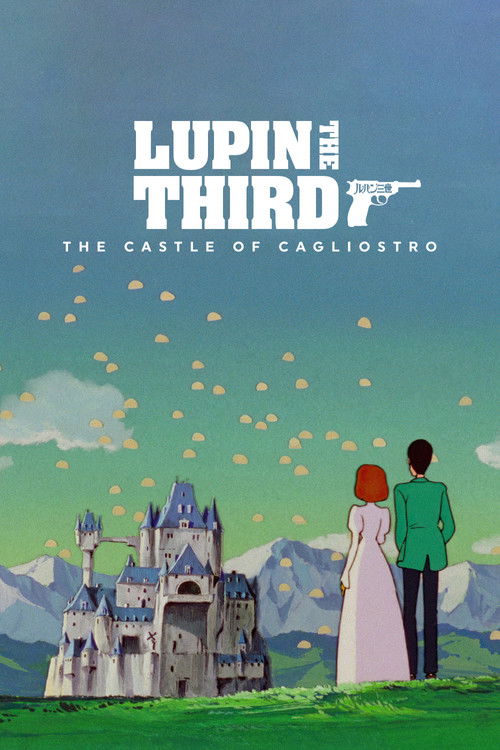
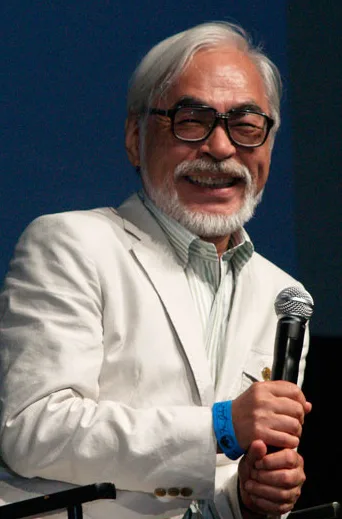
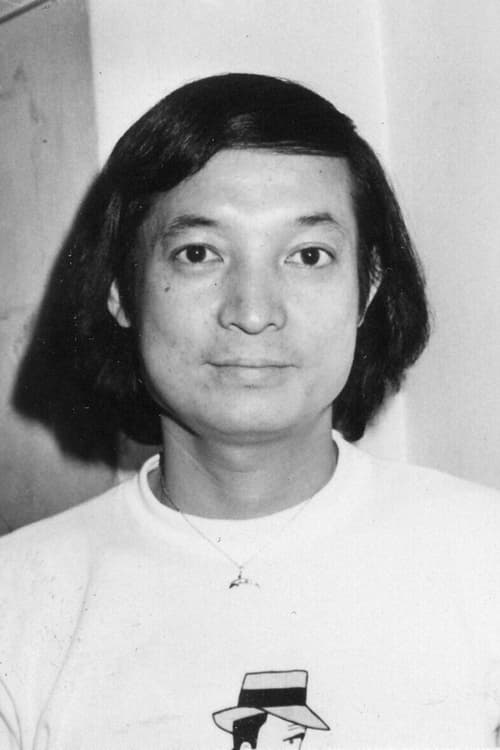
Lupin III began as a Japanese manga series written and illustrated by Monkey Punch. The title character, Lupin III, was inspired by (and is claimed in the series to be the grandson of) Maurice Leblanc's fictional character Arsène Lupin, a gallant and famous outlaw able to outsmart even Sherlock Holmes. Lupin III is a gentleman thief and announces his intentions to steal valuable objects by sending a calling card to the owners of the desired items. The manga's popularity led to two anime series, titled Lupin III and Lupin III Part II. The first film, The Mystery of Mamo, was released on 16 December 1978. The Castle of Cagliostro released a year later following the financial success of that film. This is marked as the first feature-length film to be directed by Hayao Miyazaki, who had previously co-directed episodes of the first Lupin anime series with Isao Takahata. The two directors along with Toshio Suzuki would give birth to Studio Ghibli in 1985. He was also a writer and director of two episodes in the second series under the pseudonym "Telecom", both produced a year after Cagliostro. In works other than Castle of Cagliostro and the series episodes directed by Miyazaki and Takahata, Lupin III is portrayed as a scheming and lecherous thief, sometimes supported by his former enemies Jigen and Goemon. Miyazaki's film conflicts with the typical behaviour and personality of the characters, a change that has been described as Lupin "growing up".
Castle of Cagliostro marked Miyazaki's debut as a theatrical movie director, but he also was a writer, a designer, and a storyboardist on the movie.
The production for the film began in May 1979 with the writing of the story and storyboarding for the film. Miyazaki began by drawing a bird's eye view of the setting before creating the story to completion. After the first draft scenario was returned to Miyazaki without change, he began the storyboards. The story was divided into four parts, but after reaching the third part changes had to be made at the storyboard phase in order to not exceed the decided running time. Animation work began in July while the storyboards were only a quarter complete; Miyazaki had to complete them during the animation production. Production wrapped up at the end of November and the film's premiere on 15 December 1979 was a short seven and a half months from the project's undertaking, with only five months of production time.
The film draws upon many sources of inspiration that were important in the production of the film. McCarthy writes that a research trip was not specifically undertaken for the film, but says Miyazaki's Heidi, Girl of the Alps sketchbooks were useful for the scenery. Miyazaki would cite Italian Mountain Cities and the Tiber Estuary from Kagoshima Publishing as influencing the production of the film. The film included elements that were seen in other Arsène Lupin works, including La Justice d'Arsène Lupin by Boileau-Narcejac, involving the discovery of a tremendous stash of forged franc notes with which World War I–era Germany had planned to destabilize the French economy. Maurice Leblanc's The Green-eyed Lady also featured a secret treasure hidden at the bottom of a lake. The design of mechanisms with secret tunnels in the clock tower, and the adventure plotted around beauty is inspired from Ghost Tower by Edogawa Ranpo. The castle is visually influenced by that of the original 1952 unfinished release of The King and the Mockingbird. Greenberg writes, "Cagliostro also borrowed many narrative and visual elements from Grimault's film: the basic plotline of disrupting the wedding of an evil tyrant and a beautiful innocent girl, the tyrant's luxuriously-decorated palace that is also full of traps, and a gang of henchmen serving the tyrant – both oversized goons and ninja-like assassins..." The staff added personal touches to the film, the most iconic being Lupin's car, the Fiat 500, was the car of head animator Yasuo Ōtsuka. Clarisse's car in the chase scene is a Citroën 2CV, which was Miyazaki's first car.
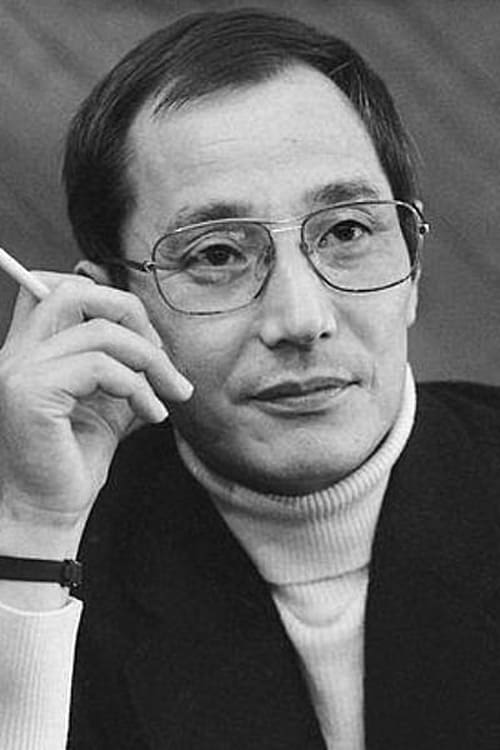
McCarthy describes the summery color palette of the film as matching the scenery and the characters, but notes the use of dark and light colours to emphasize the subplot of the dark and light sides of the Cagliostros. The film's score was composed by series regular Yuji Ohno, and varies between jazz, romance and orchestral music. Notably, it includes a variation of Lupin III's iconic TV theme. The music was performed by You & The Explosion Band, who had previously worked on the second television series. The main vocal song "Fire Treasure" was performed by Bobby (aka Toshie Kihara) and saw release as an LP single. The first release of the soundtrack was Lupin the 3rd The Castle of Cagliostro Original Soundtrack BGM Collection, an album containing extended versions of select cues from the film. It was originally sold on vinyl and cassette tape in 1983, but later saw release on CD in 1985 with several additional prints runs. In 2003, the entire score was finally released on a newly commissioned album entitled Lupin the 3rd: The Castle of Cagliostro – Music File and also contained 13 unused cues.
Castle of Cagliostro's portrayal of the characters was changed to better identify with Miyazaki's concept of a "hero" and to remove a sense of apathy in the story. This resulted in Lupin being a happy-go-lucky and upbeat thief who drives and lives out of a Fiat 500; a sharp contrast to the scheming and lecherous Lupin who drives expensive cars like the Mercedes-Benz SSK because it was "Hitler's favorite". The changes would also impact secondary characters like Jigen and Goemon, changing their serious and cold personalities into friendly and humorous; even the erotic elements involving the femme-fatale Fujiko were dropped.
Fred Patten, who worked at Streamline Pictures was involved in the English adaptation of the film and was involved in the choice of title for the English release,
The Japanese title is Lupin III: Cagliostro no Shiro, which is literally Lupin III: Cagliostro of Castle [sic]. So which would be better in English; Cagliostro Castle, Cagliostro's Castle, or The Castle of Cagliostro? It was my argument that The Castle of Cagliostro sounded the most sinister. Cagliostro Castle is just a castle's name, like Windsor Castle, but the Castle of Cagliostro emphasizes that it is the evil Count's lair!
The film had a production budget of ¥500 million or $2,282,000 (equivalent to $10,000,000 in 2025) at the time, surpassing Space Battleship Yamato (1977) to become the most expensive anime film up until then. Its production budget record was later matched by Miyazaki's Laputa: Castle in the Sky (1986) and then surpassed by Royal Space Force: The Wings of Honnêamise (1987).