Additional reactions
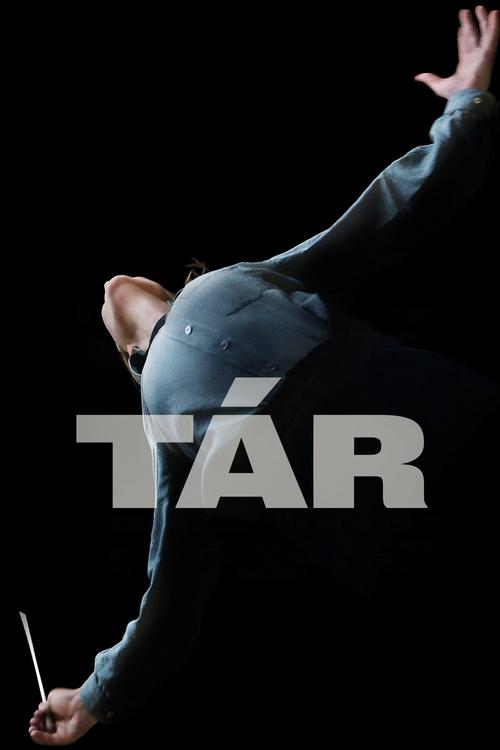
Martin Scorsese presenting Field with the 2022 New York Film Critics Circle Awards Best Film of the Year, said, For so long now, so many of us see films that pretty much let us know where they're going ... I mean, they take us by the hand and, even if it's disturbing at times, sort of comfort us along the way that it will be all okay by the end. Now this is insidious, as one can get lulled into this and ultimately get used to it, leading those of us who've experienced cinema in the past – as much more than that – to become despairing of the future of the art form, especially for younger generations. But that's on dark days. The clouds lifted when I experienced Todd's film, Tár. What you've done, Todd – is that the very fabric of the movie you created doesn't allow this. All the aspects of cinema and the film that you've used, attest to this ... conveyed through a masterful mise-en-scène, as controlled, precise, dangerous, precipitous angles and edges geometrically kind of chiseled into wonderful frame compositions. The limits of the frame itself, and the provocation of measured long takes all reflecting the brutal architecture of her soul – Tár's soul.
Paul Thomas Anderson presenting Field with the Director Medallion at the 75th annual DGA Awards said, Every detail matters in this film. Nothing is not deliberate or full of intention. It's directed with such perfectly controlled mayhem and glee by Todd, it's really hard not to drool as another director. He made a film which for some years was considered a very dirty word, he made an art film. But it's art that's not fussy or pretentious. Just razor-sharp, pitch black, and hilarious. A very focused mirror held up to some of the worst of our human behaviors. It's also a blast.
In an interview with The Sunday Times, conductor Marin Alsop shared her dislike of the film, calling it "anti-woman", saying "I was offended: I was offended as a woman, I was offended as a conductor, I was offended as a lesbian. To have an opportunity to portray a woman in that role and to make her an abuser – for me that was heartbreaking." However The Times own film critic, Kevin Maher, responded to Alsop’s statement by writing that “the cheeky blur between fact and fiction has caused some to declare it a crude and offensive cannibalization of the life and career of the conductor Marin Alsop (not least Alsop herself). This is a dead-end theory, posited only by people who don’t understand film, and is similar to arguing that Phantom Thread should be cancelled because the awful central character played by Daniel Day-Lewis is vaguely similar to the brilliant, brutal perfectionist Charles James (said to be an inspiration for the role). It’s irrelevant to the fiction before you. By making Tár a gay female conductor with seemingly sleazy and abusive work practices, yet who remains ultimately sympathetic, Field is deftly messing with comforting moral certainties. He is, in fact, openly pleading with viewers to hold two opposing ideas in their heads at the same time — Lydia Tár is good. Lydia Tár is bad.”
The Guardian’s Xan Brooks wrote, "I’m not sure I like her…I’m not convinced that we’re meant to… this question of likability, specifically female likability, is clearly a vexed one.” Blanchett herself told BBC Radio 4 that the film was a "meditation on power, and power is genderless", and that while her character shares similarities with Alsop, it is a complete work of fiction, "I don’t think you could have talked about the corrupting nature of power in as nuanced a way as Todd Field has done as a filmmaker if there was a male at the center of it, because we understand so absolutely what that looks like.”
Conductor Alice Farnham thanked Blanchett, Field and the film in The Guardian, for "taking up the baton for female conductors", and for normalising their image. Critic Emily Bootle also defended the film in the i newspaper writing: "This is a film about power [but] sometimes we have to tolerate grey areas." Film critics Mark Kermode and Simon Mayo also disagreed with the interpretation that Tár is "anti-woman."
In an essay for The New Yorker Tavi Gevinson wrote “By creating a character who can’t be written off as another predictably problematic man, Tár draws our attention to how Lydia learned to become one... In lieu of asking “Can you separate the art from the artist?” or “But what will happen to these poor, bad men?,” Tár asks, “What does power look like, feel like, not only within an institution but within an individual psyche?
Writing for Time, Stephanie Zacharek went further: "Tár doesn't offer anything as comfortable as redemption, and it asks us to fall in love, at least a little, with a tyrant. ... Lydia Tár ... knows that the power of a question is greater than that of a slogan."
Music professor Ian Pace discussed the issue in The Conversation: "It would be rash to assume that such a figure could never act in a predatory and exploitative manner. This is not just an issue of identity, but power and the opportunities it provides for the reckless." Conductor Don Baton (a pen name) in City Journal agreed.
Film critic John McDonald for the Australian Financial Review wrote: "Had it been a male conductor, the story would have been a cliché. Had it been a celebration of female power, it would have been no less superficial ... Field has taken the 'Maestro myth' that portrays the conductor as a kind of hypermale and shown that the same issues may apply to a woman." Several other conductors and musicians wrote in defense of the film.
Yo Yo Ma told indiewire "Todd has created such a striking film. Cate Blanchett’s Lydia Tár demands that we wrestle with two of art’s most difficult questions: what gives art its power and what role does power play in art?"
Jonathan Franzen praised the film in Daily Variety saying, "Todd's grammar of screenwriting is closer to a novel's than to a play's. What makes Tár a great work of art is that there's not a single generic moment to be found in it."
Zadie Smith, in an essay for The New York Review of Books, commended Cate Blanchett's performance and praised Field’s direction as “worthy of Kubrick.” The classroom scene at the Juilliard School was described by A. O. Scott as "a mini-course in the dos and don'ts of contemporary pedagogy."
Critic Amanda Hess wrote in The New York Times, "The online cancellation of an artistic giant can be a tedious subject, but in Tár, it acquires sneaky complications ... Tár offers up a work into which we can sublimate our own Schadenfreude and sympathy for abusers. Thanks to Blanchett's luminous performance and Field's puzzle-box storytelling, we are freed to obsess."
Film critic Howie Movshovitz (NPR), critic and essayist Philippa Snow (ArtReview), and Guillaume Orignac (Cahiers du Cinéma) drew attention to the film's creative open-endedness, allowing audiences to draw their own conclusions about its significance and meaning, with Murielle Joudet (Le Monde) choosing it as her favorite film of 2023 writing, “This year, it was a rare pleasure to leave the cinema, having suddenly forgotten to judge a character who was most certainly guilty. Field walks a tightrope while managing to remain invisible. Tár is a masterpiece. It poetically captures the spirit of our time and draws from it a new way of storytelling. Above all, it leaves viewers alone, free to make their own opinions and to lose their bearings without knowing what the next scene will be. This type of wandering is a gift that has become too rare in cinema.”
The New York Times columnist Michelle Goldberg argued that Tár is "a film about cancel culture, making it the rare piece of art that looks squarely at this social phenomenon that has roiled so many of America's meaning-making institutions ... Tár demonstrates that all this flux and uncertainty is very fertile territory for art. Hopefully its success – many are predicting it will win a Best Picture Oscar – will encourage others to take on similarly thorny and unsettled issues. Hysteria about cancel culture can encourage artistic timidity by overstating the cost of probing taboos. In truth, there's a hunger out there for work that takes the strangeness of this time and turns it into something that transcends polemic."
Austrian musicologist and anthropologist Bernd Brabec alleged that part of Lydia Tár's biography read aloud by Adam Gopnik mines his CV. In response, Brabec wrote an open letter to director Todd Field. In the letter, Brabec takes offence at the film mirroring particulars of his academic background and criticizes what he characterized as unfortunately minimal and shallow treatment of the Shipibo-Konibo people in the plot of the film. However, Amanda M. Smith, associate professor of Latin American and Culture at the University of California wrote in ReVista, the Harvard Review of Latin America, "Shipibo-Konibo cosmovision is not merely decorative in the film. It organizes the narrative's internal conflicts and reveals Tár as a tale of shamanic justice in a world where the Global North continues to take from the Global South."
Writing in Art Forum, Ara Osterweil took issue with her colleague Amy Taubin’s critique of the film as being “carelessly racist” in depicting Tár’s fall from grace in the "filthy streets and decaying buildings of an unnamed Southeast Asian country.”
Osterweill states “Amy Taubin has denounced the film’s Orientalist reduction of Asia to the equivalent of nowhere. Yet I would like to defend Tár’s problematic ending as self-consciously racist and deliberately ridiculous. Radically departing from the style of the rest of the film. By racially highlighting the power inequities that underlie the composer’s erotic economy, the film shows that Tár’s supposedly rarefied communion with other geniuses is as predictable as the behavior of the politically correct, moderately talented “robots” she despises. It is a powerful moment of recognition for viewers—and of self-recognition for the character. Only by camping his film’s style to the point of parody can Field suggest that the ritual excommunications of cancel culture may be as exaggerated as the generic fantasies enacted by Tár’s gamer audience. While this unnamed Asian country is indeed stereotyped as exotic, the Western-centric composer confirms her valuation of music above all by seizing her new podium with a seriousness befitting the most esteemed Occidental stage.”
Because the film was released in the United Kingdom in January 2023, Tár was included in Sight and Sound's Best Films of 2023, and sat atop the polls of New Statesman and Time Out, with Phil de Semlyen of Time Out writing "Blanchett's Oscar-nominated performance has rightly earned the lion's share of plaudits, but the superb acting is buoyed by Field's subtly off-kilter visual style, lending the 'ripped from the headlines' narrative a hint of Kubrickian uncanniness." The Guardian also chose Tár as best film of the year, with critic Wendy Ide writing, “Todd Field's creation of the magnificent, monstrous fictional conductor Lydia Tár, inhabited down to the last shred of cruelty and ambition by the remarkable Cate Blanchett, is exceptional: a savage, slippery account of rampant narcissism brought down to earth.” In April 2024 the historian Simon Heffer wrote in The Sunday Telegraph that Tár is "the finest American film of the century".