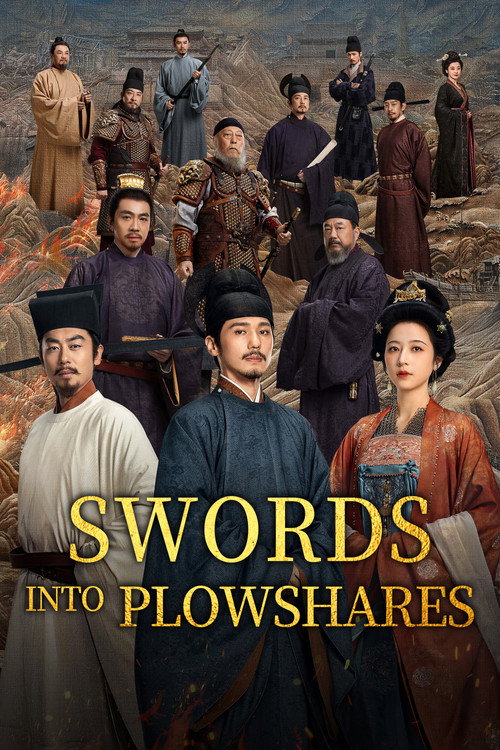
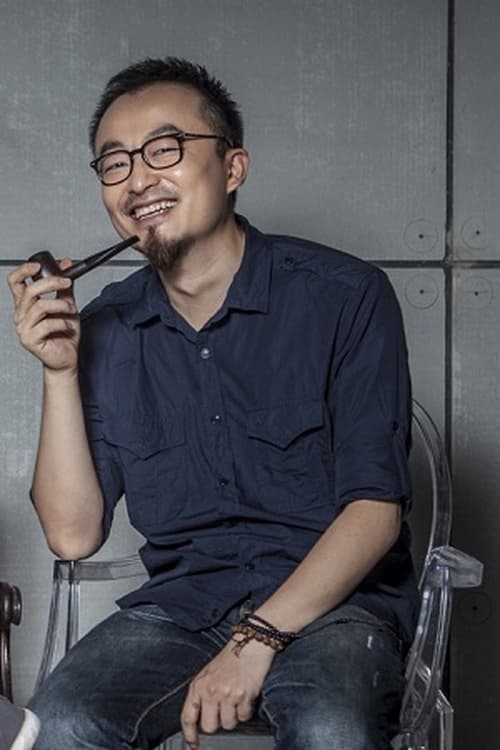



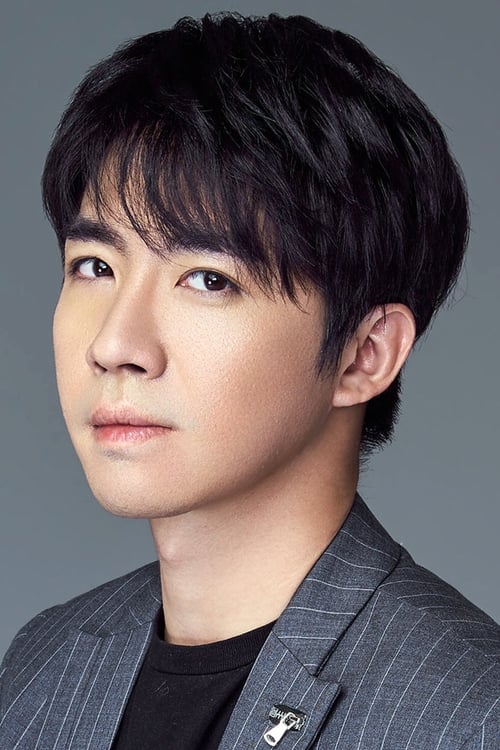
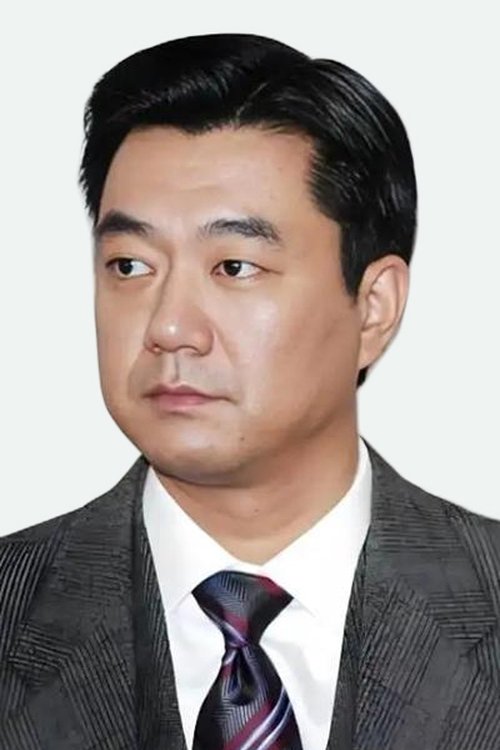
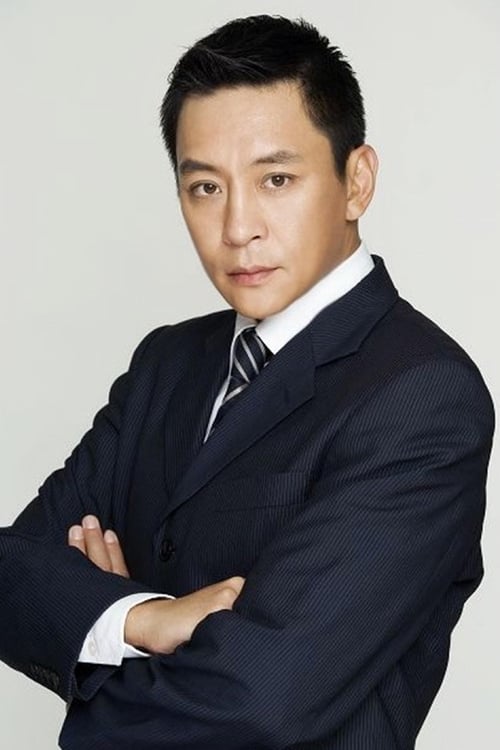
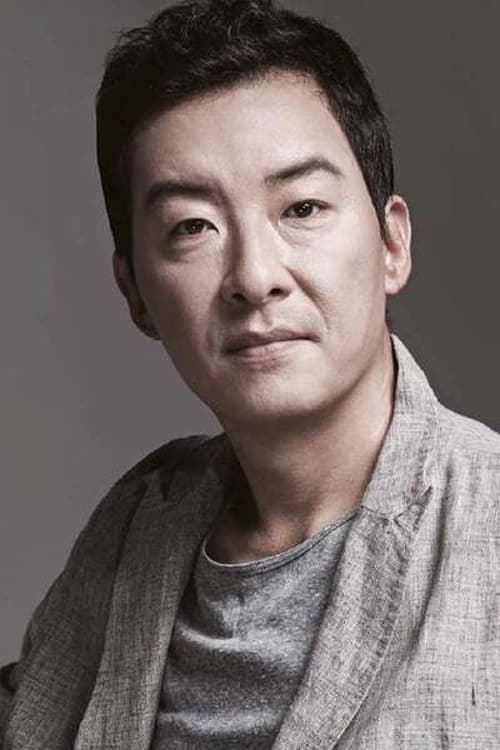
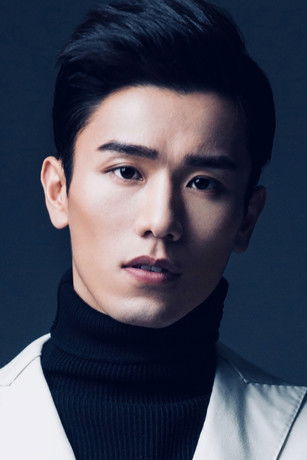
Swords Into Plowshares (Chinese: 太平年; pinyin: Tàipíng Nián) is a 2026 Chinese historical television series directed by Yang Lei and Lu Beike, written by Dong Zhe, and starring Bai Yu, Zhou Yutong, Zhu Yawen, Yu Haoming, Dong Yong and Ni Dahong. Produced by Huace Film & TV, the 48-episode drama depicts the final years of the Five Dynasties and Ten Kingdoms period and the early Song dynasty, focusing on Qian Hongchu, the last king of Wuyue, and his historic decision to peacefully surrender his kingdom to the Song in 978 CE—a rare instance of bloodless national unification in Chinese history.
The series premiered on CCTV-1 on January 23, 2026, airing daily at 20:00 China Standard Time, with simultaneous streaming on iQiyi, Mango TV, and Tencent Video.
Contents
Synopsis
Set against the tumultuous final decades of the Five Dynasties and Ten Kingdoms period, The series chronicles the transformative journey of Qian Hongchu, the ninth prince of the Wuyue royal family, from a sheltered prince to a visionary ruler who achieved China's first peaceful unification.
Following the death of King Qian Yuanguan, Wuyue faces internal corruption and external threats. Five years later, nineteen-year-old Prince Qian Hongchu volunteers for a perilous mission to the Later Jin court in Bianliang. There, he witnesses the humiliation of Emperor Shi Chonggui before Khitan invaders and encounters two men who will shape his destiny: the brilliant young nobleman Guo Rong and the charismatic commander Zhao Kuangyin. Most fatefully, he meets chancellor Sang Weihan, the architect of the controversial cession of the Sixteen Prefectures, and the legendary statesman Feng Dao, who has served eleven emperors across four dynasties. In a haunting midnight conversation, Sang—awaiting execution—delivers a profound meditation on moral ambiguity to the young prince: "Right and wrong are immutable. Even a thousand years hence, they will remain unchanged". Meanwhile, Feng imparts his philosophy of pragmatic statecraft—prioritizing cultural preservation and civilian welfare over rigid dynastic loyalty—with the counsel that "one just only needs to do good deeds, do not worry about the future". These encounters leave an indelible mark on Qian Hongchu's political philosophy.
Returning to Wuyue transformed, Qian Hongchu abandons his leisurely existence to confront court corruption, eliminating the treacherous Cheng Zhaoyue and suppressing powerful clans. He forms a deep bond with Sun Taizhen, daughter of a maritime magnate, whose strategic brilliance matches his own. When succession crises claim his brothers Qian Hongzuo and Qian Hongzong, Qian Hongchu reluctantly assumes the throne.
The narrative parallels Wuyue's evolution with the chaotic transition of central plains regimes. As the Later Jin collapses, Later Han briefly flickers, and Later Zhou emerges under Guo Wei's founding, Qian Hongchu carefully navigates shifting allegiances. He maintains Wuyue's autonomy while acknowledging nominal suzerainty, a delicate balance requiring constant diplomatic finesse, drawing upon the lessons of flexibility and pragmatic governance learned from his formative journey north.
The death of Later Zhou's visionary Emperor Shizong Guo Rong triggers another upheaval. Zhao Kuangyin's Chenqiao Mutiny establishes the Song Dynasty, setting the stage for final reunification. As Song armies systematically conquer rival states, Qian Chu (renamed from Qian Hongchu) faces an existential dilemma. His chancellor Shen Yin urges resistance to preserve dynastic honor, while Cui Renji argues pragmatic surrender is the only path to "preserve the clan and save the people".
Cast and characters
Main characters
Bai Yu as Qian Hongchu/Qian Chu (錢弘俶/錢俶), the ninth prince and last king of Wuyue who ascends through palace intrigue at nineteen, navigates three decades of precarious sovereignty between contending empires, and ultimately achieves the historic "surrender of territory to Song", preserving his realm's prosperity and five hundred fifty thousand households through the courage to relinquish power for peace.
Zhou Yutong as Sun Taizhen (孫太真), Qian Hongchu's consort. She evolves from an innocent young woman into a wise and supportive queen who understands and aids her husband's historic decision.
Zhu Yawen as Zhao Kuangyin (趙匡胤), courtesy name Yuanlang(元朗), who rises from a Later Zhou general to become Emperor Taizu of Song, founder of the Song dynasty. A man of great talent and vision, he seeks unification through both military strength and peaceful means. Seizing the throne through the Chenqiao Mutiny, he ends the chaotic Five Dynasties period and establishes the Song Dynasty. After ascending, he peacefully dissolves the power of military aristocrats through the "Dismissing Generals with a Cup of Wine", consolidating a centralized system. Toward Qian Chu of Wuyue, he lays the foundation for peaceful unification.
Yu Haoming as Chai Rong/Guo Rong (柴榮/郭榮), courtesy name Jungui(君貴), Emperor Shizong of Later Zhou, Zhao Kuangyin's lord and Qian Hongchu's friend. An emperor determined to end the chaos of the Five Dynasties, he dies prematurely, leaving his vision to his successors—Zhao Kuangyin.
Supporting characters
Wuyue
Ni Dahong as Hu Jinsi (胡進思), a powerful three-generation statesman who served from the founding of Wuyue under Qian Liu through five successive kings, ultimately orchestrating the deposition of Qian Hongzong and enthronement of Qian Hongchu.
Gao Yuqing as Hu Jing (胡璟), the astute and deliberately understated son of the powerful minister Hu Jinsi, who feigns indifference to political advancement while serving as Minister of Works, ultimately preserving his clan through strategic withdrawal.
Bao Jianfeng as Shuiqiu Zhaoquan (水丘昭券), a revered Wuyue statesman celebrated as the "Foremost Gentleman of Wuyue", who serves as both mentor and father figure to Qian Hongchu while navigating the treacherous political landscape, ultimately meeting a tragic end when his entire family is slaughtered in a coup orchestrated by Hu Jinsi.
You Yongzhi as Qian Yuanguan (錢元瓘), the second king of Wuyue and the father of the Qian princes, who dies from shock-induced madness after arsonists destroy the royal treasury, his original wish to pass the throne to his third son Qian Hongyou thwarted by Hu Jinsi's insistence on legitimate bloodline, resulting in the succession of his sixth son Qian Hongzuo instead.
Guo Chong as Qian Hongjun (錢弘俊), the eldest adopted son of the Wuyue royal family who serves as Pacification Commissioner of the Eastern Prefecture before withdrawing from court affairs to return to his biological father's household, ultimately supporting his younger brother Qian Hongchu's historic decision to peacefully surrender the kingdom to the Song Dynasty.
Liu Chang as Qian Hongyou/Sun Ben (錢弘侑/孫本), the illegitimate third son of Wuyue King Qian Yuanguan and Lady Yu, elder half-brother to Qian Hongchu and Sun Taizhen, who is deposed to commoner status and returns to Huanglong Island with his birth name Sun Ben, after a failed succession struggle.
Wu Haochen as Qian Hongzuo (錢弘佐), the sixth prince and third king of Wuyue, and the elder brother of Qian Hongzong and Qian Hongchu who ascended the throne at age 14 and ruled for seven years until his death at 20.
Production
Development
The series was conceived over a decade by Huace Film & TV, with five years dedicated to script development. The production was supported by the 2024 Cultural Industry Development Special Fund of the Publicity Department of the Chinese Communist Party and designated as a major historical drama by the National Radio and Television Administration.
The series represents a rare television portrayal of the Five Dynasties and Ten Kingdoms period, a relatively underrepresented era in Chinese historical dramas. The production team emphasized the contemporary relevance of the "peaceful unification" theme, drawing parallels to modern international relations while maintaining historical accuracy.
Casting
To immerse himself in the role, Bai Yu has been studying the history of the Five Dynasties and Ten Kingdoms period for months before filming, rarely leaving his home to focus entirely on script analysis; designed nuanced characterizations for each stage of Qian Hongchu's life, from youthful naivety to mature kingship, demonstrating precise control over the 50-year age span of the role.
Zhu Yawen stationed himself at the National Museum of Classic Books for six months before filming, meticulously reading the History of Song, Old History of the Five Dynasties, and Xu Zizhi Tongjian Changbian; consulted two historians professional in Song Dynasty history in Kaifeng and Luoyang, repeatedly refining Zhao Kuangyin's vocal transitions from sharp to restrained and his physical bearing from aggressive to profound; performed all dangerous stunts without safety doubles, including enduring real whip strikes and 47-minute continuous filming in industrial-grade sandstorms.
Filming
Principal photography began on September 28, 2024, at Hengdian World Studios in Zhejiang Province. Filming locations spanned multiple sites across Zhejiang and Gansu provinces, including:
Hengdian World Studios (primary location)
Dunhuang, Gansu
Shaoxing, Zhejiang
Taizhou, Zhejiang
Hangzhou (West Lake, Lin'an District, Binjiang District)
Wenzhou (Cangnan County), Zhejiang
Quzhou, Zhejiang
The production utilized the Qian Wang Temple (錢王祠) in Lin'an (modern Hangzhou), the ancestral home of the Wuyue royal family, as an authentic filming location.
Technical specifications
The series was shot in 8K Ultra High Definition using RED 8K cameras and Zeiss Supreme Prime (SP) lenses, representing a technical milestone for Chinese television production. The production team constructed over 550 sets totaling 38,000 square meters and created more than 8,000 costumes. Costume details included the recreation of Tang dynasty "plant dyeing" techniques, and lead actors' wigs were hand-woven with 120 needles per square centimeter.
Audio-visual technology followed the National Radio and Television Administration's 2024 standards, employing domestic HDR Vivid and Audio Vivid technologies for enhanced viewing experience.
Reception
Public response
The series received generally positive reviews for its historical accuracy, production values, and performances. Critics praised the drama's nuanced portrayal of a complex historical period and its emphasis on peaceful unification over military conquest.It also sparked widespread public interest in the historical era it depicts, prompting renewed discussions among viewers and scholars about the political choices and cultural legacy of that period.
Professor Yin Hong, Vice Chairman of the China Film Association and professor at Tsinghua University, commented: "The series is not merely a story of dynastic transition, but a narrative that highlights the themes of unification and peace. Qian Hongchu's choice represents a historic decision that prioritized the welfare of the people over personal power".
Beyond its artistic reception, the drama also prompted cross-regional media discussion in Hong Kong and Taiwan. Some commentators interpreted the depiction of Qian Hongchu's peaceful submission to the Song dynasty as carrying contemporary resonance for Cross-strait relations. Media reports noted debate over whether the series' portrayal of "peaceful unification" could be understood as a modern political allegory. Such interpretations were presented as commentary rather than as an explicitly stated intention of the production team, reflecting broader sensitivities surrounding themes of unity and sovereignty in the region.
The 8K cinematography and detailed production design were particularly noted, with reviewers highlighting the visual clarity that captured minute details such as blood droplets and fabric textures. The ensemble cast, combining rising stars like Bai Yu and Zhou Yutong with veteran actors including Ni Dahong and Dong Yong, was praised for bringing depth to the historical figures.
Ratings
Highest ratings are marked in red, lowest ratings are marked in blue