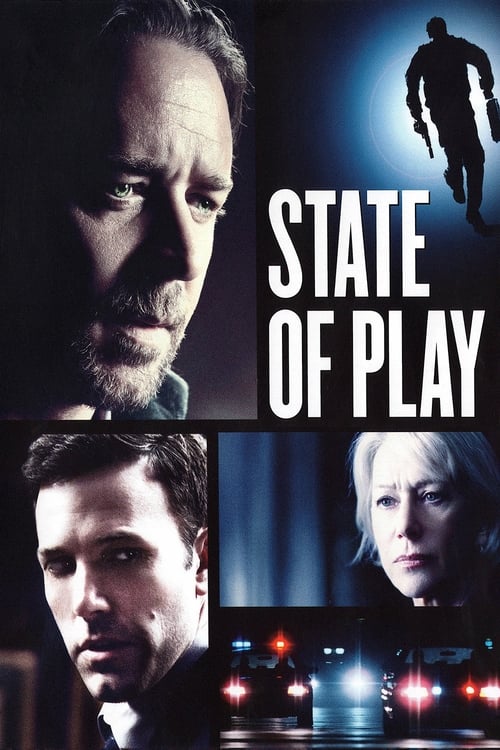




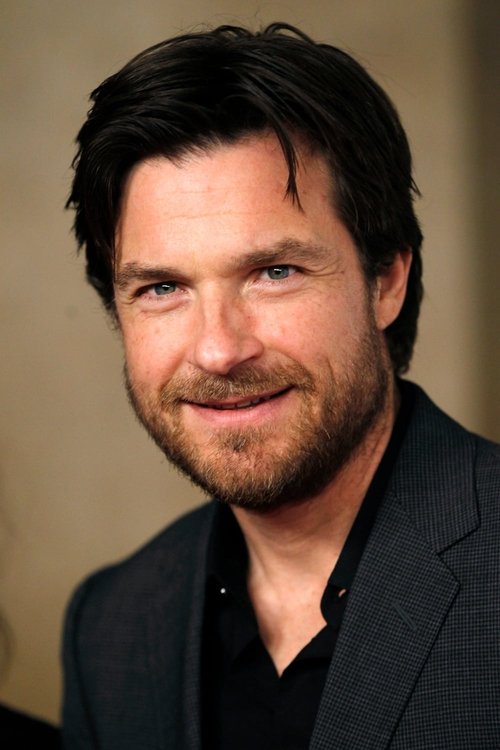


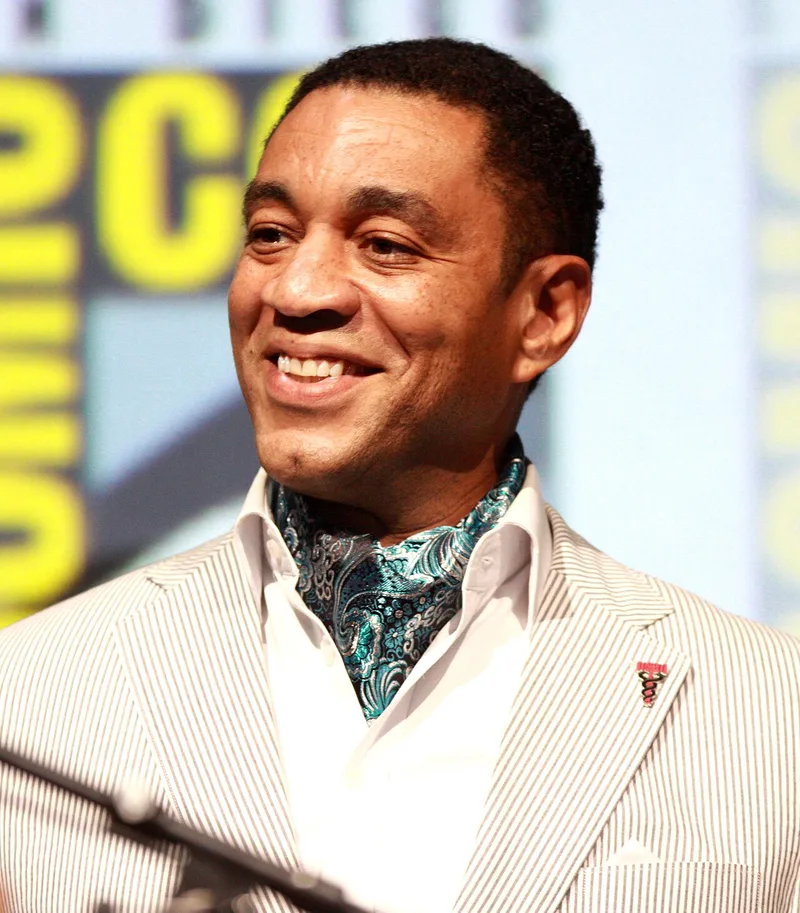

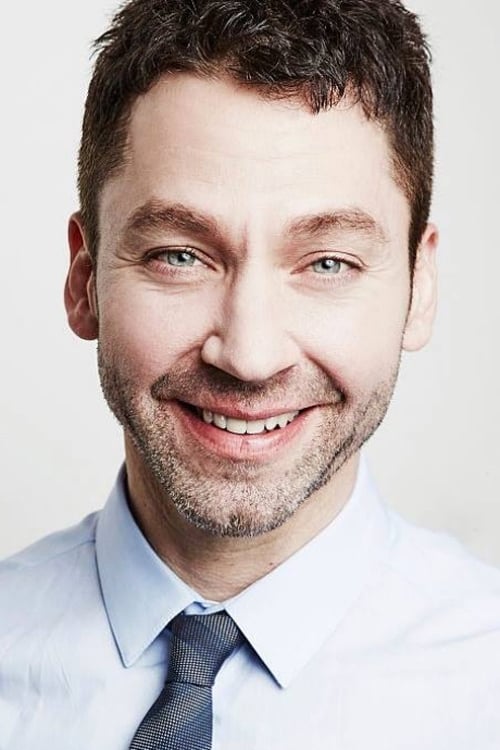

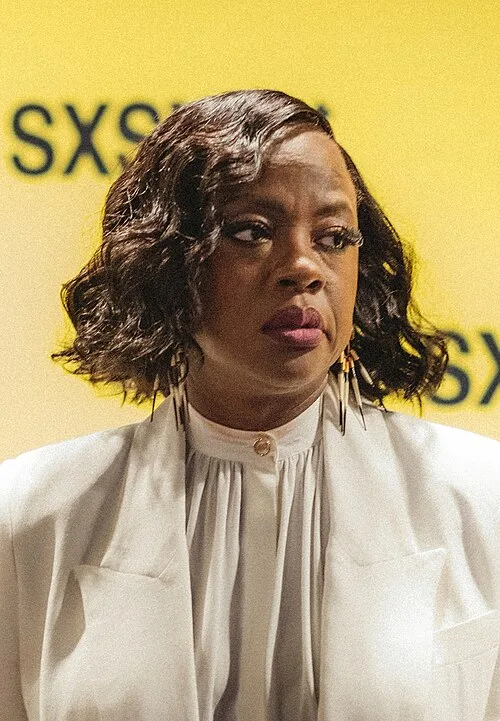
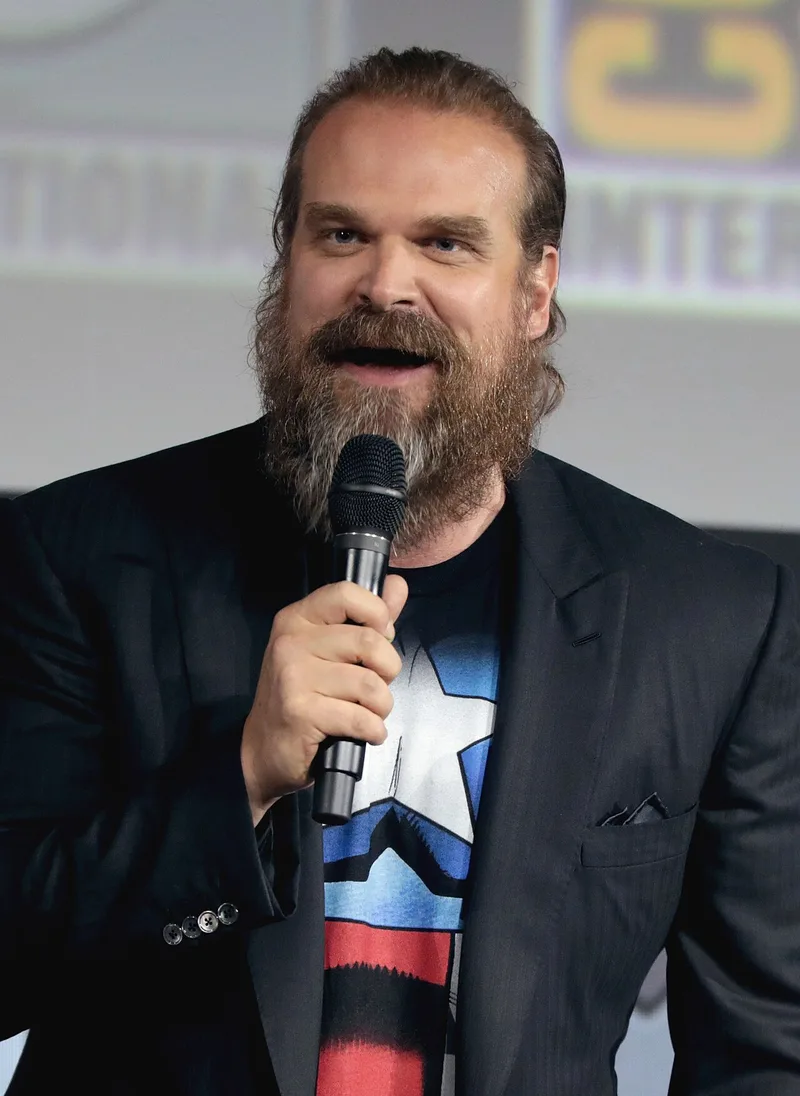




State of Play is a 2009 political thriller film directed by Kevin Macdonald. It is based on the 2003 British television serial of the same name. The film tells of journalist Cal McAffrey's (Russell Crowe) probe into the suspicious death of the assistant and mistress of Congressman Stephen Collins (Ben Affleck). The supporting cast includes Rachel McAdams, Helen Mirren, Jason Bateman, Robin Wright, and Jeff Daniels.
Macdonald said that State of Play is influenced by the films of the 1970s. He explores the privatization of American Homeland Security and, to a minor extent, journalistic independence, along with the relationship between politicians and the press. Released in North America on April 17, 2009, by Universal Pictures, the film received generally positive reviews from critics and grossed $88 million worldwide.
Contents
Plot
In Washington, D.C., a man with a metal briefcase kills fleeing thief Deshaun Stagg. A passing witness is shot and left in a coma. The next morning, Congressional aide Sonia Baker is killed by a Washington Metro train.
Sonia was chief researcher for Congressman Stephen Collins, as the chair of the Congressional committee investigating private defense contractors, including one named PointCorp. Stephen reveals to Cal McAffrey, senior reporter of the Washington Globe newspaper, that he had been having an affair with Sonia and does not believe that she was suicidal.
News blogger Della Frye, Cal's new recruit, reviews the Metro CCTV footage, which proves fruitless. Cal eventually finds Sonia's number in Deshaun's phone. A homeless teenage girl named Mandi seeks out Cal to sell him items from a bag stolen by Deshaun; they had been close friends. These items include covert photographs of Sonia meeting a well-dressed man and a gun with handmade hollow point bullets. While Cal meets up with Stephen's wife, Anne — with whom he had previously had an affair — he sends Della to the hospital, where the witness is coming out of his coma. However, a sniper kills the witness. Della realizes that she saw the killer at the hospital and in the Metro footage.
Stephen confirms that PointCorp is secretly the power behind other contractors, thus seeking a virtual monopoly on foreign and domestic government defense and security contracts worth hundreds of billions of dollars. If Cal can prove that PointCorp had Sonia killed, Stephen will go public with his findings.
A PointCorp insider gives Cal a contact address, where he encounters the assassin, who shoots at him before fleeing. Detective Donald Bell informs Cal that Mandi has been found murdered. Sonia's flatmate, Rhonda Silver, identifies the well-dressed man as Dominic Foy, a PR executive at a subsidiary of PointCorp. Rhonda also says that she had a threesome with Sonia and Stephen and that the latter paid off Sonia's $40,000 of debt. Believing Rhonda to be lying, Cal resists Della's urge to publish.
Cal buttonholes Dominic at a diner and convinces him that he is in danger. His best protection is to make a statement on the record. Dominic reveals that Sonia was being paid $26,000 a month to spy on Stephen for PointCorp, but had fallen in love and had become pregnant with Stephen's child. Sonia was killed when she refused to continue spying. Cal plays the tape of the interview to Stephen, who lashes out at Cal for not telling him in person about the pregnancy. He accuses Cal of caring about his story above their friendship and storms off. That evening, Cal confronts Congressman George Fergus, the majority leader who had mentored Stephen and recommended Sonia to him. Cal reveals that he plans to run a story about Fergus' link with PointCorp and his undermining of Stephen's investigation.
Cast
For the movie adaptation, certain names of characters were changed:
Della's surname was changed from "Smith" to "Frye".
Cameron's surname was changed from "Foster" to "Lynne," and the character's gender was changed.
Andrew's surname was changed from "Wilson" to "Pell".
Det. Bell's first name was changed from "William" to "Donald".
Production
Development
The television miniseries was written by Paul Abbott and aired on British television channel BBC One in May and June 2003 and on BBC America in April 2004. Abbott was initially reluctant to sell the film rights to State of Play, fearing a compressed version of his miniseries would be unworkable, but in May 2004 he accepted a seven-figure Paramount Pictures-backed bid led by producer Scott Rudin. The bid prevailed over an offer from Andrew Hauptman's Mission Pictures (backed by Warner Bros.), but the deal fell through before completion. After a second bidding war, Mission acquired the rights for Universal Pictures in December 2004.
Director Kevin Macdonald had long been attached to the project; however, an early report suggested screenwriter Matthew Michael Carnahan was set to make the film his directorial debut. Macdonald was a fan of the original miniseries, and said it would be a "hard act to follow".
He said the blend of fiction and the topical subjects of journalism and politics attracted him to the project, adding that he wanted to examine how American and European societies learn what is happening in the world and to what degree newspapers and the nightly news could be trusted. He said that in an age when people read fewer newspapers, he wanted to explore the necessity for reliable information and the threat to the journalistic profession from collusion between reporters and politicians, and that the film would "[ask] questions of how independent the press is, how much real investigating is conducted, and how much is taken on faith from lobbyists or PR sheets." Macdonald cited the films of the 1970s, All the President's Men in particular, as major influences, saying that while he was scared of comparisons with the film account of the Watergate scandal, State of Play would primarily be a piece of entertainment.
According to Carnahan, the story's core issue (and the main factor behind his desire to write the adaptation) was the question it raised about whether a person would be justified in doing "a pretty awful thing" if performing great deeds in other areas of their life. Carnahan began working on revisions to his script with Macdonald, but the process was disrupted when Carnahan's daughter fell ill. When he chose to concentrate his time on his family, the task was handed to screenwriter Tony Gilroy, who performed a small rewrite based upon Carnahan's notes. He is known for the Bourne film series. Further rewrites were carried out by Peter Morgan, screenwriter of The Queen and writer/director Billy Ray, associated with Shattered Glass.
Casting
Brad Pitt had a long association with the main role. He was initially attracted to the project after watching Macdonald's documentary Touching the Void (2003), and had enjoyed the director's film The Last King of Scotland (2006). Macdonald had also been working with Pitt's production company Plan B Entertainment on a potential future project.
Pitt officially committed to star in State of Play in August 2007 after a Tony Gilroy script rewrite was completed. He visited the newsroom of The Washington Post with Macdonald in September 2007 to research the role, spending four hours "talking shop" with political and investigative reporters. But one week before filming was to begin in November 2007, he left the production.
Producer Eric Fellner attempted to convince Pitt to remain in the film, but Pitt disagreed with changes that the studio had made to the script since he originally agreed to star. Talent agency CAA (which represents Pitt) maintained that he never signed off on the changes; Macdonald delayed filming by a week to perform a scene-by-scene review of the script with Pitt; by the end, the director told the actor "I don't think we want to make the same film." When Pitt decided to drop out of the film, he called the director to tell him. Pitt preferred a version closer to the original Carnahan draft and wanted to postpone filming until after the resolution of the 2007–2008 Writers Guild of America strike, which would have enabled a further rewrite. The studio preferred to press on with production; initially, it said it intended to sue Pitt for reneging on his "pay or play" deal, which would have earned him $20 million. Settlement talks later led to a thawing of relations between the parties. Pitt later said of the situation: "I had definite beliefs of what [the film] should be, and the director had his definite beliefs [and] we got up against this writers' strike where we couldn't fuse the two."
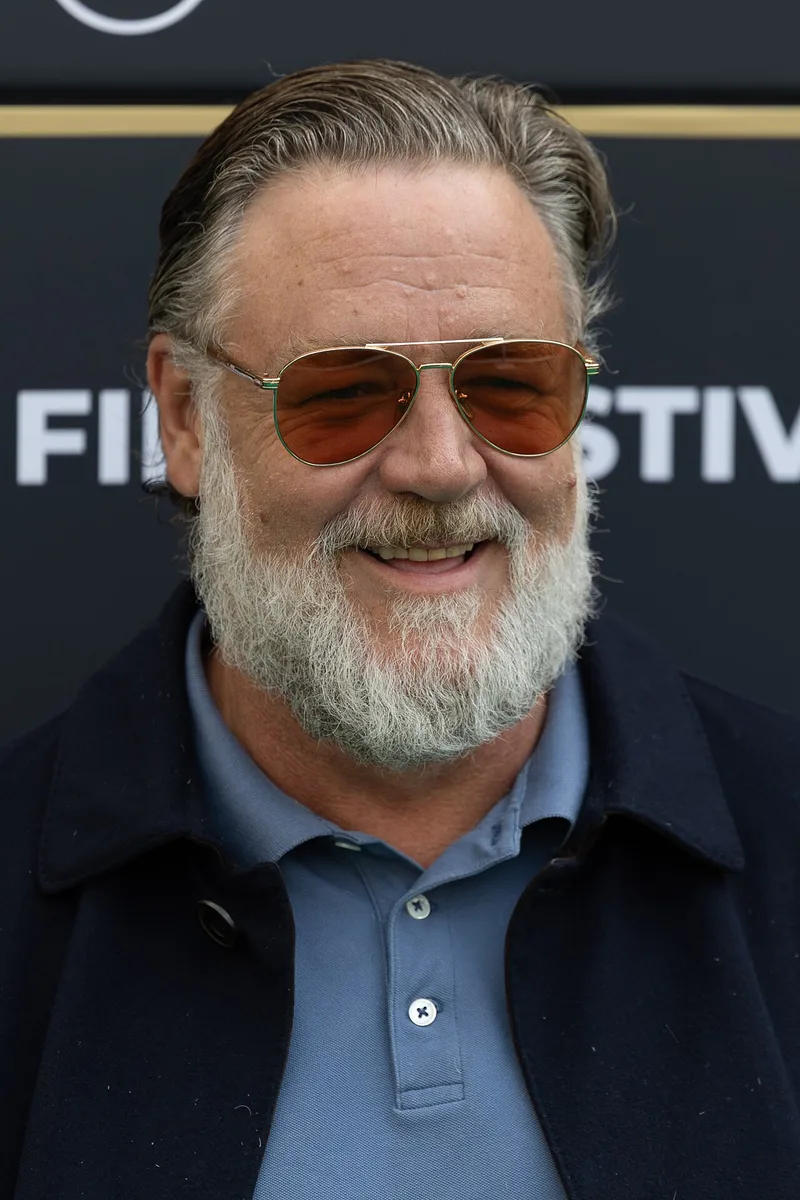
Macdonald traveled to Australia to court Crowe's involvement, which averted the film's abandonment after Pitt left. Crowe had to negotiate with the studio over shooting dates to avoid a conflict with Nottingham (later renamed Robin Hood), which he was due to star in for director Ridley Scott in March 2008. Crowe said jumping immediately into the part was similar to immediately taking roles as a jobbing young actor. He had not seen the series and was unsure about taking the role, as he could not compare a six-hour telling of the story to a two-hour adaption. The majority of Crowe's three hours per day in hair and makeup preparation was spent hiding his "extremely long" hair, which he grew for his title role in Robin Hood. During filming in Washington, D.C., Crowe acquired an education in journalism from The Washington Post's Metro editor, R.B. Brenner. Universal president of production Donna Langley said Crowe's performance was a naturalistic one, and claimed State of Play was a different film than the one that would have been made had Pitt remained.
Filming
Principal photography took place between January 11, 2008, and April 6, 2008. Filming was originally scheduled to start in November 2007, but was postponed due to Brad Pitt's unexpected departure from the production. Eric Fellner indicated that the film was close to being abandoned and credited Universal's chairman and co-chairman (Marc Shmuger and David Linde) with seeing the film to production.
The first eight weeks of filming took place in Los Angeles, which accounted for the majority of the shooting schedule. A newsroom set was built to be the fictional Washington Globe newspaper operations hub. Costume designer Jacqueline West indicated that she looked to the newsroom of The Washington Post for inspiration and used photos of The Baltimore Sun's newsroom to help her develop the journalists' looks.
The production moved to Washington, D.C., for five weeks of location filming toward the end of the shoot, commencing on March 6, 2008. More than a third of State of Play was shot in Washington, D.C., with filming taking place throughout the city. The filmmakers estimated that State of Play may have set a record for the longest studio shoot in the city. Locations included the neighborhoods of Adams Morgan, Shaw, and Mount Pleasant. Scenes set on Mount Pleasant Street were also filmed at the Los Angeles studio, where a full replica of the strip's facade was built. In Georgetown, menswear store The District Line was transformed into household goods store for the shooting of a chase scene for the film's opening sequence.
Filming took place on various streets in Washington, D.C., including the U Street Corridor, and at "practically every major landmark", including outside the headquarters of the World Bank on Pennsylvania Avenue, around Capitol Hill, at the Supreme Court building, outside the Library of Congress, and at the Washington Monument. Other locations included landmark restaurant Ben's Chili Bowl, where restaurant workers were employed as extras, and the Maine Avenue Fish Market. The Americana Hotel in Crystal City was also used for the scenes in which McAffrey interrogates Dominic Foy. The exterior of the Department of Housing and Urban Development building was used to double as a hospital entrance. In preparation for filming, eighteen two-foot by three-foot photographs of Secretary Alphonso Jackson were removed from the entrance. The production's "working week" was Wednesday to Sunday, because several of the government buildings featured could not be used for filming during regular work days. The Harbour Square Owners Cooperative complex was used as the home of Affleck's character.
Visual effects
Director of photography Rodrigo Prieto indicated that the film was shot in two distinct visual styles: scenes featuring the media were shot in the anamorphic format on 35mm film, while scenes focusing on the world of politics were shot in high-definition video with the Panavision Genesis digital video camera. Hand-held cameras have been used. For color management, Prieto employed Gamma & Density Company's 3cP color management and correction software, using the American Society of Cinematographers' Color Decision List to keep color consistent throughout shooting, dailies, post and digital intermediate finishing process. The visual effects were handled by Rhythm & Hues Studios (R&H).
Music
The film score is written by Alex Heffes, who previously worked with MacDonald in the documentaries One Day in September (1999), Touching the Void (2003) and The Last King of Scotland (2007) and produced by Grammy Award-winning record producer Flood (aka Mark Ellis).
Release
State of Play was released in the US on April 17, 2009, and in the UK on April 22, 2009, by Universal Pictures.
Reception
Box office
State of Play has grossed $37 million domestically, and $50 million in other territories, for a worldwide total of $88 million.
Critical response
On review aggregator Rotten Tomatoes, State of Play holds an approval rating of 84% based on 213 reviews, with an average rating of 7/10. The site's critical consensus reads: "A taut, well-acted political thriller, State of Play overcomes some unsubtle plot twists with an intelligent script and swift direction." Metacritic, another review aggregator, assigned the film a weighted average score of 64 out of 100 based on 36 critics, indicating "generally favorable reviews". Audiences polled by CinemaScore gave the film an average grade of "A−" on an A+ to F scale.
Philip Kemp from Total Film called it "a twisty substantial thriller" and said, "It's not as exceptional as its source but the changes implemented mostly enhance rather than harm the story." Roger Ebert of the Chicago Sun Times described the film as "a smart ingenious thriller", and he went on to say, "There are many other surprises in the film, which genuinely fooled me a couple of times, and maintains a certain degree of credibility for a thriller".