Cars
Stunt cars, camera cars, tow cars, dolly cars, and cars used for "beauty" shots varied in model year from 1974 to 1976 Ford Torinos, since the body style of the Gran Torino was unchanged.
Originally, Blinn was to have Starsky drive a Chevrolet Camaro convertible because he fondly remembered a green and white one that he owned. However, when production started on the pilot episode, Ford Motor Company's Studio-TV Car Loan Program was the lease supplier for Spelling-Goldberg.
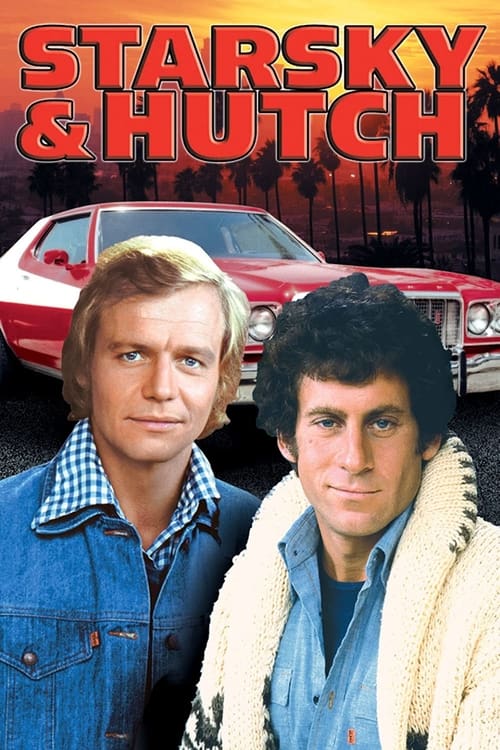
They looked at lease stock and chose two 1975 351 Windsor V8-powered (VIN code "H") "Bright Red" (paint code 2B) 2-door Gran Torinos. Both cars had a role in the pilot movie, one being "Starsky's" car, and the other being a similar car which is mistaken for Starsky's car by the film's villains. They each had body-side mouldings along with a black interior with vinyl bench seats. One of the pilot cars had the luxury remote-control chrome mirrors installed, while the other pilot car had the cheaper, entry-level manual chrome mirrors installed; in editing the film, Starsky and Hutch are shown to be driving around in each of the two cars at different times during the film.
The cars were also custom painted (on top of the factory red paint color) with the distinctive white "vector" stripe designed by Spelling-Goldberg's transportation coordinator George Grenier. The rear ends were lifted by air shocks, and had Ansen Sprint 5-slot mag wheels added with larger rear tires. While the tires were mounted so that only the black wall side would show, thus hiding any unauthorized brand-name display, in one first-season episode ("Kill Huggy Bear"), a close-up shot of the villain cutting the rear brake lines shows the letters on the inside-facing side of the tires to say Firestone.
It is reported that the original 2.75:1 ratio rear axle gearing (standard on non-police Torinos from 1975 onward) was replaced with numerically higher ratio gears for better acceleration during stunt driving scenes; in the 1999 interview, Glaser said that "we finally had to get a new rear end put in it so that at zero to sixty it had some pop". At least one of the second-season cars was known to have a Dymo label prominently attached to the dashboard which read "DO NOT EXCEED 50 MPH"; this was probably due to the fact that the revised gearing would cause the engine RPM to go to a higher level, possibly leading to engine damage.
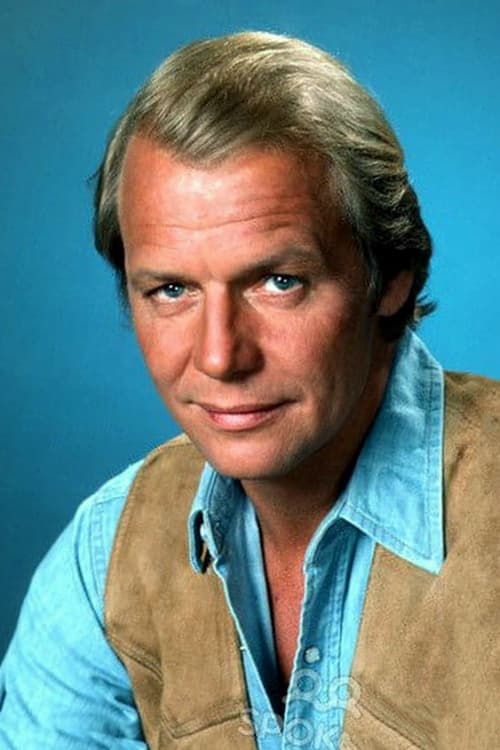
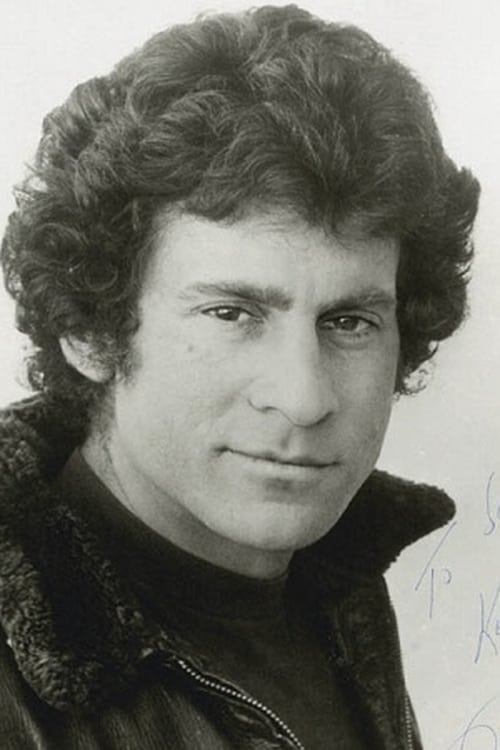
In the "Behind The Badge" interviews, Glaser said that during the early stages of production of the pilot, Spelling took him outside to introduce him to the red & white-striped, mag-wheeled Torino. Glaser took an immediate and long-lasting dislike to the car, which has not changed to this day. According to Glaser in several early interviews, there were three main reasons why he instantly hated the car: First, in his opinion, it was big, ugly and childish-looking. Secondly, the idea that two undercover cops would drive around in a car with such an outlandish appearance seemed ludicrous, and lastly, he does not like Ford products (although in a picture that was printed in an issue of the National Enquirer, Glaser is shown on the side of a California freeway with a flat-tired Ford Explorer). At the first viewing of the car with David Soul (Hutch), Glaser remarked that the car looked like a "striped tomato". That nickname stuck, and very soon the show's writers had worked it into the show as Hutch's derogatory name for Starsky's beloved Torino.
Glaser remarked to Soul that he hated the car and that he was "going to destroy that car...burn it down every chance I get", and repeated the story in the 1999 "reunion" interview. Several scenes of Glaser driving the car show him smashing the front wheels into curbs as he slides the car around corners and such, but that may also be attributable to the fact that he is primarily an actor, not a trained stunt-driver. Over the years, the Starsky & Hutch Torino increased in popularity and became a much-loved icon of the show and of the Seventies in general. Glaser has not grown to appreciate the car as he has learned to simply accept its popularity as a necessary component of the fans' appreciation of the show.
In fact, during filming of the 2004 Starsky & Hutch film adaptation, Glaser had several opportunities to sit in the newest iteration of "his" car, and even drive them, but he refused. He just was not interested, but in 2004, during the last day of filming a movie in Canada, the crew wanted a group picture of Glaser with a Starsky and Hutch Torino, so he agreed to sit in the driver's seat of a Limited Edition replica with the crew surrounding the car. In the summer of 2012 during the introduction to the "Las Vegas Car Stars 2012" charity event, Glaser drove up in a S&H Torino replica; after being introduced by the master of ceremonies, he got out of the Torino and was cheered by the crowd.
High-performance engine sounds were dubbed over scenes during the show because California law forbade mechanically modifying the engines of new cars. When the pilot was successful, Spelling-Goldberg ordered two new 1975 red Gran Torinos for the first season. These cars were powered by 400 V8s (VIN code "S") because extra power was going to be needed for additional stunt driving scenes. These new cars for the first-season were factory ordered in the bright-red color (Ford paint code: 2B), which was a regular production color for 1975 Torinos.
Unlike the pilot-movie cars, the first-season Torinos had no body-side mouldings, but did have body-colored sport mirrors, and brocade cloth split-bench seats. With the acquisition of the new cars, the producers took the opportunity to improve the design of the white stripe painted on the cars. The original pilot-movie cars had the bottom horizontal edge of the stripe about an inch or so above the mid-body character line that ran along the car, which was apparently done so that the section of the stripe that passes above the front-wheel opening would not be cut off by the wheel opening, but for the first-season cars, the bottom horizontal edge of the stripe was lowered until directly on the crease, which gave a more cohesive look to the design of the stripe. The section of stripe that runs across the front-wheel opening was gradually curved up and around the opening. The stripe was also thicker on the roof section, and whereas the front pointed section ended well behind the amber marker light on the pilot cars, the newer design had the point ending far ahead of it on the front fascia piece. These new cars also featured the complete bumper-protection group option, which included horizontal black rub-strips on both bumpers that were not included on the pilot cars.
For the start of the second season, these were replaced by two 1976 Gran Torinos that had vinyl split-bench seats like the pilot-episode cars. The new cars were ordered under Ford's fleet program, which is what was required to get them painted in the previous year's Bright Red(2B), as Ford used a different shade of red for new standard-order Torinos by this point.
These newer cars can be identified by their silver sight shields (bumper-filler panels) which Ford used on specially painted fleet-ordered cars. They also had the luxury-chrome mirrors like one of the pilot cars. Even though the body-colored sport mirrors were still a Torino option in 1976, they could not be installed on a fleet-ordered specialty-painted car, as Ford had no provision for producing those mirrors in anything other than the regular production colors listed for that year; since the 2B bright red was a special fleet-ordered color for the '76 model year, the cars came equipped with the chrome mirrors. The body-side mouldings were installed on these cars and the stripe was, unlike the pilot cars, integrated with the mouldings.
They were powered by 460 Lima V8s (VIN code "A"), and Spelling-Goldberg kept these Torinos until production ceased. While these were the biggest, most powerful engines available from Ford at the time, even with dual exhaust, they were still somewhat underpowered at 202 net horsepower. A third car, owned by 20th Century Fox and 351 Windsor powered, was used as the first backup to the Ford lease cars.
Over time, an unforeseen problem was discovered with the Torinos when they were used during stunt driving scenes. In sharp right-hand turns, Soul would sometimes slide accidentally across the vinyl bench into Glaser. Although a potential safety hazard at the time, the problem was solved by replacing the front bench of the number two Torino with bucket seats at Glaser and Soul's request; Glaser said in 1999: "It took us a year to get them to put bucket seats in it so David wouldn't slide all over the place whenever I took a corner".
The aggressive stunt driving required of the show resulted in many accidents and fender-benders for the Torinos. The time demands of a weekly production mandated quick body and paint repairs so the cars could get back to work as soon as possible, and many of the quick and often sloppy repairs are quite evident to eagle-eyed viewers of the show. The front fenders seemed to have taken a lot of abuse, and the Gran Torino nameplates on the front fenders are missing in several episodes, as are the chrome wheelhouse moldings.
Towards the end of the four seasons of production, the Torinos were noticeably worse-for-wear, and close watchers of the later episodes will spot many dents and other damage on the cars as they appear in various episodes. In particular, the driver's side quarter panel and tail-light area were seen to be smashed up in 4th-season episodes, and at least one of the cars was shown to have a dented and twisted front bumper along with some visible damage to the grille behind. The last appearance of the Torino on the series seems to show that the driver's door and window will not even close correctly, possibly due to the rigours and effects of the spirited stunt driving the car suffered over the years.
Glaser deliberately mistreated the cars during close-up stunt scenes when he drove (this was admitted to in a 1997 letter he wrote to the owner of the #1 Torino; and in a first-season DVD interview he said that he tried to "destroy" the cars) and would often stop the car by hitting the front wheels against curbs, as well as coming into driveways at high speed and bumping into garbage dumpsters.
Due to the success of S&H, in 1976 (the Torino's final year) Ford released a limited edition (only 1,305 units total, plus three pilot production cars) Starsky and Hutch replica Gran Torino. Manufactured at the Chicago plant, one of these code "PS 122" units was leased by Spelling-Goldberg from the middle of season two until the series' end as a second backup for the main cars and was known simply as "Unit 129". It was originally equipped with a 351 Modified (also VIN code "H"); however, during filming, one of the stuntmen damaged the engine beyond repair, and it was replaced overnight with a 429 Lima V8.
During the last season of Starsky & Hutch, The Dukes of Hazzard premiered on CBS, and one of the factory replicas was used in the first episode, "One Armed Bandits", seen to be driven by regular character Cooter Davenport (Ben L. Jones). This was the only appearance of the Torino in the series, and many fans have speculated over its strange one-off appearance. One theory is that it was merely an in-joke, with the Torino's former iconic car status now being taken over by the Dukes' Dodge Charger car "The General Lee".
After Starsky & Hutch was canceled, the cars were returned to Ford's Studio-TV Car Lease Program and sold at a Ford Motor Company auction to A.E. Barber Ford of Ventura, California. The first retail sale of Torino #1 was to a resident of Ojai, California; he owned it for one year, then sold it in a private sale to an Air Force officer that owned it for 17 years. In 1988, Torino #1 was purchased by an Ohio resident; he sold it in 2012 to Cars of the Stars Motor Museum in the United Kingdom. A few years later, Torino #1 was sold to Dezer Car Collection in Miami, Florida. Dezer sold Torino #1 in a private auction in January 2015 to a Texas collector; at the time, it was mostly unrestored and somewhat battered due to wear and tear from TV-show filming and subsequent ownership. It still had its original 460 V8, interior, and paint; however, Mickey Thompson valve covers and a chrome air cleaner were added by the first owner after he purchased it from Barber Ford. The Texas collector has since done a "sympathetic" frame-off restoration.
Torino #2 is owned by a New Jersey man who supplied the main close-up Torino (featured on the movie posters) for 2004's big-screen Starsky & Hutch movie.
During its life after Starsky & Hutch, #2 was wrecked and sold as salvage. It was repaired, although it was repainted the wrong shade of red and the iconic stripe was improperly painted. Although still equipped with bucket seats, #2 no longer has its original 460 engine, which was replaced at some point with a 2.8-liter Ford V-6. The car underwent a full restoration in a Pennsylvania Shop and is back on the road. Finally, the 20th Century Fox Torino was purchased in 2009 by the owner of #2, sold to an Oklahoma couple in 2010, and restored. "Unit 129" was owned by a collector in New Hampshire; as of May 2018, it is for sale by a Florida collector vehicle dealer.
In addition, the Torino has many fans and sparked a collectors market in the United Kingdom, as evidenced by the large number of UK-owned replicas (both factory and aftermarket). The red Torino's fame also led to a number of people customizing their own red vehicles with the distinctive white vector stripe, and with varying levels of success.