

Stanley Augustus Holloway (1 October 1890 – 30 January 1982) was an English actor, comedian, singer and monologist. He was famous for his comic and character roles on stage and screen, especially that of Alfred P. Doolittle in My Fair Lady. He was also renowned for his comic monologues and songs, which he performed and recorded throughout most of his 70-year career.
Born in Essex, Holloway pursued a career as a clerk in his teen years. He made early stage appearances before infantry service in the First World War, after which he had his first major theatre success starring in Kissing Time when the musical transferred to the West End from Broadway. In 1921, he joined a concert party, The Co-Optimists, and his career began to flourish. At first, he was employed chiefly as a singer, but his skills as an actor and reciter of comic monologues were soon recognised. Characters from his monologues such as Sam Small, invented by Holloway, and Albert Ramsbottom, created for him by Marriott Edgar, were absorbed into popular British culture, and Holloway developed a following for the recordings of his many monologues. By the 1930s, he was in demand to star in variety, pantomime and musical comedy, including several revues.
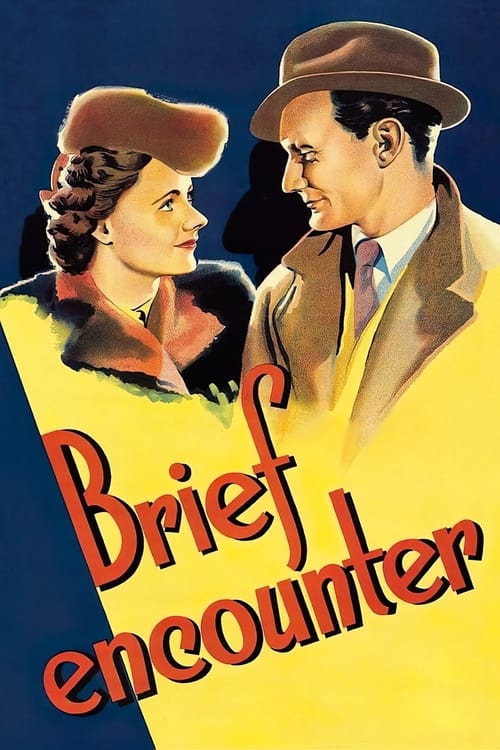
Following the outbreak of the Second World War, Holloway made short propaganda films on behalf of the British Film Institute and Pathé News and took character parts in a series of films including Major Barbara, The Way Ahead, This Happy Breed and The Way to the Stars. In the decade after the war, he appeared in the film Brief Encounter and made a series of films for Ealing Studios, including Passport to Pimlico, The Lavender Hill Mob and The Titfield Thunderbolt.
In 1956 he was cast as the irresponsible and irrepressible Alfred P. Doolittle in My Fair Lady, a role that he played on Broadway, the West End and in the film version in 1964. The role brought him international fame, and his performances earned him nominations for a Tony Award for Best Featured Actor in a Musical and an Academy Award for Best Supporting Actor. In his later years, Holloway appeared in television series in the UK and the US, toured in revues, appeared in stage plays in Britain, Canada, Australia and the US, and continued to make films into his eighties. Holloway was married twice and had five children, including the actor Julian Holloway.
Contents
Biography
Family background and early life
Holloway was born in Manor Park, Essex (now in the London Borough of Newham), on 1 October 1890. He was the younger child and only son of George Augustus Holloway, a lawyer's clerk, and Florence May (née Bell), a housekeeper and dressmaker. He was named after Henry Morton Stanley, the journalist and explorer famous for his exploration of Africa and for his search for David Livingstone. There were theatrical connections in the Holloway family going back to Charles Bernard, an actor and theatre manager, who was the brother of Holloway's maternal grandmother.
Holloway's paternal grandfather was Augustus Holloway, brought up in Poole, Dorset. Augustus became a wealthy shopkeeper, with a brush-making business. He married Amelia Catherine Knight in September 1856, and they had three children, Maria, Charles and George. In the early 1880s the family moved to Poplar, London. When Augustus died, George Holloway (Stanley's father) moved to nearby Manor Park and became a clerk for a city lawyer, Robert Bell. George married Bell's daughter Florence in 1884, and they had two children, Millie (1887–1949) and Stanley. George left Florence in 1905 and was never seen or heard from again by his family.
During his early teenage years, Holloway attended the Worshipful School of Carpenters in nearby Stratford and joined a local choir, which he later called his "big moment". He left school at the age of 14 and worked as a junior clerk in a boot polish factory, where he earned ten shillings a week. He began performing part-time as Master Stanley Holloway – The Wonderful Boy Soprano from 1904, singing sentimental songs such as "The Lost Chord". A year later, he became a clerk at Billingsgate Fish Market, where he remained for two years before commencing training as an infantry soldier in the London Rifle Brigade in 1907.
Career
Holloway's stage career began in 1910, when he travelled to Walton-on-the-Naze to audition for The White Coons Show, a concert party variety show arranged and produced by Will C. Pepper, father of Harry S. Pepper, with whom Holloway later starred in The Co-Optimists. This seaside show lasted six weeks. From 1912 to 1914, Holloway appeared in the summer seasons at the West Cliff Gardens Theatre, Clacton-on-Sea, where he was billed as a romantic baritone.
In 1913 Holloway was recruited by the comedian Leslie Henson to feature as a support in Henson's more prestigious concert party called Nicely, Thanks. In later life, Holloway often spoke of his admiration for Henson, citing him as a great influence on his career. The two became firm friends and often consulted each other before taking jobs. In his 1967 autobiography, Holloway dedicated a whole chapter to Henson, whom he described as "the greatest friend, inspiration and mentor a performer could have had". Later in 1913, Holloway decided to train as an operatic baritone, and so he went to Italy to take singing lessons from Ferdinando Guarino in Milan. However, a yearning to start a career in light entertainment and a contract to re-appear in Bert Graham and Will Bentley's concert party at the West Cliff Theatre caused him to return home after six months.
In the early months of 1914, Holloway made his first visit to the United States and then went to Buenos Aires and Valparaíso with the concert party The Grotesques. At the outbreak of the First World War in August 1914, he decided to return to England, but his departure was delayed for six weeks due to his contract with the troupe. At the age of 25, Holloway enlisted in the Connaught Rangers in which he was commissioned as a subaltern in December 1915 because of his previous training in the London Rifle Brigade. In 1916 he was stationed in Cork and fought against the rebels in the Easter Rising. Later that year, he was sent to France, where he fought in the trenches alongside Michael O'Leary, who was awarded the Victoria Cross for gallantry in February 1915. Holloway and O'Leary stayed in touch after the war and remained close friends.
Holloway spent much of his time in the later part of the war organising shows to boost army morale in France. One such revue, Wear That Ribbon, was performed in honour of O'Leary winning the VC. He, Henson and his newly established Star Attractions concert party, entertained the British troops in Wimereux. The party included such performers as Jack Buchanan, Eric Blore, Binnie Hale, and Phyllis Dare, as well as the performers who would later form The Co-Optimists. Upon his return from France, Holloway was stationed in Hartlepool, and immediately after the war ended he starred in The Disorderly Room with Leslie Henson, which Eric Blore had written while serving in the South Wales Borderers. The production toured theatres on England's coast, including Walton-on-the-Naze and Clacton-on-Sea.
Personal life
Holloway was married twice, first to Alice "Queenie" Foran. They met in June 1913 in Clacton, while he was performing in a concert party and she was selling charity flags on behalf of the Royal National Lifeboat Institution. Queenie was orphaned at the age of 16, something that Holloway felt they had in common, as his mother had died that year and his father had earlier abandoned the family. He married Queenie in November 1913.
Holloway and Queenie had four children: Joan, born on Holloway's 24th birthday in 1914, Patricia (b. 1920), John (1925–2013) and Mary (b. 1928). Upon the death of her mother, Queenie inherited some property in Southampton Row and relied on the rents from the property for her income. During the First World War, while Holloway was away fighting in France, Queenie began to have financial trouble, as the tenants failed to pay their rent. Out of desperation, she approached several loan sharks, incurring a large debt about which Holloway knew nothing. She also started to drink heavily as the pressures from the war and of supporting her daughter took their toll. On Holloway's return from the war, the debt was paid off and they moved to Hampstead, West London. By the late 1920s, Holloway found himself in financial difficulties with the British tax authorities and was briefly declared bankrupt. In the 1930s, Holloway and Queenie moved to Bayswater and remained there until Queenie's death in 1937 at the age of 45, from cirrhosis of the liver. Of the children from this first marriage, John worked as an engineer in an electrics company, and Mary worked for BP for many years.
On 2 January 1939, Holloway married the 25-year-old actress and former chorus dancer Violet Marion Lane (1913–1997), and they moved to Marylebone. Violet was born into a working-class family from Leeds. Although he was a client of the Aza Agency in London, Violet effectively managed Holloway's career, and no project was taken on without her approval. In his autobiography, Holloway said of her, "I suppose I am committing lawful bigamy. Not only is she my wife, lover, mother, cook, chauffeuse, private secretary, house keeper, hostess, electrician, business manager, critic, handy woman, she is also my best friend." Together, they had one son, Julian, whose brief relationship with Tessa Dahl produced a daughter, the model and author Sophie Dahl.
Holloway, Violet and Julian lived mainly in the tiny village of Penn, Buckinghamshire. Holloway also owned other properties including a flat in St John's Wood in North West London, which he used when working in the capital, and a flat in Manhattan during the My Fair Lady Broadway years. The final years of his life were spent in Angmering, West Sussex, with Violet. Holloway forged close friendships with fellow performers including Leslie Henson, Gracie Fields, Maurice Chevalier, Laurence Olivier and Arthur Askey, who said of him, "He was the nicest man I ever knew. He never had a wrong word to say about anyone. He was a great actor, a super mimic and a one-man walking comic show." While working in the US, Holloway numbered among his friends Frank Sinatra, Dean Martin, Burgess Meredith and Groucho Marx.
Honours, memorials and books
Holloway was appointed an Officer of the Order of the British Empire (OBE) in the 1960 New Year Honours for his services to entertainment. In 1978 he was honoured with a special award by the Variety Club of Great Britain.
There is a memorial plaque dedicated to Holloway in St Paul's, Covent Garden, London, which is known as "the actors' church". In 2009 English Heritage unveiled a blue plaque at 25 Albany Road, Manor Park, Essex, the house in which he was born in 1890. There is a building named after him at 2 Coolfin Road, Newham, London, called Stanley Holloway Court.
Holloway entitled his autobiography Wiv a Little Bit o' Luck after the song he performed in My Fair Lady. The book was ghostwritten by the writer and director Dick Richards and published in 1967. Holloway oversaw the publication of three volumes of the monologues by or associated with him: Monologues (1979); The Stanley Holloway Monologues (1980); and More Monologues (1981).
Recordings
Holloway had a 54-year recording career, beginning in the age of acoustic recording, and ending in the era of the stereophonic LP. He mainly recorded songs from musicals and revues, and he recited many monologues on various subjects. Most prominent among his recordings (aside from his participation in recordings of My Fair Lady) are those of three series of monologues that he made at intervals throughout his career. They featured Sam Small, Albert Ramsbottom, and historical events such as the Battle of Hastings, Magna Carta and the Battle of Trafalgar. In all, his discography runs to 130 recordings, spanning the period 1924 to 1978. A review in The Gramophone of one of his 1957 albums containing recordings of his old "concert party" songs commented, "what a fine voice he has and how well he can use it – diction, phrasing, range and the interpretative insight of the artist".