



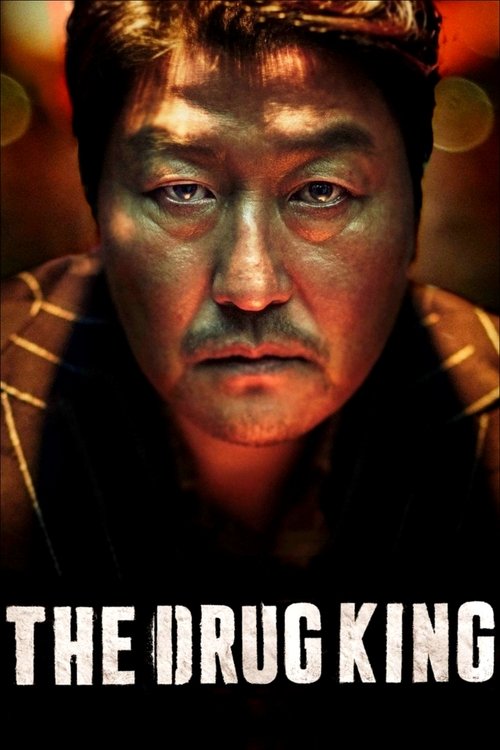





Song Kang-ho (Korean: 송강호; born 17 January 1967) is a South Korean actor. Regarded as one of the most influential actors in Korean cinema, he has appeared in critically acclaimed films across various genres. He is the recipient of numerous accolades, including a Cannes Film Festival Award, three Baeksang Arts Awards, four Blue Dragon Film Awards, and five Grand Bell Awards. In 2020, The New York Times named him one of the greatest actors of the 21st century.
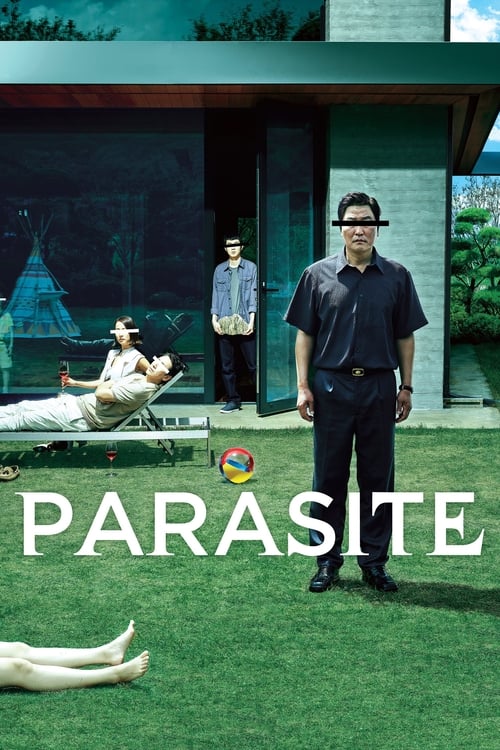
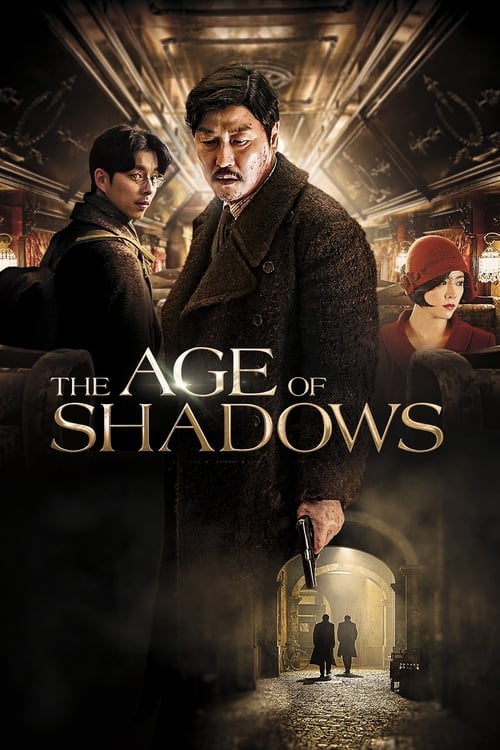
Song first gained recognition with the crime thriller No. 3 (1997), and later rose to prominence with Park Chan-wook's critically acclaimed film Joint Security Area (2000). He is known for his collaborations with filmmaker Bong Joon-ho in Memories of Murder (2003), The Host (2006), Snowpiercer (2013), and Parasite (2019). Song rose to wider international prominence for his performance in Parasite, which won the Palme d'Or at the Cannes Film Festival and the Academy Award for Best Picture. He has also worked extensively with director Kim Jee-woon, starring in five of his films: The Quiet Family (1998), The Foul King (2000), The Good, the Bad, the Weird (2008), The Age of Shadows (2016), and Cobweb (2023).
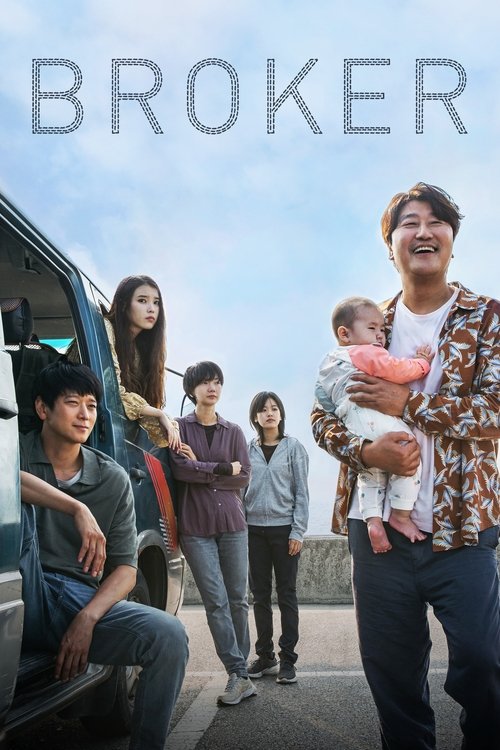
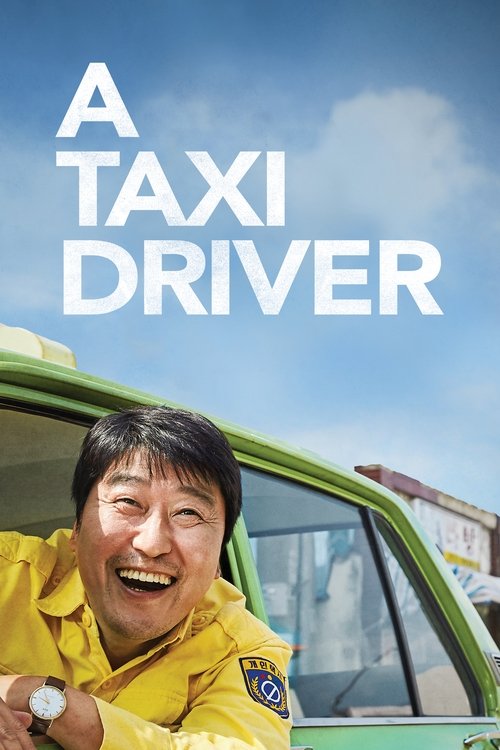
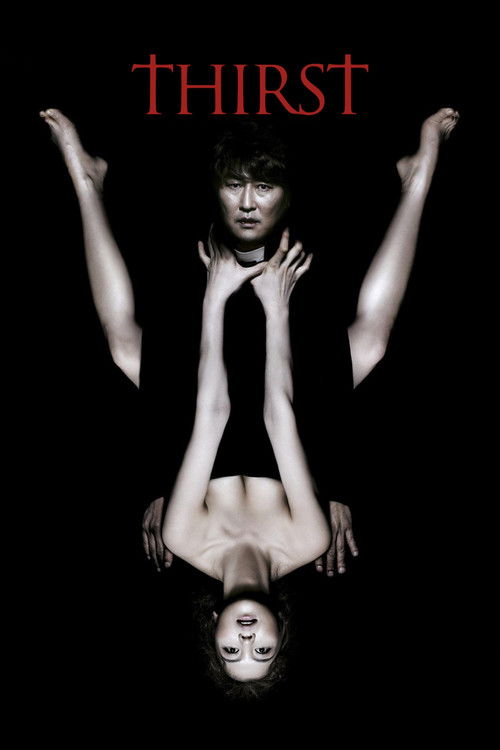
His other notable films include Sympathy for Mr. Vengeance (2002), Secret Sunshine (2007), Thirst (2009), The Attorney (2013), The Throne (2015), A Taxi Driver (2017), and Broker (2022), for the latter of which he won the Best Actor prize at the Cannes Film Festival. Song has been named Gallup Korea's Film Actor of the Year four times (2013, 2017, 2019 and 2020).
Contents
Early life
Song Kang-ho was born on 17 January 1967, in Gimhae, South Gyeongsang Province. He graduated from Gimhae High School and had aspirations of becoming an actor since his second year at Garak Middle School. At the time, the country had just five theater and film departments. Despite failing the entrance exam once, he eventually studied at Gyeongsang National University in Busan. However, he was drafted for mandatory military service soon after. After completing his service, Song did not return to college and instead joined a theater company in Busan at age 23.
Career
1991–1997: Early career
In 1990, Song Kang-ho attended a performance of "Mr. Choi," a play by Yeonwoo Theater Company in Busan. This experience ignited his passion for acting and inspired him to pursue his dream. The following year, at the age of 23, he moved to Seoul with the sole purpose of realizing his ambition, and he immediately headed to Yeonwoo Theater without any concrete plans. Song approached Ryu Tae-ho, the director of Yeonwoo Theater Company, and humbly pleaded for an opportunity to stay and contribute, even if it meant working as a theater cleaner. Determined to make his mark, he visited the theater four times and left his contact information. As fate would have it, he was eventually called upon to assist with an event organized by the theater due to a staff shortage.
During this event, Song had an encounter with director Yi Sang-woo. Impressed by Song's dedication, Yi Sang-woo offered him the advice: "Yeonwoo Theater shouldn't be your ultimate goal. It should be a place where you immerse yourself to fulfill your own purpose." Then, Yi Sang-woo welcomed Song Kang-ho as a member of the theater. In 1991, Song made his stage debut in the play of "Dongseung" (A Little Monk). Over the next few years, he honed his craft on stage, earning a reputation as a remarkably talented actor.
Since I was young, I learned acting by immersing myself in the theater company scene. Yi Sang-woo and Kim Seok-man could be silent teachers because they were from the Yeonwoo stage. The mechanical engineering department can teach you how to sharpen a metal, but the theater and film department can't teach you acting.
In 1995 Song joined Theater Company Chaimu, founded by theater director Yi Sang-woo. Director Yi Sang-woo said, "I saw Song Kang-ho and Yoo Oh-sung, who were drinking all the time at my officetel in 1995, and thought, 'Everyone is going to be ruined like this.' That was the beginning," he explained. Song became an early member of the troupe alongside Moon Seong-geun, Yu Oh-seong, Ryu Tae-ho, film director Yeo Gyun-dong, and drama writer Jeong In-ok.
Although Song was regularly approached to act in films, he always turned down the opportunity until he was in his 30s. In 1996, he finally accepted a role as an extra in Hong Sang-soo's 1996 film The Day a Pig Fell into the Well. After that, Song drew attention for his acting as Pan-soo in Lee Chang-dong's Green Fish in 1997. His portrayal of a gangster who wielded an iron pipe and jumped into the car Mak-dong (played by Han Seok-kyu) in an underground parking lot was so realistic that rumors even circulated that a real gangster had been cast. The following year, Song played one of the homeless characters in Jang Sun-woo's documentary-style Bad Movie. Song gained cult notoriety for his performance as Jopil, a stuttering gangster who trained a group of young recruits in Song Neung-han's No. 3. Song became the most notable actor of 1997, sweeping the Best New Actor Award at the Grand Bell Awards and the Blue Dragon Film Awards.
1998–2002: Path to leading roles
Director Kim Jee-woon opened a new path for Song, who had been cast mainly as bullies and gangsters, by casting him as Young-min, the eldest son of Park In-hwan and Na Moon-hee, in his debut film, The Quiet Family (1998) The movie was his second large role with Choi Min-sik. He then took on his first leading role as agent Lee Jang-gil, Han Suk-kyu's partner, in Kang Je-gyu's blockbuster thriller Shiri (1999). However, it was director Kim Jee-woon who elevated Song into leading actor status in his film The Foul King (2000). The movie was released in cinemas in February 2000, with Song portraying Lim Dae-ho, a bank clerk turned professional wrestler, for which he did most of his own stunts. Song's comedic acting was often praised as being topped with wide emotional range, and his popularity surged from the success of The Foul King. Song states this role was his hardest role as an actor.
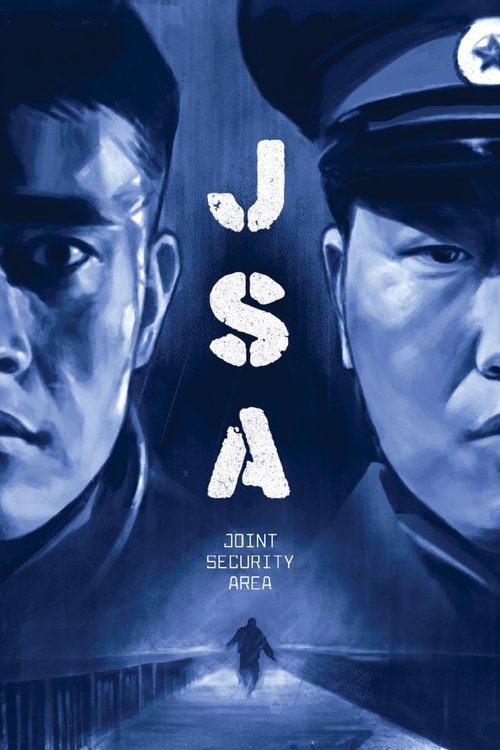
Song's performance in the Myung Film production Joint Security Area (2000) as North Korean Army sergeant Oh Joong-pil established him as one of South Korea's leading actors. He won the Best Actor Award at the 38th Grand Bell Awards for this performance. Song also starred in the first installment of Park Chan-wook's acclaimed Vengeance trilogy, Sympathy for Mr. Vengeance (2002), which centers on a father's pursuit of his daughter's kidnappers. In 2002, Song starred in another major production by Myung Films, YMCA Baseball Team (2002), which is about Korea's first baseball team formed in the early 20th century.
2003–2018: Prominence
In 2003, Song played a leading role as Park Doo-man, an incompetent rural detective, in another critically acclaimed hit, Memories of Murder, from young director Bong Joon-ho. It was the first of several critically acclaimed movies they would make together, with commentators describing Bong's relationship with Song as a "great actor-director collaboration". With it, Song swept the best actor awards at various awards ceremonies, including the 40th Grand Bell Awards in 2003, establishing himself as the best actor in the Korean film industry in the early 2000s.
In 2004, Song starred in The President's Barber by debut director Im Chan-sang, which imagines the life of South Korean president Park Chung Hee's personal barber. The following year he also took the lead in Antarctic Journal, a big-budget project by debut director Yim Pil-sung about an expedition in Antarctica that performed weakly at the box office.
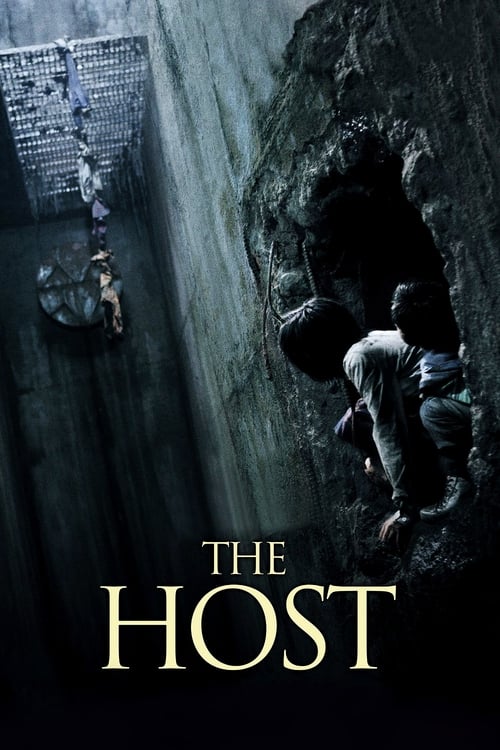
In 2006, through director Bong Joon-ho's film The Host, Song rose to the ranks of 10 million actors. The film helped to broaden international awareness of Song's talent, and in March 2007 he was named Best Actor at the inaugural Asian Film Awards in Hong Kong. More high-profile projects followed: The Show Must Go On saw him star as an aging gangster, for which he received a Blue Dragon Film Award for best actor.
Song starred opposite Jeon Do-yeon in Lee Chang-dong's film Secret Sunshine (2007), as a local mechanic in Miryang Kim Jong-chan and won Best Actor at the 6th Korean Film Awards,10th Director's Cut Awards, and Palm Springs International Film Festival. Jeon Do-yeon won the Prix d'interprétation féminine (Best Actress) at the 2007 Cannes Film Festival, making her the first Korean ever to receive an acting award at Cannes Film Festival.
In 2008, Song acted in Kim Jee-woon's western film set in 1930s Japanese-occupied Manchuria, The Good, the Bad, the Weird. The film showcased an ensemble of stars with Lee Byung-hun as "the bad", Jung Woo-sung as "the good" and Song as "the weird". The film earned US$128,486 in North America and US$44,132,723 in other territories, bringing the worldwide gross to US$44,261,209. It was the second highest grossing Korean film in 2008 after Scandal Makers, beating The Chaser and it is one of the highest-grossing films of all time in South Korea which attracted 6.68 million viewers.
2019–2023: Parasite and international stardom
In 2019, Song starred as Kim Ki-taek in the critically acclaimed film Parasite, also directed by his frequent collaborator Bong Joon-ho. It won the Palme d'Or at the 2019 Cannes Film Festival, becoming the first Korean film to receive the award. It was selected as the South Korean entry for Best International Feature Film at the 92nd Academy Awards, Bong's second selection after 2009's Mother.
It's not as if I always write with him in mind because he's a comfortable collaborator. I do give it a lot of thought, but because this film starts with a story of average neighbors and builds to something extreme, to cover that wide range, I thought Song Kang-ho would be the best to handle it. Especially in the climax; his character doesn't have any lines—it's the subtle changes in his muscles, the subtle tremors, that have to convince the audience of the entire film. Song has that strength as an actor.
In 2020, The New York Times released a list of the 25 greatest actors of the century. In the list of 25 internationally known screen figures, Song Kang-ho was ranked sixth. The newspaper also published an interview with director Bong Joon-ho. Song is known as Bong's muse, having featured in four of his films.
In the same year it was announced that Song co-starred in Kore-eda Hirokazu's debut Korean-language film Broker, alongside Lee Ji-eun, Bae Doona and Gang Dong-won. He started filming in 2021 and acted as Ha Sang-hyeon, the owner of a hand laundry who takes babies from a baby box at a nearby church and sells them with the help of his partner Dong-soo.
In 2021, Song was selected as one of the nine judges in the competition section of the 74th Cannes Film Festival to be held from 6 July to 17 July. In the same year, Song reteamed for the fifth time with leading Korean director Kim Jee-woon on the feature film Cobweb. The scriptwriter of Cobweb was Shin Yeon-shick, who also wrote the screenplay for the sports film One Win, in which Song also starred.
The following year, Broker was released on 8 June 2022. Song was awarded Best Actor at the 75th Cannes Film Festival for his performance in Broker. Song was the first Korean to win Best Actor Award at Cannes.
2024–present: Venture to small screen
In 2022, Song was reported to star alongside Byun Yo-han in Uncle Samsik, marking Song's television series debut. Set in the 1960s, the series depicts the intertwined story of two men, exploring themes of pride, greed, and their camaraderie. Shin Yeon-shick wrote and directed the series, making it his third collaboration with Song, following the feature films Cobweb and One Win. For his portrayal, Song won Best Actor at the 19th Seoul International Drama Awards.
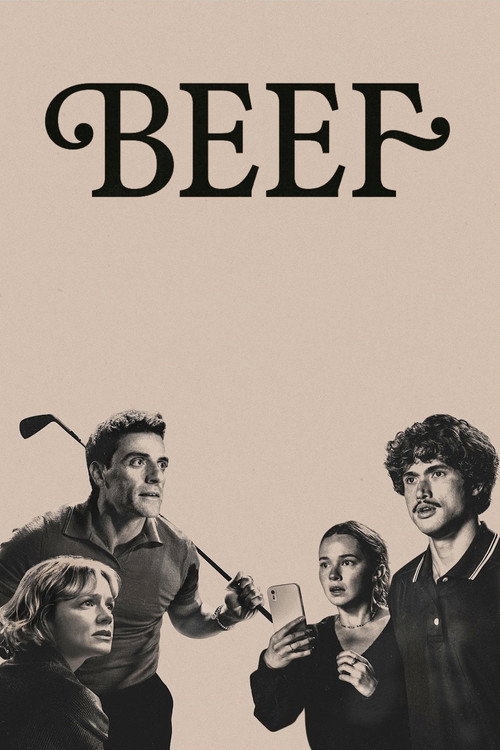
In December 2024, Song agreed to appear in the second season of the American comedy-drama series Beef.
Endorsements
In 2001, Song became the promotional face for Kooksoondang's traditional liquor, Baeksaju. The partnership contributed to a significant increase in the brand's recognition within the Japanese market. Following a five year partnership from 2001 to 2005, Song signed a three year exclusive contract with the company in 2009. This agreement was notable as the first of its kind in the South Korean advertising sector, where six month or one year terms were the standard industry practice.
Song has represented a diverse range of sectors, including food, electronics, and finance. His early endorsements included a kimchi refrigerator in 2002 and a pizza franchise in 2003. By 2005, his market value for an air purifier campaign reached a 100 million won guarantee. Between 2007 and 2012, he was selected for several high profile financial campaigns, representing Hana Financial Group alongside Jeon Do-yeon and appearing in a Hyundai Card commercial with Jung Woo-sung and Lee Byung-hun in 2008. In 2012, he joined Choi Min-sik and Seol Gyeong-gu as a representative for NH Nonghyup Bank. In 2014, Song and Yu Hae-jin fronted a campaign for Nongshim to coincide with the product's first major recipe and design update in 28 years.
Following a hiatus from the advertising sector, Song returned in 2020 after the international success of Parasite. This return included a contract with Lina Life Insurance and his first major overseas endorsement for the mobile strategy game Rise of Kingdoms.
Personal life
In November 1994, Song married theater actress Hwang Jang-sook. The couple has a daughter, Song Joo-yeon, and a son, Song Jun-pyoung. Born in 1996, Song Jun-pyoung, is a former professional footballer who played for the Suwon Samsung Bluewings U-18 team before retiring due to injuries. He has stated in interviews that both he and his father sought to maintain a professional distance to minimize public scrutiny of their relationship.
In 2005, Song's driver's license was suspended for 100 days after he was apprehended by police for driving with a blood alcohol content of 0.095%.
Philanthropy
Song is a member of the Hope Bridge Honors Club, a designation for major donors to the Hope Bridge Disaster Relief Association. In March 2020, he donated 200 million won to the association to support COVID-19 relief efforts. He contributed a further 100 million won in March 2022 to assist in recovery from a large-scale wildfire that spread from Uljin, North Gyeongsang, to Samcheok, Gangwon.