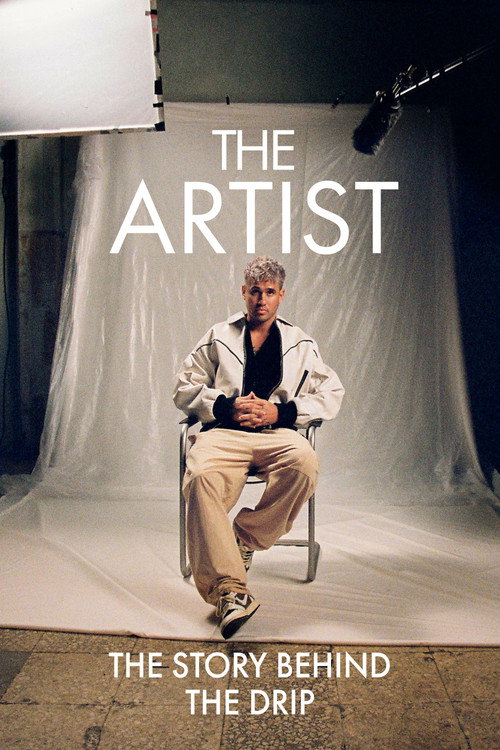



Sergio Leonel Agüero del Castillo (born 2 June 1988), also known as Kun Agüero, is an Argentine former professional footballer who played as a striker. He is regarded as one of the best strikers of his generation and one of the greatest players in the history of the Premier League. He played for Manchester City from 2011 to 2021 and is the club's all-time top goalscorer and holds the record for most Premier League hat-tricks, with 12.
Agüero began his career at the Argentine club Independiente where, on 5 July 2003, he became the youngest player to play in the Argentine Primera División at 15 years and 35 days, breaking the 27 year record previously set by future father-in-law Diego Maradona. In 2006, Agüero moved to La Liga club Atlético Madrid in a transfer worth €23 million, establishing himself as one of the world's best young players. At the club, he won the UEFA Europa League and the UEFA Super Cup. Agüero signed for Manchester City in 2011 in a transfer for a reported fee of £35 million. He spent 10 years at the club, where he won five Premier League titles, notably scoring a last minute winner in the last league game of his debut season to win the club its first league title since 1968. Further honours with the club include a record six EFL Cups and an FA Cup; he was also part of the club's first UEFA Champions League final.
During his time in England, Agüero was awarded the Player of the Year by the FSF for the best player in the Premier League, won the Premier League Golden Boot, and was included in the PFA Team of the Year twice. He is the second highest non-English goalscorer in the Premier League, with 184 goals. He held the record for the most Premier League goals scored by a player for any single club until it was overtaken by Harry Kane in 2022. In 2021, he joined Barcelona on a free transfer, before retiring from football aged 33 due to heart problems in the same year. He played just four matches for the club, with his only goal coming in the first El Clásico of the 2021–22 season.
At international level, Agüero represented the Argentina under-20 team as they won the 2005 and 2007 FIFA U-20 World Cups. He played at the 2008 Olympics, scoring two goals in the semi-final against Brazil as Argentina won gold. Agüero is Argentina's third-highest all-time top goalscorer and earned over 100 caps, representing the senior team at three FIFA World Cups (in 2010, 2014, and 2018) and five Copas América (in 2011, 2015, 2016, 2019, and 2021), finishing as runner-up with his country at the 2014 World Cup and winning the Copa América in 2021.
Contents
Club career
Independiente
Sergio Agüero joined the youth system of Independiente at the age of nine. He started playing for the side, becoming the youngest player to debut in the first division at 15 years and 35 days (on 5 July 2003 against San Lorenzo), when Independiente's coach, Oscar Ruggeri sent Agüero onto the field as a substitute for Emanuel Rivas in the 69th minute of the match. His performance was well received by the press. Despite his early debut, he was not selected again by Ruggeri, and his replacement Osvaldo Sosa, for the remainder of 2002–03 season, having made only one appearance in the Torneo Clausura. Following the arrival of coach Jose Omar Pastoriza, seven months after Agüero's first match he returned to the club's first-team in 4–2 win against Peru's Cienciano during the group stages of the 2004 Copa Libertadores. This meant that he also became the youngest player to participate in the Copa Libertadores, a record that he held for three years. One month later, Agüero again featured in a Copa Libertadores fixture against Ecuador's El Nacional. On 19 June, for the first time, Agüero played a full 90-minute match for Independiente against Atlético de Rafaela during the Torneo Clausura. He scored his first goal for Independiente in a 2–2 draw against Estudiantes on 26 November, with a 22nd minute shot from outside the penalty area. Agüero became a regular in the club's first-team, being selected for the Argentina U-20 squad for the 2005 FIFA U-20 World Cup, which Argentina won.
During the 2005–06 season, Agüero scored 18 goals in 36 league appearances, having missed two games due to suspension. In a 4–0 win against Racing Club on 11 September, he dribbled from inside of his own half and scored Independiente's fourth goal with a left footed shot. His first red card came in the Torneo Apertura, after slapping an opponent in a match against Tiro Federal. His outstanding performances during the Torneo Apertura attracted interest from a number of large European clubs, and, after months of speculation, Agüero announced on TV in April that he intended to leave the club at the end of the season. Before the end of the season, there had already been speculation of a possible transfer to Atlético Madrid. With his performances being lauded by the press, there was talk of a possible call up for Agüero for the 2006 FIFA World Cup. In a 2–0 away victory against Olimpo de Bahia Blanca in round 17 of the Torneo Clausura, Agüero received his fifth yellow card of the season. This prevented him from playing his last game for Independiente in a fixture against Boca Juniors in Avellaneda one week later. The yellow card brought tears to his eyes, as television cameras recorded. Agüero, who scored Independiente's second goal of the match, later said: "I think that it was my last goal for Independiente". He played his last game for Independiente, two weeks later, in a 2–0 away defeat to Rosario Central. On 30 May, Agüero officially transferred to Atlético Madrid for €20 million, marking a record for the club.
Atlético Madrid
In May 2006, Agüero joined Spanish club Atlético Madrid for a fee reported to be around €20 million, breaking the club's previous transfer record. He caused controversy early in his Atlético career by using his hands to score the winning goal against Recreativo Huelva on 14 October 2006, only his second goal for the club, with the first coming in a 4–1 away win against Athletic Bilbao on 17 September. He ended his first season in Madrid with seven goals in all competitions, eased into European football by manager Javier Aguirre, who opted to bring him in and out of the line-up as Atlético finished seventh, enough to qualify for the UEFA Intertoto Cup.
Following the departure of strike partner Fernando Torres to Liverpool in the summer of 2007, Agüero secured his starting spot for the Rojiblancos and soon became arguably the team's most important player at the age of just 19. In the 2007–08 season, he finished third highest scorer in La Liga, behind Dani Güiza and Luís Fabiano, with 19 goals, and was runner up in the Trofeo Alfredo Di Stéfano award. Agüero won many plaudits for his man of the match display against Barcelona in March 2008, scoring twice, assisting a goal and winning a penalty for Atlético in a 4–2 win. He also scored important goals against the likes of Real Madrid, Valencia, Sevilla and Villarreal to help Atlético finish fourth and qualify for the UEFA Champions League for the first time in over ten years.
Agüero was once again a regular goalscorer for Atlético in the 2008–09 season, continuing to establish a lethal partnership with Uruguayan striker Diego Forlán, also a former Independiente player. On 16 September, he scored his first Champions League goals in a 3–0 away win at PSV Eindhoven, helping Atlético eventually reach the last 16 of the competition. In March 2009, Forlán and Agüero each scored a brace in a 4–3 win over league leaders Barcelona, the latter scoring the winning goal in the match's final minutes. With the help of more vital goals in a formidable end of the season run-in from his team, Agüero finished in the top ten contenders for the Pichichi Trophy, which was won by his teammate Forlán. Atlético finished fourth in the league, qualifying for the following season's Champions League.
Despite not being as prolific in front of goal, Agüero had another good season in 2009–10, and was praised for his influential performances as Atlético enjoyed their most successful season in over a decade. On 3 November 2009, he scored twice against Chelsea during a 2–2 draw in the Champions League at the Vicente Calderón. Atlético were knocked out of the competition, but went on to reach the final of the 2009–10 UEFA Europa League, where Agüero assisted both goals in a 2–1 extra time win against English club Fulham. He also helped Atlético reach the final of the Copa del Rey, although this time they were not victorious, losing to Sevilla at the Camp Nou on 19 May.
Manchester City
On 28 July 2011, Manchester City confirmed that Agüero had signed a five-year contract with the club. The fee was reported to be in the region of £35 million. He was given the number 16 shirt for his first season at City and, as he did in Atlético, wore the name "Kun Agüero" on his shirt. He was an unused substitute in the Dublin Super Cup match against Inter Milan and the 2011 FA Community Shield against Manchester United with manager Roberto Mancini believing Agüero was not yet fit. Agüero made his debut for City on 15 August 2011 in a 4–0 Premier League victory over Swansea City. Agüero came on as a substitute in the 59th minute, scoring his first goal for the club within nine minutes after a tap-in from a cross from full back Micah Richards. He then turned provider with an assist after chipping over the oncoming goalkeeper before flicking the ball back into the penalty box and into the path of David Silva to score. Agüero rounded off his debut by scoring again in injury time with a 30-yard strike. His 30-minute debut gained rave reviews among football journalists, with some suggesting it was one of the best in English football.
City continued their strong start, winning 3–2 away at Bolton Wanderers with Agüero missing two chances in the penalty box. On 28 August, Agüero scored his third league goal in Manchester City's 5–1 rout of Tottenham Hotspur. On his third start for the club, he scored his first Premier League hat-trick, against Wigan Athletic. On 18 September, he scored twice at Craven Cottage against Fulham, but City were held to a 2–2 draw. Having been substituted after just 28 minutes due to an injury during a 4–0 win against Blackburn Rovers on 1 October, Agüero returned to action in a 2011–12 UEFA Champions League group stage fixture, where he came on for Nigel de Jong on 62 minutes and scored a 93rd-minute winner in his side's 2–1 victory against Villarreal on 18 October. On 23 October, Agüero took part in his first Manchester derby, scoring in the 69th minute as he converted a Micah Richards pass across the face of goal. The match finished 6–1 to City. On 1 November, Agüero was shortlisted for the prestigious FIFA Ballon d'Or. On 19 November, he scored a penalty in a 3–1 win at home to Newcastle United, ending Newcastle's unbeaten start to the season.
Agüero made his League Cup debut in the quarter final match against Arsenal at the Emirates Stadium, scoring the only goal of the game in the 83rd minute from an Adam Johnson through-ball. His next goal came in a 5–1 home win against Norwich City, opening the scoring in the 32nd minute, giving him his 13th goal of the season and maintaining the team's 100% league record at home. On 21 December, he scored a brace as City beat Stoke City 3–0 at home. On 3 January 2012, he opened the scoring in a 3–0 win at home to Liverpool, beating Pepe Reina with a low shot. Agüero scored his 15th goal on 4 February, scoring a penalty against Fulham in a 3–0 win at a snow-covered City of Manchester Stadium.
Barcelona and retirement
On 31 May 2021, Agüero agreed to sign for La Liga club Barcelona on a two-year contract starting 1 July, with a buyout clause set at €100 million.
On 17 October, he debuted as a substitute in a 3–1 home victory against Valencia. In his first El Clásico appearance on 24 October, Agüero came on as a substitute in the 77th minute, scoring his first goal for the club in the last minute of play of a 2–1 home defeat to Real Madrid. One week later, he was taken to hospital with chest discomfort diagnosed as cardiac arrhythmia during an eventual 1–1 home draw against Alavés. It was reported in November that he would be out of action for at least three months, but on 15 December, Agüero announced his retirement from football on the advice of doctors, and thanked the teams he had played for.
International career
Youth teams
Agüero was selected for the Argentina U17 team to participate at the 2004 U-16 South American Championship in Paraguay in September. He participated in all of Argentina's group stage matches, scoring in a 2–1 win against the United States and a 3–1 win against Ecuador to help Argentina finish top of their group. Agüero scored in the 47th minute of Argentina's 1–0 quarter-final victory against Peru, setting up a semi-final match against Colombia which Argentina lost 2–0.
Agüero represented Argentina at two FIFA World Youth Championships, winning back-to-back world titles. He was part of the team that won the 2005 edition in the Netherlands, alongside his future 2008 Olympics squad teammates Fernando Gago and Lionel Messi. At the 2007 FIFA U-20 World Cup, held in Canada, Agüero scored twice and helped set up three goals in a 6–0 win over Panama in the second game of the group stage of the tournament. He then scored the only goal in Argentina's third match against North Korea from a free kick. Having qualified to the round of 16, he scored two of the three goals against Poland that would eventually give them a 3–1 win to advance to the next round. Argentina defeated Mexico in the quarter-finals and Chile in the semi-finals, and faced the Czech Republic in the final, a team they drew 0–0 in the group stage. Agüero captained and scored the equaliser in the 62nd minute, leading to a 2–1 victory. In addition, Agüero won the Golden Boot of the tournament, scoring six goals in seven, and the Golden Ball as the best player of the tournament.
As a member of the Argentine squad for the 2008 Beijing Olympics, Agüero scored two goals in the space of five minutes in the semi-final 3–0 win over Brazil on 19 August 2008. Argentina went on to win its second consecutive gold medal at the Olympic tournament.
Senior team
At age 18, Agüero debuted for the Argentine senior squad in a friendly match against Brazil on 3 September 2006, played at Emirates Stadium, England. One year later, he scored his first international goal in a 2010 FIFA World Cup qualification match against Bolivia, and went on to score three more times as the Albiceleste successfully qualified for the finals in South Africa.
Agüero was named in the 23-man squad for the 2011 Copa América where Argentina had been drawn into Group A with Bolivia, Colombia, and Costa Rica. On 1 July, in Argentina's opening group stage match against Bolivia, he came on for Ezequiel Lavezzi on 71 minutes and scored an equaliser on 76 minutes to secure a 1–1 draw. On 11 July, in Argentina's third group stage match against Costa Rica, Agüero scored a goal in each half as Argentina won 3–0 and finished in second position in their group.
Agüero was named in Argentina's 23-man squad for the 2014 FIFA World Cup. On 15 June, he started alongside Lionel Messi as a forward in Argentina's 2–1 win against Bosnia and Herzegovina at the Estádio do Maracanã.
Agüero was named in the Argentine squad for the 2015 Copa América, and in a warm-up game on 7 June against Bolivia in San Juan, he scored his first international hat-trick in a 5–0 victory. On 13 June, he scored Argentina's opening goal of the tournament in a 2–2 group stage draw with Paraguay. Three days later at the same ground, he headed a cross from Manchester City teammate Pablo Zabaleta for a 1–0 win against holders Uruguay. At the semi-final stage, Agüero headed in Ángel Di María's cross as Argentina defeated Paraguay 6–1 to reach the 2015 Copa América Final. Agüero started the final against Chile, but was replaced in the 74th minute for Gonzalo Higuaín in an eventual penalty shootout loss.
Agüero was included in Gerardo Martino's 23-man squad for the Copa América Centenario and scored his first goal of the tournament in Argentina's second group match, a 5–0 win over Panama on 10 June 2016, which allowed them to advance to the quarter-finals of the competition. Agüero considered retiring from international football shortly after losing against Chile in a penalty shootout in the final of the tournament for a second consecutive time.
On 14 November 2017, Agüero was taken to hospital after fainting in the dressing room at half-time in a 4–2 loss to Nigeria in a friendly match in Krasnodar, Russia.
Style of play
Often considered one of the best strikers in the world during his playing days, Agüero is regarded as an all-out centre forward, although he is a versatile player, who can also play as a second striker off another striker, which he often did at Atlético Madrid with Diego Forlán, due to his passing ability, link-up play, tactical intelligence, and vision, which made him a capable assist-man. Although naturally right footed, he is also capable of striking well with his left foot, and can finish well both inside and outside the area with his powerful and accurate shot. A prolific goalscorer, Agüero's playing style is characterised by agility, acceleration, excellent movement off the ball, and strength, being described as "sharp and clever" by former Argentine player Osvaldo Ardiles; a view which is shared by his international captain Messi, who believes Agüero possesses "immense power, strength and an incredible work ethic". Combined with his close control, quick feet, dribbling skills, and strength to keep the ball, he has been described as "a menace in the box".
Agüero's goalscoring and collective achievements with Manchester City have led to debates over whether he is the greatest foreign player in Premier League history, alongside Manchester United's Eric Cantona and Arsenal's Henry. In Shearer's view, the Premier League's all-time leading goalscorer, Agüero is "the best foreign player to have played in the Premier League." In a 2016 article, ESPN labelled Agüero "the most lethal striker in the history of the Premier League," citing statistical data showing that he reached 100 Premier League goals at a faster goals-per-minute rate than any player before him. In December 2014, the French publication So Foot argued that he was the best striker in the world.
When asked to name the players who influenced his playing style, Agüero named former Brazilian striker Ronaldo, Messi, Ronaldinho and Maradona as the best players to have played the game, but said that the player who influenced his style of play the most was "the Brazilian Ronaldo". Aguero has a diminutive figure with a stocky build, which has led to comparisons with former Manchester City teammate Carlos Tevez and past forwards such as Romário, Alessandro Del Piero, and Maradona. When both were on the same team, some pundits called Agüero Tevez's heir apparent at City and others said that he was superior to his compatriot. His ex-manager at Manchester City, Roberto Mancini, has compared Agüero to former Brazilian striker, Romário, due to his pace, goalscoring ability, positioning in the area, and technique. Despite his ability, Agüero's playing time has often been limited by injuries throughout his career.
Personal life
Agüero was formerly married to Gianinna Maradona, the youngest daughter of Diego Maradona. On 19 February 2009, Giannina gave birth to their son, Benjamín, in Madrid. Diego Maradona was there for the birth of his first grandson, while Agüero, then 20, missed Atlético's training session earlier in the day. Atlético offered their congratulations in a statement on their official website. Agüero and Giannina divorced in 2012 after four years of marriage.
Agüero's nickname "Kun", which features on his shirt, dates back to his childhood. It was first given to him by his grandparents, due to a resemblance to the character "Kum-Kum" from the anime Wanpaku Omukashi Kumu Kumu which was Agüero's favourite television programme as a child. He said "I have grown to appreciate it because it's unique. It's not every day an athlete is nicknamed after a cartoon character!" Agüero has a tattoo on the inside of his right arm inscribed in Tengwar—a form of writing invented by J. R. R. Tolkien in The Lord of the Rings—that transliterates roughly to Kun Agüero in the Latin script. He also has a tattoo on his left arm of his son's name and date of birth. Agüero holds Spanish nationality, after being granted citizenship in 2010 whilst playing for Atlético Madrid.
Gastón del Castillo and Mauricio del Castillo are brothers of Agüero. Agüero shares a close friendship with Messi, his regular roommate during outings for the national team since 2005. He described Messi as being "like a brother" in his 2014 autobiography, Born to Rise, which contains a foreword written by Messi.
During the three-month football break due to the coronavirus pandemic in 2020, Agüero started live-streaming himself playing various video games on Twitch. He became the fastest-growing streamer in the month of May, reaching 1 million followers. He has been especially popular among the Spanish-speaking community, collaborating with many big names such as El Rubius and even calling Messi once live on air. In November 2022, Agüero joined the newly established Kings League serving as chairman for one of the competing teams, Kunisports, featuring as a guest player for his own side. In March 2025, it was revealed that Kunisports would move from Kings League Spain to Kings League Americas (later renamed Kings League Mexico) following the 2025 Kings World Cup Clubs, and would later rebrand to KRÜ FC. Agüero also is the founder of KRÜ Esports, an esports club who most notably compete on the Valorant Champions Tour.
Career statistics
International
Scores and results list Argentina's goal tally first, score column indicates score after each Agüero goal.
Honours
Atlético Madrid
UEFA Europa League: 2009–10
UEFA Super Cup: 2010
Copa del Rey runner-up: 2009–10
Manchester City
Premier League: 2011–12, 2013–14, 2017–18, 2018–19, 2020–21
FA Cup: 2018–19; runner-up: 2012–13
Football League/EFL Cup: 2013–14, 2015–16, 2017–18, 2018–19, 2019–20, 2020–21
FA Community Shield: 2012, 2018, 2019
UEFA Champions League runner-up: 2020–21
Argentina U20
FIFA U-20 World Cup: 2005, 2007
Argentina U23
Olympic Gold Medal: 2008
Argentina
Copa América: 2021
FIFA World Cup runner-up: 2014
Individual
South American Team of the Year: 2005
FIFA U-20 World Cup Golden Ball: 2007
FIFA U-20 World Cup Golden Shoe: 2007
Golden Boy: 2007
La Liga Ibero-American Player of the Year: 2007–08