Winfield Scott Moore III (December 27, 1931 – June 28, 2016) was an American guitarist who formed the Blue Moon Boys in 1954, Elvis Presley's backing band. He was studio and touring guitarist for Presley between 1954 and 1968.
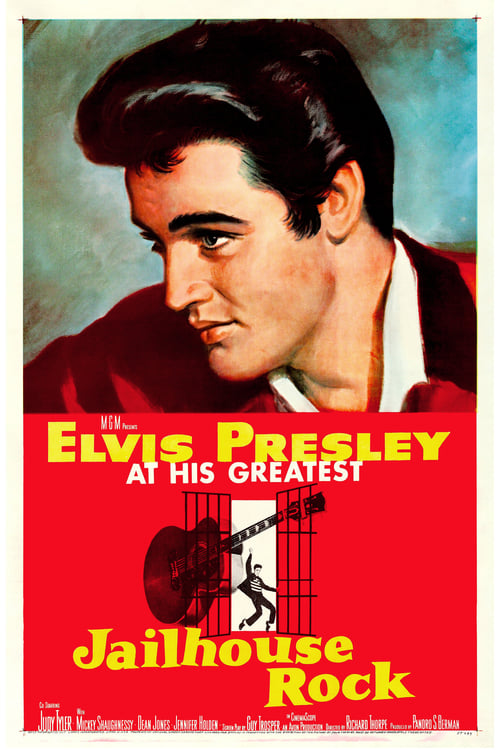
Rock critic Dave Marsh credits Moore with inventing power chords, on the 1957 Elvis hit "Jailhouse Rock". Moore was ranked 29th in Rolling Stone magazine's list of 100 Greatest Guitarists of All Time in 2011. He was inducted into the Rock and Roll Hall of Fame in 2000, the Musicians Hall of Fame and Museum in 2007, and the Memphis Music Hall of Fame in 2015. The Rolling Stones' guitarist Keith Richards said of Moore:When I heard "Heartbreak Hotel", I knew what I wanted to do in life. It was as plain as day. All I wanted to do in the world was to be able to play and sound like the way Scotty Moore did. Everyone wanted to be Elvis, I wanted to be Scotty.
Contents
Biography
Early years
Winfield Scott Moore III was born near Gadsden, Tennessee, to Mattie (nee Hefley) and Winfield Scott Moore II, as the youngest of four boys by 14 years. He learned to play the guitar from family and friends at age eight. Although underage when he enlisted, Moore served in the United States Navy in China and Korea from 1948 through January 1952.
1950s-early 1960s
Moore's early background was in jazz and country music. A fan of the guitarist Chet Atkins, Moore led a group called the Starlite Wranglers before Sam Phillips at Sun Records put him together with then-teenage Elvis Presley. The trio was completed with double bass player Bill Black, who brought a "rhythmic propulsion" that much pleased Phillips. In 1954, Moore and Black accompanied Elvis on what would become the first Presley hit, the Sun Studios session cut of "That's All Right", a recording regarded as a seminal event in rock and roll history.
This session, held on the evening of July 5, 1954, proved entirely unfruitful until late in the night. As they were about to give up and go home, Presley took his guitar and launched into a 1946 blues number, Arthur Crudup's "That's All Right". Moore recalled,All of a sudden, Elvis just started singing this song, jumping around and acting the fool and then Bill picked up his bass and he started acting the fool too, and I started playing with them. Sam, I think, had the door to the control booth open...he stuck his head out and said, "What are you doing?" And we said, "We don't know." "Well, back up," he said, "try to find a place to start and do it again." Phillips quickly began taping as this was the sound he had been looking for.The trio soon recorded a bluegrass number, Bill Monroe's "Blue Moon of Kentucky", again in a distinctive style and employing an echo effect that Sam Phillips called "slapback". A single was pressed with "That's All Right" on the A side and "Blue Moon of Kentucky" as the B-side.
Phillips' rhythm-centered vision led him to steer Moore away from Chet Atkins' style, the one which had been adopted by Merle Travis's finger-picking style, now dubbed as "travis picking", which he deemed fine for pop or country but not for the simple, gutsy sound Phillips was aiming at. Simplify was the keyword.
By his performance at the Louisiana Hayride in October 1954, Presley, Black and Moore were called the Blue Moon Boys. For a time, Moore served as Presley's personal manager. They were later joined by the drummer D.J. Fontana.
Beginning in July 1954, the Blue Moon Boys toured and recorded throughout the American South. Subsequently, Elvis's popularity rose amongst teenage girls, they began touring nationwide, appearing on distinguished programs such as The Ed Sullivan Show, which, at the time, was the hallmark for success for young artists. On April 3, 1956, they performed "Shake, Rattle and Roll," "Heartbreak Hotel," and "Blue Suede Shoes" on The Milton Berle Show. Elvis and the band appeared on The Steve Allen Show in a comedy sketch performing "Hound Dog" to an actual hound dog. Presley was prohibited from doing the gyrations that elicited screams from the audience, which would produce good reviews, but those were nothing compared to the scandals Elvis and the band would face. Elvis never understood why the girls screamed out of control when he sang. It was Moore who told him why. "It's your leg, man. The way you shake your left leg."
Mid-1960s-1980s
Moore pivoted to working primarily as an engineer in the 1960s and 1970s, first at Sam Phillips Recording Service and then later at Music City Recorders.
In 1964, Moore released a solo album on Epic Records called The Guitar That Changed the World, played using his Gibson Super 400. Phillips was initially unaware of the project, and once he got wind of it, Moore was fired. That year, he also moved to Nashville where he launched the studio Music City Recorders and his own record label, Belle Meade Records.
In 1968, Moore, Fontana, and Presley performed for Presley's NBC television special known as the '68 Comeback Special, again with his Gibson Super 400, which was also played by Presley. This special was the last time these musicians would play with Presley, and for Moore, it was the last time he ever saw him.
In 1970, Moore engineered Ringo Starr's solo album Beaucoups of Blues. In 1973, he sold Music City Recorders and primarily began working as a freelance engineer.
In 1975, he (and Fontana) reunited to record "E.P. Express" with friend Carl Perkins. In 1976, he bought Monument Studios and used the building to house his tape-duplication business called Independent Producers Corporation, while also still doing some freelance engineering work. In the late 1970s and early 1980, he served as an engineer for Opryland Productions for television specials. Some musicians and other performers he worked with during his time with Opryland included former Sun labelmate Johnny Cash, Jerry Lee Lewis, Dolly Parton, Minnie Pearl, Perry Como, Ann-Margret, Bob Hope, Carol Burnett, and Joey Heatherton.
In 1989, he served as a consultant for the ABC series titled Elvis, focusing on the early years.
1990s-2009
In 1992, he collaborated with Carl Perkins on the album 706 ReUnion: A Sentimental Journey, which was released on Moore's label, Belle Meade Records. In August 1992, he made his first live performance since 1968, performing with Carl Perkins at Ellis Auditorium for a "Good Rockin' Tonight" show alongside Fontana, the Jordanaires, James Burton, the Sun Rhythm Section, and Ronnie McDowell. They later took this show format on a small tour of England.
In 1993, Moore, Fontana, and Carl Perkins performed at a telethon in Jackson, TN. Later that year, semi-retired Moore met and recorded with Lee Rocker (of the Stray Cats), Rocker's guitarist Mike Eldred, and their band Big Blue for their first album. Moore and Fontana also toured Europe with vocalist Bloomer Jenson, organized by the Elvis Presley fan club "It's Elvis Time". In 1994, Moore, Fontana, and Carl Perkins performed at the Jackson telethon again and were joined by McDowell.
In 1997, Moore and Fontana reunited to record the album All the King's Men, featuring guest appearances from the Bill Black Combo, Keith Richards and Ronnie Wood of The Rolling Stones, Jeff Beck, Levon Helm and Jim Weider of The Band, Rick Neilsen of Cheap Trick, and others. In April 1999, Moore and Fontana toured the UK.
In 2001, Moore and Fontana recorded a version of "That's All Right" with Paul McCartney for the documentary Good Rockin' Tonight: The Legacy of Sun Records.
Style and influence
Moore's playing on his Gibson with his unique finger-picking style using a thumbpick, as on the Sun and early RCA Victor recordings, represented a move of the Chet Atkins style into a more rockabilly mode.
Of Presley's first single "That's All Right," the critic Dave Marsh wrote that "Moore's guitar—especially the solo—toughens the song up and forces it to rock." Though Marsh credits Presley with introducing "the vocal stutter" on "Baby Let's Play House," Marsh states, "Other than that, it's guitarist Scotty Moore's show and he sets a few precedents of his own." Of the other Sun recordings, Marsh cited the "urgent Scotty Moore guitar lick" as a standout element of "Mystery Train," while "Good Rockin' Tonight" displays his "stinging guitar."
In Marsh's description, the teamwork of Moore and other musicians turned the 1957 single and movie title song "Jailhouse Rock" into an "enduring smash for at least three reasons: the great walking bass, Scotty Moore's invention of power chording, and D.J. Fontana's drumming, which is halfway between strip joint rhumba and the perfect New Orleans shuffle."
On the 1961, post-Army Presley single "Little Sister," "Scotty Moore comes up with his greatest post-Sun guitar lick and not only converts a comparatively humdrum Pomus-Shuman teen love triangle number into the best of Elvis's early sixties hits but (together with D.J. Fontana's heavy-footed thunderation) gives more than a few pointers toward the metallic rock to come." According to Presley discographer Ernst Jørgensen, however, Hank Garland was the lead guitarist on the song, while Moore played acoustic guitar.
Moore is given credit as a pioneer rock 'n' roll lead guitarist, though he characteristically downplayed his own innovative role in the development of the style. "It had been there for quite a while," recalled Moore. "Carl Perkins was doing basically the same sort of thing up around Jackson and I know for a fact Jerry Lee Lewis had been playing that kind of music ever since he was ten years old." Paul Friedlander describes the defining elements of rockabilly, which he similarly characterizes as "essentially... an Elvis Presley construction:" "the raw, emotive, and slurred vocal style and emphasis on rhythmic feeling [of] the blues with the string band and strummed rhythm guitar [of] country." In "That's All Right," the Presley trio's first record, Moore's guitar solo, "a combination of Merle Travis–style country finger-picking, double-stop slides from acoustic boogie and blues-based bent-note, single-string work, is a microcosm of this fusion."
Equipment
Earlier on, Scotty used a '52 Telecaster, which he traded at the Houck Piano Company in Memphis for the now-iconic gold-colored Gibson ES-295 (nicknamed "The Guitar That Changed the World"). He made some modifications to the guitar, mainly he was unhappy with the Les Paul style bridge, which he replaced with a Melita-Synchro Sonic model with adjustable saddles, which enabled fine-tuning of each string; but this bridge further required a different tailpiece—Scotty opted for a Kluson trapeze model as utilized by Gibson on the ES-125. This is the guitar heard on all but the later Sun sessions with Elvis. In July 1955, Scotty traded this guitar for a blonde-finish 1954 Gibson L-5 CESN, with which he recorded the last Sun sessions (including "Mystery Train"), as well as several RCA cuts, and in 1957 he switched to a Gibson Super 400. This Super 400 was the guitar heard on the Jailhouse Rock and King Creole soundtracks, as well as the earlier post-army sessions.
One of the key pieces of equipment in Moore's sound on many of the recordings with Presley, besides his guitars, was the Ray Butts EchoSonic, first used by Chet Atkins, a guitar amplifier with a tape echo built in, which allowed him to take his trademark slapback echo on the road. This amplifier was not used until 1955—which means that the earlier Sun sessions (including That's All Right Mama) were not recorded with this amplifier.
Personal life
Last years and death
Moore had to give up playing guitar about ten years before his death because of arthritis. Quite likely his last appearance on a recording came as a guest on the 2011 album 61 & 49 by the Mike Eldred Trio. That group's leader, guitarist Mike Eldred, had been a friend of Moore's since the early 1990s.
Moore died on June 28, 2016, in Nashville, Tennessee, at the age of 84.
Songwriting
Scotty Moore co-wrote the songs "My Kind of Carrying On" and "Now She Cares No More" which were released as Sun 202 on Sun Records in 1954 when he was a member of the group Doug Poindexter and the Starlite Wranglers with Bill Black as the double bass player. He co-wrote the instrumental "Have Guitar Will Travel" in 1958 with Bill Black, which was released as a 45 single, 107, on the Fernwood Records label.
Awards
For his pioneering contribution, Moore has been recognized by the Rockabilly Hall of Fame. In 2000, he was inducted into the Rock and Roll Hall of Fame.