Career
Montiel started in movies at sixteen in her native Spain, where she appeared in a secondary role in her first movie, Te quiero para mí (I want you for myself) in 1944, immediately followed by a leading role in Empezó en boda (It Began with a Wedding) also in 1944. They were followed by roles in films such as Mariona Rebull (1946), Don Quixote (1947) and Madness for Love (1948). In April 1950, accompanied by her mother, she moved to Mexico and starred in a dozen films there in less than five years, including Women's Prison (1951), Red Fury (1951) and Cinnamon Skin (1953).
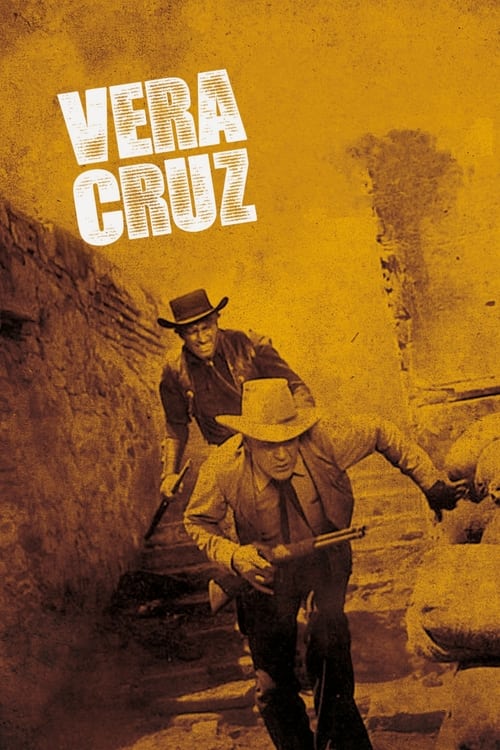
Hollywood came calling afterwards, and she was introduced to United States moviegoers in the film Vera Cruz (1954), directed by Robert Aldrich. She was offered the standard seven-year contract at Columbia Pictures, which she refused, afraid of Hollywood's typecasting policies for Spaniards. Instead she freelanced at Warner Bros. in Serenade (1956), directed by Anthony Mann, whom she married in 1957, and at RKO in Samuel Fuller's Run of the Arrow (1957).
Between November 1956 and January 1957, before filming Run of the Arrow, she filmed in Barcelona the musical film The Last Torch Song during a vacation in Spain and as a deference to its director Juan de Orduña. The film, that was filmed with a very low budget, became unexpectedly a worldwide megahit. Initially, the songs in the film were going to be sung by a professional singer who would dub Montiel, but due to the low budget, she eventually sang the songs herself. The film soundtrack album also became a hit.
Following this success, in June 1957 she signed with producer Benito Perojo a lavish contract to make four films in three years, being the first of them The Violet Seller, a 1958 large-budget international co-production musical film. The economic agreement was ten million pesetas[a] (US$240,000 as of 1957)[b] for four films, which means that she was to receive 2.5 million pesetas (US$60,000) per film, making her the highest-paid Spanish star at a time when the highest-paid stars were netting one million pesetas (US$24,000) per film. The success of The Violet Seller surpassed that of The Last Torch Song, and in a contractual dispute for the next film, A Girl Against Napoleon (1959), the agreement was improved by securing for her the twenty per cent of the producer's net revenue. She also signed a contract with Hispavox to record and release the soundtrack albums of her films for which she netted the ten per cent of the records sale as royalties. The Violet Seller soundtrack album, the first with them, topped sales in Spain and in Latin America and, in July 1959, Hispavox served a Golden Disk award to her for the number of records sold there.
All this made her a film and singing international superstar. Almost all of her next films earned high box office results and she combined filming, recording songs and performing live. She was the highest paid star of Spanish cinema, and many years later, she began to say that she had been paid more than US$1 million for each of these films, something that the press widely reported as the actual figure. Among the next films during the 1960s and early 1970s were My Last Tango (1960), Pecado de amor (1961), The Lovely Lola (a 1962 version of La Dame aux Camélias), Casablanca, Nest of Spies (1963), Samba (1964), The Lost Woman (1966), Tuset Street (1967), Esa mujer (1969) and Variety (1971). The film Variety was banned in Beijing in 1973.
In 1974, she announced her retirement from movies, as she become dissatisfied with the movie industry and the overt nudity in films, but continued performing live, recording and starring on her own variety television shows in Spain. In 2002 she was the advertising image of the MTV Europe Music Awards held in Barcelona.
In November 2009, singer Alaska who forms the Spanish pop group Fangoria with Nacho Canut, invited Montiel to record a track sharing vocals with her for the re-release of the band's album Absolutamente. They recorded the title track "Absolutamente" as a duet. The music video for the song was released on 18 December 2009. Well into her eighties, she had no plans to retire, and continued working in various projects. In May 2011, after almost forty years without making a movie, she performed in a feature film directed by Óscar Parra de Carrizosa. The film title is Abrázame and was shot on location in La Mancha.
She is considered "one of the most important actresses in the history of Spain", and has been described by Spain's press as a "myth of Spanish cinema." She has also been characterized as "the most beautiful woman of twentieth century Spain." She has also been called a "sexual, feminist, and gay icon for Francoist Spain."