
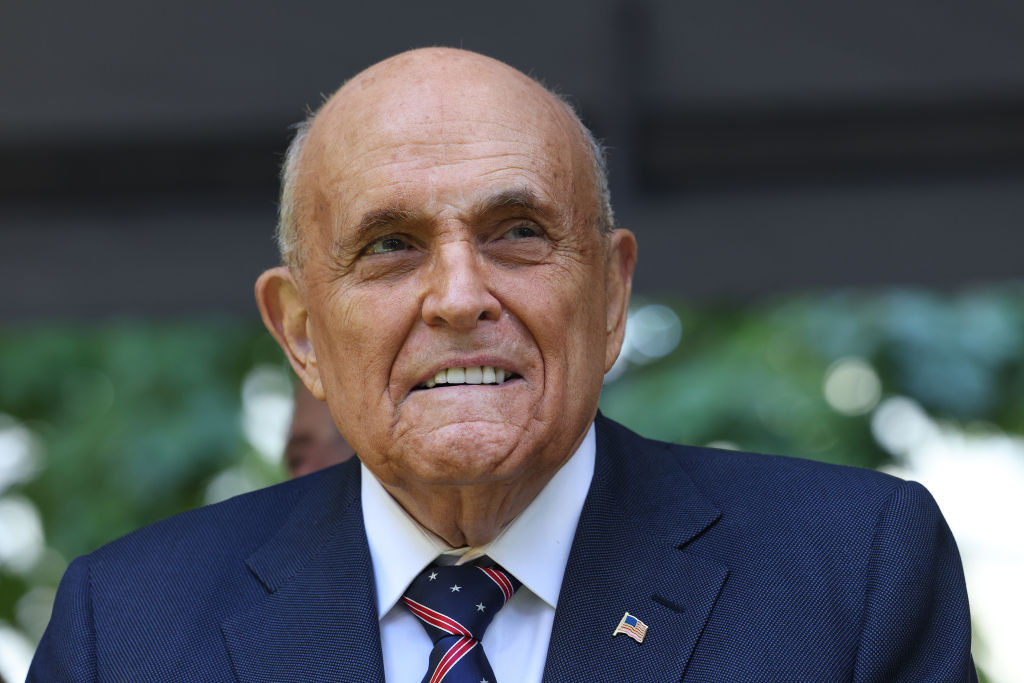
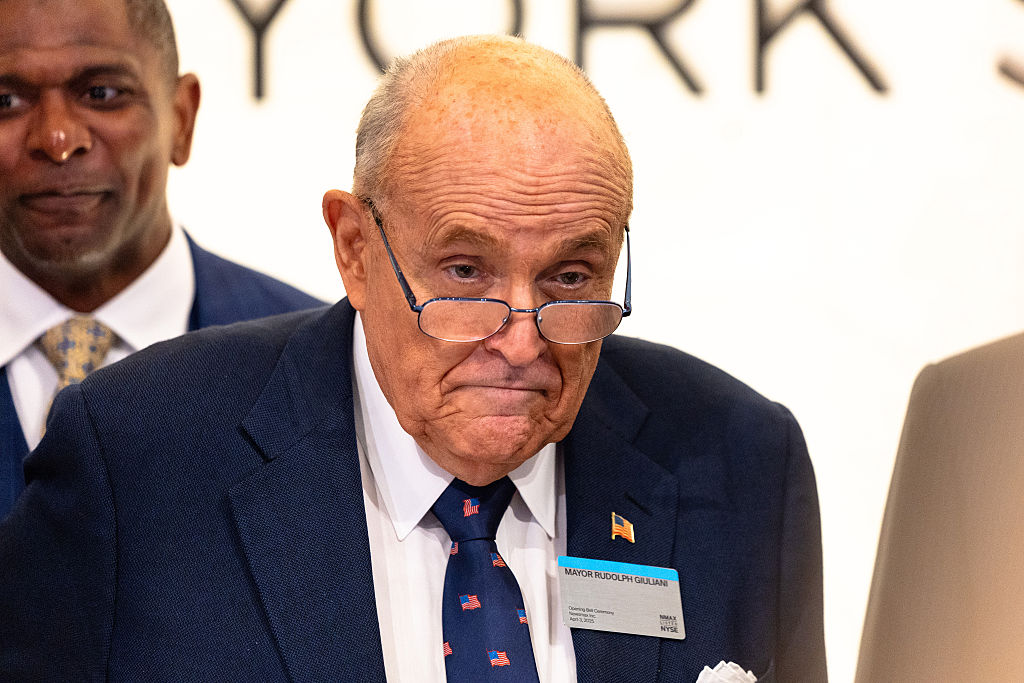
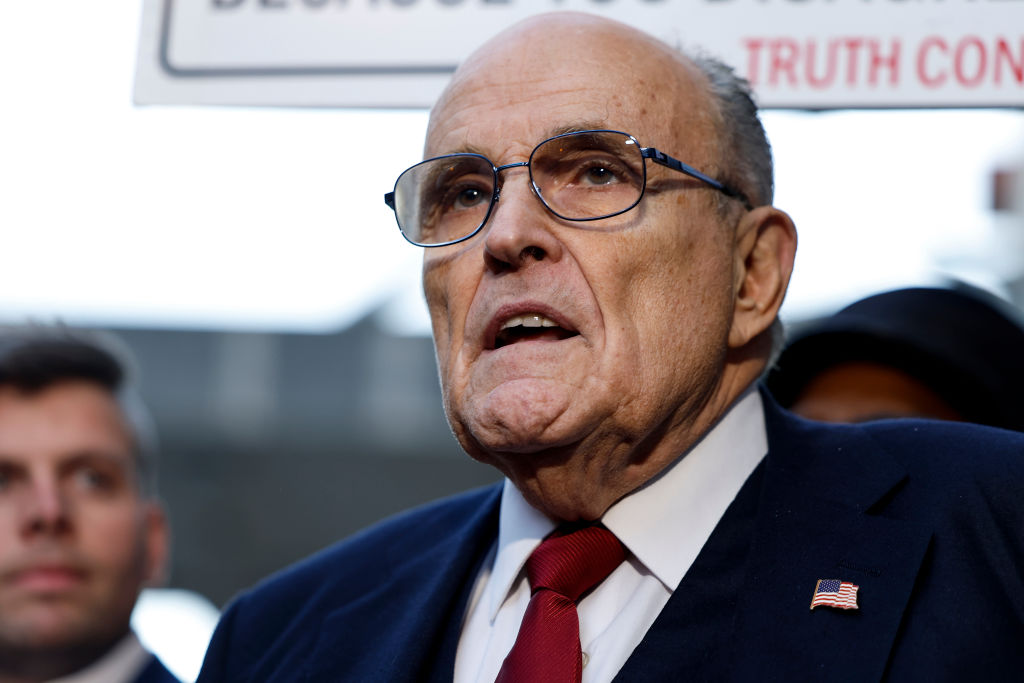
Rudolph William Louis Giuliani (, Italian: [dʒuˈljaːni]; born May 28, 1944) is an American politician and disbarred lawyer who served as the 108th mayor of New York City from 1994 to 2001. He previously served as the U.S. Associate Attorney General from 1981 to 1983 and the U.S. Attorney for the Southern District of New York from 1983 to 1989. Giuliani led the 1980s federal prosecution of New York City mafia bosses as U.S. attorney for the Southern District of New York. After a failed campaign for mayor of New York City in the 1989 election, he succeeded in 1993, and was reelected in 1997, campaigning on a "tough on crime" platform. He led New York's controversial "civic cleanup" from 1994 to 2001, and appointed William Bratton as New York City's new police commissioner. In 2000, he ran against First Lady Hillary Clinton for a U.S. Senate seat from New York, but left the race once diagnosed with prostate cancer. For his mayoral leadership following the September 11 attacks in 2001, he was called "America's mayor" and was named Time Person of the Year for 2001.
In 2002, Giuliani founded a security consulting business, Giuliani Partners, and acquired, but later sold, an investment banking firm, Giuliani Capital Advisors. In 2005, he joined a law firm, renamed Bracewell & Giuliani. Vying for the Republican Party's 2008 presidential nomination, Giuliani was an early frontrunner, yet did poorly in the primary election; he later withdrew and endorsed the party's subsequent nominee, John McCain. After declining to run for New York governor in 2010 and for the Republican presidential nomination in 2012, Giuliani turned his focus to his business firms. After advising Donald Trump during his 2016 presidential campaign and early administration, Giuliani joined President Trump's personal legal team in April 2018, remaining on it during the 2020 presidential election. His activities as Trump's attorney led to allegations that he engaged in corruption and profiteering. In 2019, Giuliani was a central figure in the Trump–Ukraine scandal.
Following the 2020 election, Giuliani represented Trump in many lawsuits filed in attempts to overturn the election results, making false and debunked allegations about rigged voting machines, polling place fraud, and an international communist conspiracy. Giuliani spoke at the rally preceding the January 6 United States Capitol attack, where he made false claims of voter fraud and called for "trial by combat". He was later also listed as an unindicted co-conspirator in the federal prosecution of Trump's alleged attempts to overturn the election. In August 2023, he was indicted in the prosecution related to the 2020 election in Georgia. Later in 2023, Giuliani lost a $148-million defamation lawsuit for his false claims about two election workers in Georgia, and unsuccessfully attempted to declare bankruptcy; he later reached a settlement to pay damages awarded to the election workers. In April 2024, he was indicted on charges related to the 2020 election in Arizona. He was disbarred in the state of New York in July and in the District of Columbia in September. In November 2025, Trump issued a federal pardon to Giuliani.
Contents
Early life and education
Giuliani was born on May 28, 1944, in the East Flatbush section of Brooklyn, New York City, which at the time of his birth was a largely Italian American enclave of Brooklyn. He is the only child of working-class parents Helen (née D'Avanzo) and Harold Angelo Giuliani, both children of Italian immigrants. Harold Giuliani, a plumber and a bartender, had trouble holding a job, was convicted of felony assault and robbery, and served prison time in Sing Sing. Once released, Harold worked as an enforcer for his brother-in-law Leo D'Avanzo, who operated an organized crime-affiliated loan sharking and gambling ring from a restaurant in Brooklyn.
Giuliani was raised a Roman Catholic. When he was seven years old, his family moved from Brooklyn to Garden City South on Long Island, where he attended the local Catholic school, St. Anne's. Later, he commuted back to Brooklyn to attend Bishop Loughlin Memorial High School, from which he graduated in 1961. Giuliani attended Manhattan College in Riverdale, Bronx, where he majored in political science with a minor in philosophy. Giuliani was elected president of his class in his second year, but was not re-elected in his junior year. He joined the Phi Rho Pi college forensic fraternity and honor society. He graduated in 1965. Giuliani considered becoming a priest but decided to attend New York University School of Law in Manhattan, where he was a member of the New York University Law Review, and graduated cum laude with a Juris Doctor degree in 1968.
Legal career
Giuliani started his career and political life as a Democrat, working as a Democratic Party committeeman on Long Island in the mid-1960s. In 1968, he volunteered for Robert F. Kennedy's campaign in the 1968 U.S. presidential election, and voted for George McGovern in the 1972 U.S. presidential election. After graduating from law school, Giuliani clerked for Judge Lloyd Francis MacMahon, U.S. district judge for the Southern District of New York.
Giuliani did not serve in the military during the Vietnam War. His conscription was deferred while he was enrolled at Manhattan College and NYU Law. Upon graduation from law school in 1968, he was classified 1-A (available for military service), but in 1969 he was reclassified 2-A (essential civilian) as Judge MacMahon's law clerk. In 1970, Giuliani was reclassified 1-A but received a high 308 draft lottery number and was not called up for service.
U.S. associate deputy attorney general
Giuliani switched his party registration from Democratic to independent in 1975. This occurred during a period of time in which he was recruited for a position in Washington, D.C., with the Ford administration. Giuliani served as the associate deputy attorney general and chief of staff to Deputy Attorney General Harold "Ace" Tyler.
His first high-profile prosecution was of Democratic U.S. representative Bertram L. Podell (NY-13), who was convicted of corruption. Podell pleaded guilty to conspiracy and conflict of interest for accepting more than $41,000 in campaign contributions and legal fees from a Florida airline to obtain federal rights for a Bahama route. Podell, who maintained a legal practice while serving in Congress, said the payments were legitimate legal fees. The Washington Post later reported, "The trial catapulted future New York mayor Rudolph Giuliani to front-page status when, as assistant U.S. attorney, he relentlessly cross-examined an initially calm Rep. Podell. The congressman reportedly grew more flustered and eventually decided to plead guilty."
From 1977 to 1981, during the Carter administration, Giuliani practiced law at the Patterson, Belknap, Webb and Tyler law firm as chief of staff to his former boss Ace Tyler. In later years, Tyler became "disillusioned" by what Tyler described as Giuliani's time as U.S. attorney, criticizing several of his prosecutions as "overkill". On December 8, 1980, one month after the 1980 U.S. presidential election brought Republicans back to power in Washington, he switched his party affiliation from independent to Republican. Giuliani later said the switches were because he found Democratic policies "naïve", and that "by the time I moved to Washington, the Republicans had come to make more sense to me." Others suggested that the switches were made to get positions in the Justice Department. Giuliani's mother maintained in 1988 that he "only became a Republican after he began to get all these jobs from them. He's definitely not a conservative Republican. He thinks he is, but he isn't. He still feels very sorry for the poor."
U.S. associate attorney general
In 1981, Giuliani was named U.S. Associate Attorney General in the Reagan administration, the third-highest position in the U.S. Department of Justice. As Associate Attorney General, Giuliani supervised the U.S. Attorney Offices' federal law enforcement agencies, the Department of Corrections, the Drug Enforcement Administration, and the U.S. Marshals Service. In a well-publicized 1982 case, Giuliani testified in defense of the U.S. federal government's "detention posture" regarding the internment of more than 2,000 Haitian asylum seekers who had entered the country illegally. The U.S. government disputed the assertion that most of the detainees had fled their country due to political persecution, alleging instead that they were "economic migrants". In defense of the government's position, Giuliani testified that "political repression, at least in general, does not exist" under Haitian president Jean-Claude Duvalier's regime.
U.S. attorney for the Southern District of New York
In 1983, Giuliani was appointed to be U.S. Attorney for the Southern District of New York, which was technically a demotion but was sought by Giuliani because of his desire to personally litigate cases and because the U.S. Attorney for the Southern District of New York is considered the highest-profile U.S. Attorney's Office in the country and as such is often used by those who have held the position as a springboard for running for public office. It was in this position that he first gained national prominence by prosecuting numerous high-profile cases, resulting in the convictions of Wall Street figures Ivan Boesky and Michael Milken. He also focused on prosecuting drug dealers, organized crime, and corruption in government. He amassed a record of 4,152 convictions and 25 reversals. As a federal prosecutor, Giuliani was credited with bringing the perp walk, parading of suspects in front of the previously alerted media, into common use as a prosecutorial tool. After Giuliani "patented the perp walk", the tool was used by increasing numbers of prosecutors nationwide.
Giuliani's critics said that he arranged for people to be arrested but then dropped charges for lack of evidence on high-profile cases rather than going to trial. In a few cases, his arrests of alleged white-collar criminals at their workplaces with charges later dropped or lessened sparked controversy and damaged the reputations of the alleged "perps". He said veteran stock trader Richard Wigton, of Kidder, Peabody & Co., was guilty of insider trading. In February 1987, he had officers handcuff Wigton and march him through the company's trading floor, with Wigton in tears. Giuliani had his agents arrest Tim Tabor, a young arbitrageur and former colleague of Wigton, so late that he had to stay overnight in jail before posting bond.
Within three months, charges were dropped against both Wigton and Tabor. Giuliani said, "We're not going to go to trial. We're just the tip of the iceberg", but no further charges were forthcoming and the investigation did not end until Giuliani's successor was in place. Giuliani's high-profile raid of the Princeton/Newport firm ended with the defendants having their cases overturned on appeal on the grounds that what they had been convicted of were not crimes.
In the Mafia Commission Trial, which ran from February 25, 1985, through November 19, 1986, Giuliani indicted eleven organized crime figures, including the heads of New York City's "Five Families", under the Racketeer Influenced and Corrupt Organizations Act (RICO) on charges including extortion, labor racketeering, and murder for hire. In 2001, Time magazine called this "case of cases" possibly "the most significant assault on the infrastructure of organized crime since the high command of the Chicago Mafia was swept away in 1943", and quoted Giuliani's stated intention: "Our approach is to wipe out the five families." Gambino crime family boss Paul Castellano evaded conviction when he and his underboss Thomas Bilotti were murdered on the streets of midtown Manhattan on December 16, 1985; however, three heads of the Five Families were sentenced to 100 years in prison on January 13, 1987.
Disbarment
In June 2021, Giuliani had his license to practice law suspended in the state of New York, pending an investigation related to his efforts to overturn the results of the 2020 presidential election. On July 2, 2024, he was disbarred in the state of New York. On September 26, 2024, he was disbarred in the District of Columbia under reciprocal discipline.
Mayoral campaigns
Giuliani was U.S. attorney until January 1989, resigning as the Reagan administration ended. He garnered criticism until he left office for his handling of cases and was accused of prosecuting cases to further his political ambitions. He joined the law firm White & Case in New York City as a partner. He remained with White & Case until May 1990, when he joined the law firm Anderson Kill Olick & Oshinsky, also in New York City.
1989
Giuliani first ran for New York City mayor in 1989, when he attempted to unseat three-term incumbent Ed Koch. He won the September 1989 Republican Party primary election against business magnate Ronald Lauder in a campaign marked by claims that Giuliani was a not a true Republican (RINO) after an acrimonious debate between the two men.
In the Democratic primary, Koch was upset by David Dinkins, who was Manhattan Borough president. In the general election, Giuliani ran as the fusion candidate of both the Republican and the Liberal parties. The Conservative Party, which had often co-lined the Republican party candidate, withheld support from Giuliani and ran Lauder instead. Conservative Party leaders were unhappy with Giuliani on ideological grounds. They cited the Liberal Party's endorsement statement that Giuliani "agreed with the Liberal Party's views on affirmative action, gay rights, gun control, school prayer, and tuition tax credits".
During two televised debates, Giuliani framed himself as an agent of change, saying, "I'm the reformer", that "If we keep going merrily along, this city's going down", and that electing Dinkins would represent "more of the same, more of the rotten politics that have been dragging us down". Giuliani pointed out that Dinkins had not filed a tax return for many years and several other ethical missteps, in particular a stock transfer to his son. Dinkins filed several years of returns and said the tax matter had been fully paid off. He denied other wrongdoing, saying that "what we need is a mayor, not a prosecutor" and that Giuliani refused to say "the R-word – he doesn't like to admit he's a Republican". Dinkins won the endorsements of three of the four major daily New York newspapers, while Giuliani won approval from the New York Post. In the end, Giuliani lost to Dinkins by a margin of 47,080 votes out of 1,899,845 votes cast, in what was the closest election in New York City's history. The closeness of the race was particularly noteworthy, considering the small percentage of New York City residents who were registered Republicans, and it resulted in Giuliani being the presumptive nominee for a rematch with Dinkins at the next election.
1993
Four years after his defeat to Dinkins, Giuliani again ran for mayor. Once again, Giuliani also ran on the Liberal Party line but not the Conservative Party line, which ran activist George Marlin. Although crime had begun to fall during the Dinkins administration, Giuliani's campaign capitalized on the perception that crime was uncontrolled in the city following events such as the Crown Heights riot and the Family Red Apple boycott. The year prior to the election, Giuliani was a key speaker at a Patrolmen's Benevolent Association rally opposing Dinkins, in which Giuliani blamed the police department's low morale on Dinkins' leadership. The rally quickly devolved into a riot, with nearly 4,000 off-duty police officers storming the City Hall and blocking traffic on the Brooklyn Bridge.
Dinkins and Giuliani never debated during the campaign, because they were never able to agree on how to approach a debate. Dinkins was endorsed by The New York Times and Newsday, while Giuliani was endorsed by the New York Post and the New York Daily News (a key switch from 1989). Giuliani went to visit the Lubavitcher Rebbe, Rabbi Menachem Mendel Schneerson, seeking his blessing and endorsement.
On election day, Giuliani's campaign hired off-duty cops, firefighters, and corrections officers to monitor polling places in Manhattan, Brooklyn, and the Bronx for cases of voter fraud. Despite objections from the Dinkins campaign, who said that the effort would intimidate Democratic voters, Police Commissioner Raymond Kelly assigned an additional 52 police captains and 3,500 officers to monitor the city's polling places. Giuliani won by a margin of 53,367 votes. He became the first Republican elected mayor of New York City since John Lindsay in 1965. Similar to the election four years prior, Giuliani performed particularly well in the white ethnic neighborhoods in Brooklyn, Queens, and Staten Island. Giuliani saw especially high returns in the borough of Staten Island, as a referendum to consider allowing the borough to secede from New York City was on the ballot.
1997
Giuliani's opponent in 1997 was Democratic Manhattan borough president Ruth Messinger, who had beaten Al Sharpton in the September 9, 1997, Democratic primary. In the general election, Giuliani once again had the Liberal Party and not the Conservative Party listing. Giuliani ran an aggressive campaign, parlaying his image as a tough leader who had cleaned up the city. Giuliani's popularity was at its highest point to date, with a late October 1997 Quinnipiac University Polling Institute poll showing him as having a 68 percent approval rating; 70 percent of New Yorkers were satisfied with life in the city and 64 percent said things were better in the city compared to four years previously.
Throughout the campaign, Giuliani was well ahead in the polls and had a strong fund-raising advantage over Messinger. On her part, Messinger lost the support of several usually Democratic constituencies, including gay organizations and large labor unions. The major local daily newspapers (The New York Times, Daily News, New York Post, and Newsday) all endorsed Giuliani over Messinger. In the end, Giuliani won 58% of the vote to Messinger's 41%, becoming the first registered Republican to win a second term as mayor while on the Republican line since Fiorello H. La Guardia in 1941. Voter turnout was the lowest in twelve years, with 38% of registered voters casting ballots. The margin of victory included gains in his share of the African American vote (20% compared to 1993's 5%) and the Hispanic vote (43% from 37%) while maintaining his base of white ethnic and Catholic and Jewish voters from 1993.
Mayoralty
Law enforcement
Giuliani served as mayor of New York City from 1994 to 2001. In his first term as mayor, the New York City Police Department (NYPD) – at the instigation of Commissioner Bill Bratton – adopted an aggressive enforcement/deterrent strategy based on James Q. Wilson's "broken windows" approach. This involved crackdowns on relatively minor offenses such as graffiti, turnstile jumping, cannabis possession, and aggressive panhandling by "squeegee men", on the theory that this would send a message that order would be maintained.
The legal underpinning for removing the "squeegee men" from the streets was developed under Giuliani's predecessor David Dinkins. Bratton, with Deputy Commissioner Jack Maple, also created and instituted CompStat, a computer-driven comparative statistical approach to mapping crime geographically and in terms of emerging criminal patterns, as well as charting officer performance by quantifying criminal apprehensions. Critics of the system assert that it creates an environment in which police officials are encouraged to underreport or otherwise manipulate crime data. An extensive study found a high correlation between crime rates reported by the police through CompStat and rates of crime available from other sources, suggesting there had been no manipulation. The CompStat initiative won the 1996 Innovations in Government Award from Harvard Kennedy School.
During Giuliani's administration, crime rates dropped in New York City. The extent to which Giuliani deserves the credit is disputed. Crime rates in New York City had started to drop in 1991 under Dinkins, three years before Giuliani took office. A small nationwide drop in crime preceded Giuliani's election, and some critics say he may have been the beneficiary of a trend already in progress. Additional contributing factors to the overall decline in New York City crime during the 1990s were the addition of 7,000 officers to the NYPD, lobbied for and hired by the Dinkins administration, and an overall improvement in the national economy.
Changing demographics were a key factor contributing to crime rate reductions, which were similar across the country during this time. Because the crime index is based on that of the FBI, which is self-reported by police departments, some have alleged that crimes were shifted into categories the FBI does not collect. In his 2006 book The Great American Crime Decline, sociologist Frank Zimring stated that "up to half of New York's crime drop in the 1990s, and virtually 100 percent of its continuing crime decline since 2000, has resulted from policing."
City services
The Giuliani administration advocated the privatization of the city's public schools, which he called "dysfunctional", and the reduction of state funding for them. He advocated a voucher-based system to promote private schooling. Giuliani supported protection for illegal immigrants. He continued a policy of preventing city employees from contacting the Immigration and Naturalization Service about immigration violations, on the grounds that illegal immigrants should be able to take actions such as sending their children to school or reporting crimes to the police without fear of deportation. During his mayoralty, gay and lesbian New Yorkers received domestic partnership rights. Giuliani induced the city's Democratic-controlled New York City Council, which had avoided the issue for years, to pass legislation providing broad protection for same-sex partners. In 1998, he codified local law by granting all city employees equal benefits for their domestic partners.
2000 U.S. Senate campaign
With term limits, Giuliani was ineligible to run in 2001 for a third term as mayor. In November 1998, four-term incumbent Democratic U.S. senator Daniel Patrick Moynihan announced his retirement and Giuliani immediately indicated an interest in running in the 2000 election for the now-open seat. Because of his high profile and visibility, Giuliani was supported by the state Republican Party. Giuliani's entrance led Democratic congressman Charles Rangel and others to recruit then-First Lady Hillary Clinton to run for Moynihan's seat, hoping she might combat his star power.
In April 1999, Giuliani formed an exploratory committee in connection with the Senate run. By January 2000, polling for the race showed Giuliani nine points ahead of Clinton, in part because his campaign was able to take advantage of several campaign stumbles by Clinton. In March 2000, the New York Police Department's fatal shooting of Patrick Dorismond inflamed Giuliani's strained relations with the city's minority communities, and Clinton seized on it as a major campaign issue. By April 2000, reports showed Clinton gaining upstate and generally outworking Giuliani, who said his duties as mayor prevented him from campaigning more. Clinton was now eight to ten points ahead of Giuliani in the polls.
Then followed four tumultuous weeks in which Giuliani learned he had prostate cancer and needed treatment; his extramarital relationship with Judith Nathan became public and the subject of a media frenzy; and he announced a separation from his wife Donna Hanover. After much indecision, on May 19, Giuliani announced his withdrawal from the Senate race.
September 11 terrorist attacks
Giuliani received nationwide attention in the aftermath of the September 11 attacks. He made frequent appearances on radio and television on September 11 and afterwards – for example, to indicate that tunnels would be closed as a precautionary measure, and that there was no reason to believe the dispersion of chemical or biological weaponry into the air was a factor in the attack. In his public statements, Giuliani said:
Tomorrow New York is going to be here. And we're going to rebuild, and we're going to be stronger than we were before ... I want the people of New York to be an example to the rest of the country, and the rest of the world, that terrorism can't stop us.
The 9/11 attacks occurred on the scheduled date of the mayoral primary to select the Democratic and Republican candidates to succeed Giuliani. The primary was immediately delayed two weeks to September 25. During this period, Giuliani sought an unprecedented three-month emergency extension of his term from January 1 to April 1 under the New York State Constitution (Article 3, Section 25). In October 2000, he had considered supporting city council efforts to remove their own term limits, although he was not in favor of ending consecutive mayoral term limits.
In the end, leaders in the State Assembly and Senate indicated that they did not believe the extension was necessary. The election proceeded as scheduled, and the winning candidate, the Giuliani-endorsed Republican convert Michael Bloomberg, took office on January 1, 2002, per normal custom. Giuliani said he had been at the Ground Zero site "as often, if not more, than most workers ... I was there working with them. I was exposed to exactly the same things they were exposed to. So in that sense, I'm one of them." Some 9/11 workers have objected to those claims. While his appointment logs were unavailable for the six days immediately following the attacks, Giuliani logged 29 hours at the site over three months beginning September 17. This contrasted with recovery workers at the site who spent this much time at the site in two to three days.
When Saudi prince Alwaleed bin Talal suggested the attacks were an indication that the United States "should re-examine its policies in the Middle East and adopt a more balanced stand toward the Palestinian cause", Giuliani asserted, "There is no moral equivalent for this act. There is no justification for it ... And one of the reasons I think this happened is because people were engaged in moral equivalency in not understanding the difference between liberal democracies like the United States, like Israel, and terrorist states and those who condone terrorism. So I think not only are those statements wrong, they're part of the problem." Giuliani subsequently rejected the prince's $10 million donation to disaster relief in the aftermath of the attack.
Post-mayoralty political career
Before 2008 election
Since leaving office as mayor, Giuliani has remained politically active by campaigning for Republican candidates for political offices. When George Pataki became governor in 1995, this represented the first time the positions of mayor and governor were held simultaneously by Republicans since John Lindsay and Nelson Rockefeller. Giuliani and Pataki were instrumental in bringing the 2004 Republican National Convention to New York City. He was a speaker at the convention, and endorsed President George W. Bush for re-election by recalling that immediately after the World Trade Center towers fell, stating: "Without really thinking, based on just emotion, spontaneous, I grabbed the arm of then-Police Commissioner Bernard Kerik, and I said to him, 'Bernie, thank God George Bush is our president.'"
In 2006, Giuliani started a website called Solutions America to help elect Republican candidates. After campaigning on Bush's behalf in the 2004 U.S. presidential election, he was reportedly the top choice for U.S. Secretary of Homeland Security after Tom Ridge's resignation. When suggestions were made that Giuliani's confirmation hearings would be marred by details of his past affairs and scandals, he turned down the offer and instead recommended his friend and former New York police commissioner Bernard Kerik. After the announcement of Kerik's nomination, information about Kerik's past – that he had: ties to organized crime, failed to properly report gifts he had received, been sued for sexual harassment and employed an undocumented alien as a domestic servant – became known, and Kerik withdrew.
In March 2006, Congress formed the Iraq Study Group (ISG). This bipartisan ten-person panel, of which Giuliani was a member, was charged with assessing the Iraq War and making recommendations. They unanimously concluded that contrary to Bush administration assertions, "The situation in Iraq is grave and deteriorating" and called for "changes in the primary mission" that would allow "the United States to begin to move its forces out of Iraq".
In May 2006, after missing all ISG's meetings, including a briefing from General David Petraeus, former secretary of state Colin Powell and former Army chief of staff Eric Shinseki, Giuliani resigned, citing "previous time commitments". Giuliani's fundraising schedule had kept him from participating in the panel, a schedule which raised $11 million in speaking fees over fourteen months, and that Giuliani had been forced to resign after being given "an ultimatum to either show up...or leave" by group leader James Baker. Giuliani subsequently said he had started thinking about running for president, and being on the panel might give it a political spin. Giuliani was described by Newsweek in January 2007 as "one of the most consistent cheerleaders for the president's handling of the war in Iraq". As of June 2007, he remained one of the few candidates for president to unequivocally support the basis for 2003 invasion of Iraq and the execution of the war.
2008 presidential campaign
In November 2006, Giuliani announced the formation of an exploratory committee toward a run in the 2008 U.S. presidential election. In February 2007, he filed a "statement of candidacy" and confirmed on the television program Larry King Live that he was running.
Early polls showed Giuliani with one of the highest levels of name recognition ever recorded along with high levels of support among the Republican candidates. Throughout most of 2007, he was the leader in most nationwide opinion polling among Republicans. Senator John McCain, who ranked a close second behind the New York Mayor, had faded, and most polls showed Giuliani to have more support than any of the other declared Republican candidates, with only former senator Fred Thompson and former governor Mitt Romney showing greater support in some per-state Republican polls. On November 7, 2007, Giuliani's campaign received an endorsement from evangelist, Christian Broadcasting Network founder, and past presidential candidate Pat Robertson. This was viewed by political observers as a possibly key development in the race, as it gave credence that evangelicals and other social conservatives could support Giuliani despite some of his positions on social issues such as abortion and gay rights.
Giuliani's campaign hit a difficult stretch during the last two months of 2007, when Bernard Kerik, whom Giuliani had recommended for the position of secretary of homeland security, was indicted on 16 counts of tax fraud and other federal charges. The media reported that when Giuliani was the mayor of New York, he billed several tens of thousands of dollars of mayoral security expenses to obscure city agencies. Those expenses were incurred while he visited Judith Nathan, with whom he was having an extramarital affair; later analysis showed the billing to likely be unrelated to hiding Nathan. Several stories were published in the press regarding clients of Giuliani Partners and Bracewell & Giuliani who were in opposition to goals of American foreign policy. Giuliani's national poll numbers began steadily slipping and his unusual strategy of focusing more on later, multi-primary big states rather than the smaller, first-voting states was seen at risk.
Despite his strategy, Giuliani competed in the January 8, 2008, New Hampshire primary to a substantial extent, but finished a distant fourth with 9 percent of the vote. Similar poor results continued in other early contests, when Giuliani's staff went without pay to focus all efforts on the crucial late January Florida Republican primary. The shift of the electorate's focus from national security to the state of the economy also hurt Giuliani, as did the resurgence of McCain's similarly themed campaign. On January 29, 2008, Giuliani finished a distant third in the Florida result with 15 percent of the vote, trailing McCain and Romney. Facing declining polls and lost leads in the upcoming large Super Tuesday states, including that of his home New York, Giuliani withdrew from the race on January 30, endorsing McCain.
After 2008 election
Following the end of his presidential campaign, Giuliani's "high appearance fees dropped like a stone". He returned to work at both Giuliani Partners and Bracewell & Giuliani. His consultancy work included advising Keiko Fujimori with her presidential campaign during the 2011 Peruvian general election. Giuliani also explored hosting a syndicated radio show, and was reported to be in talks with Westwood One about replacing Bill O'Reilly before that position went to Fred Thompson (another unsuccessful 2008 GOP presidential primary candidate). In 2009, Giuliani said the Obama administration and U.S. Treasury Secretary Timothy Geithner lacked executive competence in dealing with the 2008 financial crisis.
Giuliani said his political career was not necessarily over, and did not rule out a 2010 New York gubernatorial or 2012 presidential bid. A November 2008 Siena College poll indicated that although Governor David Paterson – promoted to the office via the Eliot Spitzer prostitution scandal a year before – was popular among New Yorkers, he would have just a slight lead over Giuliani in a hypothetical matchup. By February 2009, after the prolonged Senate appointment process, a Siena College poll indicated that Paterson was losing popularity among New Yorkers, and showed Giuliani with a fifteen-point lead in the hypothetical contest.
In January 2009, Giuliani said he would not decide on a gubernatorial run for another six to eight months, adding that he thought it would not be fair to the governor to start campaigning early while the governor tries to focus on his job. Giuliani worked to retire his presidential campaign debt, but by the end of March 2009 it was still $2.4 million in arrears, the largest such remaining amount for any of the 2008 contenders. In April 2009, Giuliani strongly opposed Paterson's announced push for same-sex marriage in New York and said it would likely cause a backlash that could put Republicans in statewide office in 2010. By late August 2009, there were still conflicting reports about whether Giuliani was likely to run.
On December 23, 2009, Giuliani announced that he would not seek any office in 2010, saying "The main reason has to do with my two enterprises: Bracewell & Giuliani and Giuliani Partners. I'm very busy in both." The decisions signaled a possible end to Giuliani's political career. During the 2010 midterm elections, Giuliani endorsed and campaigned for Bob Ehrlich and Marco Rubio. On October 11, 2011, Giuliani announced that he was not running for president. According to Kevin Law, the director of the Long Island Association, Giuliani believed, "As a moderate, he thought it was a pretty significant challenge. He said it's tough to be a moderate and succeed in GOP primaries", and Giuliani himself said, "If it's too late for (New Jersey Governor) Chris Christie, it's too late for me."
Relationship with Donald Trump
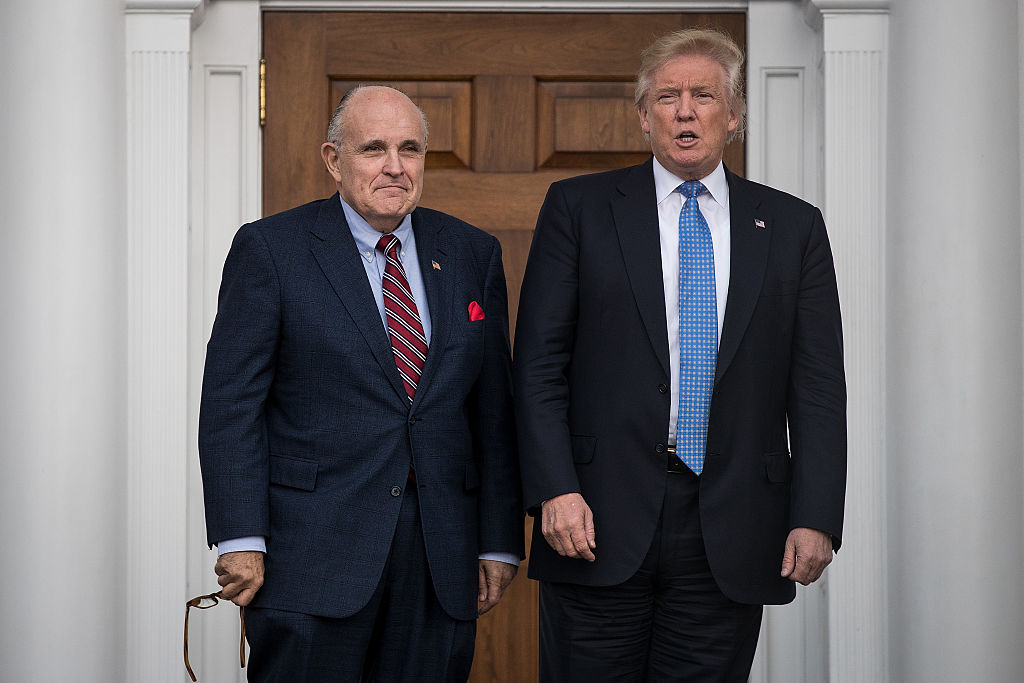
Giuliani supported Donald Trump in the 2016 U.S. presidential election. He gave a prime time speech during the first night of the 2016 Republican National Convention. Earlier in the day, Giuliani and former 2016 presidential candidate Ben Carson appeared at an event for the pro-Trump Great America PAC. Giuliani also appeared in a Great America PAC ad entitled "Leadership". Giuliani's and Jeff Sessions' appearances were staples at Trump campaign rallies. During the campaign, Giuliani praised Trump for his worldwide accomplishments and helping fellow New Yorkers in their time of need. He defended Trump against allegations of racism, sexual assault, and not paying any federal income taxes for as long as two decades.
In August 2016, Giuliani, while campaigning for Trump, said that in the "eight years before Obama" became president, "we didn't have any successful radical Islamic terrorist attack in the United States". It was noted that 9/11 happened during George W. Bush's first term. PolitiFact brought up four more counter-examples (the 2002 Los Angeles International Airport shooting, the 2002 D.C. sniper attacks, the 2006 Seattle Jewish Federation shooting and the 2006 UNC SUV attack) to Giuliani's claim. Giuliani later said he was using "abbreviated language". Giuliani was believed to be a likely pick for secretary of state in the Trump administration. On December 9, 2016, Trump announced that Giuliani had removed his name from consideration for any Cabinet post.
The then president-elect Trump named Giuliani his informal cybersecurity adviser on January 12, 2017. The status of this informal role for Giuliani was unclear because Trump created in November 2018 the Cybersecurity and Infrastructure Security Agency (CISA), headed by Chris Krebs as director and Matthew Travis as deputy. In the weeks following his appointment, Giuliani was forced to consult an Apple Store Genius Bar when he "was locked out of his iPhone because he had forgotten the passcode and entered the wrong one at least 10 times", belying his putative expertise in the field.
In January 2017, Giuliani said he advised President Trump in matters relating to Executive Order 13769, which barred citizens of seven Muslim-majority countries from entering the United States for 90 days. The order also suspended the admission of all refugees for 120 days. Giuliani drew scrutiny over his ties to foreign nations, regarding not registering per the Foreign Agents Registration Act (FARA).
Attempts to get Ukraine to carry out investigations
Since at least May 2019, Giuliani urged Ukraine's president, Volodymyr Zelenskyy, to investigate oil company Burisma, whose board once included Joe Biden's son Hunter Biden, and check for irregularities in Ukraine's investigation of Paul Manafort. He said such investigations would benefit his client's defense, and that his efforts had Trump's support. Toward this end, Giuliani met with Ukrainian officials throughout 2019. In July 2019, BuzzFeed News reported that Soviet-born Americans, and Igor Fruman and Lev Parnas, were liaisons between Giuliani and Ukrainian government officials in this effort. Parnas and Fruman, prolific Republican donors, neither registered as foreign agents in the United States nor were approved by the State Department. Giuliani responded that the report was "a pathetic effort to cover up what are enormous allegations of criminality by the Biden family". By September 2019, there had been no evidence of wrongdoing by the Bidens.
In October 2019, Giuliani hired former Watergate prosecutor Jon Sale to represent him in the House Intelligence Committee's impeachment investigation. The committee issued a subpoena to Giuliani asking him to release documents related to the Ukraine scandal. The New York Times reported on October 11, 2019, that the U.S. Attorney for the Southern District of New York, was investigating him for violating lobbying laws related to his activities in Ukraine. Bloomberg News reported that the investigation could extend to bribery of foreign officials or conspiracy, and The Wall Street Journal reported Giuliani was being investigated for a possible profit motive in a Ukrainian gas venture. Giuliani denied having any interest in the venture. Federal prosecutors issued subpoenas to associates of Giuliani to investigate individuals, apparently including Giuliani, on potential charges, including money laundering, obstruction of justice, conspiracy to defraud the US, and mail/wire fraud.
Giuliani was paid $500,000 to consult for Parnas' company named "Fraud Guarantee". Trump supporter attorney Charles Gucciardo paid Giuliani on behalf of Fraud Guarantee in two $250,000 payments, in 2018. In May 2019, Giuliani described Ukraine's chief prosecutor Yuriy Lutsenko as a "much more honest guy" than his predecessor, Viktor Shokin. After Lutsenko was removed from office, he said in September 2019 that he found no evidence of wrongdoing by the Bidens, and had met Giuliani about ten times. Giuliani reversed his stance, saying that Shokin is the one people "should have spoken to", while Lutsenko acted "corruptly" and "is exactly the prosecutor that Joe Biden put in in order to tank the case".
2020 election lawsuits
In November 2020, Trump placed Giuliani in charge of lawsuits related to alleged voter irregularities in the 2020 U.S. presidential election. On November 7, Giuliani gave a press conference at Four Seasons Total Landscaping in Philadelphia to discuss challenging the vote count in Pennsylvania, during which media networks called the presidential election for Biden. Trump designated Giuliani to lead a legal team to challenge the election results, telling Giuliani to "go wild" and "do anything you want" in his efforts to overturn them. This team, a self-described "elite strike force" that included Sidney Powell, Joseph diGenova, Victoria Toensing, and Trump campaign attorney Jenna Ellis, appeared at a November 19 press conference in which they made numerous false and unsubstantiated assertions revolving around an international Communist conspiracy, rigged voting machines, and polling place fraud.
Giuliani repeatedly publicly denounced the use of provisional ballots (in which the poll worker does not see the voter's name on the rolls, so the voter swears an affidavit oath that they are registered to vote), arguing that the practice enables fraud, although Giuliani himself had cast this type of ballot on October 31, 2020, in Manhattan. By January 8, 2021, Trump and his team had lost 63 lawsuits. Giuliani's associate Maria Ryan sent a letter to White House chief of staff Mark Meadows requesting that Giuliani be paid $2.5 million and receive a "general pardon". A month later, when Trump was out of office, Giuliani was no longer representing him in any pending cases, according to a Trump adviser. While Trump continued to fundraise, purportedly for his election-related legal fights, as of the end of July 2021 he had not given any of this money to Giuliani. In October 2021, in another context, Trump remarked: "I do pay my lawyers when they do a good job."
One early lawsuit sought to invalidate up to 700,000 mail-in ballots and stop Pennsylvania from certifying its election results. Giuliani said he had signed affidavits attesting to voter fraud and election official misconduct in Pennsylvania and elsewhere. Despite not having argued a case in any courtroom for over three decades, Giuliani applied for special permission to represent the Trump presidential campaign in the federal court of Pennsylvania. In doing so, Giuliani misrepresented his status with the District of Columbia Bar in his application by stating that he was a member of the bar in good standing, when in fact the District of Columbia had suspended him for nonpayment of fees. In his first day in court on the case, which was November 17, 2020, Giuliani struggled with rudimentary legal processes and was accused by lawyers for the Pennsylvania secretary of state of making legal arguments that were "disgraceful in an American courtroom". Judge Matthew Brann questioned how Giuliani could justify "asking this court to invalidate some 6.8 million votes thereby disenfranchising every single voter in the commonwealth."
Attack on the Capitol
On January 6, 2021, Giuliani spoke at the "Save America March" rally on the Ellipse that was attended by Trump supporters protesting the election results. He repeated conspiracy theories that voting machines used in the election were "crooked" and called for "trial by combat", which he claimed after the riot had not been a call to violence but a reference to Game of Thrones. Trump supporters subsequently stormed the U.S. Capitol in a riot that resulted in the deaths of four people, and temporarily disrupted the counting of the Electoral College vote.
Giuliani had reportedly called Republican lawmakers to urge them to delay the electoral vote count with the intention of throwing the election to Trump. Giuliani attempted to contact Alabama senator Tommy Tuberville, a Trump ally, around 7 p.m. following the Capitol storming, planning to ask him to "try to just slow it down" by objecting to multiple states and "raise issues so that we get ourselves into tomorrow – ideally until the end of tomorrow". Giuliani mistakenly left the message on the voicemail of another senator, who leaked the recording to The Dispatch. Rick Perlstein, a noted historian of the American conservative movement, termed Giuliani's effort as treasonous and days later tweeted: "Sedition. Open and shut. He talked about the time that was being opened up. He was welcoming, and using, the violence. This needs to be investigated."
Giuliani faced criticism for his appearance at the rally and the Capitol riot that followed it. Former congressman and MSNBC host Joe Scarborough called for the arrest of Giuliani, President Trump, and Donald Trump Jr. Manhattan College president Brennan O'Donnell stated in a January 7 open letter to the college community, "one of the loudest voices fueling the anger, hatred, and violence that spilled out yesterday is a graduate of our College, Rudolph Giuliani. His conduct as a leader of the campaign to de-legitimize the election and disenfranchise millions of voters – has been and continues to be a repudiation of the deepest values of his alma mater."
On January 11, the New York State Bar Association, an advocacy group for the legal profession in New York state, announced that it was launching an investigation into whether Giuliani should be removed from its membership rolls, noting both Giuliani's comments to the Trump supporter rally at the Ellipse on January 6, and that it "has received hundreds of complaints in recent months about Mr. Giuliani and his baseless efforts on behalf of President Trump to cast doubt on the veracity of the 2020 presidential election and, after the votes were cast, to overturn its legitimate results". Removal from the group's membership rolls would not directly disbar Giuliani from practicing law in New York. New York state senator Brad Hoylman and lawyers' group Lawyers Defending American Democracy, also filed a complaints against Giuliani with the Attorney Grievance Committee of the First Judicial Department of the New York Supreme Court, which has the authority to discipline and disbar licensed New York lawyers.
Indictments
On August 1, 2023, the Justice Department's special counsel investigating Trump's efforts to overturn the 2020 election charged Trump with four criminal counts related to those efforts. News reports widely identified Giuliani as the unnamed "Co-Conspirator 1" (of six) mentioned at least 46 times in the 45-page indictment. In a statement, Giuliani's lawyer, Robert J. Costello, acknowledged that it "appears that Mayor Giuliani is alleged to be co-conspirator No. 1."
On August 14, 2023, Giuliani was indicted, along with Trump and 17 others, by an Atlanta, Georgia, grand jury. The 41-count indictment charged the group of 19 under state racketeering laws for conspiring to "change the outcome of the election in favor of Trump". Giuliani's false testimony in December 2020 to Georgia lawmakers about election fraud was among the events listed in the indictment. His lawyer (at least for the arraignment) was Brian Tevis. Giuliani turned himself in at the Fulton County Sheriff's Office on August 23. On September 9, he filed to have the charges against him quashed.
In April 2024, Giuliani was among 18 people who were indicted on charges related to the 2020 election in Arizona. By mid-May, Giuliani was the only defendant yet to be served with a summons to court for this case, with prosecutors stating that they had mailed Giuliani the documents with no response, called Giuliani's telephone with no response, and visited his apartment building but were "not granted access", to which Giuliani responded: "Arizona officials say they can't find Giuliani. So this is perfect evidence that if they're so incompetent, they can't find me, they also can't count votes correctly."
On May 17, during his early 80th birthday celebration, Giuliani posted on social media a photo of himself smiling in a group of people along with balloons, with Giuliani writing, "If Arizona authorities can't find me by tomorrow morning; 1. They must dismiss the indictment", and around one hour later, Arizona's attorney general Kris Mayes announced that Giuliani had been successfully served, while Giuliani's spokesperson responded by criticizing the "decision to try and embarrass [Giuliani] during his 80th birthday party".
On May 21, Giuliani and ten other co-defendants pled not guilty after being arraigned in Maricopa County Superior Court. Giuliani was among five of these eleven defendants who appeared virtually rather than in-person. The same day, Giuliani was ordered to post a $10,000 bond and was required to book himself into the custody of the Maricopa County Sheriff's Office within 30 days as a result of him ducking efforts by the state to serve him with a summons within the past week; in contrast to Giuliani, all of the other ten defendants would be released without bond. In August 2024, an Arizona judge set the trial date for Giuliani and others for January 5, 2026.
Suspension of law license and New York disbarment
On June 24, 2021, a New York Appellate Court suspended Giuliani's law license. The panel of five justices found that there was "uncontroverted" evidence that Giuliani made "demonstrably false and misleading statements to courts, lawmakers and the public" and added, "These false statements were made to improperly bolster (Giuliani's) narrative that due to widespread voter fraud, victory in the 2020 United States presidential election was stolen from his client." The court concluded that Giuliani's conduct "immediately threatens the public interest and warrants interim suspension from the practice of law". His license was also suspended in Washington, D.C., on July 7, 2021. On July 2, 2024, a New York state appeals court disbarred Giuliani as a result of his efforts to subvert the 2020 election by making false allegations about mass voter fraud.
Ethics charges for baseless claims in favor of Trump
On June 10, 2022, the DC Bar's Office of Disciplinary Counsel filed charges with the DC Court of Appeals' Board on Professional Responsibility against Giuliani. The ethics charges said that Giuliani's federal court filings regarding the 2020 presidential election in Pennsylvania contained baseless claims in favor of Trump. On December 15, 2022, after a week-long hearing, the D.C. Bar Disciplinary Counsel recommended Giuliani be disbarred for violating rules of professional conduct by making false election fraud claims and trying to overturn the 2020 presidential election results in Pennsylvania. The counsel's decision is preliminary and non-binding. On July 7, 2023, an ad hoc hearing committee of the Board on Professional Responsibility recommended that he be disbarred, and on May 31, 2024, the board itself agreed. He was disbarred by the DC Court of Appeals on September 26, 2024.
Supermarket incident
On June 27, 2022, Giuliani appeared at ShopRite, a supermarket in Staten Island, campaigning on behalf of his son Andrew, who was attempting to become the Republican nominee for governor of New York. After Giuliani's appearance, a 39-year-old supermarket employee, Daniel Gill, was arrested and charged with second-degree assault for allegedly slapping Giuliani's back in the store. Giuliani responded publicly that it was like "a boulder hit me" or "like somebody shot me", and that "it hurt tremendously". Giuliani further stated that the "very, very heavy shot" by Gill caused him to stumble and "could've easily ... knocked me to the ground and killed me by my head getting hit", and called for Gill's firing and prosecution. The Legal Aid Society, representing Gill, asserted that Giuliani had exaggerated the severity of the slap to garner greater amounts of attention from the media, stating in a press release: "Our client merely patted Mr. Giuliani, who sustained nothing remotely resembling physical injuries, without malice to simply get his attention, as the video footage clearly showed."
Within a day of the incident, the New York Post posted video footage of it. The New York Times described that the video "contradicted" Giuliani's account, showing Gill walking quickly past Giuliani, "patting him on the back", whereby Giuliani "wobbled slightly forward". The Hill described that the "video shows Giuliani barely moving after a ShopRite employee's hand makes contact with his back", while Giuliani responded that the "videotape that you see is probably a little deceptive", stressing that he was "hit very, very hard on the back. To such an extent that it knocked me back about two steps."
After the video was released, Gill's charge was reduced to third-degree assault on June 28, while third-degree menacing and second-degree harassment charges were simultaneously added. Gill acknowledged telling Giuliani "What's up, scumbag?" during the incident. In September 2022, Gill agreed to an adjournment in contemplation of dismissal, whereby all charges would be dismissed if he does not violate the law in the next six months. In May 2023, Gill sued Giuliani, seeking monetary damages "for false arrest, civil rights conspiracy resulting in false arrest and false imprisonment, defamation, intentional infliction of emotional distress, and negligent infliction of emotional distress". The case was dismissed in 2024.
Sexual assault and misconduct allegations
On May 15, 2023, Noelle Dunphy, a former off-the-books employee of Giuliani, filed a civil lawsuit against him. She accused Giuliani of sexual assault, wage theft and unlawful abuse of power. Dunphy claimed that sexually satisfying Giuliani was an "absolute requirement" of her job; the complaint also said that Giuliani "often made outrageous comments that created and added to the hostile work environment that Ms. Dunphy was forced to endure", and that he was constantly under the effects of alcohol. The lawsuit further alleged that Giuliani complained about "'freakin Arabs' and Jews", and implied that "[Jewish men's] penises were inferior due to 'natural selection'". The lawsuit also alleged that Giuliani and Donald Trump sold pardons for $2 million apiece. In her 2023 memoir Enough, Cassidy Hutchinson says that Giuliani groped her backstage during Donald Trump's speech on January 6, 2021.
Other legal issues
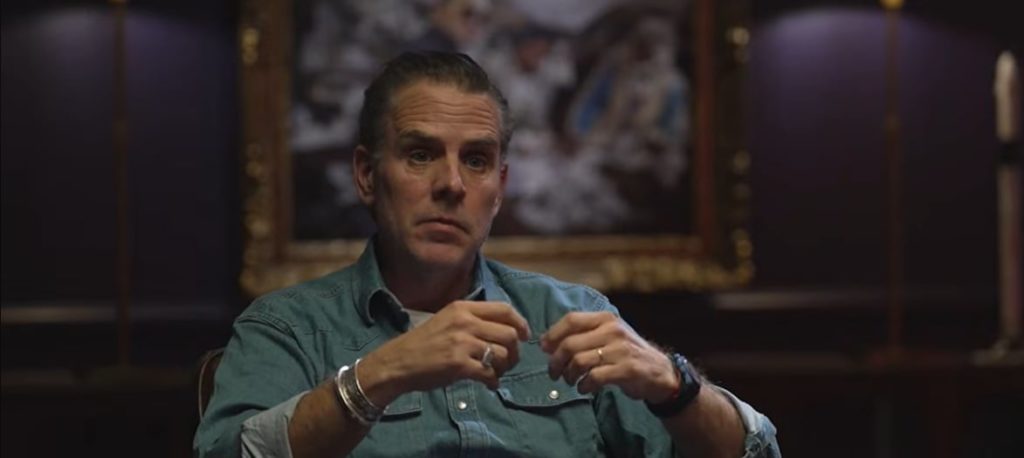
In September 2023, law firm Davidoff Hutcher & Citron sued Giuliani for over $1.3 million in unpaid legal fees. The firm alleged that Giuliani had paid only $214,000 of his total legal bill between November 2019 and July 2023. Giuliani said that the firm's bill "is way in excess to anything approaching legitimate fees." Also in September 2023, Hunter Biden filed a civil lawsuit against Giuliani, his companies and attorney Robert Costello, alleging that they had spent years "hacking into, tampering with, manipulating, copying, disseminating, and generally obsessing over data that they were given that was taken or stolen from" his personal devices and caused "total annihilation" of his digital privacy. Biden dropped the lawsuit in June 2024.
In October 2023, Giuliani filed a defamation lawsuit in New Hampshire against President Joe Biden for referring to him as a "Russian pawn" during a 2020 presidential debate. Giuliani alleged that Biden's comments were false and that he had been personally harmed by them. Giuliani did not respond to a motion to dismiss the lawsuit in March 2024. The lawsuit was dismissed in September, with the judge saying that Giuliani had "utterly failed" to carry his burden.
Other post-mayoral ventures
Giuliani Partners
After leaving the New York City mayor's office, Giuliani founded a security consulting business, Giuliani Partners LLC, in 2002, a firm that has been categorized by multiple media outlets as a lobbying entity capitalizing on Giuliani's name recognition, and which has been the subject of allegations surrounding staff hired by Giuliani and due to the firm's chosen client base. Over five years, Giuliani Partners earned more than $100 million.
In June 2007, he stepped down as CEO and chairman of Giuliani Partners, although this action was not made public until December 4, 2007; he maintained his equity interest in the firm. Giuliani subsequently returned to active participation in the firm following the election. In late 2009, Giuliani announced that they had a security consulting contract with Rio de Janeiro, Brazil regarding the 2016 Summer Olympics. He faced criticism in 2012 for advising people once allied with Slobodan Milošević who had lauded Serbian war criminals.
Bracewell and Giuliani
In 2005, Giuliani joined the law firm of Bracewell & Patterson LLP (renamed Bracewell & Giuliani LLP) as a name partner and basis for the expanding firm's new New York office. When he joined the Texas-based firm he brought Marc Mukasey, the son of Attorney General Michael Mukasey, into the firm. Despite a busy schedule, Giuliani was highly active in the day-to-day business of the law firm, which was a high-profile supplier of legal and lobbying services to the oil, gas, and energy industries. Its aggressive defense of pollution-causing coal-fired power plants threatened to cause political risk for Giuliani, but association with the firm helped Giuliani achieve fund-raising success in Texas.
In 2006, Giuliani acted as the lead counsel and lead spokesmen for Bracewell & Giuliani client Purdue Pharma, the makers of OxyContin, during their negotiations with federal prosecutors over charges that the pharmaceutical company misled the public about OxyContin's addictive properties. The agreement reached resulted in Purdue Pharma and some of its executives paying $634.5 million in fines. Bracewell & Giuliani represented corporate clients before many U.S. government departments and agencies. Some clients have worked with corporations and foreign governments. The firm was rebranded as Bracewell LLP after Giuliani left it in January 2016, reportedly by "amicable agreement".
Greenberg Traurig
In January 2016, Giuliani moved to the law firm Greenberg Traurig, where he served as the global chairman for Greenberg's cybersecurity and crisis management group, as well as a senior advisor to the firm's executive chairman. He took an unpaid leave of absence in April 2018 when he joined Trump's legal defense team. He resigned from the firm on May 9, 2018.
Lobbying in Romania
In August 2018, Giuliani was retained by Freeh Group International Solutions, a global consulting firm run by former FBI director Louis Freeh, which paid him a fee to lobby Romanian president Klaus Iohannis to change Romania's anti-corruption policy and reduce the role of the National Anticorruption Directorate. Giuliani argued that the anti-corruption efforts had gone too far.
Podcast
Giuliani launched a podcast, Rudy Giuliani's Common Sense, in January 2020.
Television appearances
Giuliani was reportedly revealed to be the first unmasking on the seventh season of The Masked Singer, which caused judges Ken Jeong and Robin Thicke to leave the set in disgust. Giuliani actually turned out to be the ninth unmasking as "Jack in the Box" of Team Bad. He mentioned that he partook in this show to do it for his newborn granddaughter. It was during his unmasked performance of George Thorogood's "Bad to the Bone" when Jeong walked off.
Personal life
Marriages and relationships
Giuliani married Regina Peruggi, his second cousin, whom he had known since childhood, on October 26, 1968. The marriage was in trouble by the mid-1970s and they agreed to a trial separation in 1975. Peruggi did not accompany him to Washington when he accepted the job in the U.S. Attorney General's Office. Giuliani met local television personality Donna Hanover sometime in 1982, and they began dating when she was working in Miami. Giuliani filed for legal separation from Peruggi on August 12, 1982. The Giuliani–Peruggi marriage legally ended in two ways: a civil divorce was issued by the end of 1982, while a Roman Catholic church annulment of the marriage was granted at the end of 1983, reportedly because Giuliani had discovered that he and Peruggi were second cousins. Alan Placa, Giuliani's best man, later became a priest and helped secure the annulment. Giuliani and Peruggi had no children.
Giuliani married Hanover at St. Monica's church in Manhattan on April 15, 1984. They had two children: Andrew and Caroline Rose, who is a filmmaker in the LGBTQ+ community and has described herself as "multiverses apart" from her father. Giuliani was still married to Hanover in May 1999 when he met Judith Nathan, a sales manager for a pharmaceutical company, at Club Macanudo, an Upper East Side cigar bar. By 1996, Donna Hanover had reverted to her professional name and virtually stopped appearing in public with her husband amid rumors of marital problems. Nathan and Giuliani formed an ongoing relationship. In summer 1999, Giuliani charged the costs for his NYPD security detail to obscure city agencies to keep his relationship with Nathan from public scrutiny. The police department began providing Nathan with city-provided chauffeur services in early 2000.
By March 2000, Giuliani had stopped wearing his wedding ring. The appearances that he and Nathan made at functions and events became publicly visible, although they were not mentioned in the press. The Daily News and the New York Post both broke news of Giuliani's relationship with Nathan in early May 2000. Giuliani first publicly acknowledged her on May 3, 2000, when he said Judith was his "very good friend".
On May 10, 2000, Giuliani held a press conference to announce that he intended to separate from Hanover. Giuliani had not informed Hanover about his plans before the press conference. This was an omission for which Giuliani was widely criticized. Giuliani then went on to praise Nathan as a "very, very fine woman" and said about Hanover that "over the course of some period of time in many ways, we've grown to live independent and separate lives." Hours later Hanover said, "I had hoped that we could keep this marriage together. For several years, it was difficult to participate in Rudy's public life because of his relationship with one staff member", in reference to another woman who worked on Giuliani's staff. Giuliani moved out of Gracie Mansion by August 2001 and into an apartment with a couple he was friends with. Giuliani filed for divorce from Hanover in October 2000, and a public battle broke out between their representatives. Nathan was barred by court order from entering Gracie Mansion or meeting his children before the divorce was final.
Religious beliefs
Giuliani has declined to comment publicly on his religious practice and beliefs, although he identifies religion as an important part of his life. When asked if he is a practicing Catholic, Giuliani answered, "My religious affiliation, my religious practices and the degree to which I am a good or not-so-good Catholic, I prefer to leave to the priests."
Health
Giuliani's father died at age 73 of prostate cancer at Memorial Sloan–Kettering Cancer Center in April 1981. Nineteen years later, in April 2000, Giuliani, then aged 55, was diagnosed with prostate cancer following a prostate biopsy, after an elevated screening PSA. Giuliani would go on to make a full recovery, becoming a spokesman for cancer survivors.
On August 30, 2025, Giuliani's car was rear-ended on a New Hampshire highway. Shortly before, he had stopped to help a woman who had flagged him down, then he had resumed travel. His car was in motion when he was hit from behind by a speeding vehicle. He suffered arm and leg injuries, a fractured vertebra, cuts and bruises.
In early May 2026, Giuliani was hospitalized with pneumonia. As of May 3, he was in critical but stable condition. It was unclear how long he had been hospitalized. He was released from the hospital the same month.
Awards and honors
In 1989, Syracuse University awarded Giuliani an honorary law degree; in 2022, the university announced that it was developing a process that would allow them to revoke Giuliani's degree. In 1998, Giuliani received the Hundred Year Association of New York's Gold Medal Award "in recognition of outstanding contributions to the City of New York". In December 2001, Giuliani was made Knight Grand Cross of the Order of Merit of Savoy by motu proprio. For his leadership on and after the September 11 attacks, Giuliani was made an honorary Knight Commander of the Order of the British Empire by Her Majesty Queen Elizabeth II on February 13, 2002. He was awarded Medal of Heroism by Czech president Václav Havel on October 28, 2002.
Giuliani was named the Time "Person of the Year" for 2001. In 2002, the Episcopal Diocese of New York gave Giuliani the Fiorello LaGuardia Public Service Award for Valor and Leadership in the Time of Global Crisis. Also in 2002, former first lady Nancy Reagan awarded Giuliani the Ronald Reagan Freedom Award, and he received the U.S. senator John Heinz Award for Greatest Public Service by an Elected or Appointed Official, an award given out annually by Jefferson Awards. In 2003, Giuliani received the Academy of Achievement's Golden Plate Award. Also in 2003, he was awarded a Doctor of Laws honoris causa by the University of Rhode Island, which was revoked in January 2022.
In 2004, construction began on the Rudolph W. Giuliani Trauma Center at St. Vincent's Hospital in New York. In 2005, Giuliani received honorary degrees from Loyola College in Maryland and Middlebury College. In 2006, Giuliani and his wife were honored by the American Heart Association at its annual Heart of the Hamptons benefit in Water Mill, New York. In 2007, Giuliani received an honorary doctorate in public administration from The Citadel, The Military College of South Carolina. In 2021, Middlebury announced that it was revoking the degree given to Giuliani.
Also in 2007, Giuliani was honored by the National Italian American Foundation (NIAF), receiving the NIAF Special Achievement Award for Public Service, and was awarded the Margaret Thatcher Medal of Freedom by the Atlantic Bridge. In the 2009 graduation ceremony for Drexel University's Earle Mack School of Law, Giuliani was the keynote speaker and recipient of an honorary degree; in 2021, Drexel announced that it was rescinding the degree. Giuliani was the Robert C. Vance Distinguished Lecturer at Central Connecticut State University in 2013.
In popular culture
During his career, Giuliani was referenced in popular culture through television and other media. In 1993, he made a cameo appearance as himself in the Seinfeld episode "The Non-Fat Yogurt", which is a fictionalized account of the 1993 mayoral election. Giuliani's scenes were filmed the morning after his real-world election. In late 2000, Giuliani made an appearance as himself in the 11th season Law & Order episode titled "Endurance", where he introduces ADA Nora Lewin (portrayed by Dianne Wiest). In 2003, Giuliani was portrayed by James Woods in the USA Network television film Rudy: The Rudy Giuliani Story. In 2007, Giuliani guest starred as himself in The Simpsons episode "Stop, or My Dog Will Shoot!" In 2018, Giuliani was portrayed multiple times on Saturday Night Live by Kate McKinnon. McKinnon continued portraying him in 2019.
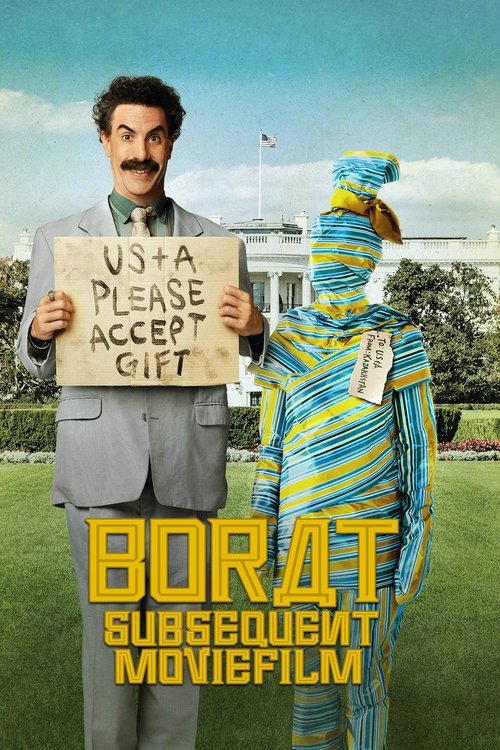
In 2020, Giuliani made a cameo appearance on a Netflix true crime limited series' Fear City: New York vs the Mafia, talking about his role in leading the 1980s federal prosecution of the Five Families. Also in 2020, Giuliani made an unwitting appearance in Borat Subsequent Moviefilm. In the mockumentary film, Giuliani agrees to an interview with Borat's "daughter", Tutar (played by actress Maria Bakalova), who is disguised as a reporter. When invited to Tutar's hotel room, Giuliani proceeds to lie on her bed and reach inside his trousers; they are immediately interrupted by Borat, who says: "She 15. She too old for you." Giuliani later disregarded the accusation, calling it a "complete fabrication" and saying he was rather "tucking in [his] shirt after taking off the recording equipment". In 2021, Giuliani won two Razzie awards for his part in the film: Worst Supporting Actor and Worst Screen Combo for his pants zipper.