Robert Adolph Wilton Morley (26 May 1908 – 3 June 1992) was an English actor who enjoyed a lengthy career in both Britain and the United States. He was frequently cast as a pompous English gentleman representing the Establishment, often in supporting roles. In 1939 he received an Academy Award nomination for Best Supporting Actor for his portrayal of King Louis XVI in Marie Antoinette.
In Movie Encyclopedia, film critic Leonard Maltin describes Morley as "recognisable by his ungainly bulk, bushy eyebrows, thick lips and double chin, ... particularly effective when cast as a pompous windbag." Ephraim Katz in his International Film Encyclopaedia describes Morley as "a rotund, triple-chinned, delightful character player of the British and American stage and screen." In his autobiography, Responsible Gentleman, Morley said his stage career started with managements valuing his appearance for playing "substantial gentleman" roles – as a doctor, lawyer, accountant or other professional member of society.
Contents
Early life
Morley was born in Semley, Wiltshire, England, the son of Gertrude Emily (née Fass) and Robert Wilton Morley, a major in the British Army. His mother came from a German family that had emigrated to South Africa. Morley attended Wellington College, Berkshire, which he hated, followed by RADA. As he was a famous "Old Wellingtonian", generations of headmasters tried to contact him, without success, with Morley stating "the only reason for me visiting Wellington would be to burn it down".
Career
Morley made his West End stage debut in 1929 in Treasure Island at the Strand Theatre and his Broadway debut in 1938 in the title role of Oscar Wilde at the Fulton Theatre. Although soon won over to the big screen, Morley remained both a busy West End star and successful author, as well as appearing in touring productions.
A versatile actor, especially in his younger years, he played Louis XVI in Marie Antoinette (1938), for which he received an Academy Award nomination as Best Supporting Actor, and won both a National Board of Review Award and a Photoplay Award.
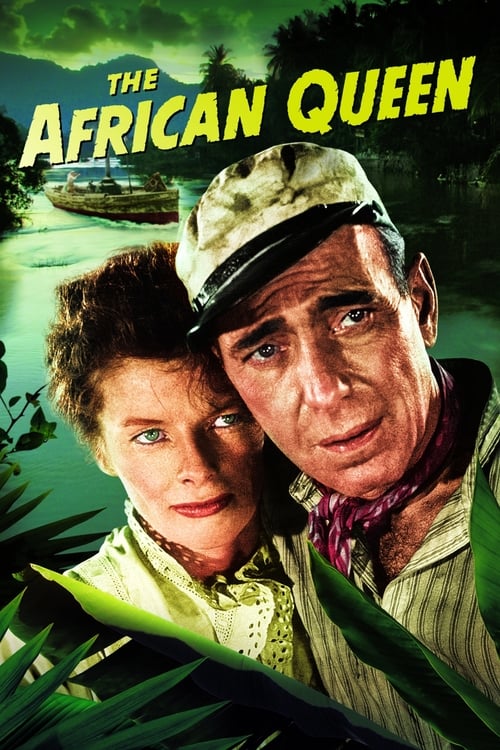
He co-wrote several plays for the stage. His 1937 play Goodness, How Sad was turned into an Ealing Studios film, Return to Yesterday (1940), directed by Robert Stevenson. Later, he had outstanding success in London and New York with Edward, My Son, a gripping family drama written in 1947 in collaboration with Noel Langley. Morley played the central role of Arnold Holt. Edward, My Son (1949) was made into a movie by George Cukor for MGM-British. Morley's acting career continued with roles as a missionary in The African Queen (1951), The Story of Gilbert and Sullivan (1953), as W. S. Gilbert, and in Oscar Wilde (1960). In 1959 he appeared in an Alfred Hitchcock Presents adaptation of a Stanley Ellin short story entitled, 'Specialty of the House'. In Ken Annakin's Those Magnificent Men in Their Flying Machines, Morley is featured among an international ensemble cast including Stuart Whitman, Sarah Miles, Terry-Thomas, James Fox, Red Skelton, Benny Hill, Jean-Pierre Cassel, Gert Fröbe and Alberto Sordi.
Morley also personified the conservative Englishman in many comedy and caper films. He was the face of BOAC (later British Airways) as the merry television commercial spokesman of the 1970s with "We'll take good care of you". Later in his career, he received critical acclaim and acting plaudits for his performance in the 1977 comedic satire Who Is Killing the Great Chefs of Europe?, winning both a National Society of Film Critics Award and a Los Angeles Film Critics Association Award, as well as earning a nomination for a Golden Globe Award.
In 1980, Morley hosted and provided explanatory introductions to the 14-episode Granada Television anthology series Ladykillers. During the 1980s, Morley hosted a celebrity cooking show on Cable TV, Celebrity Chefs.
Personal life and honours
Robert Morley married Joan Buckmaster (1910–2005), a daughter of Dame Gladys Cooper. Their elder son, Sheridan Morley, became a writer and critic. They also had a daughter, Annabel, and another son, Wilton.
He was godfather to the eldest son of fellow actor Tom Chatto.
Morley was appointed a Commander of the Order of the British Empire (CBE) in 1957 and was also offered a knighthood in 1975 but declined.
Morley was a member of the Labour Party and lived for decades in Wargrave, Berkshire.
Death
Morley died in Reading, England, from a stroke aged 84 on 3 June 1992.
Publications
A Musing Morley: The Selected Writings of Robert Morley. Robson Books. 1974. ISBN 978-0-3401-9997-8.
Morley, Robert (1976). Morley Marvels: Memoirs, Notes, and Essays of the Famed Actor, Raconteur, Collector, Hotel Guest, and Man of Leisure. Robson Books. ISBN 978-0-9038-9581-1.
More Morley (1978, ISBN 0 340 24763 0)
Robert Morley's Book of Bricks (1978, ISBN 0 330 25881 8)
Worry! (with Margaret Morley, 1979, ISBN 0 399 12596 5)
Robert Morley's Book of Worries (U.K. of Worry!) (with Margaret Morley, 1979, ISBN 0 297 77698 3)
Robert Morley's Second Book of Bricks (1981, ISBN 0 340 28443 9)
The Pleasures of Age (Hodder and Stoughton) (1988 ISBN 0 340 50606 7) (re-published in a 'Coronet' imprint 1989)
"Around The World in 81 Years"(Hodder and Stoughton) 1990, ISBN 0-340-53483 4