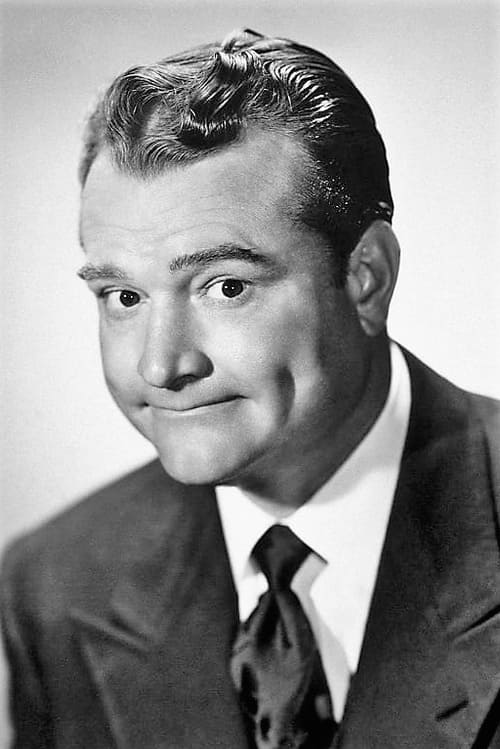
Richard Bernard Skelton (July 18, 1913 – September 17, 1997) was an American entertainer best known for his national radio and television shows between 1937 and 1971, especially as host of the television program The Red Skelton Show. He has stars on the Hollywood Walk of Fame for his work in radio and television, and he also appeared in burlesque, vaudeville, films, nightclubs, and casinos, all while he pursued an entirely separate career as an artist.
Skelton began developing his comedic and pantomime skills from the age of 10, when he became part of a traveling medicine show. He then spent time on a showboat, worked the burlesque circuit, and then entered into vaudeville in 1934. The "Doughnut Dunkers" pantomime sketch, which he wrote together with his wife, launched a career for him in vaudeville, radio, and films. His radio career began in 1937 with a guest appearance on The Fleischmann's Yeast Hour, which led to his becoming the host of Avalon Time in 1938. He became the host of The Raleigh Cigarette Program in 1941, on which many of his comedy characters were created, and he had a regularly scheduled radio program until 1957. Skelton made his film debut in 1938 alongside Ginger Rogers and Douglas Fairbanks Jr. in Alfred Santell's Having Wonderful Time, and appeared in numerous musical and comedy films throughout the 1940s and 1950s, with starring roles in 19 films, including Ship Ahoy (1941), I Dood It (1943), Ziegfeld Follies (1946),
Three Little Words (1950), and The Clown (1953).
Skelton was eager to work in television, even when the medium was in its infancy. The Red Skelton Show made its television premiere on September 30, 1951, on NBC. By 1954, Skelton's program moved to CBS, where it was expanded to one hour and renamed The Red Skelton Hour in 1962. Despite high ratings, the show was canceled by CBS in 1970, as the network believed that more youth-oriented programs were needed to attract younger viewers and their spending power. Skelton moved his program to NBC, where he completed his last year with a regularly scheduled television show in 1971. He spent his time after that making as many as 125 personal appearances a year and working on his paintings.
Skelton's paintings of clowns remained a hobby until 1964, when his wife Georgia persuaded him to show them at the Sands Hotel in Las Vegas while he was performing there. Sales of his originals were successful, and he also sold prints and lithographs, earning $2.5 million yearly on lithograph sales. At the time of his death, his art dealer said he thought that Skelton had earned more money through his paintings than from his television performances.
Skelton believed that his life's work was to make people laugh; he wanted to be known as a clown because he defined it as being able to do everything. He had a 70-year-long career as a performer and entertained three generations of Americans. His widow donated many of his personal and professional effects to Vincennes University, including prints of his artwork. They are part of the Red Skelton Museum of American Comedy at Vincennes, Indiana.
Contents
Biography
Early years, the medicine show and the circus (1913–1929)
Skelton was born Richard Bernard Eheart on July 18, 1913, in Vincennes, Indiana. (The Eheart surname was his father's stepfather's, which his father occasionally went by.)
Skelton was the fourth son and youngest child of Joseph Elmer and Ida Mae (née Fields) Skelton. He had three older brothers: Denny Ishmael Skelton (1905–1943), Christopher M. Skelton (1907–1977) and Paul Fred Skelton (1910–1989). Joseph Skelton, a grocer, died two months before Richard was born; he had once been a clown with the Hagenbeck-Wallace Circus. His birth certificate surname, Eheart, was that of his father's stepfather. During Skelton's lifetime there was some dispute about the year of his birth. Author Wesley Hyatt suggests that since he began working at such an early age, Skelton may have claimed he was older than he actually was to gain employment. Vincennes neighbors described the Skelton family as being extremely poor; a childhood friend remembered that her parents broke up a youthful romance between her sister and Skelton because they thought he had no future.
Because of the loss of his father, Skelton went to work as early as the age of seven, selling newspapers and doing other odd jobs to help his family, who had lost the family store and their home. He quickly learned the newsboy's patter and would keep it up until a prospective buyer bought a copy of the paper just to quiet him. According to later accounts, Skelton's early interest in becoming an entertainer stemmed from an incident that took place in Vincennes around 1923, when a stranger, supposedly the comedian Ed Wynn, approached Skelton, who was the newsboy selling papers outside a Vincennes theater. When the man asked Skelton what events were going on in town, Skelton suggested he see the new show in town. The man purchased every paper Skelton had, providing enough money for the boy to purchase a ticket for himself. The stranger turned out to be one of the show's stars, who later took the boy backstage to introduce him to the other performers. The experience prompted Skelton, who had already shown comedic tendencies, to pursue a career as a performer.
Skelton discovered at an early age that he could make people laugh. He dropped out of school around 1926 or 1927, when he was 13 or 14 years old, but he already had some experience performing in minstrel shows in Vincennes, and on a showboat, The Cotton Blossom, that plied the Ohio and Missouri rivers. He enjoyed his work on the riverboat, moving on only after he realized that showboat entertainment was coming to an end. Skelton, who was interested in all forms of acting, took a dramatic role with the John Lawrence stock theater company, but was unable to deliver his lines in a serious manner; the audience laughed instead. In another incident, while performing in Uncle Tom's Cabin, Skelton was on an unseen treadmill; when it malfunctioned and began working in reverse, the frightened young actor called out, "Help! I'm backing into heaven!" He was fired before completing a week's work in the role. At the age of 15, Skelton did some early work on the burlesque circuit, and reportedly spent four months with the Hagenbeck-Wallace Circus in 1929, when he was 16 years old.
Burlesque to vaudeville (1929–1937)
As burlesque comedy material became progressively more ribald, Skelton moved on. He insisted that he was no prude; "I just didn't think the lines were funny". He became a sought-after master of ceremonies for dance marathons (known as "walkathons" at the time), a popular fad in the 1930s. The winner of one of the marathons was Edna Stillwell, an usher at the old Pantages Theater. She approached Skelton after winning the contest and told him that she did not like his jokes; he asked if she could do better. They married in 1931 in Kansas City, and Edna began writing his material. At the time of their marriage Skelton was one month away from his 18th birthday; Edna was 16. When they learned that Skelton's salary was to be cut, Edna went to see the boss; Red resented the interference, until she came away with not only a raise, but additional considerations as well. Since he had left school at an early age, his wife bought textbooks and taught him what he had missed. With Edna's help, Skelton received a high school equivalency degree.
The couple put together an act and began booking it at small midwestern theaters. When an offer came for an engagement in Harwich Port, Massachusetts, some 2,000 miles from Kansas City, they were pleased to get it because of its proximity to their ultimate goal, the vaudeville houses of New York City. To get to Massachusetts they bought a used car and borrowed five dollars from Edna's mother, but by the time they arrived in St. Louis they had only fifty cents. Skelton asked Edna to collect empty cigarette packs; she thought he was joking, but did as he asked. He then spent their fifty cents on bars of soap, which they cut into small cubes and wrapped with the tinfoil from the cigarette packs. By selling their products for fifty cents each as fog remover for eyeglasses, the Skeltons were able to afford a hotel room every night as they worked their way to Harwich Port.
Skelton and Edna worked for a year in Camden, New Jersey, and were able to get an engagement at Montreal's Lido Club in 1934 through a friend who managed the chorus lines at New York's Roxy Theatre. Despite an initial rocky start, the act was a success, and brought them more theater dates throughout Canada.
Skelton's performances in Canada led to new opportunities and the inspiration for a new, innovative routine that brought him recognition in the years to come. While performing in Montreal, the Skeltons met Harry Anger, a vaudeville producer for New York City's Loew's State Theatre. Anger promised the pair a booking as a headlining act at Loew's, but they would need to come up with new material for the engagement. While the Skeltons were having breakfast in a Montreal diner, Edna had an idea for a new routine as she and Skelton observed the other patrons eating doughnuts and drinking coffee. They devised the "Doughnut Dunkers" routine, with Skelton's visual impressions of how different people ate doughnuts. The skit won them the Loew's State engagement and a handsome fee.
Film work
Skelton's first contact with Hollywood came in the form of a failed 1932 screen test. In 1938, he made his film debut for RKO Pictures in the supporting role of a camp counselor in Having Wonderful Time. He appeared in two short subjects for Vitaphone in 1939: Seeing Red and The Broadway Buckaroo. Actor Mickey Rooney contacted Skelton, urging him to try for work in films after seeing him perform his "Doughnut Dunkers" act at President Roosevelt's 1940 birthday party. For his Metro-Goldwyn-Mayer (MGM) screen test, Skelton performed many of his more popular skits, such as "Guzzler's Gin", but added some impromptu pantomimes as the cameras were rolling. "Imitation of Movie Heroes Dying" were Skelton's impressions of the cinema deaths of stars such as George Raft, Edward G. Robinson, and James Cagney.
Skelton appeared in numerous films for MGM throughout the 1940s. In 1940, he provided comic relief as a lieutenant in Frank Borzage's war drama Flight Command, opposite Robert Taylor, Ruth Hussey, and Walter Pidgeon. In 1941, he also provided comic relief in Harold S. Bucquet's Dr. Kildare medical dramas, Dr. Kildare's Wedding Day and The People vs. Dr. Kildare. Skelton was soon starring in comedy features as inept radio detective "The Fox", the first of which was Whistling in the Dark (1941) in which he began working with director S. Sylvan Simon, who became his favorite director. He reprised the same role opposite Ann Rutherford in Simon's other pictures, including Whistling in Dixie (1942) and Whistling in Brooklyn (1943). In 1941, Skelton began appearing in musical comedies, starring opposite Eleanor Powell, Ann Sothern, and Robert Young in Norman Z. McLeod's Lady Be Good. In 1942, Skelton again starred opposite Eleanor Powell in Edward Buzzell's Ship Ahoy, and alongside Ann Sothern in McLeod's Panama Hattie.
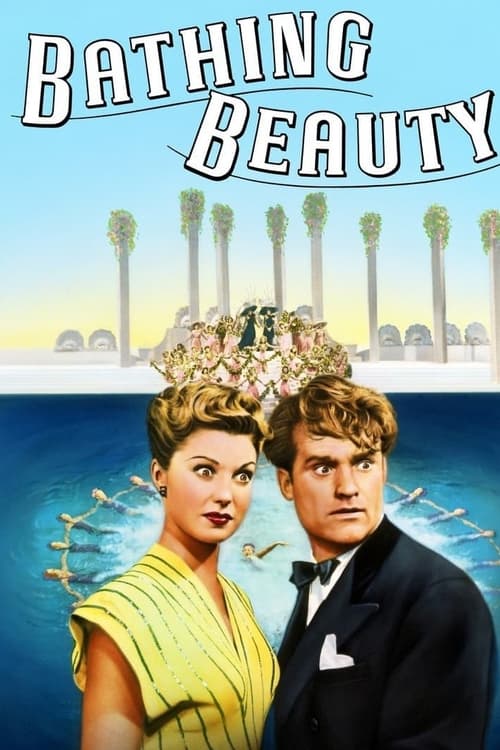
In 1943, after a memorable role as a nightclub hatcheck attendant who becomes King Louis XV in a dream opposite Lucille Ball and Gene Kelly in Roy Del Ruth's Du Barry Was a Lady, Skelton starred as Joseph Rivington Reynolds, a hotel valet besotted with Broadway starlet Constance Shaw (Powell) in Vincente Minnelli's romantic musical comedy, I Dood It. The film was largely a remake of Buster Keaton's Spite Marriage; Keaton, who had become a comedy consultant to MGM after his film career had diminished, began coaching Skelton on set during the filming. Keaton worked in this capacity on several of Skelton's films, and his 1926 film The General was also later rewritten to become Skelton's A Southern Yankee (1948), under directors S. Sylvan Simon and Edward Sedgwick. Keaton was so convinced of Skelton's comedic talent that he approached MGM studio head Louis B. Mayer with a request to create a small company within MGM for himself and Skelton, where the two could work on film projects. Keaton offered to forgo his salary if the films made by the company were not box-office hits; Mayer chose to decline the request. In 1944, Skelton starred opposite Esther Williams in George Sidney's musical comedy Bathing Beauty, playing a songwriter with romantic difficulties. He next had a relatively minor role as a "TV announcer who, in the course of demonstrating a brand of gin, progresses from mild inebriation through messy drunkenness to full-blown stupor" in the "When Television Comes" segment of Ziegfeld Follies, which featured William Powell and Judy Garland in the main roles. This was actually his "Guzzler's Gin" routine, written by Edna, which Skelton had been performing since 1940. In 1946, Skelton played boastful clerk J. Aubrey Piper opposite Marilyn Maxwell and Marjorie Main in Harry Beaumont's comedy picture The Show-Off.
Radio, divorce, and remarriage (1937–1951)
Performing the "Doughnut Dunkers" routine led to Skelton's first appearance on Rudy Vallée's The Fleischmann's Yeast Hour on August 12, 1937. Vallée's program had a talent-show segment, and those who were searching for stardom were eager to be heard on it. Vallée also booked veteran comic and fellow Indiana native Joe Cook to appear as a guest with Skelton. The two Hoosiers proceeded to trade jokes about their home towns, with Skelton contending to Cook, an Evansville native, that the city was a suburb of Vincennes. The show received enough fan mail after the performance to invite both comedians back two weeks after Skelton's initial appearance and again in November of that year.
On October 1, 1938, Skelton replaced Red Foley as the host of Avalon Time on NBC; Edna also joined the show's cast, under her maiden name. She developed a system for working with the show's writers – selecting material from them, adding her own, and filing the unused bits and lines for future use; the Skeltons worked on Avalon Time until late 1939. Skelton's work in films led to a new regular radio-show offer; between films, he promoted himself and MGM by appearing without charge at Los Angeles-area banquets. A radio advertising agent was a guest at one of his banquet performances and recommended Skelton to one of his clients.
Skelton went on the air with his own radio show, The Raleigh Cigarette Program, on October 7, 1941. The bandleader for the show was Ozzie Nelson; his wife, Harriet, who worked under her maiden name of Hilliard, was the show's vocalist and also worked with Skelton in skits.
Skelton introduced the first two of his many characters during The Raleigh Cigarette Program's first season. The character of Clem Kadiddlehopper was based on a Vincennes neighbor named Carl Hopper, who was hard of hearing. After the cartoon character Bullwinkle was introduced, Skelton contemplated filing a lawsuit against Bill Scott, who voiced the cartoon moose, because he found it similar to his voice pattern for Clem. The second character, the Mean Widdle Kid, or "Junior", was a young boy full of mischief, who typically did things he was told not to do. "Junior" would say things like, "If I dood it, I gets a whipping.", followed moments later by the statement, "I dood it!" Skelton performed the character at home with Edna, giving him the nickname "Junior" long before it was heard by a radio audience. While the phrase was Skelton's, the idea of using the character on the radio show was Edna's. Skelton starred in a 1943 movie of the same title, but did not play "Junior" in the film.
Television (1951–1970)
Skelton was unable to work in television until the end of his 1951 MGM movie contract; a renegotiation to extend the pact provided permission after that point. On May 4, 1951, he signed a contract for television with NBC; Procter and Gamble was his sponsor. He said he would be performing the same characters on television that he had been doing on radio. The MGM agreement with Skelton for television performances did not allow him to go on the air before September 30, 1951.
His television debut, The Red Skelton Show, premiered on that date: At the end of his opening monolog, two men backstage grabbed his ankles from behind the set curtain, hauling him offstage face down. A 1943 instrumental hit by David Rose, called "Holiday for Strings", became Skelton's TV theme song. The move to television allowed him to create two nonhuman characters, seagulls Gertrude and Heathcliffe, which he performed while the pair were flying by, tucking his thumbs under his arms to represent wings and shaping his hat to look like a bird's bill. He patterned his meek, henpecked television character of George Appleby after his radio character, J. Newton Numbskull, who had similar characteristics. His "Freddie the Freeloader" clown was introduced on the program in 1952, with Skelton copying his father's makeup for the character. (He learned how to duplicate his father's makeup and perform his routines through his mother's recollections.) A ritual was established for the end of every program, with Skelton's shy, boyish wave and words of "Good night and may God bless."
During the 1951–1952 season, the program was broadcast from a converted NBC radio studio. The first year of the television show was done live; this led to problems, because not enough time was available for costume changes; Skelton was on camera for most of the half-hour, including the delivery of a commercial that was written into one of the show's skits. In early 1952, Skelton had an idea for a television sketch about someone who had been drinking not knowing which way is up. The script was completed, and he had the show's production crew build a set that was perpendicular to the stage, so it would give the illusion that someone was walking on walls. The skit, starring his character Willie Lump-Lump, called for the character's wife to hire a carpenter to redo the living room in an effort to teach her husband a lesson about his drinking. When Willie wakes up there after a night of drinking, he is misled into believing he is not lying on the floor, but on the living room wall. Willie's wife goes about the house normally, but to Willie, she appears to be walking on a wall. Within an hour after the broadcast, the NBC switchboard had received 350 calls regarding the show, and Skelton had received more than 2,500 letters about the skit within a week of its airing.
Off the air and bitterness (1970–1983)
As the 1970s began, the networks began a major campaign to discontinue long-running shows that they considered stale, dominated by older demographics, and/or becoming too expensive due to escalating costs. Despite Skelton's continued strong overall viewership, CBS saw his show as fitting into this category and canceled the program along with other comedy and variety shows hosted by veterans such as Jackie Gleason and Ed Sullivan. Performing in Las Vegas when he got the news of his CBS cancellation, Skelton said, "My heart has been broken." His program had been one of the top-10, highest-rated shows for 17 of the 20 years he was on television.
Skelton moved to NBC in 1970 in a half-hour Monday-night version of his former show. Its cancellation after one season ended his television career, and he returned to live performances. In an effort to prove the networks wrong, he gave many of these at colleges and proved popular with the audiences.
Skelton was bitter about CBS's cancellation for many years afterwards. Believing the demographic and salary issues to be irrelevant, he accused CBS of bowing to the antiestablishment, antiwar faction at the height of the Vietnam War, saying his conservative political and social views caused the network to turn against him. He had invited prominent Republicans, including Vice President Spiro Agnew and Senate Republican Minority Leader Everett Dirksen, one of the Senate's strongest supporters of the war, to appear on his program.
Personal, as well as professional, changes occurred in Skelton's life at this time. He divorced Georgia in 1971 and married Lothian Toland, daughter of cinematographer Gregg Toland, on October 7, 1973. While he disassociated himself from television soon after his show was canceled, his bitterness had subsided enough for him to appear on The Tonight Show Starring Johnny Carson on July 11, 1975; it was his first television appearance since the cancellation of his television program. (Johnny Carson, one of his former writers, began his rise to network television prominence when he substituted for Skelton after a dress rehearsal injury in 1954.) Skelton was also a guest on The Merv Griffin Show in October of the same year. Hopes he may have had that he could ease back into television through the talk-show circuit were ended on May 10, 1976, when Georgia Skelton committed suicide by gunshot on the 18th anniversary of Richard Skelton's death. Georgia was 54 and had been in poor health for some time. He put all professional activities on hold for some months as he mourned his former wife's death. Despite his anger at CBS, Skelton participated in the CBS 50th anniversary specials in April and May 1978.
Red Skelton onstage
Skelton's 70-year career as an entertainer began as a stage performer. He retained a fondness for theaters, and referred to them as "palaces"; he also likened them to his "living room", where he would privately entertain guests. At the end of a performance, he would look at the empty stage where there was now no laughter or applause and tell himself, "Tomorrow I must start again. One hour ago, I was a big man. I was important out there. Now it's empty. It's all gone."
Skelton was invited to play a four-week date at the London Palladium in July 1951. While flying to the engagement, Skelton, Georgia and Father Edward J. Carney, were on a plane from Rome with passengers from an assortment of countries that included 11 children. The plane lost the use of two of its four engines and seemed destined to lose the rest, meaning that the plane would crash over Mont Blanc. The priest readied himself to administer last rites. As he did so, he told Skelton, "You take care of your department, Red, and I'll take care of mine." Skelton diverted the attention of the passengers with pantomimes while Father Carney prayed. They ultimately landed at a small airstrip in Lyon, France. He received both an enthusiastic reception and an invitation to return for the Palladium's Christmas show of that year.
Though Skelton had always done live engagements at Nevada hotels and appearances such as state fairs during his television show's hiatus, he focused his time and energy on live performances after he was no longer on the air, performing up to 125 dates a year. He often arrived days early for his engagement and would serve as his own promotion staff, making the rounds of the local shopping malls. Before the show, his audiences received a ballot listing about 100 of his many routines and were asked to tick off their favorites. The venue's ushers would collect the ballots and tally the votes. Skelton's performance on that given day was based on the skits his audience selected. After he learned that his performances were popular with the hearing-impaired because of his heavy use of pantomimes, Skelton hired a sign language interpreter to translate the non-pantomime portions of his act for all his shows. He continued performing live until 1993, when he celebrated his 80th birthday.
Later years and death
In 1974, Skelton's interest in film work was rekindled with the news that Neil Simon's comedy The Sunshine Boys would become a movie; his last significant film appearance had been in Public Pigeon No. 1 in 1957. He screen tested for the role of Willy Clark with Jack Benny, who had been cast as Al Lewis. Although Simon had planned to cast Jack Albertson, who played Willy on Broadway, in the same role for the film, Skelton's screen test impressed him enough to change his mind. Skelton declined the part, however, reportedly due to an inadequate financial offer, and Benny's final illness forced him to withdraw, as well. George Burns and Walter Matthau ultimately starred in the film.
In 1981, Skelton made several specials for HBO, including Freddie the Freeloader's Christmas Dinner (1981) and the Funny Faces series of specials. He gave a Royal Command Performance for the Royal Society for the Protection of Birds in 1984, which was later shown in the U.S. on HBO. A portion of one of his last interviews, conducted by Steven F. Zambo, was broadcast as part of the 2005 PBS special The Pioneers of Primetime.
Skelton died on September 17, 1997, at the Eisenhower Medical Center in Rancho Mirage, California, at the age of 84, from pneumonia. He is interred in the Skelton Family Tomb, the family's private room, alongside his son, Richard Freeman Skelton, Jr., and his second wife, Georgia Maureen Davis Skelton, in the Great Mausoleum's Sanctuary of Benediction at Forest Lawn Memorial Park in Glendale, California.
Art and other interests
Artwork
Skelton began producing artwork in 1943, but kept his works private for many years. He said he was inspired to try his hand at painting after visiting a large Chicago department store that had various paintings on display. Inquiring as to the price of one, which Skelton described as "a bunch of blotches", he was told, "Ten thousand wouldn't buy that one." He told the clerk he was one of the ten thousand who would not buy the painting, instead buying his own art materials. His wife Georgia, a former art student, persuaded him to have his first public showing of his work in 1964 at the Sands Hotel in Las Vegas, where he was performing at the time. Skelton believed painting was an asset to his comedy work, as it helped him to better visualize the imaginary props used in his pantomime routines.
In addition to his originals, Skelton also sold reproductions and prints through his own mail-order business. He made his work available to art galleries by selling them franchises to display and sell his paintings. He once estimated the sale of his lithographs earned him $2.5 million per year. Shortly after his death, his art dealer said he believed that Skelton made more money on his paintings than from his television work. At the time of his death, Skelton had produced over 1,000 oil paintings of clowns. When asked why his artwork focused on clowns, he said at first, "I don't know why it's always clowns." He continued after thinking a moment by saying "No, that's not true—I do know why. I just don't feel like thinking about it ..." At the time of Skelton's death, his originals were priced at $80,000 and upward.
Other interests
Skelton was a prolific writer of both short stories and music. After sleeping only four or five hours a night, he would wake up at 5 am and begin writing stories, composing music, and painting pictures. He wrote at least one short story a week and had composed over 8,000 songs and symphonies by the time of his death. He wrote commercials for Skoal tobacco and sold many of his compositions to Muzak, a company that specialized in providing background music to stores and other businesses. Skelton was also interested in photography; when attending Hollywood parties, he would take photos and give the film to newspaper reporters waiting outside. He was never without a miniature camera, and kept a photographic record of all his paintings. Skelton was also an avid gardener, who created his own Japanese and Italian gardens and cultivated bonsai trees at his home in Palm Springs. He owned a 600-acre (240 ha) horse ranch in the Anza Valley.
Fraternity and honors
Skelton was a Freemason, a member of Vincennes Lodge No. 1, in Indiana. He also was a member of both the Scottish and the York Rites. He was a recipient of the Gold Medal of the General Grand Chapter, Royal Arch Masons, for Distinguished Service in the Arts and Sciences. On September 24, 1969, he received the honorary 33rd degree in the Scottish Rite and was a Gourgas Medal recipient in 1995. Skelton became interested in Masonry as a small boy selling newspapers in Vincennes, when a man bought a paper from him with a $5 bill and told him to keep the change. The young Skelton asked his benefactor why he had given him so much money; the man explained that he was a Mason and Masons are taught to give. Skelton decided to become one also when he was grown. He was also member of the Independent Order of Odd Fellows, as well as a Shriner in Los Angeles.
Skelton was made an honorary brother of Phi Sigma Kappa at Truman State University. In 1961, he became an honorary brother of the Phi Alpha Tau fraternity of Emerson College, when he was awarded the Joseph E. Connor Award for excellence in the field of communications. He also received an honorary degree from the college at the same ceremony. Skelton received an honorary high-school diploma from Vincennes High School. He was also an honorary member of Kappa Kappa Psi band fraternity; Skelton had composed many marches, which were used by more than 10,000 high-school and college bands. In 1986, Skelton received an honorary degree from Ball State University.
The Red Skelton Memorial Bridge spans the Wabash River and provides the highway link between Illinois and Indiana on U.S. Route 50, near Skelton's home town of Vincennes. He attended the dedication ceremonies in 1963.
Awards and recognition
In 1952, Skelton received Emmy Awards for Best Comedy Program and Best Comedian. He also received an Emmy nomination in 1957 for his noncomedic performance in Playhouse 90's presentation of "The Big Slide". Skelton and his writers won another Emmy in 1961 for Outstanding Writing Achievement in Comedy. He was named an honorary faculty member of Ringling Bros. and Barnum & Bailey Clown College in 1968 and 1969.
Skelton's first major post-television recognition came in 1978, when the Golden Globe Awards named him as the recipient for their Cecil B. DeMille Award, which is given to honor outstanding contributions in entertainment. His excitement was so great upon receiving the award and a standing ovation, that he clutched it tightly enough to break the statuette. When he was presented with the Academy of Television Arts & Sciences' Governor's Award in 1986, Skelton received a standing ovation. "I want to thank you for sitting down", he said when the ovation subsided. "I thought you were pulling a CBS and walking out on me." The honor came 16 years after his television program left the airwaves.
Skelton received a Lifetime Achievement Award from the Screen Actors Guild in 1987, and in 1988, he was inducted into the Academy of Television Arts & Sciences' Television Hall of Fame. He was one of the International Clown Hall of Fame's first inductees in 1989. Skelton and Katharine Hepburn were honored with lifetime achievement awards by the American Comedy Awards in the same year. He was inducted into the National Radio Hall of Fame in 1994. Skelton also has two stars on the Hollywood Walk of Fame for his radio and television work.
Legacy and tributes
Skelton preferred to be described as a clown rather than a comic: "A comedian goes out and hits people right on. A clown uses pathos. He can be funny, then turn right around and reach people and touch them with what life is like." "I just want to be known as a clown", he said, "because to me that's the height of my profession. It means you can do everything—sing, dance and above all, make people laugh." His purpose in life, he believed, was to make people laugh.
In Groucho and Me, Groucho Marx called Skelton "the most unacclaimed clown in show business", and "the logical successor to [Charlie] Chaplin", largely because of his ability to play a multitude of characters with minimal use of dialogue and props. "With one prop, a soft battered hat", Groucho wrote, describing a performance he had witnessed, "he successfully converted himself into an idiot boy, a peevish old lady, a teetering-tottering drunk, an overstuffed clubwoman, a tramp, and any other character that seemed to suit his fancy. No grotesque make-up, no funny clothes, just Red." He added that Skelton also "plays a dramatic scene about as effectively as any of the dramatic actors." In late 1965, ventriloquist Edgar Bergen, reminiscing about the entertainment business, singled out Skelton for high praise. "It's all so very different today. The whole business of comedy has changed — from 15 minutes of quality to quantity. We had a lot of very funny people around, from Charley Chase to Charlie Chaplin and Laurel and Hardy. The last one of that breed is Red Skelton." Harry Cohn of Columbia Pictures also praised Skelton, saying, "He's a clown in the old tradition. He doesn't need punch lines. He's got heart."
Skelton and Marcel Marceau shared a long friendship and admiration of each other's work. Marceau appeared on Skelton's CBS television show three times, including one turn as the host in 1961 as Skelton recovered from surgery. He was also a guest on the three Funny Faces specials that Skelton produced for HBO. In a TV Guide interview after Skelton's death, Marceau said, "Red, you are eternal for me and the millions of people you made laugh and cry. May God bless you forever, my great and precious companion. I will never forget that silent world we created together." CBS issued the following statement upon his death: "Red's audience had no age limits. He was the consummate family entertainer—a winsome clown, a storyteller without peer, a superb mime, a singer, and a dancer."
The Red Skelton Performing Arts Center was dedicated in February 2006 on the campus of Vincennes University, one block from the home in Vincennes where Skelton was born. The building includes an 850-seat theater, classrooms, rehearsal rooms, and dressing rooms. Its grand foyer is a gallery for Skelton's paintings, statues, and film posters. The theater hosts theatrical and musical productions by Vincennes University, as well as special events, convocations, and conventions. The adjacent Red Skelton Museum of American Comedy opened on July 18, 2013, on what would have been Skelton's 100th birthday. It houses his personal and professional materials, which he had collected since the age of 10, in accordance with his wishes that they be made available in his hometown for the public's enjoyment. Skelton's widow, Lothian, noted that he expressed no interest in any sort of Hollywood memorial. The museum is funded jointly by the Red Skelton Museum Foundation and the Indiana Historical Society. Other foundation projects include a fund that provides new clothes to Vincennes children from low-income families. The foundation also purchased Skelton's birthplace. On July 15, 2017, the state of Indiana unveiled a state historic marker at the home in Vincennes where Skelton was born.
Filmography
Box-office ranking
Based on rankings of the amount of money earned in box-office receipts for film showings, for a number of years Skelton was among the most popular stars in the country:
1944 – 16th-largest box-office draw
1949 – 13th
1951 – 14th
1952 – 21st
Published works
Red Skelton's Favorite Ghost Stories. 1965. OCLC 3695410.
A Red Skeleton in Your Closet; Ghost Stories Gay and Grim. 1965. OCLC 1744491.
Gertrude & Heathcliffe. 1974. OCLC 1129973.
The Ventriloquist. 1984. OCLC 144598647.
Old Whitey. 1984. OCLC 144598636.
The Great Lazarus. 1986.