

Peter Paul Wyngarde (born Cyril Goldbert; circa 1926 or 1927 – 15 January 2018), until 1945 called Cyril Louis Goldbert, was a British actor who spent his early life in the Far East. He had a successful career on stage from the mid-1940s and slowly gained screen roles, especially in television in the 1950s and 1960s, before becoming well known for portraying the character of Jason King in the television series Department S (1969) and Jason King (1971). His acting career came to an end in the 1990s, but he had occasional appearances in the 21st century.
Wyngarde's flamboyant dress sense and stylish performances led to his becoming a style icon in Britain and elsewhere in the early 1970s. Various details of Wyngarde's early and personal life, including his place and date of birth, birth name, family and ethnic background, and sexual orientation, have been disputed.
Contents
Background and early life
Name
Wyngarde's name as a child was Cyril Goldbert, and in reporting his death, BBC News gave his full name as Cyril Louis Goldbert.
Date and place of birth
By his own account, Wyngarde was born on 23 August 1933. However, in an interview in 1993 he said he did not know his age. On 14 December 1945, he arrived in England on the SS Arawa, and the ship's passenger list gives his age as 18, suggesting he was born before 15 December 1927. On official documents related to sea voyages in 1960, his date of birth was given as 28 August 1929 for a voyage into San Francisco, then as 27 July 1929 on the way home to England in October. In 2003, The Encyclopedia of British Film gave the year as 1927, and the registration of his death states his date of birth as 23 August 1927.
A biography published in 2020 which draws on personal knowledge of Wyngarde and on a large archive gives his date of birth as 28 (not 23) August 1928. Most official documents state the year as 1927 or 1929, while the more informal sources have reported a range between 1924 and 1937.
After speaking to his mother in September 1956, The Straits Times said he was then aged 26.
Wyngarde was first included on an electoral register at Belsize, Hampstead, in 1948, which might support 1927 as his year of birth, as only those aged 21 and over were allowed to vote in the United Kingdom at that time.
Wyngarde's mother seems to have told The Straits Times that he was born in Marseilles, France, and Wyngarde said he was born at an aunt's home in Marseilles. His death registration states his birthplace as Singapore, and for the sea voyages in 1960 his place of birth was also stated as Singapore. In July 1972, he spent ninety minutes at Changi International Airport, Singapore, waiting for a connecting flight to Athens, and commented on this "I don't believe I have been to Singapore". Throughout his life, Wyngarde gave Marseilles as his place of birth, and this is the view taken by the biography published in 2020.
Family
When Wyngarde travelled from Shanghai to Britain by sea in 1945, as Cyril Goldbert, the records of the ship, Arawa, name his next of kin as "Mr. H. Goldbert, c/o Ministry of Shipping, London", and the biography published in 2020 names him as Henry Goldbert. A citizen of the Russian Empire by birth, in October 1919 Goldbert was naturalized as a British subject in Singapore, with The Straits Times reporting that he had lived in the Straits Settlements for nineteen years. Born in 1897, his parents were Marco Goldbert and Rosa Klivger, and in April 1904 Mrs Goldbert took over the license of the Singapore Hotel in North Bridge Road.
In 1910, her licence was moved to another address. In December 1906, Henry Goldbert won a school prize for "Scripture (Jews)", and in 1913 he was taking YMCA Engineering Classes and was about to sit for a Board of Education South Kensington certificate.
Wyngarde's mother was Marcheritta Marie Goldbert, born Ahin (1908–1992), known as Madge. In interviews, Wyngarde said she was French. There was a Eurasian family called Ahin living in Singapore. In 1947, she stated the name and nationality of her father as Andrew Nicolich Ahin, deceased, Swiss. She and Henry Goldbert were separated by 1937.
On 6 March 1929, The Straits Echo reported that Mr H. Goldbert was leaving his position as branch manager of the United Motor Works, Seremban, and that he and his wife were about to leave for Singapore on the night mail train.
In June 1934, in Singapore, a "V. Ahin", described as a young Eurasian mechanic and a brother of Mrs Golbert (sic), was fined fifteen Straits dollars for his behaviour in March in trying to stop the posting of a summons on his sister's door in Kim Yean Road. A Victor Ahin was noted in 1941 as a nephew of Mr P. A. Ahin, chief engineer in the dredging section of the Public Works Department.
Wyngarde had two younger Goldbert siblings: Adolphe Henry Peter Goldbert (1930–2011), and Marion Colette Simone Goldbert (1932–2012). In 1946, they also came by ship from Shanghai to England, arriving at Southampton on RMS Strathmore on 30 April 1946, aged sixteen and thirteen, both stating their destination as Prenton, Birkenhead. In England, Adolphe dropped his first name and was known as "Joe". Henry Goldbert was in England at the time and arranged for his younger children to be fostered by a family in Liverpool. He then set off for Bombay on the Franconia, intending to return to his life in the East. Wyngarde met his brother and sister after their arrival, but had little further contact with them or their children.
Early life
Wyngarde's mother told The Straits Times in 1956 that her son had spent "his first few years" in Malaya. He later claimed to have been speaking both Russian and French fluently at the age of five.
Wyngarde often spoke about having had a traumatic early life. In 2012, he wrote to his sister-in-law Lillian Goldbert "From early childhood we had to fend for ourselves." He told an interviewer that after his parents' divorce, his father took him to China "only months before war with China broke out" in the summer of 1937. He spoke about living in Shanghai when the Japanese Army took over the Shanghai International Settlement on 8 December 1941. Correspondence between 1942 and 1943 held in the National Archives shows that in 1943 Henry Goldbert was serving on SS Lyemoon, that his three children, including 15-year-old Cyril, were then living in Shanghai, that efforts were being made by the British Ministry of War Transport, the Prisoners of War Department, and various boarding schools, to repatriate the children to Britain, and that Cyril could not be accommodated because of his age.
Before internment, Wyngarde was educated at the Western District Public School for Boys in Yuyuan Road, Shanghai, where after the arrival of the Japanese there were compulsory lessons in Japanese. Yuyuan Road was within the Shanghai French Concession.
In April 1943, Wyngarde was interned in the Lunghua Civilian Assembly Centre. There were some 300 children in the camp, who continued their education at a school called the Lunghua Academy. This had "a full-scale syllabus which met the requirements of the then School Certificate" and taught maths, French, English, Latin, history, and general science. Outside the classroom, there were football, hockey, and softball, plus concerts and dances. J. G. Ballard was also there and travelled to Britain in 1945 with Wyngarde and other former internees. He later wrote of this period Separated from his parents, he lived with another family in G Block, and amused everyone with his fey and extravagant manner. Theatre was his entire world, and he played adult roles in the camp Shakespeare productions, completely dominating the bank managers and company directors who struggled to keep up with him. He was four years older than me, and very witty company, with a sophisticated patter I had rarely come across... I once strolled with Cyril through some ruined buildings on the outskirts of the camp, listening to him set out his plans for his conquest of the West End.
Career
Early stage career
Within a few months of his arrival in England in December 1945, Wyngarde began his professional acting career, beginning to use the name of Peter Wyngarde. He first appeared on stage at the Buxton Playhouse in June 1946, playing Ensign Blades in Quality Street. The theatre had just re-opened after being closed for six months. Soon after that it presented J. B. Priestley's When We Are Married, and in July 1946 Wyngarde appeared in this at the Embassy Theatre, Hampstead, playing Gerald Forbes. In the later months of 1946, he was on tour in a play called Pickup Girl, playing three parts.
In April 1947, Wyngarde was reported to be a newcomer to the Nottingham Playhouse theatre company, "and an asset... responsible for much good fun". Towards the end of that year, he had the role of Morris Dixon in a production of Noël Coward's Present Laughter at the Theatre Royal, Birmingham.
In May and June 1949, Wyngarde was back at the Embassy Theatre, playing Cassio in a new Nottingham Playhouse production of Othello , with Michael Aldridge as Othello and Rosalind Boxall as Desdemona. The Stage commented "Cassio is obviously a good fellow, not particularly quick-witted, but as trusting and open as his dusky master. Peter Wyngarde invests him with gaiety and sincerity."
Wyngarde appeared in While the Sun Shines at the Richmond Theatre, Richmond-upon-Thames, in December 1949, playing a French officer.
In January 1950, the Essex Newsman reported that he was a former member of the Colchester Repertory company. The same month, a new theatre company was formed at the Richmond Theatre, with Oliver Gordon as resident producer, the members including Martin Wyldeck, Raymond Francis, and Wyngarde. In February, at Richmond, Wyngarde was in They Knew What They Wanted, and in March in Mountain Air.
In February 1951, as part of the Festival of Britain, Wyngarde appeared in Hamlet at the New Theatre, Bromley, playing Voltimand.
In May 1952, he was back at the New Theatre, Bromley, appearing in a play called Separate Rooms, when on 6 May he was taken ill with an attack of malaria at Charing Cross Station while on his way to the theatre. In June, he was at the Irving Theatre playing Jonah, the commander of an Israeli platoon surrounded by a minefield, in Natan Shaham's They'll Arrive To-morrow. This was the first Israeli play to be presented in London. The reviewer of The Times said "Mr Peter Wyngarde, as the commanding officer, makes perhaps the strongest impression."
Early television career
In 1950, when few people in England had televisions, Wyngarde began to appear in television plays and series. The number of British "television households" was then reported as 344,000, but by 1955 it was
said to be 4,500,000, and it went on shooting up.
Wyngarde's first credited screen role appears to have come in a BBC Sunday Night Theatre play called "The Rope", broadcast in January 1950, playing Charles Granillo. He and a friend played by David Markham strangle a young man, hide his body in their flat, then invite his friends and family to a party to complete the perfection of the murder.
In June 1954, he had the lead part of Fritz Lobheimer in a BBC production of Liebelei, directed by Rudolph Cartier, opposite Jeanette Sterke. This was the first full-length play by Arthur Schnitzler to be televised in Britain.
For his role as John the Baptist in the first episode of Jesus of Nazareth (February 1956), Wyngarde travelled to the Holy Land and baptized Jesus (played by Tom Fleming) in the River Jordan.
Soon after the launch of ITV, Wyngarde appeared on ITV Television Playhouse on 20 December 1956, playing a British Army officer in the play The Bridge by Joseph Schail, with Ingeborg Wells.
He is said to have first become a "heart-throb" in 1957, in a BBC television adaptation of A Tale of Two Cities, playing Sydney Carton. In March, he was Hovstad in a Play of the Week called "An Enemy of the People", in which a scientist played by John Robinson finds a medicinal spa is polluted, and the town fights him. Jill Dixon was Petra. In August, he guest-starred in Overseas Press Club - Exclusive! in an episode about the killing of George Polk, playing a Greek, Andrea Bakolas. In December, in another Television Playhouse, "Love Her to Death", he was a young man unhappily married to a rich older woman who despises him, played by Jean Kent.
In January 1958, Wyngarde was in a production for television of The Dark Is Light Enough, by Christopher Fry, with Dame Edith Evans in the part of Countess Ostenburg, which had been written for her. The same month, he had the lead part of David Linden in an Armchair Theatre version of The Shining Hour, opposite Diana Fairfax and Angela Baddeley.
Early films
After making his film debut in an uncredited minor role as a soldier in Dick Barton Strikes Back (1949), Wyngarde gained attention for his occasional appearances in feature films.
He took the role of Pausanias opposite Richard Burton in the film Alexander the Great (1956), and with Donald Sinden had a major role in the film The Siege of Sidney Street (1960), in which he "seethed anarchist fury".
Wyngarde played the Marquis des Grieux in a TV play made from Dostoevsky's The Gambler, about the tables of Roulettenberg, first shown in August 1956.
In the BBC-TV play The Widows of Jaffa (June 1957), Wyngarde plays an Arab interpreter with divided loyalties, in a story about a Gaza Strip refugee camp written by Evan Jones. In a second play for the BBC the same year, Ordeal by Fire, directed by Rudolph Cartier, Wyngarde plays a scholar, Jerome Taillard, in a tale of 15th-century France, with Elizabeth Sellars playing a new Joan of Arc, after the death of the first by burning at the stake. (This film is not, as claimed by IMDb, about forest fires in North America.)
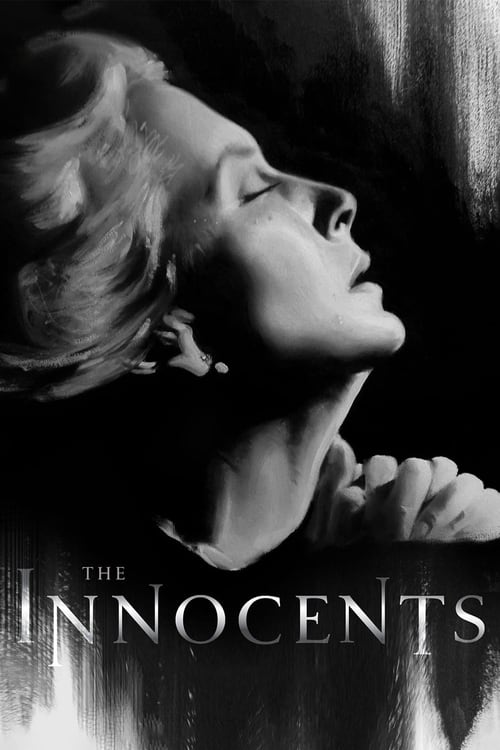
In Jack Clayton's The Innocents (1961), Wyngarde had non-speaking scenes as the leering Peter Quint, with Deborah Kerr and Pamela Franklin. He followed this by starring in the occult thriller Night of the Eagle (1962), a rare film appearance in a lead role. The New York Times called the movie "quite the most effective 'supernatural' thriller since Village of the Damned".
In Lucy in London (1966), a US television movie starring Lucille Ball, her character, Lucy, finds herself appearing in The Taming of the Shrew as Kate, and Wyngarde plays himself, appearing as a Shakespearean actor playing the part of Petruchio.
Radio
Wyngarde played the journalist Nigel Bathgate on the BBC Light Programme, in a five-part dramatization of Ngaio Marsh's Artists in Crime, broadcast in August and September 1953, with Mavis Villiers as Bobbie O'Dawne.
In August 1954, he starred with Dorothy Gordon in a BBC Radio production of Jean Anouilh's Léocadia, playing Prince Albert Troubiscoi, who is in love with an opera singer, Léocadia. In April 1955, he again starred in an Anouilh play on BBC radio, this time voicing the part of Frantz in The Ermine. He spoke the part of Orestes in the Oresteia of Aeschylus for the Third Programme, first broadcast in three parts on 27 May 1956, with Howard Marion-Crawford playing Agamemnon.
In February 1957, again on the Third Programme, Wyngarde was the narrator for a BBC Drama Repertory Company performance of Anton Chekhov's Uncle Vanya. In September, he had the title role of Sir Willoughby Patterne in BBC Radio's dramatization of George Meredith's novel The Egoist.
Wyngarde returned to radio in January 1967, in a broadcast of Terence Rattigan's The Sleeping Prince on the Home Service, with Millicent Martin and Fay Compton.
Jason King
Wyngarde became a British household name through his starring role in the spy-fi series Department S (1969–1970). His character, Jason King, a novelist and detective, was reputedly based on the author Ian Fleming. Department S, a fictional division of Interpol based in Paris, dealt only with "inexplicable and baffling" cases and was masterminded by Sir Curtis Seretse, supported by a former CIA agent, Stewart Sullivan, a computer expert, Annabelle Hurst, and King. Wyngarde persuaded the producers to model King on him, with the result that King led a hedonistic lifestyle in Paris, dressed decadently, and drove a Bentley S2 Continental sports saloon. Wyngarde commented many years later "I decided Jason King was going to be an extension of me". He noted that his hair was long at the time because he had just been appearing in a Chekhov play, The Duel, and added in another interview that "Jason King had champagne and strawberries for breakfast, just as I did myself."
As early as 1964, Wyngarde was complaining that glamorous dressing gowns for men must have gone out of fashion, as they were so difficult for his wardrobe master to find.
With its "peculiarly British humour", Department S failed to sell to a United States network, which was then the touchstone for any ITC production, and only one series was made,
but after the show ended, the character of Jason King was spun off into a new action series called Jason King (1971–1972). The managing director of ITC, Lew Grade, told Wyngarde
"You, with your funny dark hair, moustache and terrible clothes, are not my idea of a hero at all, but my wife loves you, so you have to do another series."
One obituary described Wyngarde as playing the role "in the manner of a cat walking on tiptoe, with an air of self-satisfaction". The kinder assessment of National Review was that Jason King was a "self-caricature" of Wyngarde, and summed him up: King was a best-selling crime writer, ladies' man, charismatic, eccentric, flamboyant, witty, ingenious. His moustache was dramatic. His tailoring was epic. His boots were snakeskin, his dressing gowns silk, his foulards silk, his cravats silk, his voice silk. His coats were sweeping, his caftans evoked decadence in Tangier, rather than a grubby pilgrimage along the hippie trail, and his tight leather outfit was worn with obvious and unashamed delight.
Later career
In May 1972, Wyngarde was on stage at the Metro, Bourke Street, Melbourne, playing the title role in the first Australian production of Simon Gray's Butley. His performance got glowing reviews, and on 1 June The Stage reported that he had "scored a big hit", but nevertheless the play had a shorter run than was hoped.
With Stanley Baker, Max Bygraves, Dickie Henderson, Cliff Michelmore, and Ron Moody, Wyngarde took part in a fund-raising lunch on 24 November 1972 to gather donations for children's charities.
On 5 January 1973, Wyngarde, Rolf Harris, and Katie Boyle were the judges in a television contest staged in Liverpool called "Miss TV Europe", which was won by Sylvia Kristel. Wyngarde chaired the panel and presented the prizes. From 22 January, he was back on stage, appearing for a week at the Royal Shakespeare Theatre, Stratford-upon-Avon, in Mother Adam by Charles Dyer, playing Adam, a middle-aged museum attendant living with his crippled mother, played by Hermione Baddeley.
At the end of January, this play went on tour, going next to the Playhouse, Weston-super-Mare, and then in February on to Glasgow. The Scotsman commented drily that "Peter Wyngarde has another try at breaking away from his image".
In the early 1970s, under the name of John Macaulay, Wyngarde wrote a play, Chameleons, later renamed as Boy.
Wyngarde had said in 1972 that he had a "great wish to do a musical". On 21 June 1973, a front-page story in The Stage announced a major tour of a revival of the musical The King and I, with Wyngarde playing the King of Siam and Sally Ann Howes in the part of Anna. This show was launched at the Forum Theatre, Billingham, at the end of June, and for a publicity stunt Wyngarde and Howes sailed up the River Thames and under Tower Bridge in a Chinese junk, in costume. The show went to Birmingham, Glasgow, Hull, Leeds, Manchester, and Nottingham, and arrived at the Adelphi Theatre in the West End on 10 October 1973. It ran until 25 May 1974, clocking up a total of 260 performances.
Between January 1975 and the summer of that year, Wyngarde toured in the title role of Bram Stoker's Dracula, once again beginning at Billingham. The Hartlepool Northern Daily Mail noted that "COUNT DRACULA has risen from the grave once again to visit Billingham, but the intrepid Count will be a week late in arriving. The Count is making his bid for stardom on the stage of Billingham Forum Theatre later this month." Wyngarde later claimed that "My problem is that women fall in love with Jason King, but then find that I'm really Dracula".
Advertising
For the Milk Tray Man campaign from 1970 to 1974, Wyngarde was the voice for the line 'And all because the lady loves Milk Tray'.
21st century appearances
In November 2002, Wyngarde was one of the three subjects of an episode of the ITV programme After They Were Famous, together with Peter Sarstedt and Emlyn Hughes. The programme revealed that since his days of stardom Wyngarde had taken up the sport of clay pigeon shooting. In March 2004, he took part for the fourth time in a charity clay pigeon shoot at Vera Lynn’s country estate at Ditchling, together with Vinnie Jones, Richard Dunwoody, and Ross Burden.
Wyngarde and Cleo Rocos appeared on Channel 4 as guests of Simon Dee, in a one-episode revival of his chat show Dee Time, in January 2004.
Screenwriter Mark Millar has said that when he was casting his film Layer Cake (2004), the director Matthew Vaughn wanted Wyngarde for a part in it, but was told he had died. Seven years later, Vaughn again requested him, this time for a role in X-Men: First Class, but was again wrongly told that Wyngarde was dead.
In 2007, Wyngarde recorded extras for a DVD box-set of The Prisoner, including a mock interview segment called "The Pink Prisoner".
In December 2013, Wyngarde narrated an episode of the BBC Four Timeshift series, "How to Be Sherlock Holmes: The Many Faces of a Master Detective", when he talked about his appearances with two Holmes actors, Douglas Wilmer and Jeremy Brett.
Wyngarde appeared as himself in It was Alright in the... (2015), a documentary series for Channel 4. Asked about wearing blackface to play a Turk in The Saint, he said he had been uneasy about it and had done it only in the hope that a theatre director might pick him to play Othello.
Records
In 1970, Wyngarde recorded an album released by RCA Victor as an LP entitled Peter Wyngarde. This is a collection of spoken-word tracks to music by Vic Smith, with words by Wyngarde, produced and arranged by Hubert Thomas Valverde. Two seven-inch singles of tracks from the album were also issued in 1970, one of 'Peter Wyngarde "Commits" Rape' and the other of 'La Ronde de L'Amour', with 'The Way I Cry Over You' on the B-side. In the 'Rape' track, Wyngarde uses a range of foreign accents, including French, German, American, Chinese, Japanese, and Russian, to explain how perceptions of rape vary around the world. The fourth track consisted of Wyngarde reading the poem "The Unknown Citizen" by W. H. Auden. The LP was billed as addressing "the darker side of human behaviour".
The album was withdrawn from sale after four days. Wyngarde commented "When RCA came up with an offer, they told me I could do whatever I liked – that's what really appealed to me. I saw the record as an entertainment in its own right; to be enjoyed tongue-in-cheek... we wanted to do something new." He also suggested that RCA was "mired in a scenario similar to The Producers", as it had wanted his album to be a tax loss and was shocked by its success.
In 1998, the album was reissued on CD by RPM Records, re-titled When Sex Leers Its Inquisitive Head. The album is now treated as a curiosity because of its unusual spoken-word style and the controversial subject matter.
Personal life
In 1949, Wyngarde met the actress Dorinda Stevens. An obituary in The Times says they later went on holiday to Sicily and were married while there. In 1950, Wyngarde was living at 56, Strand-on-the-Green, Chiswick. In 1953, as Dorinda Wyngarde and Peter Wyngarde, both are recorded as living at 9, Holland Park, Kensington. It lasted for three years, and by November 1955 Stevens was described in a TV Times profile as "a bachelor girl, sharing a mews flat near Portland Place, London, with Cassio, her wire-haired terrier". (Wyngarde had been playing Cassio in the summer of 1949.) In 1957, while filming in Karen, Kenya, she married the Canadian cinematographer William Michael Boultbee.
Interviewed for The Sydney Morning Herald in 1972, Wyngarde said his biggest regret was that he "married far too young", adding: "It lasted three years and the last year was pretty hell. However, one just goes on learning from one's mistakes doesn't one?"
In August 1956, using his earnings from Alexander the Great, Wyngarde bought a cottage at Kilndown in Kent, next door to the actress Edith Evans, and for some years spent much of his time there when not working.
From 1956 to 1958, Wyngarde appears to have shared a flat in London with Ruby Talbot. At 11, Oxford Mews, Paddington, the names on the 1956, 1957, and 1958 lists of electors are "Ruby J. Talbot" and "Peter P. Wyngarde". At no. 4 were Lawrence Dundas, Earl of Ronaldshay, and his wife Katherine. In July 1957, Talbot married Reginald Stenning at Chanctonbury.
In 1958, Wyngarde rented a flat at number 1, Earls Terrace, off Kensington High Street, London, and would keep it for the rest of his life. He shared that flat for some years with fellow actor Alan Bates; according to some sources, this was a romantic relationship, and it was sometimes assumed within the acting community that Wyngarde was gay. It has been claimed that he was the target of the nickname "Petunia Winegum", but this may have originated in a comedy sketch, rather than being a name used in real life.
In 1958, Wyngarde appeared with Vivien Leigh in a stage production of Duel of Angels at the Apollo Theatre, and in 1960 they both went to New York to take the same parts in the play when it was presented there. He became her lover after she ended her affair with Peter Finch. On 20 June 1960 the Singapore Free Press carried a story saying Leigh was on a visit to England and wanted to discuss a divorce with Laurence Olivier. It printed a photo with the caption "Vivien with Peter Wyngard [sic], her frequent companion these days". Wyngarde later called Leigh "the love of my life".
Death and legacy
Wyngarde died on 15 January 2018. His agent and manager, Thomas Bowington, said on Good Morning Scotland that he had been admitted to the Chelsea and Westminster Hospital in October 2017 and had had a long illness. He told Associated Press that "His mind was razor sharp until the end. He entertained that whole hospital."
The funeral took place on 25 January at the Golders Green Crematorium, which has no limits on the form and content of the service. Two recordings of Wyngarde's voice were played, "Once Again (Flight Number 10)" from his album, and part of his solo performance of Samuel Beckett's A Piece of Monologue. The music included Annie Lennox's Love Song for a Vampire.
Administration of Wyngarde's estate was granted in the Brighton probate registry on 23 April 2019, with two members of the Goldbert family appointed as administrators, seemingly against Wyngarde's wishes. Tina Wyngarde-Hopkins's biography of Wyngarde and the Hellfire Club web site detail some disputes between the author and Wyngarde's administrators over his estate.
An auction of 250 items from the actor's estate took place on 26 March 2020 and included books, pictures, props used on stage, a snakeskin jacket and other clothes, photographs, jewellery, and Wyngarde's childhood teddy-bear. All items were sold, and the auction fetched over £35,000. The trophy for Best Dressed Personality of 1970, a hallmarked silver figure of Beau Brummell, with a plaque reading "John Stephen Fashion Award – Peter Wyngarde – Best Dressed Personality – 1970", reached the highest sale price, with a winning bid of £2,200.
In National Review, under the heading "An International Man of Mystery", Andrew Stuttaford wrote Peter Wyngarde’s death was accompanied by wryly affectionate obituaries and, among Brits of a certain age, a certain sadness: For a brief iridescent moment, one of the zanier icons of their youth had shone. Now he was gone.
In popular culture
A comic-book character called "Mastermind" was created by Stan Lee and Jack Kirby for The X-Men in 1964. Inspired by the Avengers episode "A Touch of Brimstone", Chris Claremont and John Byrne later renamed Mastermind as "Jason Wyngarde", redesigning the character to resemble Wyngarde.
Mike Myers credited Wyngarde with inspiring the character of Austin Powers.
In 1992, an episode of Harry Enfield's Television Programme featured a parody of ITC aventure series titled The Playboys, with Enfield as Jason Queen, based on Wyngarde as Jason King. Similarly, a 1993 episode of The Comic Strip Presents..., "Detectives on the Edge of a Nervous Breakdown" included Peter Richardson as Jason Bentley, also parodying Wyngarde's character.
Biographies and appreciation societies
In 2012, a career biography of Wyngarde by Roger Langley, the organiser of Six of One, the appreciation society of The Prisoner television series, was published by Escape Books. A second edition of the book appeared in 2019.
Peter Wyngarde had an active fan club from the mid-1950s to 1985. An appreciation society called the Hellfire Club was founded in 1992, with the actor's support, with Diana Rigg and Joel Fabiani among the members. At first, the members received a quarterly magazine by post, with Issue Number 1 dated January 1993, and Issue Number 28 dated Autumn 1999. This went online in October 1999 and as of 2025 the web site is still regularly updated.
In 2020, the organiser of the Hellfire Club published a biography of Wyngarde, drawing on personal knowledge of him and on hundreds of documents from an archive she had built up over some thirty years. In 2018, three weeks after his death, she had changed her surname from Bate to Wyngarde-Hopkins. Steven Berkoff wrote "This is an intimate biography that is elegantly crafted, intensively researched, and presented with the utmost honour."