Norma Deloris Egstrom (May 26, 1920 – January 21, 2002), known professionally as Peggy Lee, was an American jazz and popular music singer, songwriter, and actress whose career spanned seven decades. From her beginning as a vocalist on local radio to singing with Benny Goodman's big band, Lee created a sophisticated persona, writing music for films, acting, and recording conceptual record albums combining poetry and music.
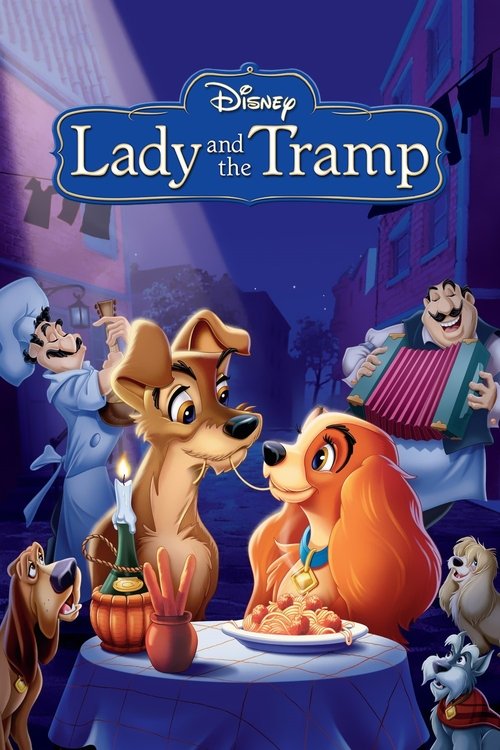
Lee recorded more than 1,100 masters and co-wrote more than 270 songs. She is best known for her role in the Walt Disney classic Lady and the Tramp, where she voiced Darling, Peg, and the Siamese cats, among others. In 1956, she received an Academy Award nomination for her role in the 1955 film Pete Kelly's Blues. That same year Lee was also nominated for a Primetime Emmy Award.
Contents
Early life
Lee was born Norma Deloris Egstrom in Jamestown, North Dakota, United States, on May 26, 1920, the seventh of the eight children of Selma Emele (née Anderson) Egstrom and Marvin Olaf Egstrom, a station agent for the Midland Continental Railroad. Her family were Lutherans. Her father was Swedish-American and her mother was Norwegian-American. After her mother died when Lee was four, her father married Minnie Schaumberg Wiese. His family's original name was Ekström.
Lee and her family lived in several towns along the Midland Continental Railroad (Jamestown, Nortonville, and Wimbledon). She graduated from Wimbledon High School in 1937.
Lee began singing at a young age. In Wimbledon, she was the female singer for a six-piece college dance band with leader Lyle "Doc" Haines. She traveled to various locations with Haines's quintet on Fridays after school and on weekends.
Lee first sang professionally on KOVC radio in Valley City, North Dakota, in 1936. She later had her own 15-minute Saturday radio show sponsored by a local restaurant that paid her salary in food. Both during and after her high-school years, Lee sang for small sums on local radio stations.
In October 1937, radio personality Ken Kennedy, of North Dakota's most widely heard station, WDAY in Fargo, auditioned her and put her on the air that day, but not before he changed her name to Peggy Lee.
In March 1938, at age 17, Lee left home for Hollywood, California. Her first job was seasonal work on Balboa Island, Newport Beach, as a short-order cook and waitress at Harry's Cafe. When the job ended after Easter, she was hired as a carnival barker at the Balboa Fun Zone. She wrote about this experience in the song "The Nickel Ride", which she composed with Dave Grusin for the 1974 film of the same name.
Later in 1938, Lee returned to Hollywood to audition for the MC at The Jade. Her employment was cut short when she fainted onstage due to overwork and malnutrition. After she was taken to the Hollywood Presbyterian Medical Center she was told she needed a tonsillectomy. Lee returned to North Dakota for the operation.
Career
Recording career
In 1942, Lee had her first top ten hit, "Somebody Else Is Taking My Place", followed in 1943 by "Why Don't You Do Right?", which sold more than one million copies and made her famous. She sang with Goodman's orchestra in two 1943 films, Stage Door Canteen and The Powers Girl.
In March 1943, Lee married Dave Barbour, a guitarist in Goodman's band. Lee said:
David joined Benny's band and there was a ruling that no one should fraternize with the girl singer. But I fell in love with David the first time I heard him play, and so I married him. Benny then fired David, so I quit, too. Benny and I made up, although David didn't play with him anymore. Benny stuck to his rule. I think that's not too bad a rule, but you can't help falling in love with somebody.
Will Friedwald has written:
when she left the band that spring [1943], her intention was to quit the footlights altogether and become Mrs. Barbour, fulltime housewife. It's to Mr. Barbour's credit that he refused to let his wife's singing and composing talent lie dormant for too long. "I fell in love with David Barbour," she recalled. "But 'Why Don't You Do Right' was such a giant hit that I kept getting offers and kept turning them down. And at that time it was a lot of money, but it really didn't matter to me at all. I was very happy. All I wanted was to have a family and cling to the children [daughter Nicki]. Well, they kept talking to me and finally David joined them and said 'You really have too much talent to stay at home and someday you might regret it.'"
In 1944, Lee drifted back to songwriting and occasional recording sessions for Capitol Records, for which she recorded a long string of hits, many of them with lyrics and music by Lee and Barbour, including "I Don't Know Enough About You" and "It's a Good Day". Her recording of "Golden Earrings", the title song of a 1947 movie, was a hit throughout 1947–48. "Mañana", by Lee and Barbour, was her eleventh solo hit recording, and remained on the charts for 21 weeks, including nine at the top position. The song sold more than a million copies, and earned the Top Disc Jockey Record of the Year award from Billboard magazine. From 1946 to 1949, Lee also recorded for Capitol's library of electrical transcriptions for radio stations. An advertisement for Capitol Transcriptions in a trade magazine noted that the transcriptions included "special voice introductions by Peggy".
Acting career
Lee starred opposite Danny Thomas in The Jazz Singer (1952), a remake of the Al Jolson film, The Jazz Singer (1927). She played an alcoholic blues singer in Pete Kelly's Blues (1955), for which she was nominated for the Academy Award for Best Supporting Actress.
Lee provided speaking and singing voices for several characters in the Disney movie Lady and the Tramp (1955), playing the human Darling, the dog Peg, and the two Siamese cats, Si and Am. She also co-wrote, with Sonny Burke, all of the original songs for the film, including "He's A Tramp", "Bella Notte", "La La Lu", "The Siamese Cat Song", and "Peace on Earth". In 1987, when Lady and the Tramp was released on VHS, Lee sought performance and song royalties on the video sales. When the Disney company refused to pay, she filed a lawsuit in 1988. After a prolonged legal battle, in 1992, Lee was awarded $2.3 million for breach of contract, plus $500,000 for unjust enrichment, $600,000 for illegal use of Lee's voice and $400,000 for the use of her name.
Peggy Lee also wrote the lyrics for "Johnny Guitar" (with music composer Victor Young), the title track of the 1954 film, Johnny Guitar, which she sings partially at the end of the movie.
During her career, Lee appeared in hundreds of variety shows, and several TV movies and specials.
Songwriting
Lee wrote or co-wrote more than 270 songs. In addition to her own material to sing, she was hired to score and compose songs for movies. For the Disney movie Lady and the Tramp, she co-composed all of the original songs with Burke, and supplied the singing and speaking voices of four characters.
Over the years, her songwriting collaborators included David Barbour, Laurindo Almeida, Harold Arlen, Sonny Burke, Cy Coleman, Duke Ellington, Dave Grusin, Quincy Jones, Francis Lai, Jack Marshall, Johnny Mandel, Marian McPartland, Willard Robison, Lalo Schifrin, and Victor Young.
Lee's first published song was in 1941, "Little Fool". "What More Can a Woman Do?" was recorded by Sarah Vaughan with Dizzy Gillespie and Charlie Parker. "Mañana (Is Soon Enough for Me)" was number one on the Billboard singles chart for nine weeks in 1948, from the week of March 13 to May 8.
Lee was a mainstay of Capitol Records when rock and roll came onto the American music scene. She was among the first of the "old guard" to recognize this new genre, as seen by her recording music from the Beatles, Randy Newman, Carole King, James Taylor, and other up-and-coming songwriters. From 1957 until her final disc for the company in 1972, Lee produced a steady stream of two or three albums per year that usually included standards (often arranged quite differently from the original), her own compositions, and material from young artists.
Many of her compositions have become standards, performed by singers such as Tony Bennett, Nat King Cole, Natalie Cole, Bing Crosby, Doris Day, Ella Fitzgerald, Judy Garland, Diana Krall, Queen Latifah, Barry Manilow, Bette Midler, Janelle Monae, Nina Simone, Regina Spektor, Sarah Vaughan and others.
Personal life
Lee was married four times: to guitarist and composer Dave Barbour (1943–1951), actor Brad Dexter (1953), actor Dewey Martin (1956–1958), and percussionist Jack Del Rio (1964). All the marriages ended in divorce.
On November 11, 1943, Lee gave birth to her only child, daughter Nicki Lee Foster (who died in 2014), in her marriage to Barbour.
Lee learned Transcendental Meditation and said she was taught "by the Maharishi personally and that was a great honor."
Lawsuit
In 1987, Peggy Lee was asked to help promote the first VHS release of Lady and the Tramp, for which she was paid an honorarium of $500. Lee contended Disney had breached the 1952 contract she had signed with the studio, which denied Disney the right to make "transcriptions for sale to the public" without her approval. Disney CEO Michael Eisner refused to pay Lee her share of the royalties. On November 16, 1988, Lee sued the Walt Disney Company for breach of contract, claiming that she retained the rights to transcriptions of the music, arguing that videotape editions were transcriptions. Her lawyers demanded $50 million in damages for compensation. In March 1991, Lee was awarded $2.3 million for breach of contract, plus $500,000 for unjust enrichment, $600,000 for illegal use of Lee's voice and $400,000 for the use of her name. From the $72 million Disney had earned in videocassette sales, by 1995, Lee's award was estimated to be four percent of the sales.
In October 1992, the California Court of Appeals upheld the judgement that Disney had to pay Lee over $3 million in compensation. Though videocassettes did not exist when Lee signed her contract with Disney, she nevertheless had retained the rights to phonograph recordings and transcriptions of the film. Stephen Lachs, a Los Angeles County Superior Court judge, later ruled that videocassettes were considered under the category of transcriptions. In December 1992, the California Supreme Court denied a hearing on Disney's appeal of lower-court rulings, which upheld the studio had committed breach of contract.
Illness and death
Lee continued to perform into the 1990s, sometimes using a wheelchair. After years of poor health, she died of complications from diabetes and a heart attack on January 21, 2002, at the age of 81. Lee was cremated and her ashes were buried with a bench-style monument in Westwood Village Memorial Park Cemetery in Los Angeles.
Legacy
Lee is often cited as the inspiration for the Margarita cocktail. In 1948, after a trip to Mexico, she and her husband ventured into the Balinese Room in Galveston, Texas. She requested a drink similar to one she had had in Mexico, and the head bartender, Santos Cruz, created the Margarita, and named it after the Spanish version of Peggy's name.
Lee was awarded a star on the Hollywood Walk of Fame for Recording in 1960. The star is at 6319 Hollywood Boulevard.
Baseball's Tug McGraw, whose career with both the New York Mets and Philadelphia Phillies ranged from 1965 to 1984, named one of his pitches the Peggy Lee. He explained to The Philadelphia Inquirer: "That's the one where the hitter is out in front of it and says, 'Is that all there is?'"
In 1971, Lee sang the Lord's Prayer at the funeral of Louis Armstrong.
In 1972, journalist Linda Deutsch described Lee as "the Queen" of pop music.
The designer of the Miss Piggy Muppet, Bonnie Erickson, who grew up in Lee's home state of North Dakota, was inspired by Lee for the Miss Piggy character in 1974. Originally called Miss Piggy Lee, her name was shortened to Miss Piggy when the Muppet gained fame.
In 1975, Lee received an honorary doctorate in music from North Dakota State University, and in 2000, she received another from Jamestown University.
In 1983, Lee had a hybrid tea rose named in her honor that was pink with a touch of peach. The Peggy Lee Rose was the 1983 American Beauty Rose of the Year.
In 2003, "There'll Be Another Spring: A Tribute to Miss Peggy Lee" was held at Carnegie Hall. Produced by recording artist Richard Barone, the sold-out event included performances by Cy Coleman, Debbie Harry, Nancy Sinatra, Rita Moreno, Marian McPartland, Chris Connor, Petula Clark, Maria Muldaur, Dee Dee Bridgewater, Quincy Jones, Shirley Horn, and others. In 2004, Barone brought the event to a sold-out Hollywood Bowl, and then to Chicago's Ravinia Festival, with expanded casts including Maureen McGovern, Jack Jones, and Bea Arthur. The Carnegie Hall concert was broadcast on NPR's JazzSet.
Work
Bibliography
Friedwald, Will. Liner notes for The Best of Peggy Lee: The Capitol Years.
Gavin, James. Is That All There Is? – The Strange Life of Peggy Lee. Atria Books, 2014. ISBN 978-1-4516-4168-4
Lee, Peggy. Miss Peggy Lee: An Autobiography. Donald I. Fine, 1989. ISBN 978-1-5561-1112-9
Oney, Dr. Tish Oney, Peggy Lee: A Century of Song. Rowman & Littlefield, 2020. ISBN 978-1-5381-2847-3
Richmond, Peter, Fever: The Life and Music of Miss Peggy Lee. Henry Holt and Company, 2006. ISBN 0-8050-7383-3
Strom, Robert. Miss Peggy Lee: A Career Chronicle. McFarland Publishing, 2005. ISBN 0-7864-1936-9
Accolades
Lee was nominated for 13 Grammy Awards. In 1969, her hit "Is That All There Is?" won her the Grammy for Best Contemporary Vocal Performance. In 1995, she was given the Grammy Lifetime Achievement Award.
She received the Rough Rider Award from the state of North Dakota in 1975, the Pied Piper Award from the American Society of Composers, Authors and Publishers in 1990, the Ella Award for Lifetime Achievement from the Society of Singers in 1994, the Living Legacy Award from the Women's International Center in 1994, and the Presidents Award from the Songwriters Guild of America in 1999. Other honors include induction into the Big Band Jazz Hall of Fame in 1992, the Songwriters Hall of Fame in 1999, and the Songbook Hall of Fame from the Great American Songbook Foundation in 2020.