
Sir Noël Peirce Coward (16 December 1899 – 26 March 1973) was an English playwright, composer, director, actor, and singer, known for his wit, flamboyance, and what Time called "a sense of personal style, a combination of cheek and chic, pose and poise".
Coward attended a dance academy in London as a child, making his professional stage début at the age of eleven. As a teenager he was introduced into the high society in which most of his plays would be set. Coward achieved enduring success as a playwright, publishing more than 50 plays from his teens onwards. Many of his works, such as Hay Fever, Private Lives, Design for Living, Present Laughter, and Blithe Spirit, have remained in the regular theatre repertoire. He composed hundreds of songs, in addition to well over a dozen musical theatre works (including the operetta Bitter Sweet and comic revues), screenplays, poetry, several volumes of short stories, the novel Pomp and Circumstance, and a three-volume autobiography. Coward's stage and film acting and directing career spanned six decades, during which he starred in many of his own works, as well as those of others.
At the outbreak of the Second World War, Coward volunteered for war work, running the British propaganda office in Paris. He also worked with the Secret Service, seeking to use his influence to persuade the American public and government to help Britain. Coward won an Academy Honorary Award in 1943 for his naval film drama In Which We Serve and was knighted in 1970. In the 1950s he achieved fresh success as a cabaret performer, performing his own songs, such as "Mad Dogs and Englishmen", "London Pride", and "I Went to a Marvellous Party".
Coward's plays and songs achieved new popularity in the 1960s and 1970s, and his work and style continue to influence popular culture. He did not publicly acknowledge his homosexuality, but it was discussed candidly after his death by biographers including Graham Payn, his long-time partner, and in Coward's diaries and letters, published posthumously. The former Albery Theatre (originally the New Theatre) in London was renamed the Noël Coward Theatre in his honour in 2006.
Contents
Biography
Early years
Coward was born in 1899 in Teddington, Middlesex, a south-western suburb of London. His parents were Arthur Sabin Coward (1856–1937), a piano salesman, and Violet Agnes Coward (1863–1954), daughter of Henry Gordon Veitch, a captain and surveyor in the Royal Navy. Noël Coward was the second of their three sons, the eldest of whom had died in 1898 at the age of six. Coward's father lacked ambition and industry, and family finances were often poor. Coward was bitten by what he called "the theatre bug" early, and appeared in amateur concerts by the age of seven. He attended the Chapel Royal Choir School as a young child. He had little formal schooling but was a voracious reader.
Encouraged by his ambitious mother, who sent him to a dance academy in London, Coward's first professional engagement was in January 1911 as Prince Mussel in the children's play The Goldfish. In Present Indicative, his first volume of memoirs, Coward wrote:
One day ... a little advertisement appeared in the Daily Mirror.... It stated that a talented boy of attractive appearance was required by a Miss Lila Field to appear in her production of an all-children fairy play: The Goldfish. This seemed to dispose of all argument. I was a talented boy, God knows, and, when washed and smarmed down a bit, passably attractive. There appeared to be no earthly reason why Miss Lila Field shouldn't jump at me, and we both believed that she would be a fool indeed to miss such a magnificent opportunity.
The leading actor-manager Charles Hawtrey, whom the young Coward idolised and from whom he learned a great deal about the theatre, cast him in the children's play Where the Rainbow Ends. Coward played in the piece in 1911 and 1912 at the Garrick Theatre in London's West End. In 1912 Coward also appeared at the Savoy Theatre in An Autumn Idyll (as a dancer in the ballet) and at the London Coliseum in A Little Fowl Play, by Harold Owen, in which Hawtrey starred. Italia Conti engaged Coward to appear at the Liverpool Repertory Theatre in 1913, and in the same year he was cast as the Lost Boy Slightly in Peter Pan. He reappeared in Peter Pan the following year, and in 1915 he was again in Where the Rainbow Ends. He worked with other child actors in this period, including Hermione Gingold (whose mother threatened to turn "that naughty boy" out); Fabia Drake; Esmé Wynne, with whom he collaborated on his earliest plays; Alfred Willmore, later known as Micheál Mac Liammóir; and Gertrude Lawrence who, Coward wrote in his memoirs, "gave me an orange and told me a few mildly dirty stories, and I loved her from then onwards."
Inter-war successes
In 1920, at the age of 20, Coward starred in his own play, the light comedy I'll Leave It to You. After a three-week run in Manchester it opened in London at the New Theatre (renamed the Noël Coward Theatre in 2006), his first full-length play in the West End. Neville Cardus's praise in The Manchester Guardian was grudging. Notices for the London production were mixed, but encouraging. The Observer commented, "Mr Coward... has a sense of comedy, and if he can overcome a tendency to smartness, he will probably produce a good play one of these days." The Times, on the other hand, was enthusiastic: "It is a remarkable piece of work from so young a head – spontaneous, light, and always 'brainy'."
The play ran for a month (and was Coward's first play seen in America), after which Coward returned to acting in works by other writers, starring as Ralph in The Knight of the Burning Pestle in Birmingham and then London. He did not enjoy the role, finding Francis Beaumont and his sometime collaborator John Fletcher "two of the dullest Elizabethan writers ever known ... I had a very, very long part, but I was very, very bad at it". Nevertheless, The Manchester Guardian thought that Coward got the best out of the role, and The Times called the play "the jolliest thing in London".
Coward completed a one-act satire, The Better Half, about a man's relationship with two women. It had a short run at The Little Theatre, London, in 1922. The critic St John Ervine wrote of the piece, "When Mr Coward has learned that tea-table chitter-chatter had better remain the prerogative of women he will write more interesting plays than he now seems likely to write." The play was thought to be lost until a typescript was found in 2007 in the archive of the Lord Chamberlain's Office, the official censor of stage plays in the UK until 1968.
In 1921, Coward made his first trip to America, hoping to interest producers there in his plays. Although he had little luck in New York on this trip, he found the Broadway theatre stimulating. He absorbed its smartness and pace into his own work, which brought him his first real success as a playwright with The Young Idea. The play opened in London in 1923, after a provincial tour, with Coward in one of the leading roles. The reviews were good: "Mr Noël Coward calls his brilliant little farce a 'comedy of youth', and so it is. And youth pervaded the Savoy last night, applauding everything so boisterously that you felt, not without exhilaration, that you were in the midst of a 'rag'." One critic, who noted the influence of Bernard Shaw on Coward's writing, thought more highly of the play than of Coward's newly found fans: "I was unfortunately wedged in the centre of a group of his more exuberant friends who greeted each of his sallies with 'That's a Noëlism!'" The play ran in London from 1 February to 24 March 1923, after which Coward turned to revue, co-writing and performing in Charlot's London Calling!
Second World War
With the outbreak of the Second World War Coward abandoned the theatre and sought official war work. After running the British propaganda office in Paris, where he concluded that "if the policy of His Majesty's Government is to bore the Germans to death I don't think we have time", he worked on behalf of British intelligence. His task was to use his celebrity to influence American public and political opinion in favour of helping Britain. He was frustrated by British press criticism of his foreign travel while his countrymen suffered at home, but he was unable to reveal that he was acting on behalf of the Secret Service. In 1942 George VI wished to award Coward a knighthood for his efforts, but was dissuaded by Winston Churchill. Mindful of the public view of Coward's flamboyant lifestyle, Churchill used as his reason for withholding the honour Coward's £200 fine for contravening currency regulations in 1941.
Had the Germans invaded Britain, Coward was scheduled to be arrested and killed, as he was in The Black Book along with other figures such as Virginia Woolf, Paul Robeson, Bertrand Russell, C. P. Snow and H. G. Wells. When this came to light after the war, Coward wrote: "If anyone had told me at that time I was high up on the Nazi blacklist, I should have laughed ... I remember Rebecca West, who was one of the many who shared the honour with me, sent me a telegram which read: 'My dear – the people we should have been seen dead with'."
Churchill's view was that Coward would do more for the war effort by entertaining the troops and the home front than by intelligence work: "Go and sing to them when the guns are firing – that's your job!" Coward, though disappointed, followed this advice. He toured, acted and sang indefatigably in Europe, Africa, Asia and America. He wrote and recorded war-themed popular songs, including "London Pride" and "Don't Let's Be Beastly to the Germans". His London home was wrecked by German bombs in 1941, and he took up temporary residence at the Savoy Hotel. During one air raid on the area around the Savoy he joined Carroll Gibbons and Judy Campbell in impromptu cabaret to distract the captive guests from their fears. Another of Coward's wartime projects, as writer, star, composer and co-director (alongside David Lean), was the naval film drama In Which We Serve. The film was popular on both sides of the Atlantic, and he was awarded an honorary certificate of merit at the 1943 Academy Awards ceremony. Coward played a naval captain, basing the character on his friend Lord Louis Mountbatten. Lean went on to direct and adapt film versions of three Coward plays.
Post-war career
Coward's new plays after the war were moderately successful but failed to match the popularity of his pre-war hits. Relative Values (1951) addresses the culture clash between an aristocratic English family and a Hollywood actress with matrimonial ambitions; South Sea Bubble (1951) is a political comedy set in a British colony; Quadrille (1952) is a drama about Victorian love and elopement; and Nude with Violin (1956, starring John Gielgud in London and Coward in New York) is a satire on modern art and critical pretension. A revue, Sigh No More (1945), was a moderate success, but two musicals, Pacific 1860 (1946), a lavish South Seas romance, and Ace of Clubs (1950), set in a night club, were financial failures. Further blows in this period were the deaths of Coward's friends Charles Cochran and Gertrude Lawrence, in 1951 and 1952 respectively. Despite his disappointments, Coward maintained a high public profile; his performance as King Magnus in Shaw's The Apple Cart for the Coronation season of 1953, co-starring Margaret Leighton, received much coverage in the press, and his cabaret act, honed during his wartime tours entertaining the troops, was a supreme success, first in London at the Café de Paris, and later in Las Vegas. The theatre critic Kenneth Tynan wrote:
To see him whole, public and private personalities conjoined, you must see him in cabaret ... he padded down the celebrated stairs ... halted before the microphone on black-suede-clad feet, and, upraising both hands in a gesture of benediction, set about demonstrating how these things should be done. Baring his teeth as if unveiling some grotesque monument, and cooing like a baritone dove, he gave us "I'll See You Again" and the other bat's-wing melodies of his youth. Nothing he does on these occasions sounds strained or arid; his tanned, leathery face is still an enthusiast's.... If it is possible to romp fastidiously, that is what Coward does. He owes little to earlier wits, such as Wilde or Labouchere. Their best things need to be delivered slowly, even lazily. Coward's emerge with the staccato, blind impulsiveness of a machine-gun.
In 1955 Coward's cabaret act at Las Vegas, recorded live for the gramophone and released as Noël Coward at Las Vegas, was highly successful. Variety reported, "Las Vegas, Flipping, Shouts 'More!' as Noel Coward Wows 'Em in Cafe Turn". CBS engaged him to write and direct a series of three 90-minute television specials for the 1955–56 season. The first of these, Together With Music, paired Coward with Mary Martin, featuring him in many of the numbers from his Las Vegas act. It was followed by productions of Blithe Spirit in which he starred with Claudette Colbert, Lauren Bacall and Mildred Natwick and This Happy Breed with Edna Best and Roger Moore. Despite excellent reviews, the audience viewing figures were moderate.
Death and honours
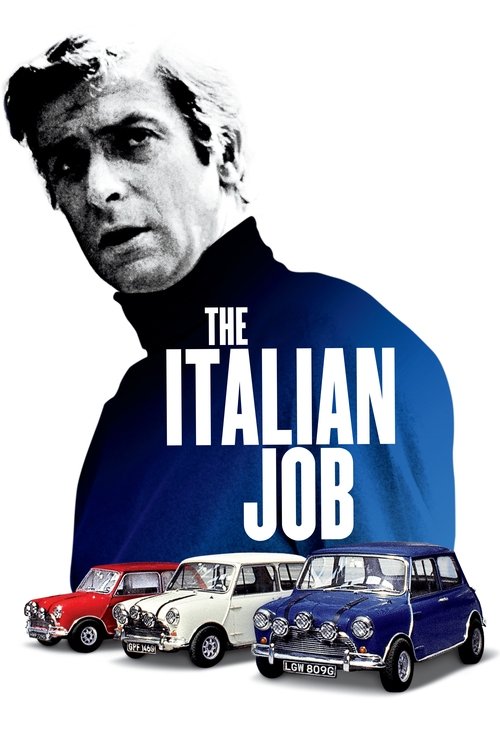
By the end of the 1960s, Coward developed arteriosclerosis and, during the run of Suite in Three Keys, struggled with bouts of memory loss. This also affected his work in The Italian Job, and he retired from acting immediately afterwards. Coward was knighted in 1970, and was elected a fellow of the Royal Society of Literature. He received a Tony Award for lifetime achievement in 1970. In 1972, he was awarded an honorary Doctor of Letters degree by the University of Sussex.
At the age of 73, Coward died at his home, Firefly Estate, in Jamaica on 26 March 1973 of heart failure and was buried three days later on the brow of Firefly Hill, overlooking the north coast of the island. A memorial service was held in St Martin-in-the-Fields in London on 29 May 1973, for which the Poet Laureate, John Betjeman, wrote and delivered a poem in Coward's honour, John Gielgud and Laurence Olivier read verse, and Yehudi Menuhin played Bach. On 28 March 1984 a memorial stone was unveiled by the Queen Mother in Poets' Corner, Westminster Abbey. Thanked by Coward's partner, Graham Payn, for attending, the Queen Mother replied, "I came because he was my friend."
The Noël Coward Theatre in St Martin's Lane, originally opened in 1903 as the New Theatre and later called the Albery, was renamed in his honour after extensive refurbishment, re-opening on 1 June 2006. A statue of Coward by Angela Conner was unveiled by the Queen Mother in the foyer of the Theatre Royal, Drury Lane in 1998. There are also sculptures of Coward displayed in New York and Jamaica, and a bust of him in the library in Teddington, near where he was born. In 2008 an exhibition devoted to Coward was mounted at the National Theatre in London. The exhibition was later hosted by the Museum of Performance & Design in San Francisco and the Academy of Motion Picture Arts and Sciences in Beverly Hills, California. In June 2021 an exhibition celebrating Coward opened at the Guildhall Art Gallery in the City of London.
Personal life
Coward was homosexual but, following the convention of his times, this was never publicly mentioned. The critic Kenneth Tynan's description in 1953 was close to an acknowledgment of Coward's sexuality: "Forty years ago he was Slightly in Peter Pan, and you might say that he has been wholly in Peter Pan ever since. No private considerations have been allowed to deflect the drive of his career; like Gielgud and Rattigan, like the late Ivor Novello, he is a congenital bachelor." Coward firmly believed his private business was not for public discussion, considering "any sexual activities when over-advertised" to be tasteless. Even in the 1960s, Coward refused to acknowledge his sexual orientation publicly, wryly observing, "There are still a few old ladies in Worthing who don't know." Despite this reticence, he encouraged his secretary Cole Lesley to write a frank biography once Coward was safely dead.
Coward's most important relationship, which began in the mid-1940s and lasted until his death, was with the South African stage and film actor Graham Payn. Coward featured Payn in several of his London productions. Payn later co-edited with Sheridan Morley a collection of Coward's diaries, published in 1982. Coward's other relationships included the playwright Keith Winter, actors Louis Hayward and Alan Webb, his manager Jack Wilson and the composer Ned Rorem, who published details of their relationship in his diaries. Coward had a 19-year friendship with Prince George, Duke of Kent, but biographers differ on whether it was platonic. Payn believed that it was, although Coward reportedly admitted to the historian Michael Thornton that there had been "a little dalliance". Coward said, on the duke's death, "I suddenly find that I loved him more than I knew."
Coward maintained close friendships with many women, including the actress and author Esmé Wynne-Tyson, his first collaborator and constant correspondent; Gladys Calthrop, who designed sets and costumes for many of his works; his secretary and close confidante Lorn Loraine; the actresses Gertrude Lawrence, Joyce Carey and Judy Campbell; and "his loyal and lifelong amitié amoureuse", Marlene Dietrich.
In his profession, Coward was widely admired and loved for his generosity and kindness to those who fell on hard times. Stories are told of the unobtrusive way in which he relieved the needs or paid the debts of old theatrical acquaintances who had no claim on him. From 1934 until 1956, Coward was the president of the Actors' Orphanage, which was supported by the theatrical industry. In that capacity, he befriended the young Peter Collinson, who was in the care of the orphanage. He became Collinson's godfather and helped him to get started in show business. When Collinson was a successful director, he invited Coward to play a role in The Italian Job. Graham Payn also played a small role in the film.
Public image
"Why", asked Coward, "am I always expected to wear a dressing-gown, smoke cigarettes in a long holder and say 'Darling, how wonderful'?" The answer lay in Coward's assiduous cultivation of a carefully crafted image. As a suburban boy who had been taken up by the upper classes he rapidly acquired the taste for high life: "I am determined to travel through life first class." He first wore a dressing gown onstage in The Vortex and used the fashion in several of his other famous plays, including Private Lives and Present Laughter. George Walden identifies him as a modern dandy. In connection with the National Theatre's 2008 exhibition, The Independent commented, "His famous silk, polka-dot dressing gown and elegant cigarette holder both seem to belong to another era. But 2008 is proving to be the year that Britain falls in love with Noël Coward all over again."
As soon as he achieved success he began polishing the Coward image: an early press photograph showed him sitting up in bed holding a cigarette holder: "I looked like an advanced Chinese decadent in the last phases of dope." Soon after that, Coward wrote:
He soon became more cautious about overdoing the flamboyance, advising Cecil Beaton to tone down his outfits: "It is important not to let the public have a loophole to lampoon you." However, Coward was happy to generate publicity from his lifestyle. In 1969 he told Time magazine, "I acted up like crazy. I did everything that was expected of me. Part of the job." Time concluded, "Coward's greatest single gift has not been writing or composing, not acting or directing, but projecting a sense of personal style, a combination of cheek and chic, pose and poise."
Coward's distinctive clipped diction arose from his childhood: his mother was deaf and Coward developed his staccato style of speaking to make it easier for her to hear what he was saying; it also helped him eradicate a slight lisp. His nickname, "The Master", "started as a joke and became true", according to Coward. It was used of him from the 1920s onwards. Coward himself made light of it: when asked by a journalist why he was known as "The Master", he replied, "Oh, you know – Jack of all trades, master of none." He could, however, joke about his own immodesty: "My sense of my importance to the world is relatively small. On the other hand, my sense of my own importance to myself is tremendous." When a Time interviewer apologised, "I hope you haven't been bored having to go through all these interviews for your [70th] birthday, having to answer the same old questions about yourself", Coward rejoined, "Not at all. I'm fascinated by the subject."
Works and appearances
Coward wrote more than 65 plays and musicals (not all produced or published) and appeared in approximately 70 stage productions. More than 20 films were made from his plays and musicals, either by Coward or other screenwriters, and he acted in 17 films.
Plays
In a 2005 survey Dan Rebellato divides the plays into early, middle and late periods. In The Oxford Encyclopedia of British Literature (2006) Jean Chothia calls the plays of the 1920s and 1930s "the quintessential theatrical works of the years between World Wars I and II". Rebellato considers Hay Fever (1925) typical of the early plays, "showing a highly theatrical family running rings around a group of staid outsiders"; Easy Virtue (1926) "brings the well-made play into the twentieth century". Chothia writes that "the seeming triviality" and rich, flippant characters of Coward's plays, though popular with the public, aroused hostility from a few, such as the playwright Sean O'Casey, "perhaps particularly because of the ease with which his sexually charged writing seemed to elude censorship". Rebellato rates Private Lives (1930) as the pinnacle of Coward's early plays, with its "evasion of moral judgement, and the blur of paradox and witticism".
During the 1930s, once he was established by his early successes, Coward experimented with theatrical forms. The historical epic Cavalcade (1931) with its huge cast, and the cycle of ten short plays Tonight at 8.30 (1935), played to full houses, but are difficult to revive because of the expense and "logistical complexities" of staging them. He continued to push the boundaries of social acceptability in the 1930s: Design for Living (1932), with its bisexual triangle, had to be premiered in the US, beyond the reach of the British censor. Chothia comments that a feature of Coward's plays of the 1920s and 1930s is that, "unusually for the period, the women in Coward's plays are at least as self-assertive as the men, and as likely to seethe with desire or rage, so that courtship and the battle of the sexes is waged on strictly equal terms".
The best-known plays of Coward's middle period, the late 1930s and the 1940s, Present Laughter, This Happy Breed and Blithe Spirit are more traditional in construction and less unconventional in content. Coward toured them throughout Britain during the Second World War, and the first and third of them are frequently revived in Britain and the US.
Coward's plays from the late 1940s and early 1950s are generally seen as showing a decline in his theatrical flair. Morley comments, "The truth is that, although the theatrical and political world had changed considerably through the century for which he stood as an ineffably English icon, Noël himself changed very little." Chothis comments, "sentimentality and nostalgia, often lurking but usually kept in check in earlier works, were cloyingly present in such post-World War II plays as Peace in Our Time and Nude with Violin, although his writing was back on form with the astringent Waiting in the Wings". His final plays, in Suite in Three Keys (1966), were well received, but the Coward plays most often revived are from the years 1925 to 1940: Hay Fever, Private Lives, Design for Living, Present Laughter and Blithe Spirit.
Musicals and revues
Coward wrote the words and music for eight full-length musicals between 1928 and 1963. By far the most successful was the first, Bitter Sweet (1929), which he termed an operetta. It ran in the West End for 697 performances between 1929 and 1931. Bitter Sweet was set in 19th-century Vienna and London; for his next musical, Conversation Piece (1934) Coward again chose a historical setting: Regency Brighton. Notices were excellent, but the run ended after 177 performances when the leading lady, Yvonne Printemps, had to leave the cast to honour a filming commitment. The show has a cast of more than fifty and has never been professionally revived in London. A third musical with a historical setting, Operette, ran for 133 performances in 1938 and closed for lack of box-office business. Coward later described it as "over-written and under-composed", with too much plot and too few good numbers. He persisted with a romantic historical theme with Pacific 1860 (1946), another work with a huge cast. It ran for 129 performances, and Coward's failure to keep up with public tastes was pointed up by the success of the Rodgers and Hammerstein show that followed Pacific 1860 at Drury Lane: Oklahoma! ran there for 1,534 performances. His friend and biographer Cole Lesley wrote that although Coward admired Oklahoma! enormously, he "did not learn from it and the change it had brought about, that the songs should in some way further the storyline." Lesley added that Coward compounded this error by managing "in every single show to write one song, nothing whatever to do with the plot, that was an absolute showstopper".
With Ace of Clubs (1949) Coward sought to be up-to-date, with the setting of a contemporary Soho nightclub. It did better than its three predecessors, running for 211 performances, but Coward wrote, "I am furious about Ace of Clubs not being a real smash and I have come to the conclusion that if they don't care for first rate music, lyrics, dialogue and performance they can stuff it up their collective arses and go and see [Ivor Novello's] King's Rhapsody". He reverted, without success, to a romantic historical setting for After the Ball (1954 – 188 performances). His last two musicals were premiered on Broadway rather than in London. Sail Away (1961) with a setting on a modern cruise ship ran for 167 performances in New York and then 252 in London. For his last and least successful musical, Coward reverted to Ruritanian royalty in The Girl Who Came to Supper (1963), which closed after 112 performances in New York and has never been staged in London.
Coward's first contributions to revue were in 1922, writing most of the songs and some of the sketches in André Charlot's London Calling!. This was before his first major success as a playwright and actor, in The Vortex, written the following year and staged in 1924. The revue contained only one song that features prominently in the Noël Coward Society's list of his most popular numbers – "Parisian Pierrot", sung by Gertrude Lawrence. His other early revues, On With the Dance (1925) and This Year of Grace (1928) were liked by the press and public, and contained several songs that have remained well known, including "Dance, Little Lady", "Poor Little Rich Girl" and "A Room With a View". Words and Music (1932) and its Broadway successor Set to Music (1939) included "Mad About the Boy", "Mad Dogs and Englishmen", "Marvellous Party" and "The Party's Over Now".
Songs
Coward wrote three hundred songs. The Noël Coward Society's website, drawing on performing statistics from the publishers and the Performing Rights Society, names "Mad About the Boy" (from Words and Music) as Coward's most popular song, followed, in order, by:
"I'll See You Again" (Bitter Sweet)
"Mad Dogs and Englishmen" (Words and Music)
"If Love Were All" (Bitter Sweet)
"Someday I'll Find You" (Private Lives)
"I'll Follow My Secret Heart" (Conversation Piece)
"London Pride" (1941)
"A Room With a View" (This Year of Grace)
"Mrs Worthington" (1934)
"Poor Little Rich Girl" (On with the Dance)
"The Stately Homes of England" (Operette)
Coward was no fan of the works of Gilbert and Sullivan, but as a songwriter was nevertheless strongly influenced by them. He recalled: "I was born into a generation that still took light music seriously. The lyrics and melodies of Gilbert and Sullivan were hummed and strummed into my consciousness at an early age. My father sang them, my mother played them ... my aunts and uncles, who were legion, sang them singly and in unison at the slightest provocation." His colleague Terence Rattigan wrote that as a lyricist Coward was "the best of his kind since W. S. Gilbert."
Critical reputation and legacy
The playwright John Osborne said, "Mr Coward is his own invention and contribution to this century. Anyone who cannot see that should keep well away from the theatre." Tynan wrote in 1964, "Even the youngest of us will know, in fifty years' time, exactly what we mean by 'a very Noel Coward sort of person'." In praise of Coward's versatility, Lord Mountbatten said, in a tribute on Coward's seventieth birthday:
Tynan's was the first generation of critics to realise that Coward's plays might enjoy more than ephemeral success. In the 1930s, Cyril Connolly wrote that they were "written in the most topical and perishable way imaginable, the cream in them turns sour overnight". What seemed daring in the 1920s and 1930s came to seem old-fashioned in the 1950s, and Coward never repeated the success of his pre-war plays. By the 1960s, critics began to note that underneath the witty dialogue and the Art Deco glamour of the inter-war years, Coward's best plays also dealt with recognisable people and familiar relationships, with an emotional depth and pathos that had been often overlooked. By the time of his death, The Times was writing of him, "None of the great figures of the English theatre has been more versatile than he", and the paper ranked his plays in "the classical tradition of Congreve, Sheridan, Wilde and Shaw". In late 1999 The Stage ran what it called a "millennium poll" of its readers to name the people from the world of theatre, variety, broadcasting or film who have most influenced the arts and entertainment in Britain: Shakespeare came first, followed by Coward in second place.
A symposium published in 1999 to mark the centenary of Coward's birth listed some of his major productions scheduled for the year in Britain and North America, including Ace of Clubs, After the Ball, Blithe Spirit, Cavalcade, Easy Virtue, Hay Fever, Present Laughter, Private Lives, Sail Away, A Song at Twilight, The Young Idea and Waiting in the Wings, with stars including Lauren Bacall, Rosemary Harris, Ian McKellen, Corin Redgrave, Vanessa Redgrave and Elaine Stritch. A centenary celebration was presented at the Savoy Theatre on 12 December 1999, devised by Hugh Wooldridge, featuring more than 30 leading performers, raising funds for the Actors' Orphanage. Tim Rice said of Coward's songs, "The wit and wisdom of Noël Coward's lyrics will be as lively and contemporary in 100 years' time as they are today", and many have been recorded by artists such as Damon Albarn, Ian Bostridge, The Divine Comedy, Elton John, Valerie Masterson, Paul McCartney, Michael Nyman, Pet Shop Boys, Vic Reeves, Sting, Robbie Williams, Joan Sutherland, Adam Lambert, Judy Garland and Frank Sinatra. Recordings of Coward's songs have been heard in films, such as Bridget Jones: Mad About the Boy, video games and advertising.
Notes, references and sources
Sources
Barbey D'Aurevilly, Jules (2002) [1845]. Who's a Dandy? – Dandyism and Beau Brummell. George Walden (trans. and ed. of new edition). London: Gibson Square. ISBN 978-1-903933-18-3.
Castle, Charles (1972). Noël. London: W H Allen. ISBN 978-0-491-00534-0.
Coward, Noël (1994). Plays, Five. Sheridan Morley (introduction). London: Methuen. ISBN 978-0-413-51740-1.
Coward, Noël (1994). Plays, Six. Sheridan Morley (introduction). London: Methuen. ISBN 978-0-413-73410-5.
Coward, Noël (2004) [1932]. Present Indicative – Autobiography to 1931. London: Methuen. ISBN 978-0-413-77413-2.
Coward, Noël (1954). Future Indefinite. London: Heinemann. OCLC 5002107.
Coward, Noël (1967). Not Yet the Dodo, and other verses. London: Heinemann. OCLC 488338862.
Day, Barry, ed. (2007). The Letters of Noël Coward. London: Methuen. ISBN 978-1-4081-0675-4.
Dibbs, Martin (2019). Radio Fun and the BBC Variety Department, 1922–67. Cham: Springer.
Gaye, Freda, ed. (1967). Who's Who in the Theatre (fourteenth ed.). London: Sir Isaac Pitman and Sons. OCLC 5997224.
Herbert, Ian, ed. (1977). Who's Who in the Theatre (sixteenth ed.). London and Detroit: Pitman Publishing and Gale Research. ISBN 978-0-273-00163-8.
Hoare, Philip (1995). Noël Coward, A Biography. London: Sinclair-Stevenson. ISBN 978-1-4081-0675-4.