Ellen Miriam Hopkins (October 18, 1902 – October 9, 1972) was an American actress known for her versatility. She signed with Paramount Pictures in 1930.
She portrayed a pickpocket in Ernst Lubitsch's romantic comedy Trouble in Paradise, a bar singer named Ivy in Rouben Mamoulian's Dr. Jekyll and Mr. Hyde, and the titular character in the controversial drama The Story of Temple Drake. She received a nomination for the Academy Award for Best Actress for the 1935 film Becky Sharp, becoming the first performer nominated for a color picture. She was nominated for a Golden Globe for The Heiress. She co-starred with Joel McCrea in five films.
Her long-running feud with actress Bette Davis was publicized for effect. Hopkins later became an important figure in television drama. She developed a reputation for hosting elegant parties, which were typically attended by intellectuals and artists she had befriended.
Contents
Early life
Hopkins was born in Savannah, Georgia, to Homer Hopkins and Ellen Cutler. Her early childhood home was located at 321 Whitaker St (since demolished). She was raised in Bainbridge, near the Alabama border. She had an older sister, Ruby (1900–1990). Her maternal great-grandfather, the fourth mayor of Bainbridge, had helped establish St. John's Episcopal Church in the city. Hopkins sang in the choir as a girl.
In 1909, she briefly lived in Mexico with her family. After her parents separated, Hopkins moved as a teen with her mother to Syracuse, New York, to be near her paternal uncle, Thomas Cramer Hopkins, head of the geology department at Syracuse University.
Hopkins attended Goddard Seminary in Plainfield, Vermont (later renamed Goddard College), and Syracuse University in New York State.
Career
At age 20, Hopkins became a chorus girl in New York City; she also acted regularly on the stage throughout the 1920s, including in the 1926 stage adaptation of Theodore Dreiser's An American Tragedy. In 1930, she starred on Broadway in the play Ritzy by Sidney Toler. She starred on Broadway in the lead of Jezebel, a 1933 play by Owen Davis. When it was adapted as a 1938 film of the same name, Hopkins was bitterly disappointed that Bette Davis was chosen for the role she had played on stage. This began a feud between them, which the motion picture studios publicized.
In 1930, Hopkins signed with Paramount Pictures and made her official film debut in Fast and Loose. Her first great success was in the 1931 horror drama film Dr. Jekyll and Mr. Hyde, where she portrayed Ivy Pearson, a prostitute who becomes entangled with Jekyll and Hyde. She received rave reviews, including one from Mordaunt Hall of the New York Times, saying she portrayed Ivy "splendidly".
Her career ascended swiftly. In 1932, she made her breakthrough in Ernst Lubitsch's Trouble in Paradise, where she proved her charm and wit as a beautiful and jealous pickpocket. During the pre-code Hollywood of the early 1930s, she appeared in The Smiling Lieutenant, The Story of Temple Drake, and Design for Living, all of which were box-office successes and critically acclaimed. Design for Living ranked as one of the top ten highest-grossing films of 1933.
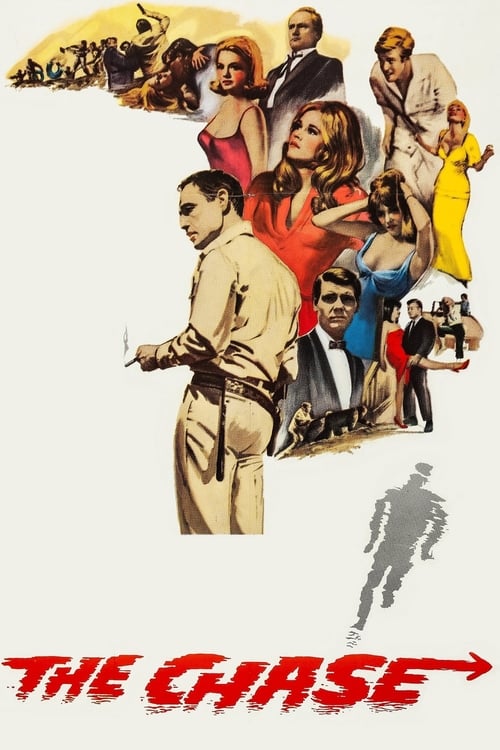
Hopkins' early films were considered sexually risqué; produced in the years before the Motion Picture Production Code was rigorously enforced, they featured issues that would be prohibited after 1934. For instance, The Story of Temple Drake depicted a rape scene, and Design for Living featured a ménage à trois with Fredric March and Gary Cooper. Her successes continued during the remainder of the decade with the romantic comedy The Richest Girl in the World (1934); the historical drama Becky Sharp (1935), for which she was nominated for the Academy Award for Best Actress; Barbary Coast (1935); These Three (1936) (the first of four films with the director William Wyler); and The Old Maid (1939).
Hopkins was one of the early actresses approached to play the role of Ellie Andrews in It Happened One Night (1934). She rejected the part, and Claudette Colbert was cast. Hopkins auditioned for the role of Scarlett O'Hara in Gone with the Wind; she was the only candidate to be a native Georgian, but the part went to British actress Vivien Leigh.
Personal life
Hopkins married four times. Her first marriage was to actor Brandon Peters, second to aviator and screenwriter Austin Parker, third to the director Anatole Litvak, and fourth to war correspondent Raymond B. Brock. In 1932, she adopted a son, Michael T. Hopkins (March 29, 1932 – October 5, 2010), who had a career in the U.S. Air Force.
In the early 1930s, between her second and third marriages, Hopkins had a passionate relationship with Random House publisher Bennett Cerf.
She was known for hosting elegant parties. John O'Hara, a frequent guest, noted that
most of her guests were chosen from the world of the intellect ... Miriam knew them all, had read their work, had listened to their music, had bought their paintings. They were not there because a secretary had given her a list of highbrows.
She was a staunch Democrat who strongly supported the presidency of Franklin D. Roosevelt.
Death
Hopkins died in New York City from a heart attack on October 9, 1972. She is buried in Oak City Cemetery in Bainbridge, Georgia.