Feature films
In June 1987, with Taraporevala, Nair researched and co-wrote Salaam Bombay!, which turned out to be an enormous and exhausting undertaking. Nair sought out real street children to more authentically portray the lives of children who survived in the streets and were deprived of a true childhood. Mitch Epstein was co-producer and production designer on the film. They struggled to get financing, but eventually Nair "managed to cajole completion cash out of a French company". On 19 May 1988, three days after Nair had finished cutting the film, it had its world première at the closing gala at the 1988 Cannes Film Festival. It earned a 15-minute standing ovation, and won the Caméra d'Or (the first Indian film to do so) and the Prix du public (Audience Prize). It was nominated at the 1989 Academy Awards for Best Foreign Language Film. Although it did not do well at the box office, it won 23 international awards.
Nair and Taraporevala next worked together on the 1991 film Mississippi Masala, which told the story of Ugandan-born Indians (displaced by Idi Amin in 1972) in Mississippi. Their research for the film started in March 1989, and it was their first visit to Africa. Nair met her second husband, Asian Ugandan academic Mahmood Mamdani, when she interviewed him in Nairobi after having read his book From Citizen to Refugee, about the expulsion of Asians. The film centers on a carpet-cleaner business owner (Denzel Washington) who falls in love with the daughter (Sarita Choudhury) of one of his Indian clients. The film revealed the prejudice in the black and Indian communities. Mississippi Masala was heavily inspired by the history of Indian emigrants in Uganda. Nair was inspired by the fact that Ugandan-born Indians often aligned themselves more with white people, especially due to the worse treatment Black Ugandans endured. It was well received by critics, earned a standing ovation at the 1992 Sundance Film Festival, and won three awards at the Venice Film Festival.
Her next feature, The Perez Family (1995), was not a success. The producer said that it had "too much plot", and a critic wrote, "It looks like a musical after all the songs have been cut out." The next one, Kama Sutra: A Tale of Love (1996), which Nair later called "an aberration", also bombed. In that year, the family moved to South Africa for three years, where her career "stagnated".
Monsoon Wedding, written by Sabrina Dhawan, was filmed over only 30 days, using only a small crew, including some of Nair's acquaintances and relatives. Released in 2001, the film told the story of an Indian Punjabi wedding. In the end, the film grossed over $30 million worldwide. The film was awarded the Golden Lion award at the Venice Film Festival, making Nair the first female recipient of the award.
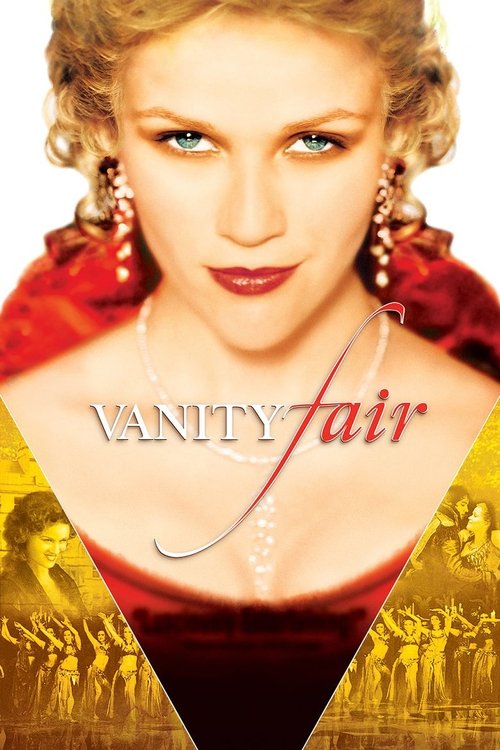
Nair directed the 2002 television film, Hysterical Blindness for HBO. The film is a romance set in 1987 starring Uma Thurman in the lead role. The made-for-TV movie would prove a success for both HBO and Thurman, with the latter receiving a Golden Globe for her acting in the film. This was followed by an adaptation of William Makepeace Thackeray's epic Vanity Fair (2004).
In 2005, Nair was asked to direct Harry Potter and the Order of the Phoenix, but turned it down to work on The Namesake, reportedly after her son Zohran persuaded her that she was the only one who could direct the latter. Based on the book by Pulitzer Prize-winner Jhumpa Lahiri, Sooni Taraporevala's screenplay follows the son of Indian immigrants who wants to fit in with New York City society, but struggles to get away from his family's traditional ways. The film was presented with the Dartmouth Film Award and was also honored with the Pride of India award at the Bollywood Movie Awards. Next she directed the Amelia Earhart biopic Amelia (2009), starring Hilary Swank and Richard Gere. The film predominantly received negative reviews. It was also a box-office bomb, grossing $19.6 million against a budget of $40 million.
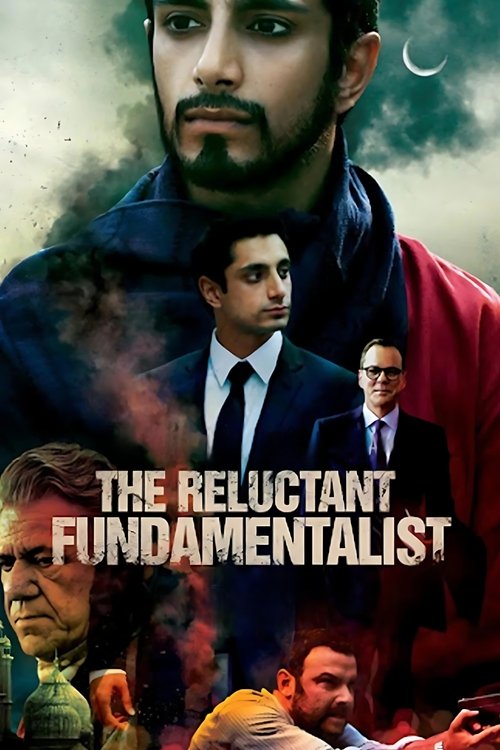
In 2012, Nair directed The Reluctant Fundamentalist, a thriller based on the best-selling novel by Mohsin Hamid, starring Riz Ahmed, Kate Hudson, Liev Schreiber, and Kiefer Sutherland. It tells a post-9/11 story about the impact of the terrorist attacks on one Pakistani man and his treatment by Americans in reaction to them. It opened the 2012 Venice Film Festival in Venice, Italy to critical acclaim, and was released worldwide in early 2013. It did not do well at the box office.
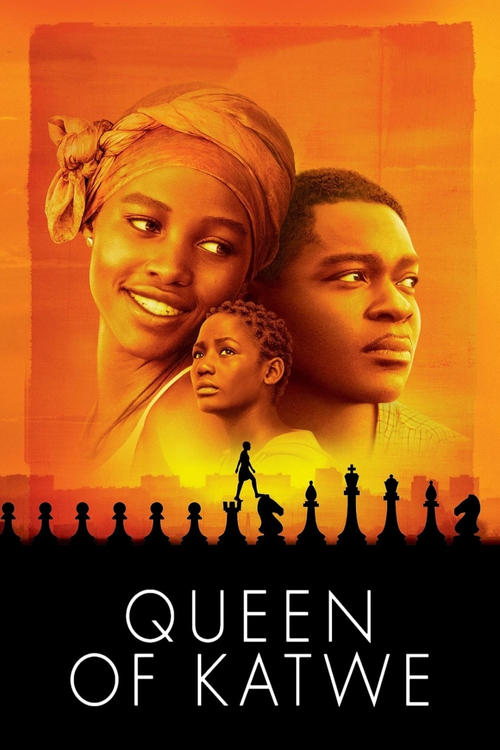
Nair's 2016 film Queen of Katwe, a Disney production, starred Lupita Nyong'o and David Oyelowo, and was based on a biography of Ugandan chess prodigy Phiona Mutesi written by American author Tim Crothers. The film earned much acclaim. It had a budget of $15 million and grossed $10.4 million. Nair's son Zohran Mamdani appears as an extra in the film, and one of his songs performed under his rapper pseudonym Young Cardamom, "#1 Spice", also features in the film.
In 2018, Amardeep Singh published a book, with the University Press of Mississippi, about Nair's films, titled, The Films of Mira Nair - Diaspora vérité.