Dada and surrealism
In 1918, Ernst was demobilised and returned to Cologne. He soon married art history student Luise Straus, of Jewish ancestry, whom he had met in 1914. In 1919, he visited Paul Klee in Munich and studied paintings by Giorgio de Chirico. In the same year, inspired by de Chirico and mail-order catalogues, teaching-aide manuals and similar sources, he produced his first collages (notably Fiat modes, a portfolio of lithographs), a technique which later dominated his artistic pursuits. Also in 1919, Ernst, social activist Johannes Theodor Baargeld and several colleagues founded the Cologne Dada group. In 1919–20, Ernst and Baargeld published various short-lived magazines such as Der Strom, die Schammade and organised Dada exhibitions.
Ernst and Luise's son Ulrich 'Jimmy' Ernst was born on 24 June 1920; he later would also become a painter. Ernst's marriage to Luise was short-lived. In 1921, he met Paul Éluard, who became a lifelong friend. Éluard bought two of Ernst's paintings (Celebes and Oedipus Rex) and selected six collages to illustrate his poetry collection Répétitions. A year later the two collaborated on Les malheurs des immortels and then with André Breton, whom Ernst met in 1921, on the magazine Littérature. In 1922, unable to secure the necessary papers, Ernst entered France illegally and settled into a ménage à trois with Éluard and his wife Gala in the Paris suburb of Saint-Brice, leaving behind his wife and son. During his first two years in Paris, Ernst took various odd jobs to make a living and continued to paint. In 1923, the Éluards moved to a new home in Eaubonne north of Paris, where Ernst painted numerous murals. The same year his works were exhibited at Salon des Indépendants.
Although apparently accepting the ménage à trois, Éluard eventually became more concerned about the affair. In 1924, he abruptly left, first for Monaco and then for Saigon, Vietnam. He soon asked his wife and Max Ernst to join him; both had to sell paintings to finance the trip. Ernst went to Düsseldorf and sold a large number of his works to a long-time friend, Johanna Ey, owner of gallery Das Junge Rheinland. After a brief time together in Saigon, the trio decided that Gala would remain with Paul. The Éluards returned to Eaubonne in early September, while Ernst followed them some months later, after exploring more of southeast Asia. He returned to Paris in late 1924 and soon signed a contract with Jacques Viot which allowed him to paint full-time. In 1925, Ernst established a studio at 22, rue Tourlaque.
In 1925, Ernst invented a graphic art technique called frottage (see surrealist techniques), which uses pencil rubbings of objects as a source of images. He also created the 'grattage' technique, in which paint is scraped across canvas to reveal the imprints of the objects placed beneath. He used this technique in his famous painting Forest and Dove (as shown at the Tate Modern). The next year he collaborated with Joan Miró on designs for Sergei Diaghilev. With Miró's help, Ernst developed grattage, in which he trowelled pigment from his canvases. He also explored with the technique of decalcomania, which involves pressing paint between two surfaces. Ernst was also active, along with fellow surrealists, at the Atelier 17.
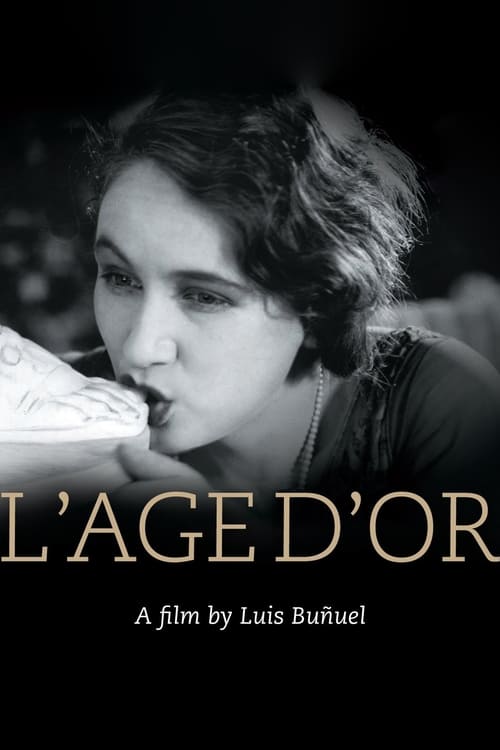
Ernst developed a fascination with birds which was prevalent in his work. His alter ego in paintings, which he called Loplop, was a bird. He suggested that this alter-ego was an extension of himself stemming from an early confusion of birds and humans. He said that one night when he was young, he woke up and found that his beloved bird had died; a few minutes later, his father announced that his sister was born. Loplop often appeared in collages of other artists' work, such as Loplop presents André Breton. Ernst drew a great deal of controversy with his 1926 painting The Virgin Chastises the infant Jesus before Three Witnesses: André Breton, Paul Éluard, and the Painter. In 1927, he married Marie-Berthe Aurenche and it is thought his relationship with her may have inspired the erotic subject matter of The Kiss and other works of that year. He appeared in the 1930 film L'Âge d'Or, directed by the surrealist Luis Buñuel. Ernst began to sculpt in 1934 and spent time with Alberto Giacometti. In 1938, the American heiress and artistic patron Peggy Guggenheim acquired a number of Max Ernst's works, which she displayed in her new gallery in London. Ernst and Guggenheim were married from 1942 to 1946.