Presidency (since 2024)
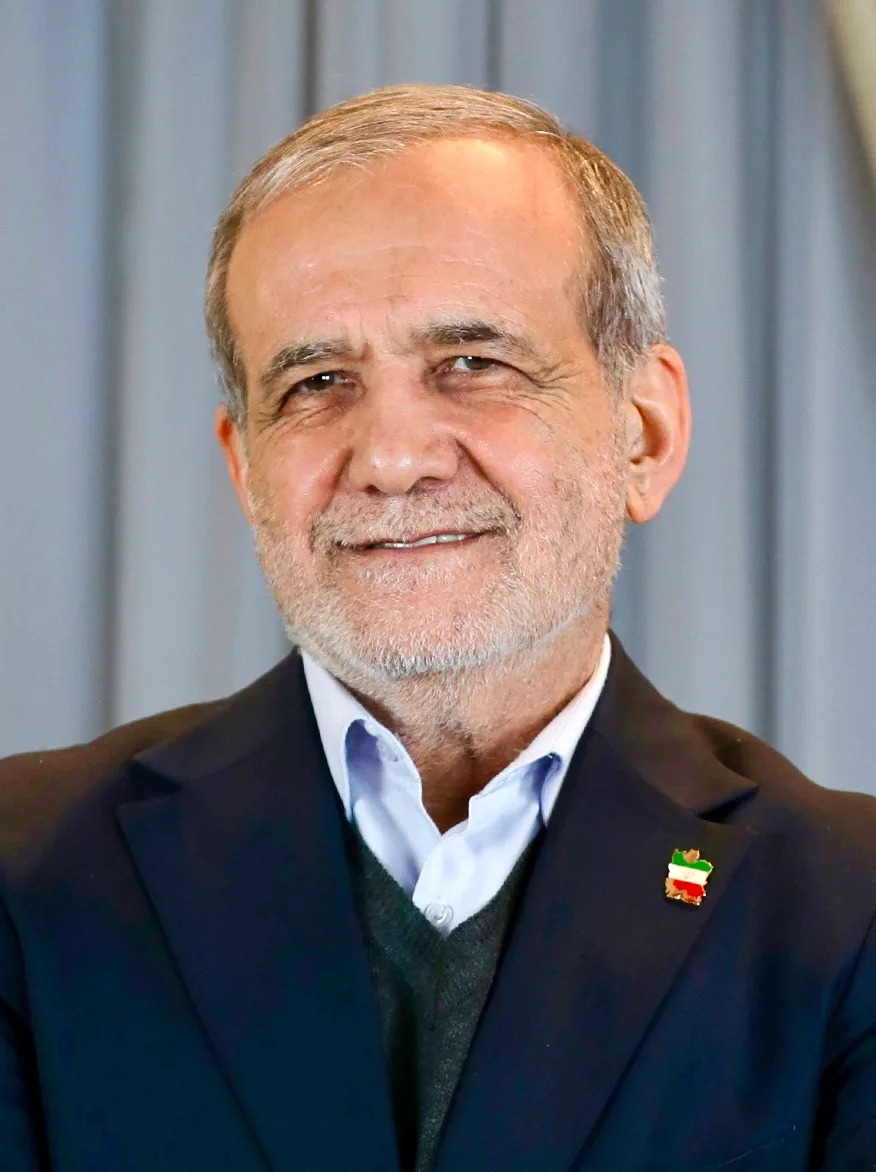
On 6 July 2024, Pezeshkian was elected president after winning the 5 July run-off of the 2024 presidential election with 16.3 million votes (53.7%) to Saeed Jalili's 13.5 million (44.3%). He was formally appointed as the president by the supreme leader of Iran Ali Khamenei on 28 July 2024, and was sworn in before the Iranian parliament on 30 July.
After taking office, Pezeshkian retained Mohammad Eslami as vice president and head of the Atomic Energy Organization, while appointing the former first vice president of Iran Mohammad Reza Aref and former vice president and head of the Foundation of Martyrs and Veterans Affairs Saeed Ohadi back to their posts, in addition to appointing former education minister Mohsen Haji-Mirzaei as his chief of staff, former foreign minister Mohammad Javad Zarif as vice president for Strategic Affairs, Mohammad Ja'far Ghae'em Panah as vice president for Executive Affairs, former finance minister Ali Tayebnia as his senior adviser, Hamid Pourmohammadi as vice president and head of the Plan and Budget Organization, Shahram Dabiri Oskuei as his deputy for parliamentary affairs, Hossein Afshin as vice president for Science, Technology and Knowledge-based Affairs, and Zahra Behrouz Azar, a critic of the Guidance Patrol, as Vice President for Women and Family Affairs.
Following Iran's threats to attack Israel for the assassination of Ismail Haniyeh in July 2024, Pezeshkian reportedly urged Khamenei to reconsider, warning of severe consequences to Iran's economy and infrastructure if an attack was carried out. According to The Telegraph, Pezeshkian clashed with the Islamic Revolutionary Guard Corps (IRGC), who pushed for a direct strike on Israel, while he advocated for targeting Israeli bases in neighboring countries in order to avoid a full-scale war. Pezeshkian stated that Iran had a right to retaliate against Israel for the attack.
The names of the nineteen ministers nominated as part of Pezeshkian's cabinet were announced on 11 August 2024. Soon after the announcement, Zarif announced his resignation in protest against the composition of the cabinet. On 21 August, the parliament approved the entire cabinet, the first time it had done so since 2001. The cabinet consisted of ministers who were selected by Pezeshkian to appease all the camps of Iranian politics, including Farzaneh Sadegh, the second woman to become a minister of Iran after the 1979 Iranian Revolution, and Abbas Araghchi, who helped negotiate the 2015 nuclear deal agreement.
Pezeshkian's first international visit as president was to Iraq in September 2024. The trip came amidst worsening relations between Iran and the United States, both of whom are allies of Iraq, due to an escalation in back-and-forth attacks between the US and pro-Iranian militias during the Gaza war. He also met with leaders of Iraqi Kurdistan in Erbil.
After the explosions of pagers carried by Hezbollah members in Lebanon on 17–18 September 2024, which came amidst heightened tensions between Iran and Israel, Pezeshkian stated on 23 September that Iran was willing to ease hostilities in return for Israel doing the same. On 27 September 2024 Israel assassinated Iranian commander Abbas Nilforoushan and Hezbollah leaders including Hassan Nasrallah, and from 1 October invaded southern Lebanon; Iran then launched missiles against Israel on 1 October 2024. Pezeshkian stated that the missile strikes were a response to Israel's aggression, and warned it against getting involved in a conflict with Iran.
In his address to the UN General Assembly on 24 September 2024, Pezeshkian expressed a desire to open a 'constructive chapter' in Iran's international relations. He stated that Tehran was 'ready to engage' with Western powers regarding its nuclear program, provided they acted in good faith.
Pezeshkian has consistently condemned Israel's military actions in Gaza as "genocide" and "crimes against humanity," frequently criticizing the international community and Western nations for their silence and complicity. In his 2025 UN General Assembly address and other statements, he accused Israel of massacring civilians, destroying infrastructure, and enforcing starvation.
Patrick Wintour, diplomatic editor of The Guardian, has described Pezeshkian as uncharismatic and lacking authority. Pezeshkian has said that he cannot solve the country's problems in his role as president. He described himself as beholden to Iranian supreme leader Ali Khamenei on foreign policy issues and hampered on domestic issues such as social media regulation. Meanwhile, conservative Iranian politicians have criticized him for publicizing his inability to solve or improve conditions for Iranian citizens. At the same time, the reformist newspaper Tejarat-e Farda has described "weaknesses in his performance."
On 13 June 2025, Israel launched airstrikes against Iran, marking the beginning of the Twelve-Day War. In response, Pezeshkian ordered the suspension of Iran's cooperation with the International Atomic Energy Agency. The Fars News Agency and U.S. intelligence sources confirmed that Israeli forces attempted to assassinate Pezeshkian on 16 June. In the opening hours of the war, Israeli air and ground forces assassinated some of Iran's prominent military leaders, nuclear scientists, and politicians. The assassination attempt included a strike on a building where Pezeshkian was having a meeting with other top Iranian officials. The strike used six missiles or bombs to target the building's entrances and exits to block escape routes and disrupt air circulation. Despite a power cut to the targeted floor, Iranian officials, including Pezeshkian, managed to escape through a pre-planned emergency exit. According to reports, Pezeshkian was lightly injured while escaping the assassination attempt, suffering a minor leg injury.
Pezeshkian condemned the joint U.S.-Israeli strikes on Iran that began on 28 February 2026, characterizing the attacks—which resulted in the assassination of Supreme Leader Ali Khamenei—as a 'blatant violation' of humanitarian principles and an 'open declaration of war' against Muslims. Pezeshkian was selected to serve on the interim Leadership Council, along with Alireza Arafi and Chief Justice Gholam-Hossein Mohseni-Eje'i, following the assassination of Ali Khamenei on 1 March 2026.
He also denounced a strike on the Shajareh Tayyebeh girls' school in Minab, labeling the attack, which reportedly killed over 160 people, a "barbaric act".
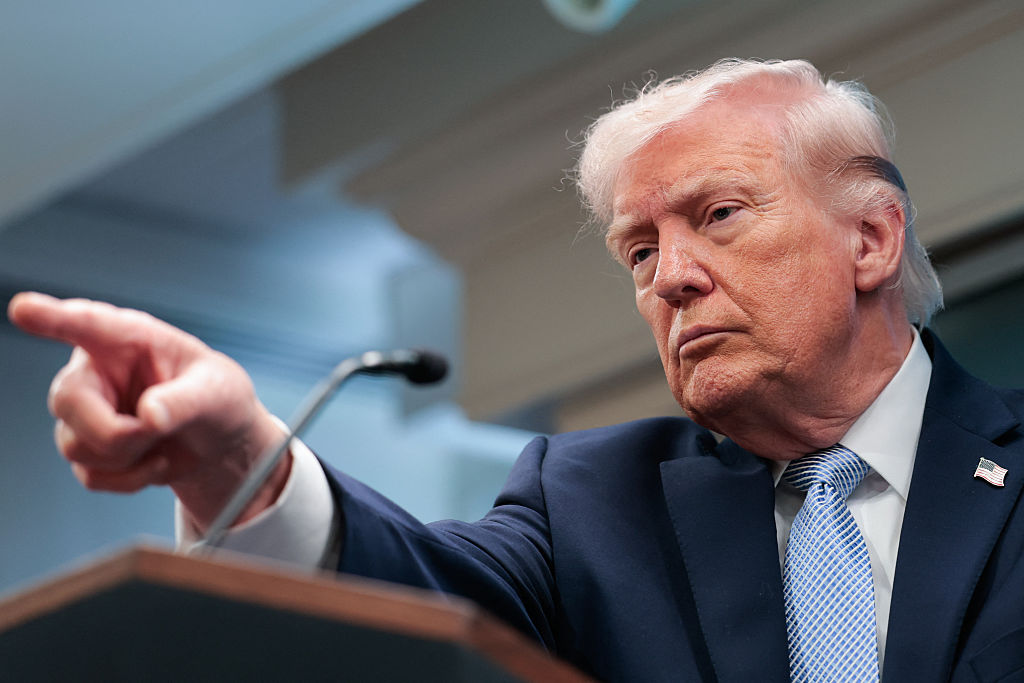
On 7 March 2026, Pezeshkian apologized to neighboring countries for retaliatory Iranian missile attacks, stating on state TV that Iran would suspend attacks on regional countries unless they were used as launchpads for strikes against Iran. The statement underscored the limited control exercised by the Iran's leaders over the paramilitary Revolutionary Guard. Pezeshkian explicitly rejected a demand from U.S. President Donald Trump for Iran's "unconditional surrender".
Following the assassination of Ali Larijani, Pezeshkian apparently appointed Mohammad Bagher Zolghadr to be secretary of Iran’s Supreme National Security Council under pressure from the Islamic Revolutionary Guard Corps.
Iran International reported major disagreements between Pezeshkian and IRGC commander Ahmad Vahidi about how to handle the economic effects of the war. Later reports indicated Vahidi is in power as he blocked Pezeshkian's efforts to appoint a new intelligence minister, rejecting all candidates including Hossein Dehghan. It is said that Vahidi insists that, during wartime, all critical and sensitive leadership positions must be appointed by the IRGC.
On June 17, US President Donald Trump and Pezeshkian signed the memorandum of understanding to end the war, with Trump signing the document during dinner with French President Emmanuel Macron at the Palace of Versailles after the G7 summit.