
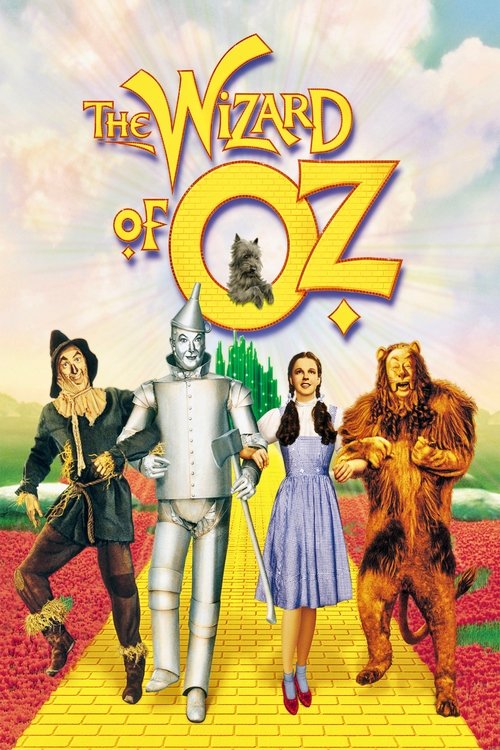
Margaret Brainard Hamilton (December 9, 1902 – May 16, 1985) was an American actress, vaudevillian and educator, whose fifty-year career in entertainment spanned theater, film, radio and television. She often played villains and is best known to modern audiences for her portrayal of the Wicked Witch of the West and her Kansas counterpart Almira Gulch in the 1939 MGM film The Wizard of Oz.
A former kindergarten teacher, she worked as a character actress in films for seven years before she was offered the role that defined her public image. In later years, Hamilton appeared in films and made frequent cameo appearances on television sitcoms and commercials. She also gained recognition for her work as an animal rights activist and her lifelong commitment to public education.
Her role as the Wicked Witch of the West is ranked by the American Film Institute as Hollywood's fourth-greatest villain of all time and the all-time greatest female villain.
Contents
Early life
Hamilton was born in Cleveland, Ohio, the daughter of W.J. Hamilton and Jennie Adams, and practiced her craft doing children's theater while she was a Junior League of Cleveland member. She attended Hathaway Brown School.
Hamilton began her acting career at the Cleveland Play House as an ensemble member in a production of The Brothers Karamazov, while studying acting and Pantomime under Maria Ouspenskaya. Her first major role at the Play House was as the First Witch in a production of Macbeth. She would go on to play numerous comedic roles, including circus performer Charlotta Ivanovna in Chekhov's The Cherry Orchard, and the sultry Miss Prosperine Garnett in Candida. She was praised in the press for her range as both a comedian and a serious actress.
In December 1929, she starred in a musical vaudeville act titled Heartrending and Humorous Songs of 1840, 1890, and 1929. Before she turned to acting exclusively, her parents insisted she attend Wheelock College in Boston, Massachusetts, which she did, later becoming a kindergarten teacher.
Film career
Hamilton made her screen debut as Helen Hallam in the MGM film adaptation Another Language (1933) starring Helen Hayes and Robert Montgomery, having previously originated the role of Helen Hallam on Broadway. She went on to appear in These Three (1936), Saratoga, You Only Live Once, When's Your Birthday?, Nothing Sacred (all 1937), The Adventures of Tom Sawyer (1938), Mae West's My Little Chickadee (with W. C. Fields, 1940), and The Sin of Harold Diddlebock, with Harold Lloyd, 1947. She strove to work as much as possible to support herself and her son. She never put herself under contract to any one studio and was paid $1,000 a week ($22,400 in today's money).
Hamilton co-starred opposite Buster Keaton and Richard Cromwell in a 1940s spoof of the long-running local melodrama The Drunkard, titled The Villain Still Pursued Her.
Later in the decade, she played the part of Mrs. Theresa Appleby, co-starring with Tom Conway and Richard Cromwell in a little-known and now partially lost film noir, titled Bungalow 13 (1948). She continued appearing in supporting film roles until the early 1950s and sporadically thereafter.
Hamilton played a heavily made-up witch opposite Bud Abbott and Lou Costello in Comin' Round the Mountain. Hamilton's character goes toe-to-toe with Costello's; each with voodoo dolls representing each other. She appeared uncredited in Joseph L. Mankiewicz's People Will Talk (1951) as Sarah Pickett. In 1960, producer/director William Castle cast Hamilton as a housekeeper in his 13 Ghosts horror film, in which 12-year-old lead Charles Herbert's character taunts her about being a witch, including the final scene, in which she is holding a broom in her hand.
On stage and screen, she was known for her rapid fire deadpan delivery, Midwestern accent, and her dark contralto singing voice. Despite standing at only five feet tall, Hamilton's commanding stage presence led to a successful career playing villains, with fans often being surprised by her slight stature.
The Wizard of Oz
In 1939, Hamilton played the role of the Wicked Witch of the West, her most famous role. Hamilton was cast after Gale Sondergaard, who was first considered for the role, albeit as a more glamorous witch with a musical scene, declined the role when the decision was made that the witch should appear ugly.
On December 23, 1938, Hamilton suffered an on-set accident. During a second take of her fiery exit from Munchkinland, the trap door's drop was delayed to eliminate the brief glimpse of it seen in the final edit, causing her to receive a second-degree burn on her face and a third-degree burn on her hand. She had to recuperate for six weeks after the accident, before returning to the set to complete her work on the film. After she recuperated, she said, "I won't sue, because I know how this business works, and I would never work again. I will return to work on one condition—no more fireworks!" Garland visited Hamilton while the latter recuperated at home, looking after Hamilton's son.
Studio executives cut some of Hamilton's more frightening scenes, worrying they would scare children too much. Later in life, she would comment on the role of the witch in a light-hearted fashion. During one interview, she joked:
I was in need of money at the time, I had done about six pictures for MGM at the time, and my agent called. I said, 'Yes?' and he said 'Maggie, they want you to play a part on the Wizard.' I said to myself, 'Oh, boy, The Wizard of Oz! That has been my favorite book since I was four.' And I asked him what part, and he said, 'The Witch', and I said, 'The Witch?!' and he said, 'What else?'
On February 11, 1939, Hamilton's stand-in and stunt double, Betty Danko, also suffered an on-set accident. Instead of Hamilton, Danko made the fiery entrance to Munchkinland. During the "Surrender Dorothy!" skywriting sequence at the Emerald City, Danko sat on a smoking pipe configured to look like the Witch's broomstick. The pipe exploded on the third take of the scene. She spent 11 days in the hospital and her legs were permanently scarred. The studio hired a replacement stunt double, Aline Goodwin, to finish the scene.
When asked about her experiences with her role in The Wizard of Oz, Hamilton said she was afraid that it would give children a wrong idea of who she really was, since she actually cared deeply about children, frequently giving to charitable organizations. She often remarked about children coming up to her and asking her why she had been so mean to Dorothy. She appeared on an episode of Mister Rogers' Neighborhood in 1975 where she explained to children she was only playing a role and showed how putting on a costume "transformed" her into the witch. She also made personal appearances, and Hamilton described the children's usual reaction to her portrayal of the Witch:
Radio, television, and stage career
Hamilton made her Broadway debut in 1932, as Helen Hallam in Rose Franken's play Another Language, to immensely positive reviews, praised for her dry wit and comedic timing. In 1943, she played Gertrude Goldsmith in another Franken play, Outrageous Fortune, which was notable for openly tackling antisemitism and homosexuality in the early 1940s. Critics were divided on the play's themes, but Hamilton's performance was praised.
In the 1940s and 1950s, Hamilton had a long-running role on the radio series Ethel and Albert, or The Couple Next Door, in which she played the lovable, scattered Aunt Eva, with her name later changed to Aunt Effie. In 1957, she appeared in two episodes of The Phil Silvers Show. During the 1960s and 1970s, Hamilton appeared regularly on television. She did a stint as a What's My Line? mystery guest on the popular Sunday night CBS-TV program. She played Morticia Addams's mother, Esther Frump, in three episodes of The Addams Family (1965–66). Hamilton had been offered the role of Grandmama, but turned it down.
In 1962, Hamilton played Leora Scofield, a suffragist who arrives in Laramie, Wyoming, to bolster feminist causes in a territory where women had already obtained the right to vote, in the episode "Beyond Justice" of NBC's Laramie.
Having started on the stage in the early 1930s, Hamilton began to work extensively in the theater after leaving Los Angeles. She appeared on Broadway in the musical Goldilocks opposite Don Ameche and Elaine Stritch, and played the domineering Parthy Anne Hawks in the 1966 revival of Show Boat, dancing with David Wayne. In 1968, she played Aunt Eller in the Lincoln Center revival of Oklahoma!. Hamilton toured in many plays and musicals across the United States, starring in The Rivals at Seattle Repertory Theatre and later repeating her role of the Wicked Witch in specially written stage productions of The Wizard of Oz. For her last stage role, she was cast as Madame Armfeldt in the national tour of Stephen Sondheim musical A Little Night Music, costarring with Jean Simmons as her daughter Desiree.
Even with her extensive film career, Hamilton took roles in whatever medium she could get if she was free, making her soap opera debut as the nasty Mrs. Sayre on Valiant Lady, who schemed to prevent her daughter from marrying the heroine's son. In the 1960s, Hamilton was a regular on another CBS soap opera, The Secret Storm, playing the role of Grace Tyrell's housekeeper, Katie. For ABC's short-lived radio anthology Theatre-Five, she played a manipulative, ailing Aunt Lettie to Joan Lorring as the unhappy niece Maude in "Noose of Pearls".
Personal life
Hamilton married Paul Boynton Meserve on June 13, 1931, and made her debut on the New York City stage in 1932. While her acting career developed, her marriage began to fail; the couple divorced in 1938. Their separation was publicized, with Hamilton accusing Meserve of physical abuse, including him hitting her and punching her in the face. These allegations were corroborated by the couple's housekeeper, who sued Meserve after alleging he physically attacked her. They had one son, Hamilton "Tony" Wadsworth Meserve, whom she raised on her own after being awarded sole custody. Hamilton had three grandchildren, Christopher, Scott, and Margaret.
Hamilton never remarried, and many details of her romantic life following her divorce remain elusive. Actress Jean Tafler, who portrayed Hamilton in a one-woman show about the character actress called "My Witch: The Margaret Hamilton Stories," said Hamilton "had boyfriends" but also that "it doesn't seem that she had too many long term romantic relationships, though she had many friends." (Tafler and her husband John Ahlin, who wrote the show, did extensive research over many years to tell Hamilton's story. Their research included interviewing Hamilton "Tony" Meserve and his wife, Helen; Hamilton's grandson, Scott; Hamilton's agent, Michael Thomas; Hamilton's niece Sylvia; and actors who worked with Hamilton, among others.) Writer and actor Bruce Vilanch, who worked with Hamilton later in her career, stated that it was well-known in Hollywood that Hamilton was a lesbian.
Her Gramercy Park neighbor Sybil Daneman reported that Hamilton loved children, but they were often afraid to meet her because of her portrayal of the Wicked Witch of the West in The Wizard of Oz. Daneman's nephew refused to meet Hamilton, because even though he understood she was an actress, he thought it was still possible she really was like the character in the movie.
Hamilton became close friends with The Wizard of Oz castmate Judy Garland, acting as a mentor and confidant. While filming Babes in Arms the same year with Garland, Garland would ask Hamilton to spend time in her dressing room with her, as her mother wouldn't berate her in the presence of another adult. Garland affectionately referred to Hamilton as "my witch". Hamilton also remained a lifelong friend of The Wizard of Oz castmate Ray Bolger (who played the Scarecrow), and was also close friends with Harpo Marx.
Final years and death
Hamilton's early experience as a teacher fueled a lifelong interest in educational issues. She served on the Beverly Hills Board of Education from 1948 to 1951 and was a Sunday school teacher during the 1950s. Hamilton lived in New York City for most of her adult life, and summered in a cottage on Cape Island, Southport, Maine. She was a guest speaker at a University of Connecticut children's literature class.
Hamilton later moved to Millbrook, New York. She was admitted to a nursing home in Salisbury, Connecticut, six months before her death from a suspected heart attack on May 16, 1985, at the age of 82. Hamilton's remains were cremated.