1976–1977: Breakthrough
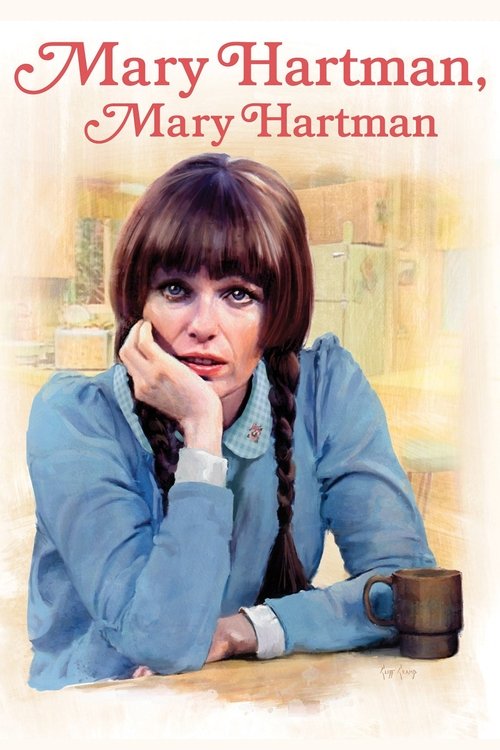
Lasser's breakthrough role came as the unhappy, neurotic titular character in the soap opera satire Mary Hartman, Mary Hartman, which aired five nights a week for two seasons from January 1976 until July 1977. Some markets aired it at different times of the day and night and also in a block format that showcased all the week's episodes in a row.
During the program's run, Lasser became a household name and appeared on the covers of Newsweek, People and Rolling Stone.
In his biography, producer Norman Lear said that the casting of Lasser took less than a minute after Charles H. Joffe told him that there was only one actress to play the part of Mary Hartman. Lasser initially refused the role but later acquiesced. Lear said that "when she read a bit of the script for me, I all but cried for joy ... Louise brought with her the persona that fit Mary Hartman like a corset."
Of her brief yet memorable time on the series, Lasser surmised: "I could go into anyone's kitchen in America and have dinner. It was the best and worst of times." Of her beleaguered alter ego Mary, Lasser remarked: "She was like a survivor that lived in a world that might not be worth surviving in."
Exhausted from the grueling schedule demands, Lasser left the series after two seasons and 325 episodes.
The serial was rebranded Forever Fernwood, which centered on the lives of the other Mary Hartman, Mary Hartman characters and lasted for 26 more weeks. In an interview for the bonus features of the Mary Hartman, Mary Hartman DVD box set from Shout! Factory, Lasser revealed that the idea for Mary's nervous breakdown at the end of the first season came after she wrote a 12-page letter suggesting the idea to Norman Lear.
On July 24, 1976, Lasser hosted the penultimate episode of Saturday Night Live's first season. Her performance is best known for her opening monologue in which she re-created a Mary Hartman-esque nervous breakdown and locked herself in her dressing room. She is then coaxed out by Chevy Chase/Land Shark and the promise of appearing on the cover of Time. Some reports claim that Lasser's erratic behavior on the show led to her being the first person banned from SNL. Chase accused her of "solipsism", and SNL writer Michael O'Donoghue called her "clinically berserk" and allegedly walked off that week's installment in disgust. O'Donoghue did concede that Lasser "was a nice woman going through a few problems, but I wanted to force her to eat her goddamn pigtails at gunpoint".
Lasser denied that she was ever forbidden to come back. According to Lasser, she was initially told she would be able to write her own material, but that promise was later withdrawn, and she also refused to do sketches she deemed "salacious"; one in particular featured Lasser and Gilda Radner as teenagers talking about male genitalia. Ultimately, Jane Curtin appeared in the sketch with Radner instead. Lasser also asserted that her SNL antics, which included stream-of-consciousness rambling (typical of her Mary Hartman character), were "on purpose" and that Lorne Michaels pulled repeats of the broadcast only at her manager's request because her manager was not fond of the whole affair, including the final segment in which the actress sat onstage to discuss her rise to fame and the dollhouse incident. Lasser mostly performed by herself on the program but also appears in a vignette with a dog at a table.
Lasser called Chase "like-a-bully mean" but Radner "a doll", but aside from the intro segment in which Radner and Dan Aykroyd knock on her changing room door, Chase was the only regular player with whom Lasser had any scenes. Lasser and Chase appear as lovers in an Ingmar Bergman parody; plus, the pair filmed a sequence at the 1976 Democratic National Convention (although the footage was never aired). Instead, there is a video short in a diner in which she and her partner, played by Alan Zweibel, try to break up but forget their lines; in the end, Lasser moves to the bar and sits next to Michael Sarrazin. Lorne Michaels also briefly shows up in the clip, which ends with "a film by Louise Lasser" credit. According to Lasser, "For me to threaten to walk off the show, I would never do that for spite. Banned—that's a horrible thing to have said." Mary Hartman, Mary Hartman producer Norman Lear and co-star Mary Kay Place also hosted SNL during the run of Mary Hartman, Mary Hartman.