

Angiolino Giuseppe Pasquale Ventura (14 July 1919 – 22 October 1987), known as Lino Ventura, was an Italian-born actor, philanthropist, and professional wrestler, who lived and worked for most of his life in France. He was considered one of the greatest leading men of French cinema during the 1960s and 1970s, known for his portrayal of tough characters on both sides of the law in crime dramas.
Born in Parma and raised in Paris, Ventura worked as a professional wrestler before an injury ended his career. He made his film debut as a gangster in the 1954 Jacques Becker film Touchez pas au grisbi and rapidly became one of France's favourite film actors, playing opposite many other great stars and working with such leading directors as Louis Malle, Claude Sautet, and Claude Miller. Usually portraying a tough man, either a criminal or a cop, he also featured as a leader of the Resistance in the Jean-Pierre Melville-directed Army of Shadows (1969). He was nominated for a Cesar Award for his portrayal of Jean Valjean in the 1982 film adaptation of Les Misérables.
After one of his four children, a daughter, was born handicapped, he and his wife founded a charity Perce-Neige (Snowdrop) which aids disabled children and their parents. Though a lifelong resident and pop cultural icon in France, Ventura always considered himself an Italian first and foremost, and never took French citizenship. He was nonetheless voted 23rd in a 2005 poll of the 100 greatest Frenchmen.
Contents
Early life
Ventura was born in Busseto, in the province of Parma in 1919, the son of Giovanni Ventura and Luisa Borrini. While Ventura was still very young, his father moved to Paris for work. When Ventura was eight-years-old, he and his mother followed, but could not locate his father and settled in Montreuil.
To supplement his mother's income, Ventura left school at age nine and worked various oddjobs. As a teenager, he met Austrian Greco-Roman wrestler Fred Oberlander, who became his mentor. He met his wife, Odette Lecomte while working for an Italian travel agency in Paris.
As an Italian citizen, Ventura was conscripted into the Italian Army during World War II. In July 1943, he deserted and rejoined his wife in Paris. To avoid being denounced or arrested by the occupying German forces, he and his wife lived hid in a barn in Maine-et-Loire until the liberation of France.
Professional wrestling
With his legit Greco-Roman wrestling skills, Ventura dabbled in prizefighting, but switched to professional wrestling to earn more money. He adopted the ring name "The Italian Rocket" Lino Borrini (from his mother's maiden name). In February 1950, he won the European Middleweight title. However, he dropped the title after injuring his knee on a March 31 bout with Henri Cogan, and retired from in-ring competition soon after. For some time afterwards, he worked as a booker and promoter.
Acting career
Early life
Born in Parma, Emilia-Romagna, Italy to Giovanni Ventura and Luisa Borrini, who moved to France soon thereafter, Lino dropped out of school at the age of eight and later took on a variety of jobs. At one point Ventura was pursuing a prizefighting and professional wrestling career, under the name Lino Borrini, but had to end it because of an injury.
Early roles
In 1953, by chance, one of his friends mentioned him to Jacques Becker who was looking for an Italian actor to play opposite Jean Gabin in a gangster movie called Touchez pas au grisbi (1954). Becker offered him on the spot the role of Angelo, which Ventura refused at first but then accepted. He had such a presence in the film that the whole profession took notice. The film was a big success.
Ventura started to build up an acting career in similar hard-boiled gangster films, often playing beside his friend Jean Gabin, including his second film, Razzia sur la chnouf (1955).
He followed it with Law of the Streets (1956), Crime and Punishment (1956) with Gabin.
Later career
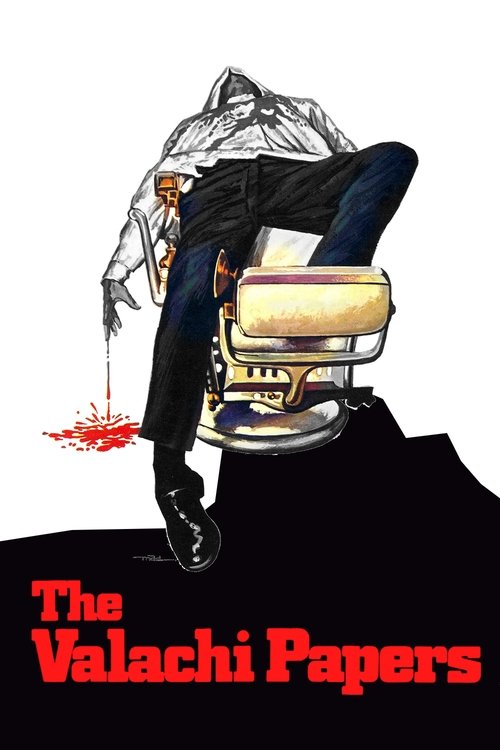
Some of his most famous roles include the portrait of corrupt police chief Tiger Brown in The Threepenny Opera (1963) and mob boss Vito Genovese in The Valachi Papers (1972).
Although he remained an Italian citizen throughout his life and long used to seeing himself dubbed into Italian from the original French release, he only made a handful of films in his native language, among them The Last Judgement (Il giudizio universale, 1961), Illustrious Corpses (Cadaveri eccellenti, 1976) and Cento Giorni a Palermo (1983).
Ventura remained active until the year before his death from a heart attack in 1987 at the age of 68. Having a disabled daughter himself, he created a charitable foundation, Perce-Neige (Snowdrop) in 1966, which supports disabled people.
Throughout his career, he was one of the most popular actors of French cinema. He spoke French without any accent (excepting a Parisian one at the beginning of his career) and spoke Italian with a slight French accent, having arrived in France at the age of seven. Forcibly conscripted into the Italian army during the Second World War, he deserted. But, although his wife and four children were French, he never wanted to give up Italian citizenship, out of respect for his parents. Despite this, he was ranked 23rd of the 100 greatest Frenchmen, 17 years after his death.
Somewhat paradoxically, Ventura attributed his great success to his limited range as an actor; and often said "If I cannot believe in a character, or if something does not ring true, I cannot act it."
In a 1980 interview he said that the previous year "I began to realize how incredibly lucky I had been since the age of 9, how much I had been loved by so many people. When I act, I am doing what I love, and I am paid for it. So I put myself in the service of the film, never the film in service to me." He mentioned he turned down several roles - a part in Apocalypse Now (cut from the final film), a role in a Robert Aldrich film and the part played by François Truffaut in Close Encounters of the Third Kind.
He said, "The story is everything. My good friend Jean Gabin told me 25 years ago there are three important things in movies: the story, the story and the story."
Charitable work and advocacy for children with disabilities
His daughter Linda, who suffered a stroke at birth, was left with an intellectual disability. Confronted with the lack of support and care facilities for children with disabilities, Lino and Odette Ventura founded the charitable association Perce-Neige in 1966, following the appeal of 6 December 1965. Based in Saint-Cloud (Hauts-de-Seine), where the couple lived, the organization was dedicated to “supporting children with special needs” by assisting existing associations working in the field of disability and by raising public awareness and advocating for greater recognition of the needs of children with disabilities and their families. In May 2016, Perce-Neige became a foundation.
The year 1975 marked the association’s first major achievement with the adoption of the Framework Law on the rights of persons with disabilities and Law of 1975 relating to social and medico-social institutions. In 1976, Perce-Neige was recognized as a public-interest organization, and six years later the first Perce-Neige residential facility opened in Sèvres, in the Paris suburbs. Following the death of Lino Ventura, Perce-Neige continued its mission and contributed to the creation of care facilities across France, numbering thirty-nine establishments in 2023.