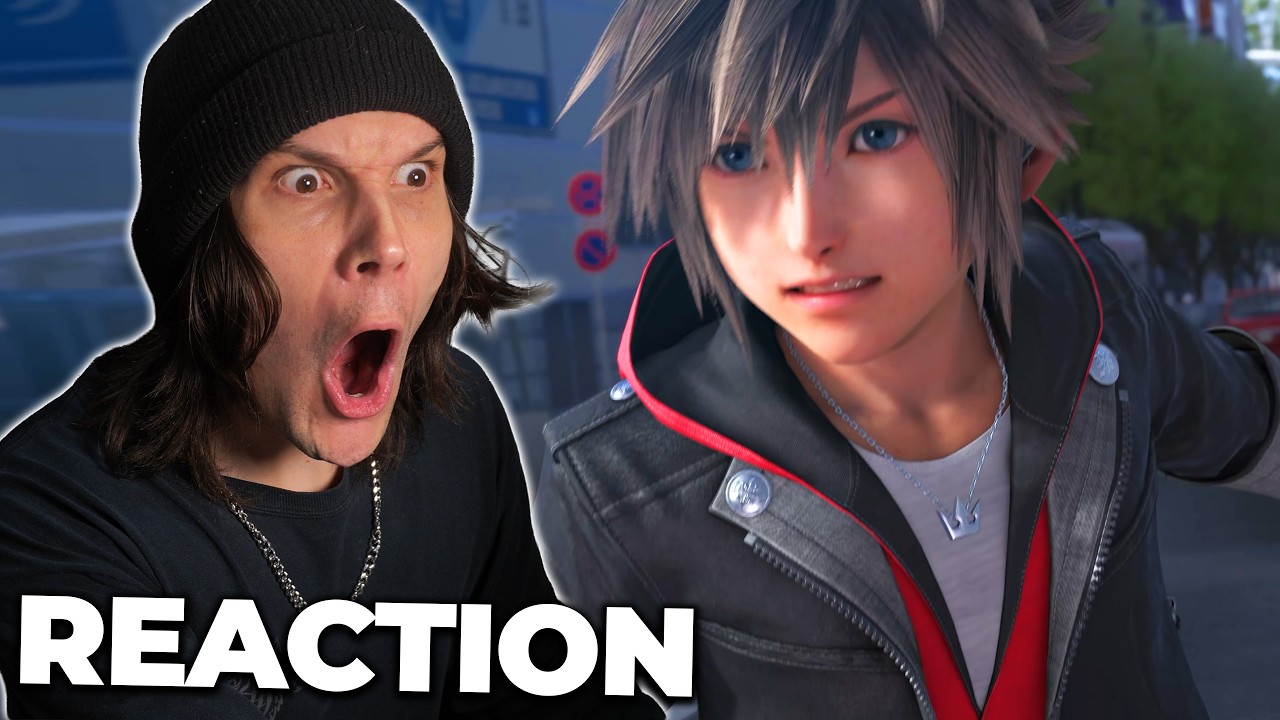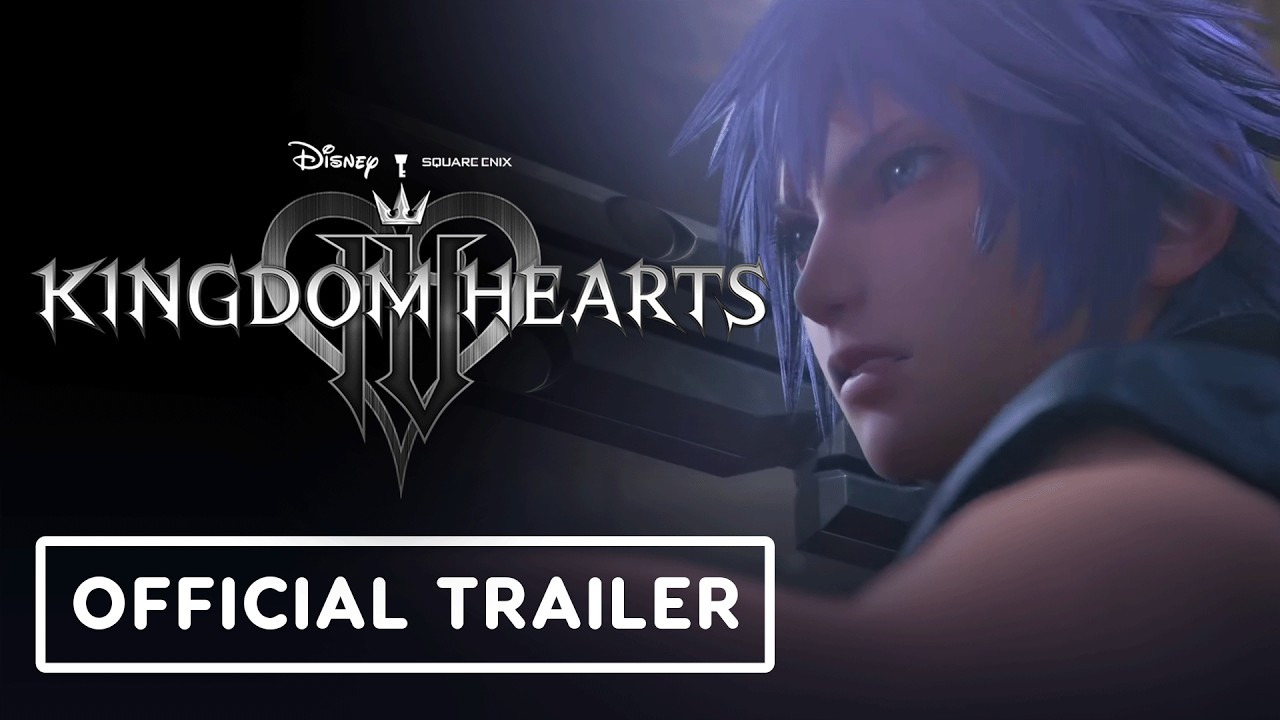




Kingdom Hearts is a Japanese video game series and media franchise developed and published by Square Enix (formerly Square) and owned by The Walt Disney Company. A collaboration between the two companies, Kingdom Hearts is a crossover of various Disney properties and original characters based within an original fictional universe, also featuring appearances by characters from Square Enix properties such as Final Fantasy and The World Ends with You. Noted for its intricate lore and complex narrative, the series features a large ensemble cast of characters and includes several story arcs. The series' main plot centers on Sora, a boy who wields a Keyblade, as he journeys across various worlds to protect his friends and thwart the schemes of numerous villains. Longtime Square designer Tetsuya Nomura has served as the series' director and creative lead since its beginning.
The series consists of thirteen games available for multiple platforms, with the first eleven games collectively comprising the "Dark Seeker Saga", and future games are planned. Most of the games in the series have been positively received and commercially successful. As of August 2026, the Kingdom Hearts franchise has grossed over $1 billion and shipped more than 39 million games worldwide. A wide variety of related merchandise has been released along with the games, including a manga series, light novels, soundtracks, action figures, companion books and a collectible card game.
Contents
Media
Games
Kingdom Hearts is the first game in the series, released in 2002 for the PlayStation 2. Kingdom Hearts introduces the main characters of the series, and establishes the plot's framework involving hearts and dark beings known as the Heartless, as well as the supporting roles of Disney and Final Fantasy characters in the series. An expanded re-release of the game featuring new and additional content, Kingdom Hearts Final Mix, was released exclusively in Japan later in 2002. Final Mix was later released globally as part of the Kingdom Hearts HD 1.5 Remix collection.
Kingdom Hearts: Chain of Memories is a direct sequel to the first game, released for the Game Boy Advance in 2004. Touted as a bridge between the two PlayStation 2 games, Chain of Memories introduces characters and plot points that would be further explored in Kingdom Hearts II. The gameplay is a departure from the original game, employing a real-time card-based battle system. Chain of Memories received a full 3D remake for the PlayStation 2 titled Kingdom Hearts Re:Chain of Memories, released in Japan in 2007 and North America in 2008. Re:Chain of Memories later received an HD port as part of the Kingdom Hearts HD 1.5 Remix collection.
Kingdom Hearts II takes place one year after the events of Chain of Memories. It was released for the PlayStation 2 in Japan in 2005 and globally in 2006. The game further explores the "heart" concept by involving a new group of enemies, the Nobodies. The gameplay is similar to that of the first Kingdom Hearts game. Like the first game, Kingdom Hearts II received an expanded re-release titled Kingdom Hearts II Final Mix, containing new and additional content. Kingdom Hearts II Final Mix was originally released exclusively in Japan in 2007, and was later released globally as part of the Kingdom Hearts 2.5 HD Remix collection.
Kingdom Hearts Coded is an episodic mobile phone game that picks up directly after Kingdom Hearts II. The "preinstall" episode was released in Japan in 2008, with an additional eight episodes released between 2009 and 2010. The game was remade as Kingdom Hearts Re:coded for the Nintendo DS, released in Japan in 2010 and globally in 2011, featuring updated gameplay.
Kingdom Hearts 358/2 Days was released for the Nintendo DS in 2009. It is primarily set between Kingdom Hearts and Kingdom Hearts II, focusing on Roxas' time in Organization XIII and leading directly into the beginning of Kingdom Hearts II. It is the first game in the series to feature a protagonist other than Sora, as well as the first in the series to feature cooperative multiplayer. Gameplay is mission-based, and features a unique panel system which governs character improvement, special abilities and equipped weapons.
Printed adaptations
A manga based on Kingdom Hearts was released in Japan and the United States. The story and art were done by Shiro Amano, who is known for his manga adaptation of the Legend of Mana series. The story follows the events that took place in the video games with differences to account for the loss of interactivity a video game provides. The manga was originally serialized in Japan by Square Enix's Monthly Shōnen Gangan, and the first tankōbon was released in Japan in October 2003. The manga was released in the US by Tokyopop two years later in October 2005. Yen Press now holds the rights to publish the books for the USA market. The first series, Kingdom Hearts, consists of four volumes, while the second series, Kingdom Hearts: Chain of Memories, has two volumes. The third series, Kingdom Hearts II, consists of ten volumes. A fourth series based on Kingdom Hearts 358/2 Days was released in five volumes while Kingdom Hearts II was in progress. As of April 2019, a fifth series based on Kingdom Hearts III has been serialized monthly in Gangan Online with Amano returning to do story and artwork. Yen Press also licensed the series and published it online in English on apps such as Comixology and BookWalker alongside the Japanese release. This series will soon have two volumes published in tankōbon format.
The games have also been adapted as a light novel series, written by Tomoco Kanemaki and illustrated by Shiro Amano. Like the manga series, it is divided into separate series based on the individual games. Kingdom Hearts is divided into two volumes; "The First Door" and "Darkness Within". Kingdom Hearts: Chain of Memories is divided into two volumes. Kingdom Hearts II is divided into four volumes; "Roxas—Seven Days", "The Destruction of Hollow Bastion", "Tears of Nobody", and "Anthem—Meet Again/Axel Last Stand".
Television
Following the release of the first game in 2002, Walt Disney Television Animation hired Seth Kearsley to develop and direct a television pilot animatic for a potential Disney Channel animated series adaption of the game. The series would have covered much of the plot of the first game, with the animatic set in Agrabah, the world based on the film Aladdin (1992). The animatic featured the same voice actors from the game, except for Sora's voice actor Haley Joel Osment, who was unable to work on the pilot because of a scheduling conflict; he was replaced by Bobby Edner. Despite the pilot testing "exceptionally well", Square Enix decided not to move forward with the television series in order to not conflict with future games in the franchise.
In May 2020, it was reported that a CGI-animated Kingdom Hearts television series was being created for Disney's streaming service, Disney+. Disney had planned to produce the series, before production was shifted to Square Enix, who were tasked with creating a pilot episode with Unreal Engine, the game engine used to create the modern games in the series. In April 2024, Skyler Shuler of The DisInsider reported that Disney had shifted their plans for the franchise to try and develop a feature film instead of a television series. At D23 2026, Disney announced that an anime series based on the franchise was in development, and would be released on both Disney Channel and Disney+.
Concept and design
Nomura intended hearts and the strengths and connections of the heart to be a common theme in the games. Characters within the Kingdom Hearts series are composed of three parts: body, soul, and heart. The body acts as a vessel for the heart and soul, with the soul giving life to the body. The heart holds their memories and gives them emotion, light, and darkness.
The Kingdom Hearts games are divided into various game levels, referred to as "worlds", which the player progresses through. Worlds vary in appearance, typically dependent on the Disney setting on which they are based. The worlds' graphics resemble the art style from the originating Disney film, and the worlds are inhabited by characters from their respective films; for example, Hercules and Philoctetes appear in Olympus Coliseum from Hercules, while Aladdin, Princess Jasmine, and the Genie appear in Agrabah from Aladdin. The game worlds consist of interconnected field maps where battles and plot-related events occur. Players travel between worlds in different ways in each game, such as the "Gummi Ship" in the original Kingdom Hearts, "Keyblade glider" in Kingdom Hearts Birth by Sleep, "Corridors of Darkness" in 358/2 Days, and "Sleeping Keyholes" in Dream Drop Distance. Worlds created specifically for the series mirror the overall appearance of other worlds and predominantly feature characters from Square Enix games and original characters.
Though Disney gave director Tetsuya Nomura freedom to choose which characters and worlds would be used in the games, he and his staff tried to stay within the established roles of characters and boundaries of the worlds. Nomura found managing and keeping multiple worlds consistent to be problematic. After determining the number of worlds in the universe, Nomura picked ones he felt would fit into the series' scenario, which was then evaluated by his team and Disney representatives. He tried to maintain the same number of worlds in each game and tried to minimize any overlap in the overall look and feel of each world, which he and his staff did by categorizing Disney worlds by appearance and setting. For example, a world based on The Jungle Book was considered for the first game, but was omitted because it was similar to Deep Jungle from Tarzan. They also took into account worlds with Disney characters that would be interesting. For example, Nomura chose to include a Mulan world for its unique atmosphere. The Tron world's design was meant to emulate an old computer game in the style of the 1982 film. Nomura got the idea to include this world after seeing a Disney employee working on Tron 2.0. He hoped that the fact that it was so different from the other worlds would make it enjoyable to players.
Common elements
Characters
Kingdom Hearts features a mixture of Disney and Square Enix characters, as well as several new characters designed and created by Nomura. In addition to original locations, the Kingdom Hearts series features worlds from Disney films. Sora must visit these worlds and interact with various Disney characters to protect them from enemies. Often, his actions in these worlds closely follow the storylines of their respective Disney films. The main characters try not to interfere with the affairs of other worlds, as it could negatively affect the universe's order. Various Final Fantasy characters also make appearances within several worlds throughout the series. This includes Moogles, small creatures who are another common element in the games. They provide the player with a synthesis shop to create and purchase items used in the game. The main cast from The World Ends with You - Neku Sakuraba, Joshua, Beat, Rhyme, and Shiki - appear in Dream Drop Distance, and Kingdom Hearts III features characters from Pixar films such as the Toy Story series and Monsters, Inc., as well as Schwarzgeist, one of the bosses from Einhänder. Nevertheless, the usage of Disney characters is not without restrictions. For example, Nomura had requested the use of Oswald the Lucky Rabbit in Kingdom Hearts III, but the response from Disney was that the character would be "too difficult" to use, with no further clarification or details from Disney.
Common enemies in the series include the Heartless (ハートレス, Hātoresu), creatures who are born from the darkness of people's hearts, lack a soul, and seek to consume others' hearts. When Heartless are created, the body left behind becomes a Nobody (ノーバディ, Nōbadi). Nobodies typically have monstrous appearances, but the members of Organization XIII retain their human forms due to possessing strong hearts as humans and remembering their original selves. If both a Heartless and their Nobody counterpart are killed, then the original person is resurrected.
The Unversed (アンヴァース, Anvāsu) are creatures that are introduced and predominantly appear in Kingdom Hearts Birth by Sleep. Described by Nomura as being "those who are not well-versed in their own existences", they are Vanitas' emotions given form and feed on negativity. Vanitas pits these creatures against Ventus to strengthen him as part of Xehanort's plan to obtain the χ-blade. Upon defeat, the Unversed's negativity reintegrates with Vanitas, allowing him to recreate them no matter how many times they are destroyed.
Dream Eaters (ドリームイーター, Dorīmu Ītā) are primarily featured in Kingdom Hearts 3D: Dream Drop Distance. Like the Heartless, they are beings of darkness that inhabit the Sleeping worlds isolated from the realm of light and are compelled to find the worlds' keyholes. Dream Eaters manifest in two kinds: hostile "Nightmares", which devour good dreams and create bad ones and serve as the game's enemies; and benevolent "Spirits", which the player can create to serve as party members and combat the Nightmares. Additionally, cat-like Dream Eaters called Chirithy appears in Kingdom Hearts χ and Kingdom Hearts III as NPCs.
Objects
Keyblades (キーブレード, Kīburēdo) are key-shaped melee weapons created to combat darkness and are the only thing that can free hearts from a Heartless form, thus allowing the restoration of complete beings. Keyblades are also capable of locking and unlocking doors and keyholes. Initially, Keyblades were crafted in the image of the original "χ-blade" by those who wanted the light within Kingdom Hearts for themselves and those who sought the opposite. Wielders acknowledged as "Keyblade Masters" can bequeath the power to wield a Keyblade to one they deem worthy by letting them touch the handle of the blade or connecting their heart to another. There are also Keyblades like Xehanort's, which are passed down from different owners through generations.
Keyblades change in both appearance and strength with different keychains, which augment its wielder's fighting capabilities; some are obtained as a result of in-game events, while others can be obtained by completing mini-games. A driving element in the first game is the ability to seal the "heart" of a world by locking the keyhole to the door leading to it, preventing it from being destroyed by Heartless. In Kingdom Hearts II, the player uses the Keyblade to unlock pathways between worlds that were closed after the events of the first game. While Sora is the only one who uses the Keyblade in the first game, later games reveal more characters who wield Keyblades. In Birth by Sleep, Keyblades can be transformed into hovercraft called Keyblade Gliders, which can be used to travel from world to world, making Keyblade wielders the only people with the means of transportation between worlds before Gummi Ships are used. The "gates" Sora would open later are known as the Lanes Between, which can be accessed by any Keyblade wielder.
The χ-blade (χブレード, Kīburēdo; pronounced the same as "Keyblade") is an ancient weapon of unknown origin introduced in Birth by Sleep that is capable of directly unlocking Kingdom Hearts. It is a double-handed weapon that takes the shape of two "Kingdom Key" Keyblades that intersect in an "X" shape, with additional features that give it the shape of an actual sword. It has the power to open the heart of all worlds, and exists alongside Kingdom Hearts as its guardian. It led to "Keyblades" being crafted in its image by those seeking Kingdom Hearts' power, those who sought to extinguish the light, and those who sought to protect it. This resulted in the Keyblade War, which ended in a world known as the Keyblade Graveyard; the aftermath led the χ-blade to shatter into seven pieces of light and thirteen pieces of darkness. These seven lights, which are said to be the source of all light in the World, later became the hearts of the Princesses of Heart, who are targeted by Organization XIII as a result.
Story
A boy named Sora is separated from his friends Riku and Kairi when dark beings called Heartless consume their home, Destiny Islands. Sora gains a Keyblade that lets him fight the Heartless, but a storm of darkness transports him to Traverse Town. There he meets Donald Duck and Goofy, who were sent by their missing king Mickey to find the Keyblade wielder. Together they travel to various worlds, battling Heartless and defeating Disney villains led by Maleficent. She recruits Riku to help gather the seven Princesses of Heart, whose power can access Kingdom Hearts, the heart of all worlds. After defeating Maleficent, Sora learns Kairi's heart has been residing inside him and sacrifices himself to revive her, becoming a Heartless, but Kairi restores him to his human form. The group discovers that a powerful Heartless named Ansem has possessed Riku and seeks Kingdom Hearts. Sora defeats Ansem but must leave Riku and Mickey in the Realm of Darkness while Kairi returns to the restored Destiny Islands, and Sora resolves to save his friends.
Their search leads them to Castle Oblivion, a fortress controlled by a group of Nobodies named Organization XIII. One member, Marluxia, forces the sorceress Naminé to alter the group's memories. After Marluxia's defeat, Naminé puts them in a year-long sleep to restore their memories. Meanwhile, Riku, aided by Mickey, ascends the castle and joins a man named DiZ to protect Sora. Unexpected events force Riku to capture Roxas—Sora's Nobody born when he sacrificed himself, and an Organization XIII member—after Roxas defeats Xion, a Replica of Sora in Kairi's image.
Roxas fuses with Sora, who awakens and resumes his search. Mickey's mentor Yen Sid familiarizes the trio with the Nobodies and Organization XIII's remaining members. The three reunite with Mickey, who reveals that the defeated "Ansem" was the Heartless of Xehanort, the real Ansem's apprentice, while Organization XIII's leader Xemnas is Xehanort's Nobody. The Organization seeks to regain their lost hearts and create an artificial Kingdom Hearts by having Keyblade users slay Heartless. Axel, a rogue Organization member, abducts Kairi in an attempt to reunite with Roxas, and sacrifices himself to help Sora's group reach Organization XIII's headquarters. DiZ, the real Ansem, is killed trying to destroy the artificial Kingdom Hearts. Sora and Riku defeat Xemnas, but become trapped in the Realm of Darkness. A letter from Kairi opens a path home, reuniting the two with their friends.
Mickey shares some history uncovered by Naminé: Xehanort was a Keyblade Master who manipulated Terra, Ventus, and Aqua, the apprentices of fellow Keyblade Master Eraqus. Xehanort possessed Terra, and Ventus sacrificed his heart to prevent Xehanort from recreating the χ-blade, which would allow its user to control Kingdom Hearts. Ventus' heart was absorbed into Sora, while Aqua placed Ventus' body in Castle Oblivion before becoming trapped within the Realm of Darkness. An amnesiac Xehanort, in Terra's body, became Ansem's apprentice. Destroying Xehanort's Heartless and Xemnas has fully resurrected him. Sora and Riku take the Mark of Mastery exam to prepare. During the exam they encounter a time-traveling younger Xehanort. They learn Organization XIII's true purpose was to provide thirteen vessels for Xehanort to battle seven hearts of pure light and recreate the χ-blade. Sora's interference forces Xehanort to gather his alternate selves from across time into Replica bodies, and Riku saves Sora from becoming the final vessel. Riku is declared a Keyblade Master, while Sora embarks on a journey to regain his Power of Waking, the ability to revive hearts, while Riku and Mickey search for Aqua in the Realm of Darkness. Yen Sid begins training Kairi and Lea as Keyblade wielders.
Gameplay
The Kingdom Hearts games contain elements of action role-playing games with hack-and-slash elements. The games are driven by a linear progression from one story event to the next, usually shown in the form of a cutscene, though there are numerous side quests available that provide bonus benefits to the characters. In most games, the player primarily controls the principal protagonist of the series, Sora. Sora is usually accompanied by Donald Duck and Goofy, who are artificial intelligence-controlled non-playable characters that aid Sora in battle. In the first and third game, their behavior can be altered to suit different combat objectives. The games feature real-time combat that incorporates physical attacks, magic, and summonings, though each game handles battles differently. The game also allows for items to be used on the field of battle to heal oneself or one's party members.
Gummi Ships are another common element of the series, which serve as the main mode of transportation between worlds in the games. The gameplay for the Gummi Ship sections is more akin to a rail shooter. Because it received negative criticism in the first game, it was modified in the third game. Most games also feature a journal which is accessible from the main menu. This journal keeps track of information regarding the story, characters, enemies, and locations. In Kingdom Hearts, Chain of Memories, Kingdom Hearts II, and Kingdom Hearts III, the journal is kept by Jiminy Cricket, who was appointed by Queen Minnie as the royal chronicler. In 358/2 Days, Birth by Sleep, and Dream Drop Distance, the main characters write their own journal entries.
The games are influenced by their parent franchise, Final Fantasy, and carry its gameplay elements over into their own action-based, hack-and-slash system. Like many traditional role-playing games, Kingdom Hearts features an experience point system which determines character development. As enemies are defeated, the player gains experience which culminates in a "level-up", where the characters grow stronger and gain access to new abilities. The amount of experience is shared with all party members and each character grows stronger as experience is gained.
Music
The music for the series has been primarily composed by Yoko Shimomura. Kaoru Wada works as the arranger for orchestral music, including orchestral renditions of the main vocal themes and the ending themes. The orchestral music was performed by the New Japan Philharmonic Orchestra and the Tokyo Philharmonic Orchestra. Soundtracks were released for the first and third installments following the release of their respective games. A compilation soundtrack was later released that included soundtracks for the entire series, including reworked tracks for the re-released Kingdom Hearts Re:Chain of Memories.
While the themes for some of the Disney-based worlds are taken directly from their Disney film counterparts, most of them are given entirely original musical scores. In addition to each world having unique background music, each is given its own battle theme rather than having a common theme to cover all fights. Several of the main characters have themes, and the final boss of each game has several themes played in the various phases of those fights. The fights with Sephiroth feature a modified version of Nobuo Uematsu's "One-Winged Angel" from Final Fantasy VII.
The main theme songs for the Kingdom Hearts games were written and performed by Japanese singer Hikaru Utada. The three main themes are "Hikari", originally from Kingdom Hearts, "Passion", from Kingdom Hearts II, and "Oath" from Kingdom Hearts III. Each song has an English counterpart, "Simple and Clean", "Sanctuary", and "Don't Think Twice" respectively, for the North American and European releases. Utada was the only singer Tetsuya Nomura had in mind for the first Kingdom Hearts theme song. This marked the first time Utada had produced a song for a video game. Both of the first two theme songs reached notable popularity; on weekly Oricon charts, "Hikari" reached No. 1 in 2002 and "Passion" reached No. 4 in 2005.
Universe
The Kingdom Hearts universe is divided into planes of existence called "realms". Most of the series takes place in the "Realm of Light". Opposite the Realm of Light is the "Realm of Darkness", where Kingdom Hearts resides and where Heartless are born. The "Realm Between" is a plane where Nobodies come into existence. Additionally, there is the "Realm of Sleep" where the Sleeping Worlds featured in Kingdom Hearts 3D: Dream Drop Distance are located.
In the Kingdom Hearts universe, travelling between worlds is normally not possible, and they are protected from extraterrestrial interference by an invisible shell. When the heart of a world is opened, the shell breaks apart, appearing as a meteor shower. Fragments from the wall are called "Gummi blocks" and are used to make spaceships called "Gummi Ships", which can be shaped into any structure, and the origin of the material used to build them allows travel to other worlds. Gummi blocks serve different functions, from navigation to offense and defense. Other methods to travel between worlds are the "corridors of darkness" and the "lanes between"—interdimensional pathways through which frequent travel eventually erodes unprotected users' hearts with darkness. Heartless and Nobodies normally use these paths, but other characters have used them, including Riku and Mickey Mouse.
Those who travel between worlds are advised to limit their interactions with their inhabitants to avoid causing chaos. For this reason, the main characters change their appearance in certain worlds to avoid standing out. In the worlds based on The Little Mermaid and The Nightmare Before Christmas, Sora, Donald, and Goofy transform into undersea creatures and Halloween monsters, respectively. For The Lion King, they transform into savannah animals because Nomura felt that it would be odd to have them appear in their standard forms when no humans appear in the film.
Most worlds that appear in the games are based on Disney films and follow abridged versions of their stories, such as in Wonderland, the Land of Dragons, and Castle of Dreams. Agrabah covers the first two Aladdin films in Kingdom Hearts and Kingdom Hearts II, while Atlantica and Halloween Town have original plots in the first game and plots based on their films in the second game. Worlds like Monstro and Neverland focus heavily on the main plot, the latter being reduced to Captain Hook's ship, where Riku reveals to Sora that Kairi has lost her heart. These worlds would not be able to be explored fully until the releases of Kingdom Hearts 3D: Dream Drop Distance, Kingdom Hearts 358/2 Days and Kingdom Hearts Birth by Sleep, respectively. In Beauty and the Beast, the Beast appears in Kingdom Hearts to aid Sora when he temporarily loses the Keyblade, and after the restoration of Beast's Castle, he becomes a pawn in the plot of Organization XIII during Kingdom Hearts II.
Development and history
History
The initial idea for Kingdom Hearts began with a discussion between Shinji Hashimoto and Hironobu Sakaguchi about Super Mario 64. They were planning to make a game with freedom of movement in three dimensions like Super Mario 64 but lamented that only characters as popular as Disney's could rival a Mario game. Tetsuya Nomura, overhearing their conversation, volunteered to lead the project and the two producers agreed to let him direct. A chance meeting between Hashimoto and a Disney executive in an elevator (Square and Disney previously shared the same building in Japan) allowed Hashimoto to pitch the idea directly to Disney. Development began in February 2000 with Nomura as director and Hashimoto as producer. While Nomura had done previous work in the Final Fantasy series as monster designer and graphic director, he did not gain widespread recognition until he was the lead character designer for Final Fantasy VII. Kingdom Hearts marked his transition into a directorial position, though he also served as the game's character designer. Scenarios were provided by Kazushige Nojima who was a scenario writer for Square from Final Fantasy VII until he left in 2003. Originally the development focused on the gameplay with a simple story to appeal to Disney's target age range. After Kingdom Hearts executive producer Hironobu Sakaguchi told Nomura the game would be a failure if it did not aim for the same level as the Final Fantasy series, he began to develop the story further. In June 2013, Nomura stated the name of the game came from him thinking about Disney Theme Parks, especially Animal Kingdom. However, Nomura could not get the IP with just "Kingdom", so the development team began to think about "heart" as a core part of the story, so they decided to combine the two to form "Kingdom Hearts".
Nomura placed a secret trailer in Kingdom Hearts in hopes that fans would want a sequel. He was unsure if fans would want a sequel and felt that if they did not, then it would be best to leave certain events in the first game unexplained. After Kingdom Hearts Final Mix was completed, development for Kingdom Hearts II began. There were several obstacles to clear before development could begin on a sequel. One was the development team's desire to showcase Mickey Mouse more; Mickey's inclusion in the first game was restricted to a very small role. Nomura had planned for the sequel to take place a year after the first and originally intended for the events of that year to be left unexplained. To bridge the gap between the two games, Kingdom Hearts: Chain of Memories was developed. Nomura was hesitant about releasing a game on the Game Boy Advance because he felt the 3D graphics of the original game would not translate well into 2D. He changed his position after hearing that children wanted to play Kingdom Hearts on the handheld system.
Creation and design
Though Disney gave Nomura freedom in the characters and worlds used for the games, he and his staff tried to stay within the established roles of characters and boundaries of the worlds. Nomura has stated that though many of the Disney characters are not normally dark and serious, there were not many challenges making them so for the story and despite this, their personalities shine because they maintain their own characteristics. He also felt managing and keeping multiple worlds was problematic. When deciding which worlds to include in the game, the development staff tried to take into account worlds with Disney characters that would be interesting and made an effort to minimize any overlap in the overall look and feel of each world.
The inclusion of specific Final Fantasy characters was based on the opinions of both fans and staff. Another criterion for inclusion was whether the staff felt the characters would fit into the storyline and in the Kingdom Hearts universe. Initially, Nomura was hesitant to use characters he did not design, because he was unfamiliar with the backstory of such characters. For Kingdom Hearts II, he changed his mind after receiving pressure from his staff. Throughout the development of the games, Nomura has often left certain events and connections between characters unexplained until the release of future games. Nomura does this because he feels that games should have room for fans to speculate and use their imagination. He has stated that with speculation, even though a game gets old, people can still be happy with it.
Promotion and marketing
The first Kingdom Hearts was announced at E3 in May 2001. Initial details were that it would be a collaboration between Square and Disney Interactive, and would feature worlds developed by both companies and Disney characters. New characters were designed by Nomura and include Sora, Riku, Kairi, and the Heartless. On May 14, 2002, a press release announced a list of the English voice actors. The list included Haley Joel Osment, David Gallagher, and Hayden Panettiere as the three new characters introduced into the game. It was also announced that many of the Disney characters would be voiced by the official voice actors from their respective Disney films.
A secret trailer in the first Kingdom Hearts and Kingdom Hearts Final Mix hinted at the possibility of a sequel. Rumors for a sequel on the PlayStation 2 were spurred in Japan when a Japanese video game site, Quiter, stated that "an internal (and anonymous) source at Square Japan" confirmed that development of Kingdom Hearts II had begun. It was not until Kingdom Hearts II was announced, along with Kingdom Hearts: Chain of Memories, at the Tokyo Game Show in September 2003 that rumors were confirmed. Initial details were that it would take place some time after Kingdom Hearts: Chain of Memories, which takes place directly after the first game. Other details included the return of Sora, Donald, and Goofy, as well as new costumes. At the 2004 Square Enix E3 press conference, the producer, Shinji Hashimoto, stated that many mysteries of the first game would be answered.
To help market the games, websites were set up for each game and demos were on display at gaming events. Each game in the main series was also re-released in Japan with additional content and served as canonical updates to the series. The additional content foreshadowed later plot elements in the series. The rereleases of the main series games had the term "Final Mix" added after the title, while Kingdom Hearts: Chain of Memories and Kingdom Hearts Coded were re-released as Kingdom Hearts Re:Chain of Memories and Kingdom Hearts Re:coded and released on the PlayStation 2 and Nintendo DS, respectively, with 3D graphics, voice overs during some cutscenes, and new game content.
Merchandise
Both Square Enix and Disney have released a wide variety of Kingdom Hearts merchandise including toys, figurines, clothing, and jewelry. Two of the games, Kingdom Hearts and Kingdom Hearts II, had a soundtrack released to coincide with the video games. These were followed by a nine CD complete set which featured both soundtracks and unreleased tracks. Kingdom Hearts has been adapted as a trading card game by the Tomy corporation of Japan. An English version of the game was released in November 2007 by Fantasy Flight Games. The video games have also been adapted into manga and novel series.
Like the Final Fantasy games, a series of "Ultimania" books were released in Japan for many of the games. These books include game walkthroughs, interviews, and extra information from the developers. Kingdom Hearts -Another Report- was released along with Kingdom Hearts II Final Mix+ and features game information, visuals by Shiro Amano, and a director interview. In North America, Brady Games released strategy guides for each game. For Kingdom Hearts II, they released two versions, a standard version and a limited-edition version. The limited edition was available in four different covers and included a copy of Jiminy's Journal along with 400 stickers.
Reception
The Kingdom Hearts series has been critically and commercially successful. As of March 2014, the series has sold over 20 million copies worldwide. The three main games in the series all met with positive sales at the time of their releases. In the first two months since the North American release of Kingdom Hearts, it was one of the top three highest-selling video games. Chain of Memories sold 104,000 units in 48 hours in Japan, a record for a Game Boy Advance game at the time. Its positive debut sales placed it in the top spot of sales charts in Japan. In the first month of its North American release, it was ranked 1st on GameSpot's ChartSpot for portable systems and 6th for all consoles. Within three days of the Kingdom Hearts II release in Japan, it shipped 1 million copies, selling through within a month. By the end of March 2006, the NPD Group reported that Kingdom Hearts II was the highest-selling console game in North America, with 614,000 copies. In the month after its release in North America, Kingdom Hearts II sold an estimated 1 million copies. As of February 2019, the Kingdom Hearts series has shipped more than 30 million copies worldwide. This number reached to over 35 million copies shipped by October 2021. On April 11, 2022, Kingdom Hearts III was revealed to reach a total of 6.7 million units as of September 2021 surpassing Kingdom Hearts 6 million units to become the current best selling title in the series. As of March 2022, the Kingdom Hearts series has shipped more than 36 million copies worldwide.
The games have also received high ratings and positive comments from reviewers. All of the main games in the series have scored a 36 out of 40 or higher from the Japanese gaming magazine Famitsu, known for its harsh grading. All six games have been praised for their visuals. Game Informer considers the series the eleventh "must-play PlayStation 2" series. The individual games have also won several awards. GameSpot commented that the concept of mixing the serious elements of Final Fantasy with the lighter elements of Disney seemed impossible, but was pulled off quite well. Because of that they awarded Kingdom Hearts "Best Crossover Since Capcom vs. SNK" in their 2002 Best and Worst of the Year awards. IGN named Kingdom Hearts "Best Art Style/Direction" in their 2003 list of "Best Looking Games on PS2". G4 awarded it "Best Story" at their 2003 G-Phoria awards show. Electronic Gaming Monthly awarded Kingdom Hearts II "Best Sequel" of 2006. It tied with Resident Evil 4 as Famitsu's Game of the Year 2005. The manga series has also been well received. Several of the manga volumes were listed on USA Today's "Top 150 best sellers". The highest ranked volume was Kingdom Hearts volume 4 at #73. Every volume listed stayed on the list for at least two weeks; Kingdom Hearts volume 4 stayed the longest at four weeks.