Domestic policy
Domestically, Starmer said that his primary concerns would be economic growth, reforming the planning system, infrastructure, energy, healthcare, education, childcare, and strengthening workers' rights, as set out in Labour's 2024 election manifesto. The 2024 State Opening of Parliament outlined 39 bills that Labour proposed to introduce in the months ahead, including ones to renationalise the railways, to bring local bus services under local public control, to strengthen the rights of workers, to tackle illegal immigration, to reform the House of Lords, and to undertake a programme to speed up the delivery of "high quality infrastructure" and housing. In addition, a number of bills proposed by the previous Conservative government were also included, notably the Tobacco and Vapes Bill, which featured in the 2023 King's Speech, but had been abandoned when the election was called. Skills England, a body whose objective will be to reduce the need for overseas employees by improving skills training for people in England, was launched on 22 July.
The new chancellor of the exchequer, Rachel Reeves, accused the previous government of leaving a £21.9 billion "black hole", and announced on 29 July 2024 that certain winter fuel payments would be scrapped for around 10 million pensioners. Following criticism of the plan, Starmer defended the scrapping of these winter fuel payments, arguing that he had to make "tough decisions to stabilise the economy". On 10 September 2024, the government benches defeated a Conservative Party motion in Parliament by a majority of 120 to block the measure. On 9 June 2025, the government, in what was described as a 'major U-turn', announced that it would reverse most of the cuts, restoring winter fuel payments to 9 million pensioners, citing improved public finances.
Starmer's Labour Government inherited a number of ongoing industrial disputes from the preceding Conservative Government and agreed on pay deals with trade unions representing NHS and railway workers, ending strikes in the first few months of taking office. In August 2024, Starmer's government agreed to increase public-sector worker pay by 5 to 7 per cent.
On 10 October 2024, the Government introduced the Employment Rights Bill, which became an Act of Parliament in December 2025. This includes an increase in minimum wages and a number of rights, such as immediate protection against unfair dismissal and the entitlement for employees to request flexible working arrangements unless the employer can demonstrate that such arrangements are impractical. The government's inaugural International Investment Summit was held on 14 October 2024 at the Guildhall in London.
The October 2024 budget was presented to the House of Commons by Chancellor of the Exchequer Rachel Reeves on 30 October 2024. It covered Labour's fiscal plans, with a focus on investment, healthcare, education, childcare, sustainable energy, transport, and worker's rights enrichment. The National Minimum Wage is set to increase by 6.7 per cent (reaching £12.21 per hour) and a £22.6 billion increase in the day-to-day health budget was announced, with a £3.1 billion increase in the capital budget. That includes £1 billion for hospital repairs and rebuilding projects. The government plans to allocate £5 billion for housing investment in the fiscal year 2025–26, with a focus on enhancing the availability of affordable housing. Education will receive £6.7 billion of capital investment, a 19 per cent real-terms increase. This includes £1.4 billion to rebuild more than 500 schools.
The June 2025 Spending Review was presented to the House of Commons by the Chancellor, allocating day-to-day budgets for the years between 2025/26 and 2028/29 and capital budgets for the years between 2025/26 and 2029/30. It included £14.2 billion for a new nuclear power station at Sizewell C, £15 billion for transport projects outside London, and £39 billion over a decade for social and affordable housing.
One of Starmer's first acts was the cancellation of the controversial Rwanda asylum plan, describing it as "dead and buried". Cooper established the Border Security Command to tackle smuggling gangs which facilitate illegal migrant crossings over the English Channel.
Following the publication in November 2024 of the record net migration figure updated from the previously estimated 728,000 to 906,000 for the year to June 2023, and of the 20% drop to 728,000 for the year to the end of June 2024 as a result of rule changes by the then Conservative government, Starmer said he would introduce policies aimed at reducing immigration levels.
In a May 2025 speech and associated white paper on the topic of immigration, Starmer said that the UK risked becoming an "island of strangers", and that high immigration had done "incalculable damage" to society. The white paper outlined changes aimed at reducing immigration, including training for people in the UK. His language was criticised by the left for its perceived echoes of Enoch Powell's Rivers of Blood speech. In June, Starmer apologised for his "island of strangers" comment, saying that the phrase "wasn't right" and "I deeply regret using it". He said that he and his speechwriters had been unaware of the similarity with Powell's words.
On 10 July 2025, Starmer announced that a new "one in, one out" migrant deal with France would begin within weeks. In early September 2025, it was reported that 3,567 people had arrived on the UK's shores since the deal with France was ratified in August, however returns had not yet commenced. On 15 September 2025, the first "one in, one out" migrant flight, which was due to fly one migrant from London to Paris on an Air France flight, was cancelled due to protests from charities and threats of legal action. On 16 September 2025, deportation flights were cancelled again due to legal challenges and protests. Further that day it was reported that a 25-year-old Eritrean asylum seeker who had arrived on a small boat on 12 August 2025, would not be deported as planned on 17 September, after he won his High Court bid to have the removal temporarily blocked. As part of his immigration reform, on 18 November 2025, the 2025 UK refugee plan was presented to Parliament by Shabana Mahmood.
In November 2025, Starmer described the decrease in net migration to 204,000 as a "step in the right direction". Entries for the year ending June 2025 were 898,000, departures were 693,000.
On 11 September 2024 Starmer pledged that there would be no more money for the NHS without reform. In response to the report from a nine-week review conducted by the peer and NHS surgeon Lord Darzi, which said that the NHS in England was in a critical condition, Starmer said the solution was reform, not money, and that there will be no more money without reform.
In Government, Starmer reaffirmed the outgoing Conservative government's commitment of no new HIV cases in the United Kingdom by 2030. On 10 February 2025 Starmer, alongside the singer and HIV activist Beverley Knight and the Terrence Higgins Trust chief executive Richard Angell, recorded himself taking a rapid HIV home test. This made Starmer the first serving British prime minister and serving G7 leader to take a test on camera. In March 2025 Starmer, along with Health Secretary Wes Streeting announced a two-year plan to abolish NHS England, saying it would to reduce bureaucracy and increase funding available for more effective purposes within the service.
Starmer initially declined to abolish the two-child benefit cap introduced by the Cameron–Clegg coalition government in 2013, citing financial reasons. On 23 July 2024 Labour withdrew the whip from seven of its MPs who had supported an amendment tabled by the Scottish National Party's Westminster parliamentary leader Stephen Flynn to scrap it, with Flynn saying that scrapping the cap would immediately raise 300,000 children out of poverty. MPs rejected the SNP amendment by 363 votes to 103. The seven Labour MPs suspended for six months were John McDonnell, Richard Burgon, Ian Byrne, Apsana Begum, Imran Hussain, Zarah Sultana, and Rebecca Long-Bailey, all of whom sat as independents; all MPs, (with the exception of Sultana, who resigned from the party in July 2025 to co-found Your Party with former Labour Leader Jeremy Corbyn), were later readmitted to the Parliamentary Labour Party. A Child Poverty Taskforce was launched by Starmer, in which expert officials from across government would work together on how best to support more than four million children living in poverty. Starmer eventually u-turned in November 2025, abolishing the two-child benefit cap in that month's fiscal budget.
In July 2025 the government's Universal Credit Bill passed the House of Commons. It will increase the standard rate of Universal Credit. The measures reduce the health-related aspect of universal credit for certain claimants, but they make sure that other parts of the benefit increase beyond inflation.
Starmer's government has imposed VAT on private school fees, expanded free school meals to 500,000 more children, and opened 750 free breakfast clubs in primary schools. It also presided over an increase in tuition fees for higher education in England along with an increase in maintenance loans.
Shortly after taking office, Starmer said that there were "too many prisoners", and described the previous government as having acted "almost beyond recklessness". Saying it would help manage prison overcrowding, the newly appointed Justice Secretary, Shabana Mahmood, announced the implementation of an early release scheme which allowed for prisoners in England and Wales to be released after serving 40 per cent of their sentences rather than the 50 per cent previously introduced under the last government. Over 1,700 prisoners were released in September, with further releases expected in the following year. It then emerged that one prisoner released early under the scheme was charged with sexual assault relating to an alleged offence against a woman on the same day he was freed. Starmer has defended the releasing of prisoners, and accused the previous government of having "broke[n] the prison system", with plans to build new prisons.
Critics have accused Starmer's government of two-tier policing, which has led to these critics labelling him with the moniker "Two-Tier Keir". Allegations of two-tier policing were prevalent during the Southport riots in August 2024 and the subsequent arrest of rioters and some of their supporters, such as Lucy Connolly, along with the Epping protests in July 2025. Conversely, critics such as Jamie Driscoll believe that the police are more favourable to right-wing protests and more heavy-handed against left-wing protests and groups such as Palestine Action, which was proscribed by Starmer's government in 2025.
Following the 2024 Southport stabbing, in which three young girls were killed, Starmer described the incident as horrendous and shocking and thanked emergency services for their swift response. He visited Southport and laid flowers at the scene, where he was heckled by some members of the public. Starmer later wrote amidst the riots across England and Northern Ireland following the stabbing that those who had "hijacked the vigil for the victims" had "insulted the community as it grieves" and that rioters would feel the full force of the law.
On 1 August, and following a meeting with senior police officers, Starmer announced the establishment of a National Violent Disorder Programme to facilitate greater cooperation between police forces when dealing with violent disorder. On 4 August Starmer stated that rioters "will feel the full force of the law" and that "You will regret taking part in this, whether directly or those whipping up this action online and then running away themselves". He added "I won't shy away from calling it what it is – far-right thuggery". Starmer later called an emergency response meeting of COBRA. After the COBRA meeting, Starmer ordered a "standing army" to be set up to tackle the ongoing "far-right" riots. This was possible under the special emergency powers which were first used 40 years ago under the Ridley Plan, to tackle striking miners in 1984 and 1985.
Following the 2024 UK riots, the Starmer government announced that it is reviewing the Online Safety Act 2023 with the possibility of strengthening its provisions.
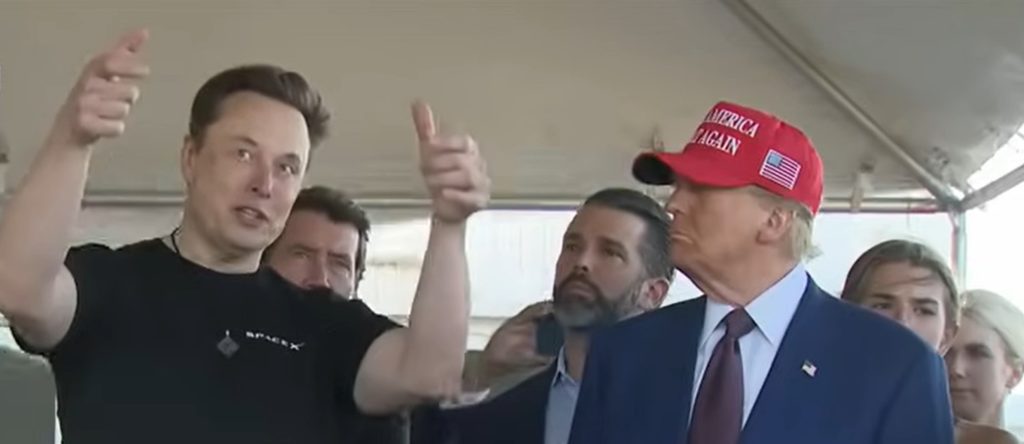
Starmer rejected calls from some MPs – including the Labour MP Diane Abbott, the Reform UK leader Nigel Farage and the Conservative MP Dame Priti Patel – to recall Parliament to Westminster. After he said "large social media companies and those who run them" were contributing to the disorder, Elon Musk, the owner of the social media website X, criticised Starmer for not condemning all participants and only blaming the far-right. Musk further said Starmer was not protecting all communities in the United Kingdom, which he said had a "two-tier" policing system.
In September 2024, Starmer and fellow senior government ministers faced criticism for accepting gifts from Labour donors. Starmer also faced accusations of breaking parliamentary rules by not declaring £5,000 worth of clothes bought for his wife by the Labour donor Lord Alli. That same month, Sky News reported that Starmer had received £107,145 in gifts, benefits, and hospitality since December 2019, which was two-and-a-half times more than any other MP.