





Kaneta Kimotsuki (肝付 兼太,, Kimotsuki Kaneta; born Kanemasa Kimotsuki (肝付 兼正,, Kimotsuki Kanemasa); November 15, 1935 – October 20, 2016) was a Japanese actor, voice actor, and theater director. He was also the founder of theater troupe 21st Century FOX and was affiliated with 81 Produce.
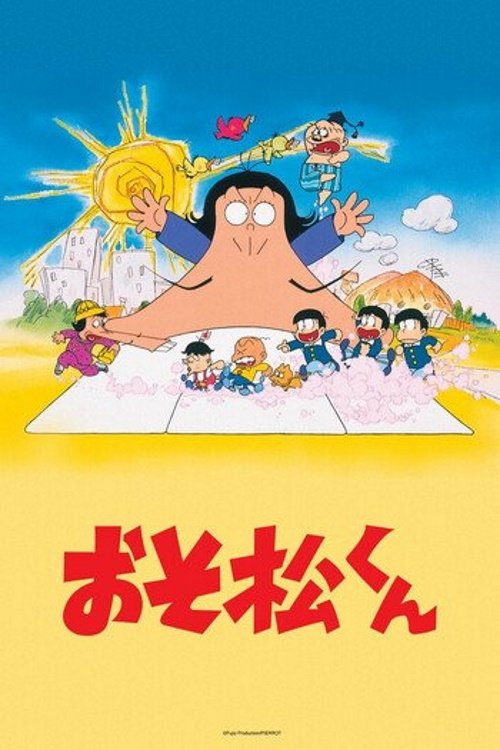
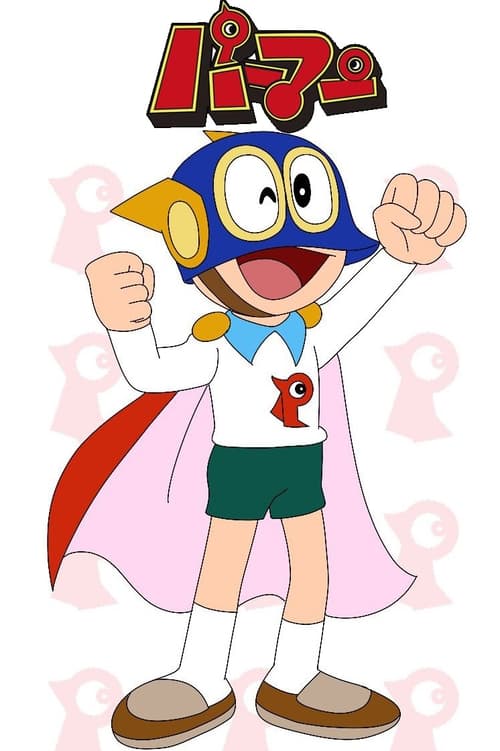
He was best known for the roles of Suneo Honekawa in Doraemon, Iyami in Osomatsu-kun, the Conductor in Galaxy Express 999, Horrorman in Let's Go! Anpanman, Takeshi "Gian" Gōda in Doraemon, Perman #4 (Hōzen Ōyama) in Perman, Kemuzō Kemumaki in Ninja Hattori-kun, Sir Great Britain in Cyborg 009, Jiminy Cricket in Pinocchio, Benzou Karino in Kiteretsu Encyclopedia, Quackerjack in Darkwing Duck, and Tom in Tom and Jerry.
Contents
Biography
Early life
Kimotsuki was born on November 15, 1935, as a descendant of the Kimotsuki clan in Kiire, Kagoshima Prefecture, Empire of Japan (which later became Kiire Town, and is now Kiire Town, Kagoshima City).
He left Kagoshima at age three and lived in Nakano, Tokyo City, Tokyo Prefecture until he was four years old.
He then grew up in Itabashi, Tokyo.
While he attended Itabashi Municipal Itabashi Fourth Elementary School, he and the other schoolchildren were evacuated to Yuhiso in Minakami Village, Tone District, Gunma Prefecture (later and now Minakami Town) due to war. He was evacuated again to Ryūō Town in Ryūō Village, Nakakoma District, Yamanashi Prefecture (later Ryūō Town, now Kai City).
At the time, he was a quiet, timid child, so the scene of being tearfully separated from his parents while being put on a train was etched to his mind forever. From the first night he arrived, he cried for his parents, who were back in Tokyo. Unable to cope with his constant crying, his teacher sent him back to his parents. Evacuees were viewed with hostility at the time, and even in Ryūō, the village children teased him mercilessly, calling him a "spoiled city kid" and a "crybaby." His days became a cycle of crying, yet he stayed there for about a year and a half.
After the war finally ended, he returned cheerful and talkative, as he would run through the streets to gather up playmates and entertain by imitating the rakugo stories he heard from the radio at the evacuation site he stayed in and the G.I.s he saw in town. On his change in personality, Kimotsuki reflected years later as an adult, "I guess I was a city boy after all." He felt really happy to be back in Tokyo, and his old playmates felt like kindred spirits to him. He re-analyzed that moment in his lifetime, saying, "I was so moved I wanted to hug them," and "I was incredibly happy."
Becoming an actor
When he advanced to junior high school, Kimotsuki took a required entrance exam for a private school but failed. At that time, he dreamed of becoming a movie actor and auditioned twice.
In his second year of junior high, he went to audition for director Keisuke Kinoshita's film Boyhood and was able to clear the second round. With a massive boost in confidence, Kimotsuki traveled to Ōfuna for a camera test in the snow, but he was unsuccessful. The child actor who was ultimately chosen went on to become an actor. Kimotsuki said in a 1999 interview that sometime later he saw that same person on a variety show where they said they were burdened with many debts, to which seeing it made him realize how tough it was being a star and that he was ultimately glad he didn't win the part in the end.
To take his mind off things, Kimotsuki often listened to radio dramas. One day, when he went to watch a public recording of The Fountain of Stories on NHK, he thought he could work at the place it was performed, and that was the spark that made him aspire to become a film actor. His idol was actor Kenichi Enomoto. But his grandmother told him he didn't have the looks to become a film actor, which made him decide to instead aim to perform voice acting in radio dramas.
He went to Teikyo Junior and Senior High School, where he founded a drama club. After performing Junji Kinoshita's play Twilight Crane, Kimotsuki decided to pursue an acting career.
Career
After Kimotsuki completed high school, he gave up attending university due to the death of his father. He applied for the fourth class of Radio Tokyo (now TBS) Broadcasting Troupe but was unsuccessful, as instead he joined the Shichiyōkai Theater Company while working at Takashimaya. While working for Takashimaya, he joined theater troupe Shichiyōkai. At the time, Shichiyōkai worked with NHK, which caused Kimotsuki to start making appearances in NHK's radio dramas. To solidify his personal resolve to make a living as an actor, he decided to leave Takashimaya. However, even after he made his debut as a voice actor, he was short on money, so he gathered some friends and established his own travel agency. At the same time, he juggled several part-time jobs as a tour escort, banquet MC, shoe shiner, and dentist. After Shichiyōkai disbanded, he auditioned and was accepted as part of the opening performance at the Nissay Theatre alongside Takeshi Aono. Following a stint with the theater troupe Sakuhinza, which had split from the Shichiyōkai, Kimotsuki was invited to join a company that was established by Koichi Chiba, who was a former member of the TBS Broadcasting Theater Troupe and was recruiting actors.
Kimotsuki's affiliated production companies throughout his career were Kiri no Kai, Sanko Office, Kawa no Kai, Ezaki Office, Actor Project, Tokyo Actor's Consumer's Cooperative Society, Mausu Promotion, Aoni Production, Production Baobab, and even his own company 21st Century FOX. As of February 2016, he was affiliated with 81 Produce. He had also been previously affiliated with Office Boro and Winner Entertainment.
His feature film debut was in When the Kobushi Flowers Bloom. At the time, he was still a theater troupe trainee and was credited under his birth name, Kanemasa Kimotsuki, playing a young barber. Aside from this, he also was in the pornographic film Woman of Shame, but both movies are his only appearances as an actor in live-action feature films.
His radio drama debut was in Women's Hour where he played an errand boy working for a dry cleaner. He had only two lines, but since everything was broadcast live back then, he remembered the tension performing his lines all the way until his death.
His voice acting debut was as a member of a motorcycle gang in the drama District Attorney. When he first appeared in an anime, he had already done dubbing for children's dramas, so he found it easy to match with the dialogue.
Awards
In 2005, Kimotsuki received the Rikiya Tayama Award at the 14th Japanese Movie Critics Awards alongside his Doraemon co-stars Nobuyo Ōyama, Noriko Ohara, Michiko Nomura, and Kazuya Tatekabe.
The following year in November 2006, they received a Special Award at the 11th Animation Kobe.
And in March 2007, they received the 3rd Lifetime Achievement Award at the Tokyo International Anime Fair.
In 2012, Kimotsuki received the Merit Award at the 6th Seiyu Awards.
Final years
In 2010, Kimotsuki was diagnosed with lung cancer.
Around May 2016, his physical health started to worsen, and he was diagnosed with pneumonia at a hospital in Tokyo. He was hospitalized for tests several times and continued his voice acting career after being discharged, but his condition worsened even further by October that year.
Death
Kimotsuki died from pneumonia on October 20, 2016, at the age of 80.
His grave is currently located at Tsukiji Hongwanji Nishitama Cemetery in Akiruno, Tokyo.
Posthumous releases & legacy
His last acting appearance was in an episode of the NHK Radio program Radio Midnight for the segment Series: Voices that Created an Era which broadcast on November 6, 2016; his dialogue having been recorded on September 19, one month before he died.
In January 2017, Kimotsuki was ranked 23rd place in a special program Popular Voice Actors 200 Seriously Choose! Voice Actor General Election! 3-Hour Special, which broadcast on TV Asahi.
In November 2019, Jajamaru from Niko Niko Pun appeared in the NHK family concert Let's Go On The Mysterious Train, held to celebrate the 60th anniversary of Okaasan to Issho, but with no replacement voice actor available, archive audio of Kimotsuki's lines for Jajamaru were used.
Personality
Being the third son out of six children, Kimotsuki got married at the age of 24 and had a son and a daughter. His personal motto was "Respect Heaven and Love People."
Features
His voice range was tenor.
Kimotsuki's voice had been considered distinctive since childhood, but he himself only realized it was unique after he started voice acting. In high school, he played leading roles for the radio drama club and thought he had a good voice. After joining the Tokyo Broadcasting Theater Company, he thought he wanted to play leading roles in radio dramas, but decided not to do so.
Kimotsuki's spoken dialects were Kagoshima and Kansai.
As he had been active since the early days of Japanese animation, Kimotsuki's voice acting roles generally consisted of bully leaders, grandpas, and grandmas, none of them being good lookers, but supporting characters.
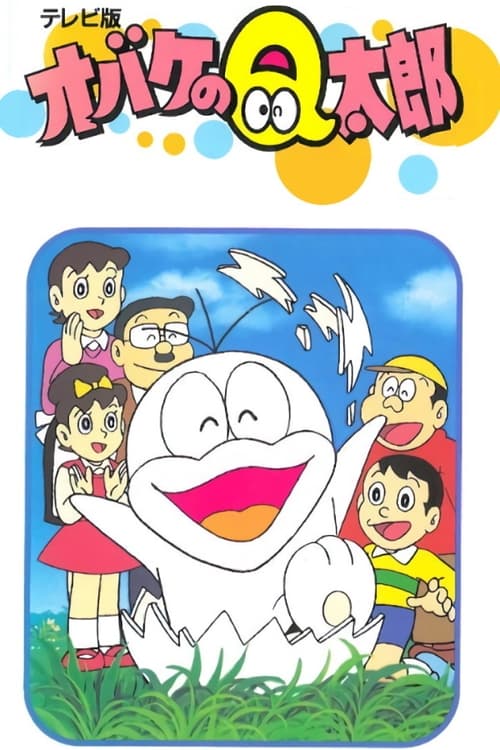
After voicing Godzilla in the first television adaptation of Fujiko Fujio's Obake no Q-Tarō, he started taking on more slightly mischievous character roles.
Regarding memorable works, Kimotsuki cited his first leading role as Kurobē in Jungle Kurobē and Barbapapa. Particularly in Barbapapa, he and Noriko Ohara voiced all of the series' characters themselves and they also performed the theme song for the three children, which was released on vinyl record format. He later remarked he was probably the first voice actor to ever become a "singing voice actor."
Kimotsuki was asked to perform the theme song for Jungle Kurobē, but the song's tempo was too fast for him, so Kumiko Ōsugi performed instead. Later on down the line, when voicing Jajamaru in Niko Niko Pun, he normally sang about 2,000 songs, with a pace of three episodes a week. He recalled that while he was singing, he gradually learned the rhythm, but that the first two or three years doing so were very difficult.
In The Monster Kid, the monster trio of Count Dracula, Wolfman, and Franken perform the song "We Are the Monster Trio". However, the voice actors of the characters, consisting of Kimotsuki, Takuzo Kamiyama, and Tarō Sagami respectively, were tone-deaf in singing, which composer Asei Kobayashi had an extremely difficult time working with.
About his works
He has appeared in almost all works based off the stories written by the Fujiko Fujio duo, with his first role in a Fujiko Fujio anime being the character Godzilla in the 1965 adaptation of Obake no Q-Tarō.
At the time, child roles were almost exclusively done by female voice actors like Michie Kita and Masako Nozawa, and there were few characters with strong personalities. He was left unsure if he could actually pull off portraying a young character. He later stated that up until then, he felt like all that he did was done half-heartedly, he wasn't succeeding as an actor, and even when playing roles, he couldn't fully immerse himself and become the character.
When he voiced Godzilla in Q-Tarō, his manager told him that while he was funny outside the studio, he was boring on the inside. During the recording session for the fourth episode, he decided to started improvising dialogue. Fujiko F. Fujio, who was observing the recording session, clapped his hands and loved it. it became the catalyst for him being specifically requested by the original author for roles. Even for projects where Kimotsuki hadn't been specifically requested, Fujiko would ask during production what he would do. Previously, improvisations weren't accepted, as he had been told to just stick to what was written in the scripts.
After breaking through with Godzilla in Q-Tarō, he started getting more child character roles. Works by Fujiko he didn't appear in include Chimpui and Mojako.
For Jungle Kurobē, he originally auditioned for the role of Kurobē's father. When he was informed the part had been settled on, he thought he got the role, but was instead cast as the main protagonist. Recording was hard and extremely grueling, as he had to raise his voice constantly, which exhausted him.
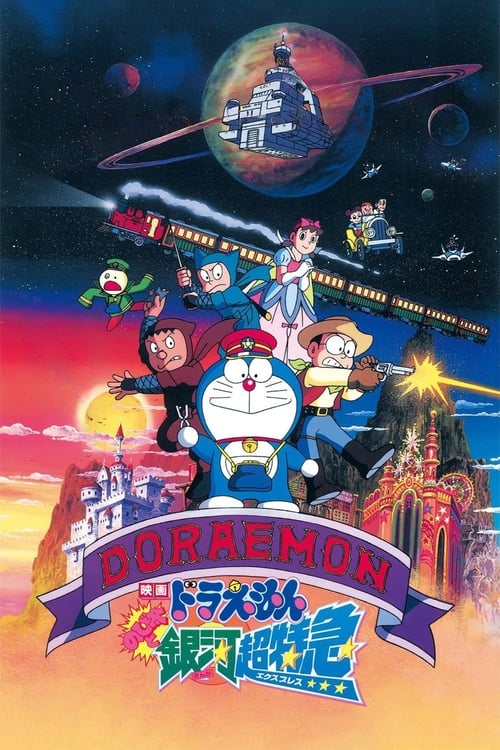
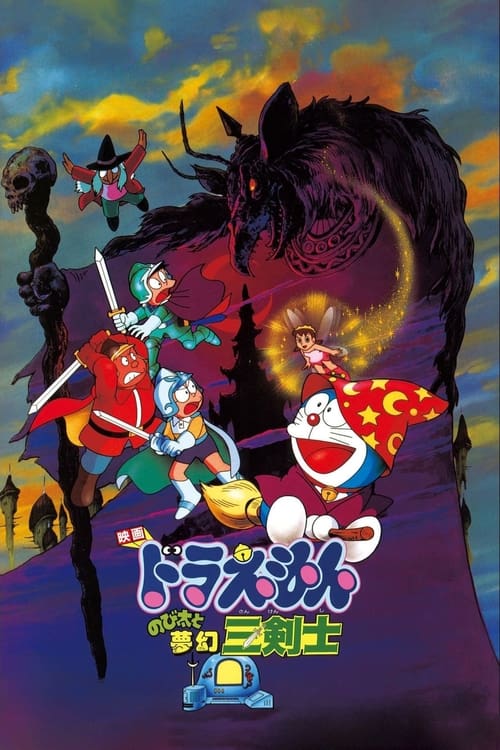
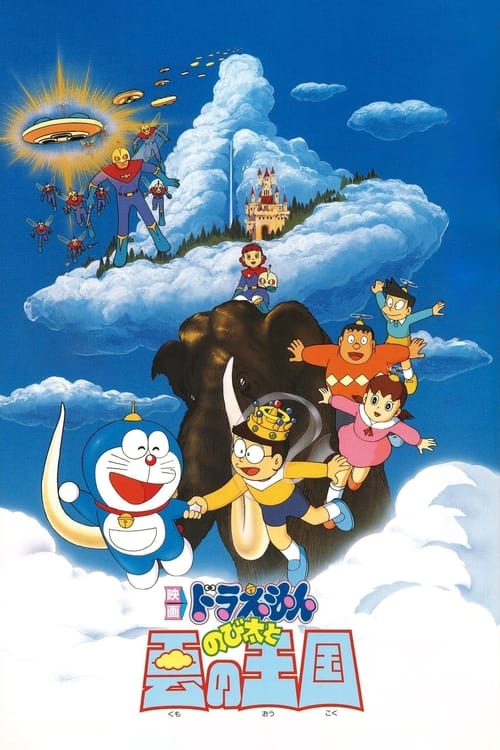
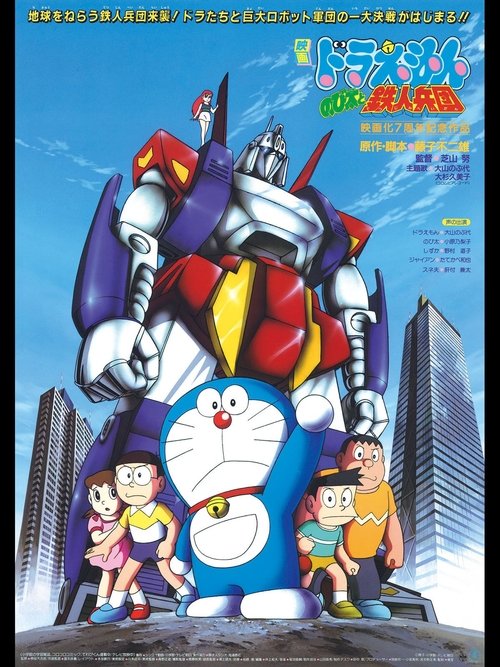
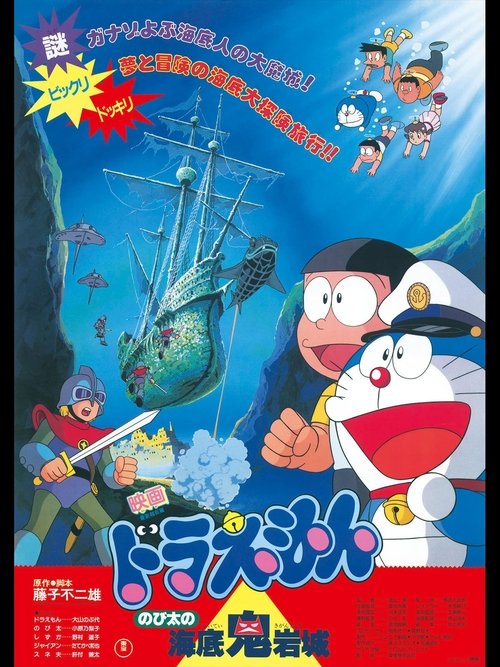
For the television adaptation of Doraemon on TV Asahi, he voiced Suneo Honekawa from 1979 to 2005. Kimotsuki previously voiced Takeshi "Gian" Gōda in the first television adaptation of Doraemon on NNS. He admitted in his later years that he had very little memory voicing Gian and mistakenly believed it was a black-and-white anime.
On March 15, 2008, he made a guest appearance alongside Doraemon co-star Nobuyo Ōyama on the Kansai Television program Nanbo DE Nanbo. They discussed personal memories recording episodes of Doraemon together and their feelings towards their roles over the years.
Relationships
Kimotsuki had a close friendship with voice actor and manager Kazuya Tatekabe for over 50 years. In a 1982 interview with Kibitsu, he said that he and Tatekabe's voice were similar in tone.
In 2004, when interviewed for the 25th anniversary of the Doraemon anime series, Kimotsuki stated, "In terms of personality, Mr. Tatekabe and I are completely different. We were both in the same theater troupe, and we had similar problems. There was a time when it was fashionable to have discussions about everything, and when I talked to Mr. Tatekabe during that time, I found his perspective very insightful. I thought, 'So that's another way of thinking about it.'" When Tatekabe passed away in 2015, Kimotsuki himself delivered the wake address and the funeral eulogy at his services, concluding both calling out to Gian in-character as Suneo doing his voice, a reference to their roles in the Doraemon series.
Kimotsuki and Masako Nozawa often co-starred in animated productions such as Galaxy Express 999, The Monster Kid, Doraemon, Ultra B, Gutsy Frog, and Dororon Enma-kun, to which Nozawa herself once jokingly remarked, "We're closer than a married couple because we spend so much time together."
Kimotsuki also worked with fellow theater troupe member Takeshi Aono as bartenders at a snack bar. They hit it off and constantly improvised, becoming known as the "Comedy Bartenders", with their witty bantering being a huge hit with customers.
The "Kappei" in Kappei Yamaguchi's stage name originated from Kimotsuki, who was his mentor, referring to him as "Inakappei" because he still had a strong Fukuoka accent.
Kimotsuki also named the acting unit "Sannin no Kai" (The Three-Person Group), consisting of Yamaguchi, Tomokazu Seki, and Wataru Takagi.
Hobbies, interests, and skills
Kimotsuki's personal hobbies included sports (mainly golf) and creating model railroads.
In junior high school, Kimotsuki had wanted to become a technician. He enjoyed working, and my parents would encourage him to pursue it. Whenever he was making models, Kimotsuki used to craft them from wood by himself. Next door to his house at the time lived a craftsman who created musical instruments, and Kimotsuki would watch from afar. That made him think, "Making instruments seems interesting too", so during his second junior high school year, he made a chair using a board from the household shrine altar, though his mother got very angry at him for doing so. During his theater troupe days, a play needed a cake prop, but a real cake would not work. So he got plaster from his part-time job and made one out of that. He also made a pistol, using only photos as reference, by joining pieces of Japanese oak. He made a 38 Smith & Wesson caliber revolver, so the cylinder part rotated. Afterwards, people kept asking him to build things, but he refrained because it was growing to interfere with his career as an actor. His wife would ask him to build shelves sometimes, but he did not like that kind of work, and his personal sense of pride would not let it happen.
Kimotsuki's special skills were rakugo (comic storytelling) and nagauta (traditional ballad singing). He would perform rakugo at an elementary school appreciation event and aspired to be a rakugo artist during his student days. His high school senior was Kokinji Katsura, who would visit his sophomore year school and perform a rakugo piece. Kimotsuki would persistently beg to be taken in as an apprentice Kokinji's performances, but Kokinji was a Shochiku star, so told him that he was not a rakugo performer and did not take in apprentices. He also possessed a creative visionary side, as the "Voice Actor Festival" event held for young voice actors in the 1980s was an idea that he conceived. He was also skilled with machinery. When his company 21st Century FOX faced deficits, he personally edited and sold videos in order to cover for the losses. He held a standard driver's license.
He loved movies, particularly being influenced by his grandparents who enjoyed Western films, with Chaplin's movies especially leaving a strong impression on him. At his fifth birthday celebration, he would insist on having his picture taken while holding a cane.
Successors
Following Kimotsuki's resignations from his advancing age and subsequent death, the following individuals listed below have taken over some of his established voice roles.
Filmography
Web anime
Galaxy Express 999: An Energy Journey Beyond Time and Space (2010-2011): Conductor
Video games
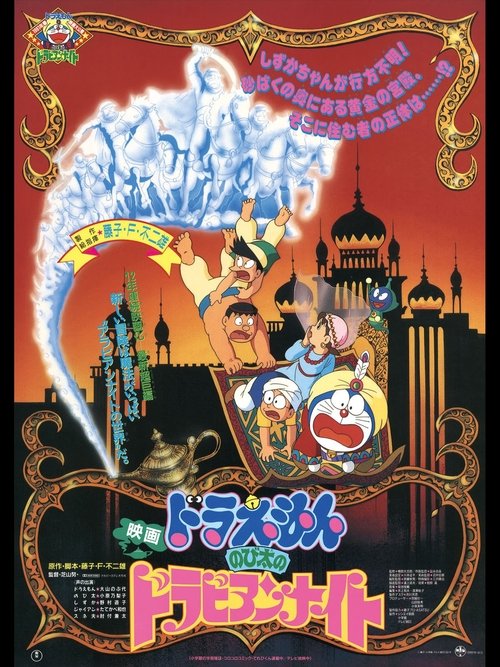
Doraemon: Nobita's Dorabian Nights (1992): Suneo Honekawa
Kingdom Hearts (2002): Jiminy Cricket
Tokusatsu
Robot Detective (1973): Kowashiman (episodes 5-6), Karateman (episodes 19-20)
Ganbare!! Robocon (1974): Roboinu
Chouriki Sentai Ohranger (1995): Butler Acha (episodes 1-15, 17-20, 22-31, 33, 35-48)
Chouriki Sentai Ohranger Movie (1995): Butler Acha
Gekisou Sentai Carranger (1996): TT Terurin (ep. 24)
Moero!!! Robocon (1999): Robogeta
Dubbing
The Empire Strikes Back (1980): Cal Alder (Jack McKenzie)
Ewoks: The Battle for Endor (1985): Willy (Tony Cox)
Shocker (1989): Sidney Cooper (Sam Scarber)
The Aristocats (1970): Roquefort
Charlotte's Web (1973): Wilbur
Darkwing Duck (1991): Quackerjack
Josie and the Pussycats (1970): Sebastian the Cat
The Little Mermaid (1989): Scuttle
Pinocchio (1940): Jiminy Cricket
Police Academy: The Animated Series (1988): Additional voices
The Mouse and His Child (1977): Bluejay
Robin Hood (1973): Friar Tuck
Tom and Jerry (1940): Tom
The Tom and Jerry Show (2014): Tom
Japanese voice-over
Pinocchio's Daring Journey (1983): Jiminy Cricket
Star Tours (1987): F-24
Sindbad's Storybook Voyage (2001): Announcer
E.T. Adventure (1990): Bigzom
The Amazing Adventure of Spider-Man the Ride (1999): Softman
Galaxy Express 999 for Planetarium (2002): Conductor