Artistry
Garland's singing voice has been described as brassy, powerful, effortless and resonant, often demonstrating a tremulous, powerful vibrato. Although her range was comparatively small, Garland was capable of alternating between female and male-sounding timbres with little effort. The Richmond Times-Dispatch correspondent Tony Farrell described her as the "possessor of a deep, velvety contralto voice that could turn on a dime to belt out the high notes." Ron O'Brien, producer of tribute album The Definitive Collection—Judy Garland (2006), wrote that her combination of natural phrasing, elegant delivery, mature pathos "and powerful dramatic dynamics she brings to ... songs make her [renditions] the definitive interpretations."
The Huffington Post writer Joan E. Dowlin called the period of Garland's music career between 1937 and 1945 the "innocent years," during which the critic believed her voice was "vibrant and her musical expression exuberant," resonant and distinct, with a "rich yet sweet" quality "that grabs you and pulls you in." Garland's voice would often vary to suit the song she was interpreting, ranging from soft, engaging, and tender during ballads to humorous on some of her duets with other artists. Her more joyful, belted performances have been compared to entertainers Sophie Tucker, Ethel Merman, and Al Jolson. Although her musical repertoire consisted largely of cast recordings, show tunes, and traditional pop standards, she was also capable of singing soul, blues and jazz music, which Dowlin compared to singer Elvis Presley.
Garland always claimed that her talent as a performer was innate, commenting: "Nobody ever taught me what to do onstage." Critics agree that even when she debuted as a child, she had always sounded mature for her age, particularly on her earlier recordings. From an early age, Garland had been billed as "the little girl with the leather lungs," a designation the singer later admitted to having felt humiliated by because she would have much preferred to have been known to audiences as a "pretty" or "nice little girl."
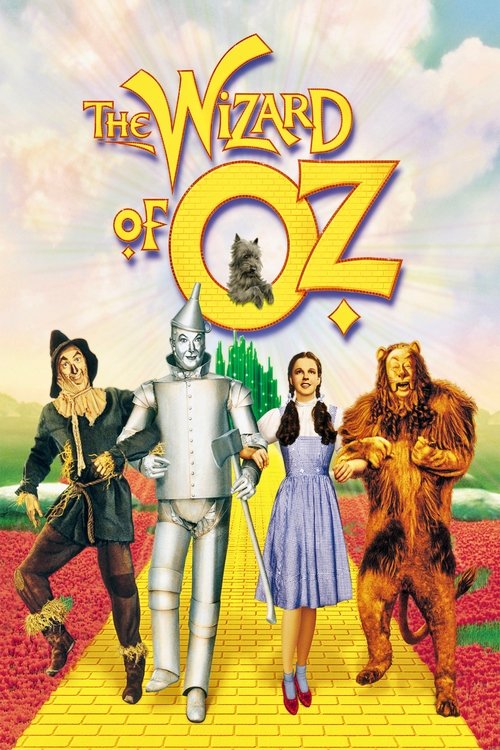
Jessel recalled that even at only 12 years old, Garland's singing voice resembled that of "a woman with a heart that had been hurt." The Kansas City Star contributor Robert Trussell cited Garland's singing voice as one of the reasons that her role in The Wizard of Oz remains memorable, writing that although "[s]he might have been made up and costumed to look like a little girl ... she didn't sing like one," due to her "powerful contralto command[ing] attention."
Camille Paglia, writing for The New York Times, joked that even in Garland's adult life, "her petite frame literally throbbed with her huge voice," making it appear as though she were "at war with her own body." Musical theater actress and director Donna Thomason opined that Garland was an "effective" performer because of her ability to make her singing voice "a natural extension of [her] speaking voice," an asset that Thomason believed all musical theater actors should at least strive to achieve. Trussell agreed that "Garland's singing voice sounded utterly natural. It never seemed forced or overly trained."
Writing for Turner Classic Movies, biographer Jonathan Riggs observed that Garland had a tendency to imbue her vocals with a paradoxical combination of "fragility and resilience" that eventually became a signature trademark of hers, marked with power in her voice, pronounced enunciation, and projection of a sense of vulnerability through her singing and body language. As Michael Bronski remarked in his book Culture Clash: "There was a hurt in her voice and an immediacy to her performance that gave the impression that it was her pain."
Louis Bayard of The Washington Post described Garland's voice as "throbbing," believing it to be capable of "connect[ing] with [audiences] in a way no other voice does." Bayard also believed that listeners "find it hard to disentwine the sorrow in her voice from the sorrow that dogged her life," a comment echoed by Dowlin: "Listening to Judy sing ... makes me forget all of the angst and suffering she must have endured."
The New York Times obituarist observed that during Garland's later performances, whether intentionally or not, she "brought with her ... all the well-publicized phantoms of her emotional breakdown, her career collapses and comebacks" on stage, going on to comment that Garland's voice changed and lost some of its quality as she aged but that she retained much of her personality. Contributing to the Irish Independent, Julia Molony observed that by the time Garland performed at Carnegie Hall in 1961, her voice—although "still rich with emotion"—had finally begun to "creak with the weight of years of disappointment and hard-living."
Similarly, the essay accompanying the live record's entry in the National Recording Registry notes that "while her voice was still strong, it had also gained a bit of heft and a bit of wear"; author Cary O'Dell believes Garland's rasp and "occasional quiver" only "upped the emotional quotient of many of her numbers," particularly on her signature songs "Over the Rainbow" and "The Man That Got Away." For her part, Garland stated that regardless of the condition of her voice, she always felt most safe and at home while performing onstage.
Her musical talent was commended by her peers. Opera singer Maria Callas once said that Garland possessed "the most superb voice she had ever heard." Singer and actor Bing Crosby said that "no other singer could be compared to her" when she was rested. Aretha Franklin praised Garland as "one of the greatest singers there was."
Fred Astaire later commented on co-starring with Garland: "Judy's the greatest entertainer who ever lived—or probably will ever live—an amazing girl," and that "[s]he could do things—anything—without rehearsing and come off perfectly."
Garland was known for interacting with her audiences during live performances. The New York Times obituarist wrote that she possessed "a seemingly unquenchable need for her audiences to respond with acclaim and affection. And often, they did, screaming, 'We love you, Judy – we love you.'" Garland herself explained: "A really great reception makes me feel like I have a great big warm heating pad all over me ... I truly have a great love for an audience and I used to want to prove it to them by giving them blood. But I have a funny new thing now, a real determination to make people enjoy the show."