








.jpg?width=400)

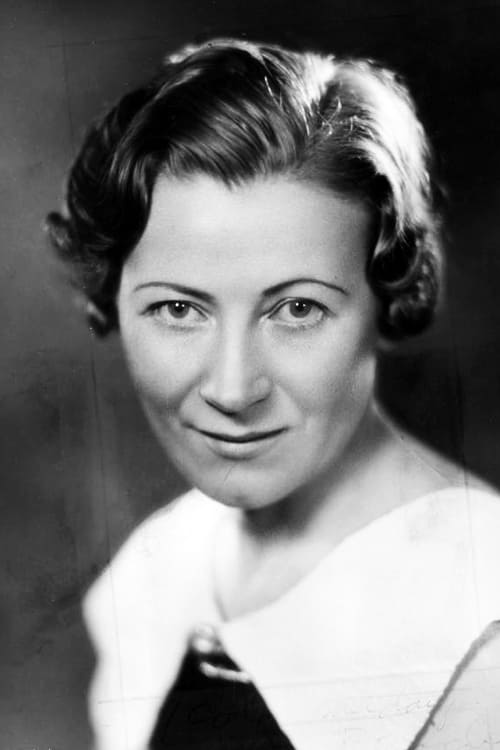
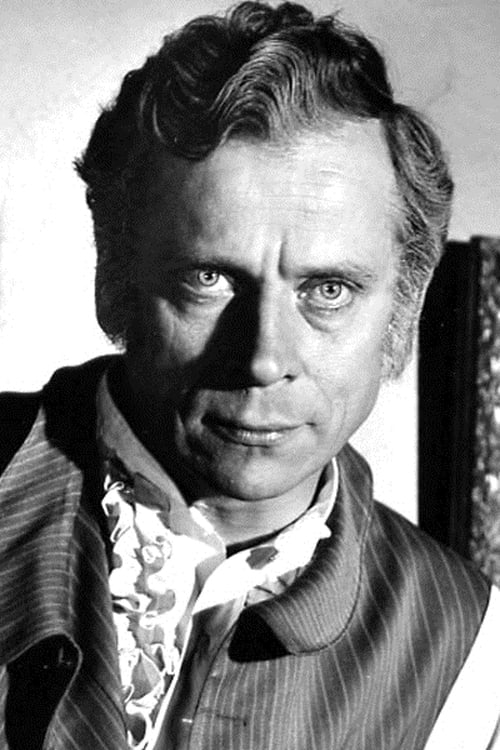
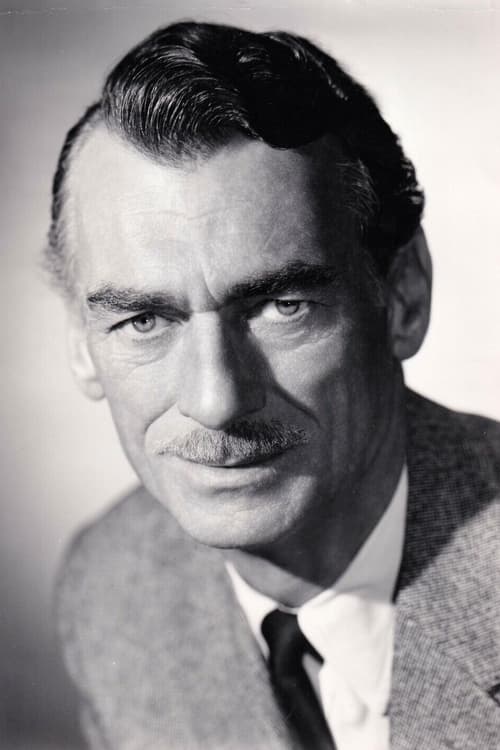
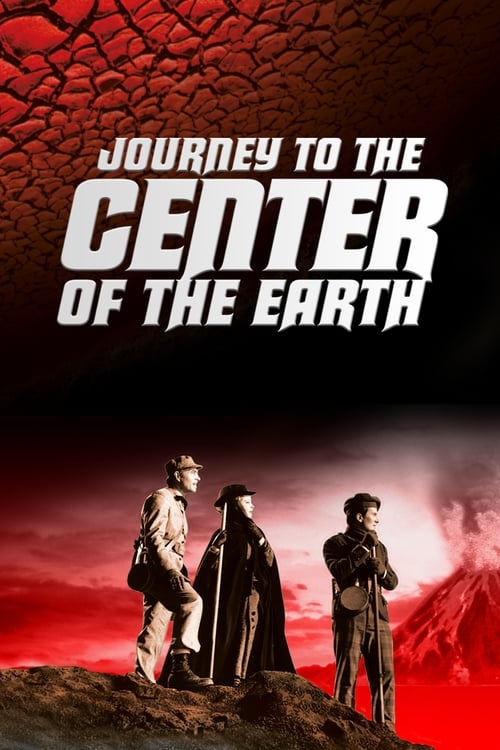
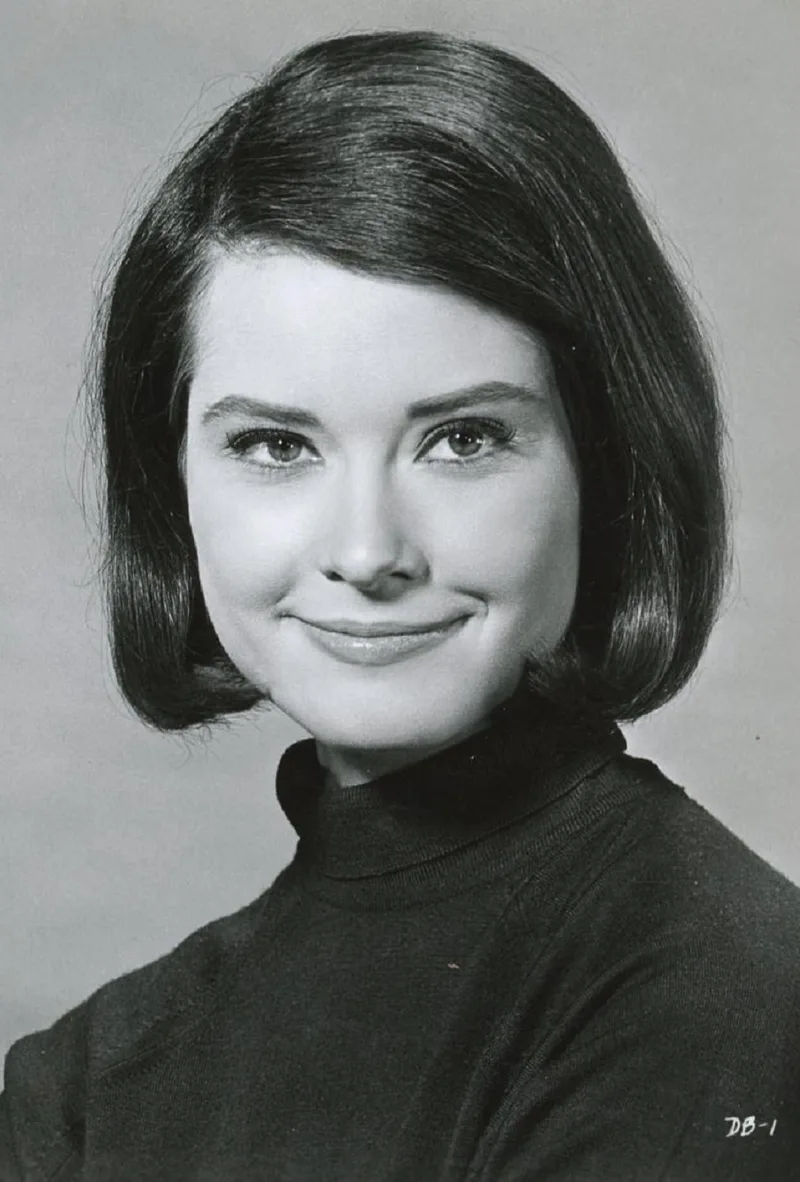
Journey to the Center of the Earth (also called Jules Verne's Journey to the Center of the Earth) is a 1959 American science fiction adventure film directed by Henry Levin and starring James Mason, Pat Boone, Arlene Dahl, and Diane Baker. Based on the 1864 novel of the same name by Jules Verne, it was written for the screen by Charles Brackett (who also produced) and Walter Reisch. Bernard Herrmann wrote the film score.
The film was released by 20th Century Fox on December 16, 1959. It was a commercial success and well received by critics, earning three Academy Award nominations.
Contents
Plot
In 1880 Edinburgh, Professor Sir Oliver Lindenbrook, a geologist at the University of Edinburgh, is given a piece of volcanic rock by his admiring student, Alec McEwan, who is in love with Lindenbrook's niece Jenny. Finding the rock unusually heavy, Lindenbrook discovers a plumb bob inside bearing a cryptic inscription. Lindenbrook and Alec discover that it was left by a scientist named Arne Saknussemm, who, almost 100 years earlier, had found a passage to the center of the Earth by descending into the volcano Snæfellsjökull, in western Iceland. After translating the message, Lindenbrook immediately sets off with Alec to follow in the Icelandic pioneer's footsteps.
Professor Göteborg, upon receiving correspondence from Lindenbrook regarding the message, attempts to reach the Earth's center first. Lindenbrook and McEwan chase him to Iceland. There, Göteborg and his assistant kidnap and imprison them in a cellar. They are freed by local Hans Bjelke and his pet duck Gertrud. They later find Göteborg dead in his hotel room. Lindenbrook finds potassium cyanide crystals in Göteborg's goatee and concludes that he was murdered.
Göteborg's widow, Carla, who initially believed Lindenbrook was trying to capitalize on her deceased husband's work, learns the truth. She provides the equipment and supplies that her husband had accumulated, including much sought after Ruhmkorff lamps, but only on the condition that she accompanies them to protect her husband's reputation. Lindenbrook grudgingly agrees. Hans and Gertrud also join the new expedition.
On a specific date, they mark the sunrise's exact location on Snæfellsjökull and descend into the Earth from there, following markings left by Saknussemm. However, they are not alone. Göteborg's murderer, Count Saknussemm, believes that, as Saknussemm's descendant, only he has the right to be there. He and his manservant trail the group secretly. When Alec becomes separated from the others, he comes upon Saknussemm. When Alec refuses to take the place of Saknussemm's servant, who has died from overexertion, Saknussemm shoots Alec in the arm. Lindenbrook locates them through the gunshot's echoes and, after a quick trial for murder, sentences Saknussemm to death. No one is willing to execute him, however, so they reluctantly take him along.
The explorers eventually come upon a subterranean ocean. They construct a raft to cross it, but not before narrowly escaping a family of large dimetrodons. Their raft begins circling in a large mid-ocean whirlpool. The professor deduces that this must be the center of the Earth: The magnetic forces of north and south meet there and are powerful enough to snatch away even the gold in their rings and tooth fillings. Now completely exhausted, they reach the opposite shore.
While the others are asleep, a hungry Saknussemm catches and eats Gertrud. When Hans finds out, he rushes at the count. Reeling back, Saknussemm inadvertently loosens a column of large stones and is buried beneath them, killing him. Right behind the collapse, the group comes upon the ruins of the sunken city of Atlantis. They also find the skeleton of Arne Saknussemm, whose right hand points toward a volcanic chimney. While a strong updraft suggests it leads directly to the surface, a huge rock partially blocks the way. Lindenbrook decides to blow up the obstruction with gunpowder left by Saknussemm, and they take shelter in a large sacrificial altar bowl. A giant lizard attacks, but is buried under molten lava released by the explosion. The bowl floats toward the passage and is finally driven upward at great speed by a lava plume. It finally reaches the surface, where the explorers are ejected, coming down away from the lava eruption.
When they return to Edinburgh, they are hailed as heroes. Lindenbrook turns down all the honors due to the loss of their documented evidence, but encourages the next generations to follow in their footsteps. Alec soon marries Jenny, and Lindenbrook and Carla kiss, a pledge of their coming wedding.
Production
The film was a co-production between 20th Century-Fox and Joseph M. Schenck, who had been instrumental in helping establish Fox in 1935. The film was produced by Charles Brackett, who said:
Our picture describes action and events, with not the slightest shadow of Freud. The serious thing about Jules Verne is that all he does is tell a story in exciting episodes, but his stories have always pushed man a little closer towards the unknown. What we've tried to do is retell his story in the best way of all - in the Verne vernacular.
Brackett called the original story "a delightful book, written for young people. We simply couldn't have any solemnity about it. I wanted very much to do it at this time. I'm tired of all these films based on thoughts at the back of sick minds."
The script was written by Walter Reisch who later said:
I had written a lot of science fiction for magazines, and Charles Brackett knew about that. They also knew that I had written magazine articles on Jules Verne. I had studied Jules Verne, and always wanted to write his biography, but I never got around to doing it. When they bought the Jules Verne novel from his estate and assigned me, I was delighted. The master's work, though a beautiful basic idea, went in a thousand directions and never achieved a real constructive "roundness". With the exception of the basic idea, there is very little of the novel left in the film. I invented a lot of new characters—the Pat Boone part, the part of the professor's wife played by Arlene Dahl, the [part of the] villain—and the fact that it all played in Scotland.
Pat Boone was the first star announced. He said he was reluctant to make the film because it was science fiction, even after Fox promised to add some songs. It was only when they offered him 15% of the profits that he agreed at the urging of his management. He said, "Later on, I was very glad I did it, because it was fun to do, it had some good music and it became a very successful film".
Following up on that point, Diabolique magazine later observed:
Reception
Box office
At the time of release, Journey to the Center of the Earth was a financial success, grossing $10,000,000 at the box office (well over its $3.44 million budget).
Critical response
Film review aggregator website Rotten Tomatoes assigns a rating of 84% based on 31 critics, with an average rating of 6.9/10. The website's critical consensus describes Journey to the Center of the Earth as "a silly but fun movie with everything you'd want from a sci-fi blockbuster – heroic characters, menacing villains, monsters, big sets and special effects".
Upon the film's release, New York Times film critic Bosley Crowther said Journey to the Center of the Earth is "really not very striking make-believe, when all is said and done. The earth's interior is somewhat on the order of an elaborate amusement-park tunnel of love. And the attitudes of the people, toward each other and toward another curious man who happens to be exploring down there at the same time, are conventional and just a bit dull".
Ian Nathan, writing a retrospective review for Empire, gave the film four stars, stating that "it has dated a fair bit, but it's a film that takes its far-fetchedness seriously, and delivers a thrilling adventure untrammelled by cheese, melodrama or ludicrous tribes of extras, shabbily dressed bird-beings or lizard men", ultimately concluding that the film is "still captivating despite the obviously dated effects".
Accolades
Journey to the Center of the Earth won a second place Golden Laurel award for Top Action Drama in 1960.
Academy Award nominations:
Best Art Direction-Set Decoration: Lyle R. Wheeler, Franz Bachelin, Herman A. Blumenthal, Walter M. Scott and Joseph Kish
Best Effects, Special Effects: L. B. Abbott (visual), James B. Gordon (visual), Carlton W. Faulkner (audible)
Best Sound: Carlton W. Faulkner
Comic book adaptation
Dell Four Color #1060 (November 1959)


