Indiana Jones and the Last Crusade
Indiana Jones and the Last Crusade, the third film in the popular Indiana Jones series, went through a flimsy scripting process before Boam was hired to write a draft. As early as 1984, George Lucas was playing with the concept of having Jones encounter the fabled Holy Grail, the cup said to have been used by Jesus Christ during the Last Supper. Director Steven Spielberg rejected Lucas's script outlines, disliking the Grail idea. Screenwriter Diane Thomas wrote a haunted house story for Indiana Jones, but Spielberg said that after producing Poltergeist, he did not want to do a similar film. Lucas hired Chris Columbus to write a draft for the film, and he submitted Indiana Jones and the Lost City of Sun Wu Kung, a story with evil spirits, ghosts, and demons. Again, Spielberg rejected the story as not believable enough. Lucas convinced him to go back to the Holy Grail idea, and Menno Meyjes was hired to develop another screenplay. The new script focused on the Arthurian legend aspect of the Holy Grail. Although the script was not to the liking of Lucas and Spielberg, it had elements that eventually became part of the finished film: the Holy Grail, and the introduction of Indiana Jones's father, Henry Jones Sr.
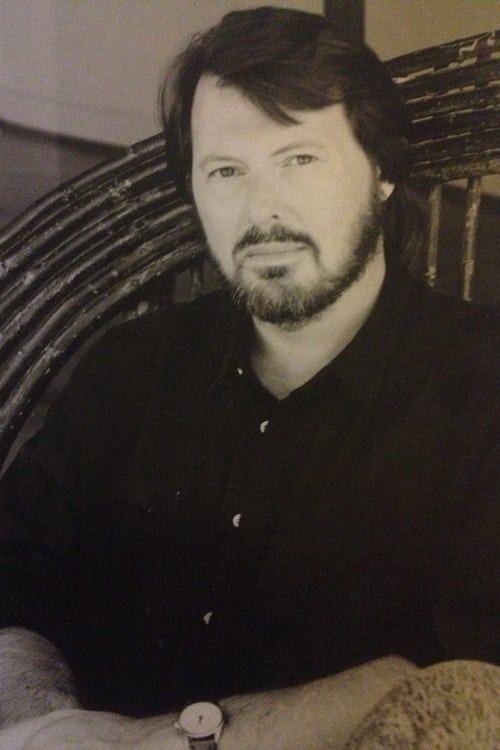
Spielberg suggested that Boam write the next draft, and Lucas agreed to it. Boam felt some nervousness going into the process. He joked that "the battlefield was littered with writers before I came on to the scene. There were four or five before me. Each writer had their script next to them covered with blood." Boam said that when Spielberg called to offer him the job, Spielberg said "something like, 'You wanna get real rich?' and I said, 'Yeah, why?' and he said, 'I think you should do the next Indiana Jones movie.'" Boam is reported to have replied to Spielberg's offer by saying, "I just don't know why you didn't come to me before." Boam spent two weeks filled with eight-hour days working with Lucas to develop the story. The two blocked out all other commitments to create the story, building it "beat by beat". Lucas already knew many of the set pieces that were to be in the movie. During the two-week story conference, Boam worked to incorporate it all into the new narrative. "Jeff was very collaborative," Lucas said, adding, "He'd try to include both Steven's ideas and my ideas, and tried to get what we wanted done."
Spielberg liked the story outline presented by Lucas and Boam, but wanted a first draft before making a decision to move forward. He was planning on directing the film Rain Man, but an Indiana Jones project would take precedence. Boam signed a contract on April 14, 1987. He wrote his first draft that summer, and turned it in on September 15, with another revision on September 30. It was at that time that Spielberg made a commitment to direct the Indiana Jones film over Rain Man, based on reading one of Boam's unfinished drafts. Spielberg said, "We licked it with Boam". Spielberg brought actor Sean Connery in to portray Henry Jones Sr., and Connery provided substantial input into the character, who Lucas originally conceived as an eccentric professor—"an Obi-Wan Kenobi type." Boam wanted to expand the father character, making him more central to the plot. He said that in Meyjes's original script, "the father was sort of a MacGuffin ... they didn't find the father until the very end. I said to George, 'It doesn't make sense to find the father at the end. Why don't they find him in the middle?'" He wanted the father-son relationship to be the main point, rather than the Grail. With the input of Spielberg and Connery, Boam altered the senior Jones from "a somewhat crotchety old character" to a man with more "vitality". Connery wanted the father to have a prior sexual relationship to the same female archeologist that Indiana Jones sleeps with. Boam incorporated this into the script, with Indiana's reaction to learning that he and his father slept with the same woman defused through humor. Boam said, "He's a bit humbled and surprised that his dad would be able to attract this young attractive woman ... but he isn't appalled by it."
Boam, who was raised Catholic, used many religious themes and metaphors in his script for the film. In preparing the story, he studied grail literature, but ultimately invented new mythology. He made the grail a symbol for faith. He said, "I guess the major given of faith is that it can't be proved otherwise you don't need faith. So that is why I created the idea that the grail can't be removed (from its hiding place). You can find the grail, but you can't really prove that you found it." When Indiana Jones finally discovers the grail hidden among decoys, its knight guardian tells him that he will die if he drinks from the wrong cup. Boam said that this scene is a metaphor for "the one true God vs. false gods". He worried that the film's religious themes would face criticism from the general audience, as well as religious scholars. He was relieved when the criticism did not appear, saying, "Nobody working on this movie was a religious scholar ... I was wondering if the numerous allusions to Christ in Indiana Jones were going to put people off. I was afraid the kids in the audience would think it was not a very hip subject matter."
Indiana Jones and the Last Crusade was a hit film, earning over $474 million worldwide.