Jean Harlow (born Harlean Harlow Carpenter; March 3, 1911 – June 7, 1937) was an American actress. Known for her portrayal of "bad girl" characters, she was the leading sex symbol of the early 1930s and one of the defining figures of the pre-Code era of American cinema. Often nicknamed the "Blonde Bombshell" and the "Platinum Blonde,” Harlow was popular for her "Laughing Vamp" screen persona. Harlow was in the film industry for only nine years, but she became one of Hollywood's biggest movie stars, whose image has endured in the public eye. In 1999, the American Film Institute ranked Harlow number 22 on its greatest female screen legends list.
Harlow was first signed by business magnate Howard Hughes, who directed her first major role in Hell's Angels (1930). After a series of critically failed films, and Hughes' loss of interest in her career, Metro-Goldwyn-Mayer bought out Harlow's contract in 1932 and cast her in leading roles in a string of hits built on her comedic talent: Red-Headed Woman (1932), Red Dust (1932), Dinner at Eight (1933), Reckless (1935), and Suzy (1936). Harlow's popularity rivaled and then surpassed that of MGM's top leading ladies Joan Crawford, Greta Garbo, and Norma Shearer. She died at the age of 26 of kidney failure while filming Saratoga. MGM completed the film using body doubles and released it less than two months after her death; it became the highest-grossing film of 1937, and the highest-grossing film of her career.
Contents
Life and career
1911–1925: Early life and education
Harlow was born Harlean Harlow Carpenter in a house located at 3344 Olive Street in Kansas City, Missouri.
Her father, Mont Clair Carpenter (1877–1974), son of Abraham L. Carpenter and Dianna (née Beal), was a dentist who attended dental school in Kansas City. He was from a working-class background. Her mother, Jean Poe Carpenter (née Harlow; 1891–1958), was the daughter of wealthy real estate broker Skip Harlow and his wife, Ella Harlow (née Williams). In 1908, Skip Harlow arranged his daughter's marriage to Mont Clair Carpenter. She was underage at the time and grew resentful and unhappy in the marriage, but the Carpenters remained together, living in a Kansas City house owned by her father.
Harlow's family called her "Baby," a nickname she was accustomed to and which endured for the rest of her life. It was not until she was five years old that she learned her real name was Harlean, when the staff and students at Miss Barstow's Finishing School for Girls used the name. Harlow was always very close to her mother, who was extremely protective. Her mother reportedly told her daughter that she owed everything she had to her; "She was always all mine!", Mama Jean said of her daughter in interviews. Jean Carpenter was later known as "Mama Jean" after Harlow achieved star status as Jean Harlow.
When Harlow was finishing school, her mother filed for a divorce. On September 29, 1922, the uncontested divorce was finalized, giving sole custody of Harlow to her mother. Although Harlow loved her father, she did not see him often after the divorce.
In 1923, the 32-year-old Jean Carpenter took her daughter and moved to Hollywood in hopes of becoming an actress, but was told that she was too old to begin a film career. Harlow was enrolled at the Hollywood School for Girls, where she met Douglas Fairbanks Jr., Joel McCrea, and Irene Mayer Selznick, but dropped out at the age of 14, in the spring of 1925.
With their finances dwindling, Jean and Harlow moved back to Kansas City after Skip Harlow issued an ultimatum that he would disinherit his daughter if they did not return. Several weeks later, Skip sent his granddaughter to summer camp at Camp Cha-Ton-Ka, in Michigamme, Michigan, where she contracted scarlet fever. Jean Carpenter traveled to Michigan to care for Harlow, rowing herself across the lake to the camp, but was told that she could not see her daughter.
1926–1928: First marriage
During Harlow's freshman year at the school, she was paired with a "big sister" from the senior class who introduced her to 19-year-old Charles "Chuck" Fremont McGrew III, an heir to a large fortune. By the fall of 1926, Harlow and Chuck were dating seriously, and they were married in 1928. Jean Carpenter was also married to Marino Bello on January 18; however, Harlow did not attend her mother's wedding.
In 1928, two months after the wedding, Chuck McGrew turned 21 and received part of his inheritance. The couple left Chicago and moved to Los Angeles, settling into a home in Beverly Hills, where Harlow thrived as a wealthy socialite. McGrew hoped to distance Harlow from her mother with the move. Neither Chuck nor Harlow worked during this time, and both were considered heavy drinkers.
1928–1929: Work as an extra
While living in Los Angeles, Harlow befriended a young aspiring actress named Rosalie Roy. Not owning a car herself, Rosalie asked Harlow to drive her to Fox Studios for an appointment. While waiting for Rosalie, Harlow was noticed and approached by Fox executives, whom she told she was not interested. Nevertheless, she was given letters of introduction to Central Casting. A few days later, Rosalie Roy bet Harlow that she did not have the nerve to go in for an audition. Unwilling to lose a wager and pressed by her enthusiastic mother, who had followed her daughter to Los Angeles by this time, Harlow went to Central Casting and signed in under her mother's maiden name, Jean Harlow.
After several calls from casting and several job offers that Harlow rejected, Mother Jean finally persuaded her into accepting work at the studio. Harlow appeared in her first film, Honor Bound (1928), as an unbilled "extra" for $7 a day (equivalent to approximately $131 in 2025 dollars) and a box lunch, common pay for such work. This led to a wage increase to $10 per day and small parts in feature films such as Moran of the Marines (1928) and the Charley Chase lost film Chasing Husbands (1928). In December 1928, Harlow, as Jean Harlow, signed a five-year contract with Hal Roach Studios for $100 per week. She had small roles in the 1929 Laurel and Hardy shorts: Double Whoopee, Liberty and Bacon Grabbers, the last giving her a costarring credit.
In March 1929, she parted with Hal Roach, who tore up her contract after Harlow told him, "It's breaking up my marriage, what can I do?" In June 1929, Harlow separated from her husband, who disapproved of her career, and moved in with Mother Jean and Bello. After her separation from McGrew, Harlow continued working as an "extra" in such films as This Thing Called Love, Close Harmony, and The Love Parade (all 1929), until she landed her first speaking role in the Clara Bow film The Saturday Night Kid. Harlow and her husband divorced in 1929.
1929–1932: Platinum blonde star
In late 1929, Harlow was spotted by Ben Lyon, an actor filming Howard Hughes' Hell's Angels; another account gives Angels head cameraman Arthur Landau as the man who spotted and suggested her to Hughes. Hughes was reshooting most of his originally silent film with sound and needed an actress to replace Greta Nissen, whose Norwegian accent was undesirable for her character. Harlow screen-tested for Hughes, who cast her in the part. On October 24, 1929, Harlow signed a five-year contract with Hughes worth $100 per week (equivalent to approximately $1,875 in 2025 dollars).
During filming of Hells Angels, Harlow met MGM executive Paul Bern, her future husband, for the first time.
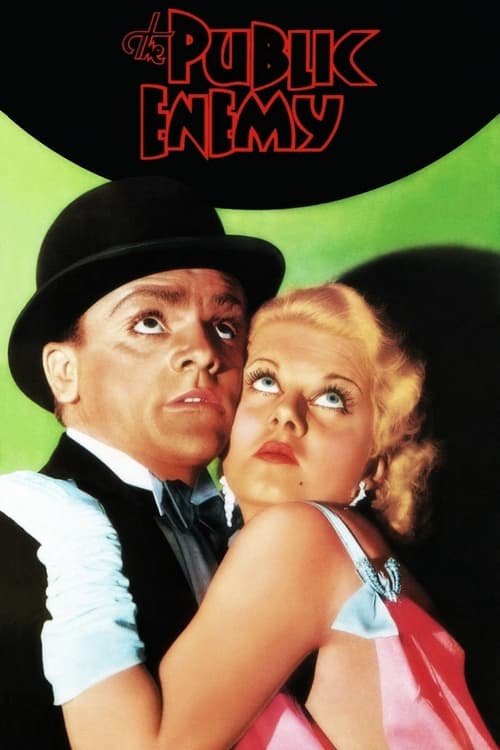
Hell's Angels premiered in Hollywood at Grauman's Chinese Theatre on May 27, 1930, and became the highest-grossing film of that year, besting even Greta Garbo's talkie debut in Anna Christie. Hell's Angels made Harlow an international star. Though she was popular with audiences, the critics were less than enthusiastic. The New Yorker called her performance "plain awful," though Variety magazine conceded, "It doesn't matter what degree of talent she possesses ... nobody ever starved possessing what she's got."In spite of her relative success with Hell's Angels, Harlow again found herself in the role of "uncredited extra" in the Charlie Chaplin film City Lights (1931), though her appearance did not make the final cut. With no other projects planned for Harlow at the time, Hughes decided to send her to New York, Seattle, and Kansas City for Hell's Angels premieres. In 1931, his Caddo Company loaned her out to other studios, where she gained more attention by appearing in The Secret Six, with Wallace Beery and Clark Gable; Iron Man, with Lew Ayres and Robert Armstrong; and The Public Enemy, with James Cagney. Although the successes of these films ranged from moderate to hit, Harlow's acting ability was mocked by critics. Hughes sent her on a brief publicity tour to bolster her career, but it was unsuccessful as Harlow dreaded making personal appearances.
Harlow briefly dated gangster Abner Zwillman, who bought her a jeweled bracelet and a red Cadillac, and made a large cash loan to studio head Harry Cohn to obtain a two-picture deal for her at Columbia Pictures. The relationship ended when he reportedly referred to her in derogatory and vulgar terms when speaking to other associated crime figures, as revealed in secret surveillance recordings.
1932–1937: Successful actress at MGM
Paul Bern was now romantically involved with Harlow and spoke to Louis B. Mayer about buying her contract with Hughes and signing her to MGM, but Mayer declined. MGM's leading ladies were presented as elegant, whereas Harlow's screen persona was not so to Mayer. Bern then began urging close friend Irving Thalberg, production head of MGM, to sign Harlow, noting her popularity and established image. After initial reluctance, Thalberg agreed, and on March 3, 1932, Harlow's 21st birthday, Bern called her with the news that MGM had purchased her contract from Hughes for $30,000, equal to $707,927 today. Harlow officially joined the studio on April 20, 1932.
At MGM, Harlow was given leading movie roles to show off her looks and nascent comedic talent. Though her screen persona changed dramatically during her career, one constant was her sense of humor. In 1932, she starred in the comedy Red-Headed Woman for which she received $1,250 a week. It was the first film in which she "resembles something of an actress," portraying a woman who is successful at being amoral, in a film that neither moralizes nor punishes her behavior. The film is often noted as being one of the few films in which Harlow did not appear with platinum blonde hair; she wore a red wig for the role. While Harlow was filming Red-Headed Woman, actress Anita Page passed her on the studio lot without acknowledging her. She later told Page that the snub had caused her to cry until she saw herself, noticed the red wig, and burst out laughing when she realized Page had not recognized her. "That shows you how sensitive she was,” Page said. "She was a lovely person in so many ways."
She next starred in Red Dust, her second film with Clark Gable. Harlow and Gable collaborated and co-starred in six films. She was also paired multiple times with Spencer Tracy and William Powell. MGM began trying to distinguish Harlow's public persona from her screen characters by putting out press releases that her childhood surname was not the common 'Carpenter' but the chic 'Carpentiér,' claiming that writer Edgar Allan Poe was one of her ancestors and publishing photographs of her doing charity work to change her image to that of an all-American woman. This transformation proved difficult; once, Harlow was heard muttering, "My God, must I always wear a low-cut dress to be important?"
During the making of Red Dust, Bern—her husband of two months—was found dead at their home; this created a lasting scandal. Initially, Harlow was suspected of killing Bern, but his death was officially ruled a suicide by self-inflicted gunshot wound. Louis B. Mayer feared negative publicity from the incident and intended to replace Harlow in the film, offering the role to Tallulah Bankhead. Bankhead was appalled by the offer and wrote in her autobiography, "To damn the radiant Jean for the misfortune of another would be one of the shabbiest acts of all time. I told Mr. Mayer as much." Harlow kept silent, survived the ordeal, and became more popular than ever. A 2009 biography of Bern asserted that Bern was, in fact, murdered by a former lover and the crime scene re-arranged by MGM executives to make it appear Bern had killed himself.
Illness and death
In January 1937, Harlow and Robert Taylor traveled to Washington, D.C., to take part in fundraising activities associated with Franklin D. Roosevelt's birthday, for the organization later known as the March of Dimes. Harlow, a Democrat, had campaigned for Roosevelt in the 1936 United States presidential election, and two years earlier for Upton Sinclair in the 1934 California gubernatorial election. The trip was physically taxing for Harlow, and she contracted influenza. She recovered in time to attend the Academy Awards ceremony with William Powell.
Filming for Harlow's final film, Saratoga, co-starring Clark Gable, was scheduled to begin in March 1937. However, production was delayed when she developed sepsis after a multiple extraction of her wisdom teeth, and had to be hospitalized. Almost two months later, Harlow recovered, and shooting began on April 22, 1937. She also appeared on the May 3 cover of Life magazine in photographs by Martin Munkácsi.
On May 20, 1937, while filming Saratoga, Harlow began to complain of illness. Her symptoms—fatigue, nausea, fluid retention, and abdominal pain—did not seem very serious to the studio doctor, who believed that she was suffering from cholecystitis and influenza. The doctor was not aware that Harlow had been ill during the previous year with a severe sunburn and influenza. Friend and co-star Una Merkel noticed Harlow's on-set weight gain, gray pallor, and fatigue.
On May 29, while Harlow filmed a scene in which her character had a fever, she was clearly sicker than her character and leaned against her co-star Gable between takes and said, "I feel terrible! Get me back to my dressing room." She requested that the assistant director telephone William Powell, who immediately left his own movie set, to escort her home.
The next day, Powell examined Harlow and discovered that her condition had not improved. He contacted her mother and insisted that she cut her holiday short to be at her daughter's side. Powell also summoned a doctor. Because Harlow's previous illnesses had delayed the shooting of three movies (Wife vs. Secretary, Suzy, and Libeled Lady), initially, there was no great concern regarding this latest bout with a recurring illness. On June 2, it was announced she was again suffering from influenza. Ernest Fishbaugh, who had been called to Harlow's home to treat her, diagnosed her with an inflamed gallbladder. Mother Jean told MGM that Harlow was feeling better on June 3, and co-workers expected her back on the set by Monday, June 7, 1937. Press reports were contradictory, with headlines reading "Jean Harlow seriously ill" and "Harlow recovers from illness crisis". When she did not return to set, a concerned Gable visited her and later remarked that she was severely bloated and that he smelled urine on her breath when he kissed her—both signs of kidney failure.
Legacy
According to Camille Paglia, the notion that blondes have more fun was started in Hollywood by Harlow. Paglia noted, "The woman who really started all this in Hollywood was Jean Harlow, with that platinum blonde look which was so incredibly unnatural. With her, it was associated with being a harlot — she was mimicking the slouchy, louche look of someone who's a machine for pleasure."
She is noted to have inspired Marilyn Monroe, Madonna, and others. Monroe, who idolized Harlow as a child, was planning to star in a biopic about Harlow but died before filming began.
Her name was given to a cocktail, the "Jean Harlow", which is equal parts light rum and sweet vermouth.
Blues musician Lead Belly wrote the song "Jean Harlow" while in prison upon hearing about her death.
The French composer Charles Koechlin composed the piece Épitaphe de Jean Harlow (opus 164) in 1937.
On February 8, 1960, Jean Harlow was given a star on the Hollywood Walk of Fame located at 6910 Hollywood Boulevard on the south part of the Hollywood Boulevard in Los Angeles, California.
Kim Carnes's hit "Bette Davis Eyes" (1981) contains the line "her hair is Harlow gold."
Harlow's signature, hands, and footprints were imprinted in cement on September 29, 1933, in the 24th ceremony at Grauman's Chinese Theater and are located near the forecourt on the west side of the box office at 6925 Hollywood Boulevard, Hollywood, California.
Novel
With the aid of the screenwriter Carey Wilson, Harlow wrote a novel titled Today Is Tonight. In Arthur Landau's introduction to the 1965 paperback edition, Harlow stated around 1933–1934 her intention to write the book, but it was not published during her lifetime. During her life, Harlow's stepfather, Marino Bello, shopped the unpublished manuscript to a few studios. Louis B. Mayer, head of MGM, prevented the book from being sold by putting an injunction on it using a clause in Harlow's contract: her services as an artist couldn't be used without MGM's permission. After her death, Landau wrote, her mother sold the film rights to MGM, though no film was made. The publication rights were passed from Harlow's mother to a family friend, and the book was finally published in 1965.
Film portrayals
Film adaptations of Harlow's life were considered at various points in the 1950s. Twentieth Century-Fox had slated Jayne Mansfield for the role, and ideas for Columbia Pictures actress Cleo Moore to play Harlow were also tabled. These projects never materialized. Marilyn Monroe was given a role for Harlow in 1953, but she declined it, feeling it was underdeveloped.
In 1964, Carroll Baker played a character loosely based on Harlow in The Carpetbaggers.
In 1965, two films about Jean Harlow were released, both titled Harlow. The first film was released by Magna Corporation in May 1965, and starred Carol Lynley. The second film was released in June 1965 by Paramount Pictures, and starred Carroll Baker. Both were poorly received and did not perform well at the box office.
In 1975, Roberta Collins played Harlow in the rhythm-and-blues band Bloodstone's pop musical movie Train Ride to Hollywood.
In 1978, Lindsay Bloom portrayed her in Hughes and Harlow: Angels in Hell.
In August 1993, Sharon Stone hosted a documentary about Harlow titled Harlow: The Blonde Bombshell, which aired on Turner Classic Movies.
In 2004, Gwen Stefani portrayed Harlow in Martin Scorsese's Howard Hughes biopic The Aviator.