



Jaya Prada Nahata (born Lalitha Rani Rao; 3 April 1962) is a politician and an Indian actress, known for her works in Telugu cinema and Hindi cinema as well as in Tamil films in late '70s, '80s and early '90s and 2000s. Jayaprada is the recipient of three Filmfare Awards South and has starred in many Telugu and Hindi films along with several Kannada, Tamil, Malayalam, Bengali and Marathi films. She left the film industry at the peak of her career, as she joined the Telugu Desam Party (TDP) in 1994 and entered politics. She was a Member of Parliament (MP) from Rampur, Uttar Pradesh from 2004 to 2014.
Some of her notable films include Anthuleni Katha (1976), Siri Siri Muvva (1976), Sita Kalyanam (1976), Adavi Ramudu (1977), Yamagola (1977), Sanaadi Appanna (1977), Huliya Haalina Mevu (1979), Sargam (1979), Ooriki Monagadu (1981), Kaamchor (1982), Kaviratna Kalidasa (1983), Sagara Sangamam (1983), Tohfa (1984), Sharaabi (1984), Maqsad (1984), Sanjog (1985), Aakhree Raasta (1986), Simhasanam (1986), Muddat (1986), Sindoor (1987), Samsaram (1988), Elaan-E-Jung (1989), Aaj Ka Arjun (1990), Thanedaar (1990), Maa (1991), Habba (1999), Shabdavedhi (2000), Devadoothan (2000), Pranayam (2011), Ee Bandhana (2007) and Krantiveera Sangolli Rayanna (2012). She won the Filmfare Award for Best Actress – Telugu for her performance in Sagara Sangamam. She has also been awarded Filmfare Special Award for her performance in Siri Siri Muvva and Anthuleni Katha.
Prada has been considered by many as the most beautiful faces to have ever graced Indian cinema including Satyajit Ray who called her "the most beautiful face on the Indian screen".
Contents
Early life
Jayaprada was born Lalitha Rani Rao in a Telugu family in Rajahmundry, Andhra Pradesh. Her father, Krishna Rao, was a Telugu film financier. Her mother, Neelaveni, was a home-maker. Lalitha attended a Telugu medium school in Rajahmundry and was also enrolled in dance and music classes at an early age.
Film career
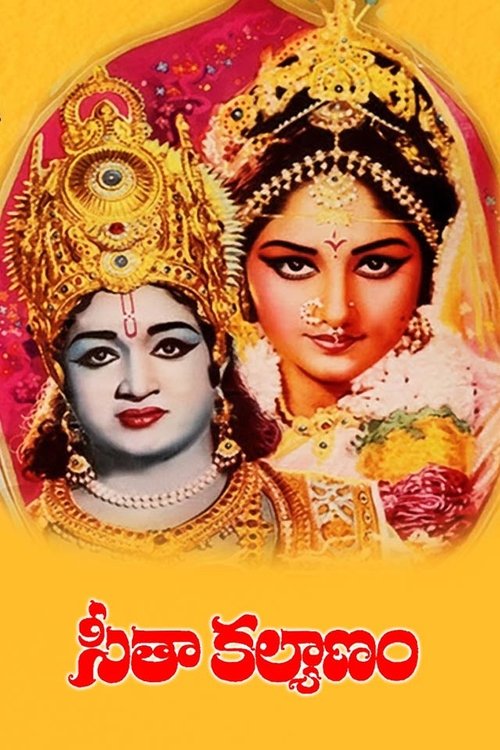
When she was a teenager, she performed a dance at her school's annual function. A film director in the audience offered her a three-minute dance number in the Telugu film Bhoomi Kosam (1974). She was hesitant, but her family encouraged her to accept it. She was paid only 10 rupees for her work in the film, but the rushes of those three minutes of film were shown to the major figures of the Telugu film industry. Major filmmakers offered her starring roles in quality films, and she accepted them. Character actor, M.Prabhakar Reddy gave Jaya Prada her screen name and introduced her to the film industry in 1976 . ( wikipedia +1) She became a huge star in 1976 with major hit films. Director K. Balachander's black-and-white film Anthuleni Katha (1976) showcased her dramatic skills; K. Viswanath's colour film Siri Siri Muvva (1976) showed her playing a mute girl with excellent dancing skills; and her title role as Sita in the big-budget mythological film Seetha Kalyanam (1976) confirmed her versatility. In 1977, she starred in Adavi Ramudu, which broke box office records and which permanently cemented her star status. The song "Aaresukoboyi Paresukunnanu" performed by Prada and co-star N.T. Rama Rao (NTR) became a mass hit. Important filmmakers were casting her and repeating her in their films. Filmmaker Vijay introduced her to Kannada cinema in his 1977 super-hit movie Sanaadi Appanna alongside Kannada matinee idol Dr. Rajkumar. The movie is also known to be the only movie to feature shehnai rendition by Ustad Bismillah Khan. She further acted with the Kannada matinee idol in super hits like Kaviratna Kalidasa in 1983 and Shabdavedhi in 2000.
In 1979, K. Balachander repeated her in the Tamil film Ninaithale Inikkum opposite Kamal Haasan and Rajinikanth in which she played a terminally-ill patient. She continued to act in more films in Telugu opposite actors such as NTR, ANR, Krishna, Krishnam Raju and Sobhan Babu throughout the 70s and 80s. She acted in highest number of films with Krishna like Sri Rajeshwari vilas coffee club (1976), Bhale Krishnudu (1980), Ooruki Monagadu (1981), Mundadugu (1983), Prajarajyam (1983) and Singhasan (1986). K. Viswanath remade Siri Siri Muvva (1976) in Hindi as Sargam, introducing Jayaprada to Bollywood in 1979. The film was successful and she became a star there as well. She earned her first Filmfare nomination as Best Actress but couldn't capitalise on her success since she couldn't speak Hindi.
In 1981, she starred in the critically acclaimed Tamil film 47 Natkal and simultaneously made Telugu film 47 Rojulu by filmmaker K. Balachander in which Chiranjeevi played her villainous, bigamist husband. After she took Hindi lessons, director K. Vishwanath relaunched her in Hindi films, with Kaamchor where she spoke Hindi fluently for the first time. Saagara Sangamam directed by K. Vishwanath, starring Kamal Haasan proved to be a milestone in her career, winning her many accolades including Filmfare Award for Best Actress - Telugu in 1983. She was now able to consistently work in Hindi films, and earned two more Filmfare nominations as Best Actress for playing Amitabh Bachchan's endearing girlfriend in Prakash Mehra's Sharaabi (1984) and for her challenging double role in K. Vishwanath's Sanjog (1985).
Personal life
On 22 February 1986, she married producer Srikanth Nahata, who was already married to Chandra and had two children. This marriage stirred a lot of controversy, especially since Nahata did not divorce his wife and had a child with his first wife after marrying Jayaprada. In a 2026 interview, she said that she regretted her marriage and moved out.
Political career
Jayaprada joined the Telugu Desam Party (TDP) in 1994 at the invitation of its founder N. T. Rama Rao, on the eve of the assembly elections, and rose quickly through the ranks. At that time there was speculation that she would run for election, but she preferred not to make her electoral debut, although she was offered a seat by Rao.
She campaigned in several constituencies in 1994. When Rao became the Chief minister in 1994, he appointed one of his sons-in-law Nara Chandrababu Naidu as the Revenue Minister. After Lakshmi Parvati, wife of NTR started interfering in politics several TDP leaders revolted against NTR. When all TDP leaders have met in Viceroy hotel, NTR went to convince them along with Lakshmi Parvati, which ended up TDP leaders throwing slippers on Lakshmi Parvati and NTR went between, followed by No Confidence Motion NTR was thrown out of power.
Since most of the legislators had gone over to his side, the Anti Defection Law did not apply and the Telugu Desam Party label passed on to the Chandrababu Naidu side. During this period, Prada too joined the Chandrababu Naidu party. She was nominated to the Rajya Sabha representing Andhra Pradesh in 1996. She also held the post of Telugu Mahila President.
Following differences with party Supremo N. Chandrababu Naidu, she left the TDP to join Samajwadi Party. She contested from Rampur parliamentary Constituency in UP during the 2004 General election and got elected with a margin of more than 85000 votes. During her campaign for the Lok Sabha elections in 2009, she was issued a notice by the Election Commission for violating the code of conduct by distributing bindis to women in Rampur's Swar locality. On 11 May 2009, Jayaprada alleged that senior Samajwadi Party leader Azam Khan was distributing nude pictures of her. She was re-elected with a margin of more than 30,000 votes.
After she came out in open support of the former General Secretary of the Samajwadi Party, Amar Singh, Prada was expelled from the party on 2 February 2010 for allegedly indulging in anti-party activities and damaging the party's secular image. Amar Singh, along with Jayaprada floated his own political party, Rashtriya Lok Manch, in 2011, and fielded candidates in 360 of the 403 seats in Uttar Pradesh in the 2012 assembly polls. However, his party did not win a single seat in these elections. Later she, along with Amar Singh joined the RLD on 10 March 2014 and after that she got the ticket to contest from the Bijnor seat in the 2014 general elections. She, however, lost the election.
Artistry and legacy
Jayaprada is regarded as one of the greatest and extremely beautiful actresses of Indian cinema. Indian director Satyajit Ray described her as one of the prettiest women in the world. Although she has acted in Bengali films, she has never worked for Ray. (She claimed that Ray had her in mind for a film, but his illness and subsequent death prevented their collaboration). In 2022, she was placed in Outlook India's "75 Best Bollywood Actresses" list. One of the highest paid actress of 1980s and 1990s, both in Hindi and Telugu films, Jayaprada appeared in Box Office India's "Top Actresses" list 10 times from 1984 to 1993 and topped of the list 3 times ranked first thrice (1984 to 1986), she was placed 5th in its "All Time Top Actresses" list and she topped its top actresses list from 1979-1994.
Writing for Filmfare, Devesh Sharma termed her as one of the "top commercial great actresses" of her era. On her Hindi debut he added, "Jaya Prada became an overnight sensation after the release of Sargam. Her classical beauty got compared to Ajanta statues and nymph of heaven. She bedazzled the Hindi film audience with her classical-based dances." Neeraja Murthy of The Hindu noted, "For over four decades, Jaya Prada has been the quintessential glamourous [sic] greatest megastar setting hearts aflutter on screen." Nibandh Vinod of News18 noted, "Jaya Prada, ruled the industry with her charm, graceful dance skills and nuanced acting chops." Filmmaker Satyajit Ray called Jayaprada as "the most beautiful face on the Indian screen". In the 2019 biopic film NTR: Kathanayakudu, actress Hansika Motwani portrayed Jaya Prada onscreen.
Awards and nominations
Nandi Awards
Best Actress – Anthuleni Katha (1976)
Best Actress – Meghasandesam (1982)
Filmfare Awards South
Special Award – Siri Siri Muvva & Anthuleni Katha (1976)
Best Actress – Telugu – Saagara Sangamam (1983)
Lifetime Achievement Award – South (2007)
Filmfare Awards
Filmfare Awards South
Other awards
Uttam Kumar Award
ANR Achievement Award (2008)
Venus of Indian Cinema Award from TSR TV9 Film Awards (2011)