Overview
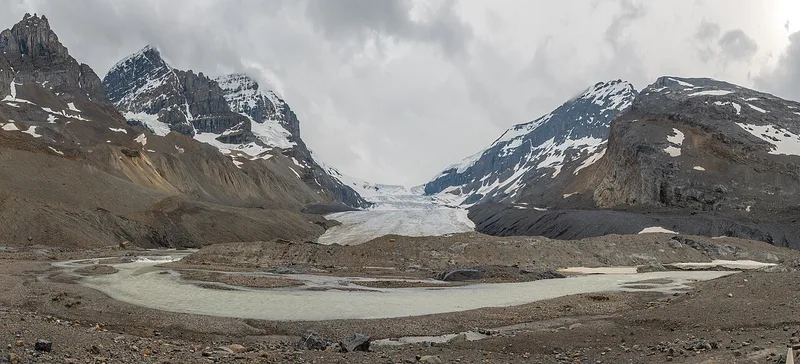
Jasper National Park, in Alberta, Canada, is the largest national park within Alberta's Rocky Mountains, spanning . It was established as Jasper Forest Park in 1907, renamed as a national park in 1930, and declared a UNESCO world heritage site in 1984. Its location is north of Banff National Park and west of Edmonton. The park contains the glaciers of the Columbia Icefield, springs, lakes, waterfalls and mountains.
History
First Nations
The territory encompassed by what is now Jasper National Park has been inhabited since time immemorial by Nakoda, Cree, Secwépemc, and Dane-zaa peoples. Plainview projectile points have been found at the head of Jasper Lake, dating back to between 8000 and 7000 BCE. In the centuries between then and the establishment of the park, First Nations land use has fluctuated according to climatic variations over the long term, and according to cyclical patterns of ungulate population numbers, particularly elk, moose, mule deer, and occasionally caribou. Starting in the 1790s, Haudenosaunee and Nipissing hunters and trappers moved in large numbers to the eastern side of the Rocky Mountains, around the headwaters of the Athabasca and Smoky Rivers in particular, most of them employed by the North West Company. By the time David Thompson crossed the Athabasca Pass in 1810, led by a Haudenosaunee guide named Thomas, there were hundreds of Haudenosaunee and Anishinaabe people living in the region. When Mary Schäffer Warren became the first settler to visit Maligne Lake—known by the Nakoda as —in 1908, she did so by following a map given to her by Samson Beaver, a Nakoda guide and hunter.
Fur trade
Jasper National Park's name originates from Jasper Haws, a Maryland-born fur trader who worked for the North West Company. In 1815, Haws took command of a North West Company trading post, built on Brûlé Lake in 1813, which subsequently became known as Jasper's House. In 1830, the trading post was relocated further up the Athabasca River, just north of Jasper Lake. The site of Jasper House itself was designated a national historic site in 1924.
From Wikipedia (CC BY-SA 4.0).