


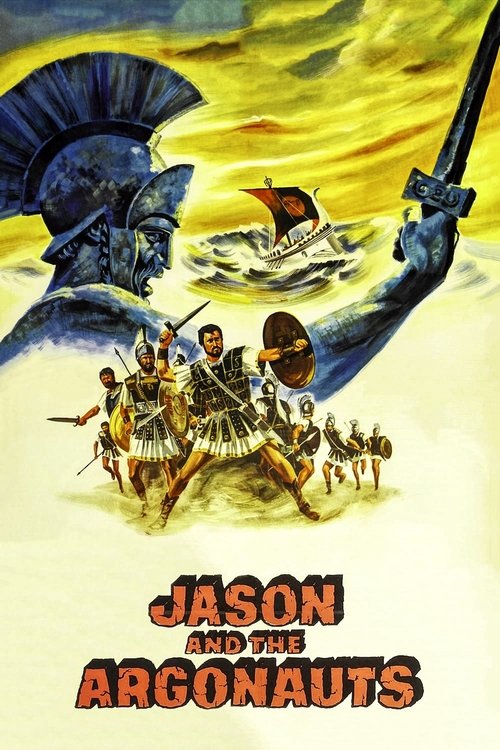

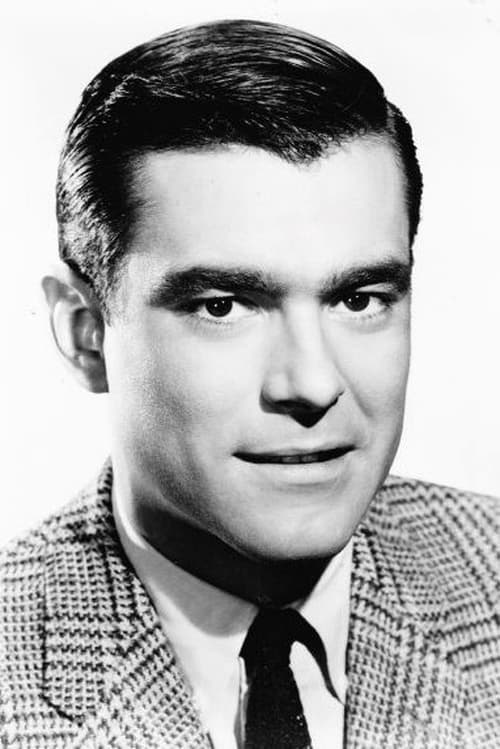

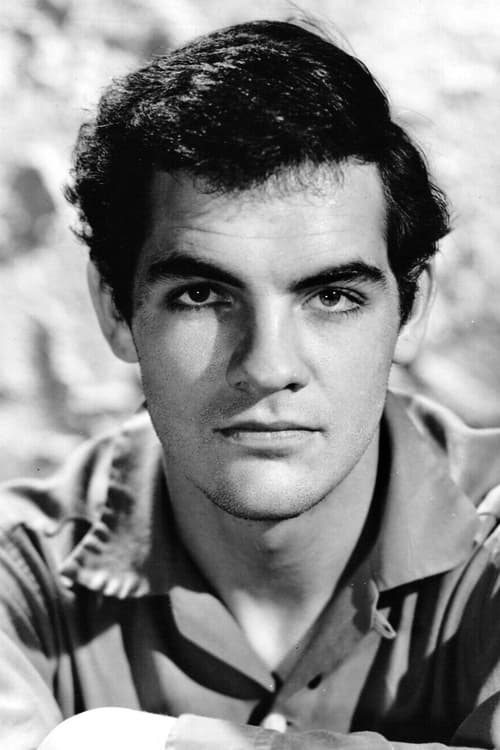

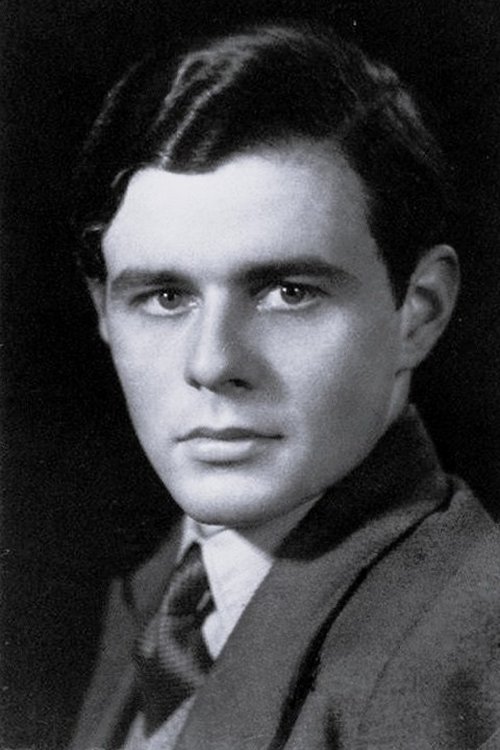





Jason and the Argonauts (working title: Jason and the Golden Fleece) is a 1963 epic fantasy adventure film loosely based on the 3rd century BC Greek epic poem The Argonautica by Apollonius Rhodius. Distributed by Columbia Pictures, it was produced by Charles H. Schneer, directed by Don Chaffey, and stars Todd Armstrong, Nancy Kovack, Gary Raymond, and Laurence Naismith.
Shot in Eastman Color, the film was made in collaboration with stop-motion animation visual effects artist Ray Harryhausen and is known for its various legendary creatures, notably the iconic fight scene featuring seven skeleton warriors. Although it was a box office disappointment during its initial release, the film was critically acclaimed and later considered a classic.
The film score was composed by Bernard Herrmann, who had partnered with Harryhausen on The 7th Voyage of Sinbad (1958), The 3 Worlds of Gulliver (1960), and Mysterious Island (1961).
Contents
Plot
Pelias usurps the throne of Thessaly, killing King Aristo. A prophecy states that one of Aristo's children will avenge him. Aristo's infant son Jason is spirited away by a soldier. Pelias slays one of Aristo's daughters after she seeks sanctuary in the temple of the goddess Hera. Because the murder has profaned her temple, Hera becomes Jason's protector. She warns Pelias to beware of "a one-sandaled man".
Twenty years later, Jason saves Pelias from drowning, an "accident" orchestrated by Hera, losing his sandal in the process. Pelias recognizes his enemy. Jason intends to seek the legendary Golden Fleece to rally support against Pelias, not recognizing who he just saved. The king, hoping Jason will die on the quest, encourages him to set forth.
Hermes takes Jason to Mount Olympus to speak with Zeus and Hera. Zeus decrees that Hera can help him only five times, the same number of times that Jason's murdered sister called on her for protection. She directs him to search for the Fleece in the land of Colchis. Zeus offers aid, but Jason declines.
He has a ship built and recruits a crew. Men from all over Greece compete for the honor of joining his quest. The ship is named the Argo after its builder, Argus, so the crew are dubbed the Argonauts. Among them are Hercules and Hylas, as well as Acastus, who was secretly sent by his father Pelias to sabotage the voyage.
When Jason runs low on supplies, Hera guides him to the Isle of Bronze, said to be the foundry of the Gods. The god Hephaestus made armor and weapons for Zeus. Hera reassures Jason that Hephaestus is long gone, but warns him to take only the provisions. However, Hercules steals a brooch pin the size of a javelin from a building filled with treasure and surmounted by a gigantic bronze statue of Talos. The statue comes to life and attacks the Argonauts. Jason again turns to Hera, who tells him to open a large plug at the back of Talos's heel to release its ichor. When Jason does so, Talos topples, crushing Hylas and hiding his body. Hercules refuses to leave until he discovers the fate of his friend. The other Argonauts are unwilling to abandon Hercules, so Jason calls upon Hera again. She informs them that Hylas is dead and that Zeus has other plans for Hercules.
She directs Jason to seek Phineus, who has been blinded and is tormented by Harpies for misusing Zeus's gift of prophecy. After the Argonauts capture and cage the Harpies, Phineus tells them how to reach Colchis, by sailing between the Clashing Rocks. He also gives Jason an amulet of the sea god Triton. The Argonauts see another ship trying to pass through the other way; it is crushed when the Clashing Rocks smash together. When the Argonauts try to row through, they appear to be doomed too. In despair, Jason throws Phineus's amulet into the water, whereupon Triton rises from the water and holds the rocks apart for the Argo to pass. The Argonauts rescue several survivors from the other ship, including Medea, the high priestess of the goddess Hecate in Colchis.
Production
Film score
The film is one of the mythically themed fantasies scored by Bernard Herrmann. Apart from being the composer's fourth collaboration with Ray Harryhausen (The 7th Voyage of Sinbad, The 3 Worlds of Gulliver, and Mysterious Island, made in 1958, 1960, and 1961 respectively), Herrmann also collaborated with Alfred Hitchcock, worked on Citizen Kane (1941), and scored the science fiction films The Day the Earth Stood Still (1951) and Journey to the Center of the Earth (1959).
Contrasting with Herrmann's all-string score for Psycho, the film's soundtrack was made without a string section. This leaves the brass and percussion to perform the heroic fanfares, and the woodwinds along with additional instruments (such as the harp) to dominate in the more subtle and romantic parts.
In 1995, Intrada released a re-recording of the original score. The new version was conducted by American composer/conductor Bruce Broughton, and performed by the Sinfonia of London.
Differences from classical mythology
The film differs in some ways from the traditional telling in Greek mythology:
Pelias does not kill his half-brother, King Aristo (Aeson), but instead had him imprisoned. Eventually, it is Medea, and not Jason, who kills Pelias; she demonstrates to Pelias' daughters that she can rejuvenate an old ram into a young one by killing, chopping and boiling it in a pot. She promises to do the same for Pelias, so his daughters kill and chop him. However, Medea breaks her word and Pelias remains dead.
Hera does not attempt to kill Pelias herself by drowning him in the river Anavros. Instead, in order to prove Jason's virtuous heart to Zeus, she disguises herself as an old woman unable to cross on her own. Jason, feeling sympathy for the lady, ferries her across on his back but loses a sandal in its depths.
In mythology, the Argonauts encounter Talos on their return journey after they had obtained the Golden Fleece. He is defeated not by Jason, but by Medea casting a spell, causing Talos to remove the bronze nail from his ankle which kept the ichor inside. Talos guarded Crete, not the "Isle of Bronze", and was protecting not a treasure, but Queen Europa.
In the film, Hylas is killed when the crumbling remains of Talos crush him. However, in mythology, Hylas is actually kidnapped by a naiad who fell in love with him as he took a drink from a spring. Hercules stays behind on the island to look for him (as in the film).
The harpies are not caught in a net or caged, but are chased away by the Boreads: Calaïs and Zetes (also Zethes)
In the film, the god Triton saves the Argo from destruction passing through the Clashing Rocks: however; according to Apollonius of Rhodes, Phineus instructs Jason to release a dove and if the bird makes it through, row with all their might and the goddess Athena provides the extra push to the ship needed to clear them; "the Argo darted from the rocks like a flying arrow". Another source is Homer's Odyssey, in which Circe tells Odysseus: "One ship alone, one deep-sea craft sailed clear, the Argo, sung by the world, when heading home from Aeëtes shores. And she would have crashed against those giant rocks and sunk at once if Hera, for her love of Jason, had not sped her through."
Reception
The film had its world premiere on June 13, 1963, at the Texas Theatre in San Antonio, Texas. It saw a same-day release Wichita Falls, Texas, Honolulu, Hawaii, and Fort Worth, Texas.
Critical response
The film received critical acclaim and is now considered a classic. On review aggregator Rotten Tomatoes, the film holds an approval rating of 85% based on 74 reviews, with an average rating of 7.6/10. The website's critical consensus reads, "A fantasy adventure with no pretensions, Jason and the Argonauts infuses a familiar myth with inventive Ray Harryhausen creature effects, dazzling camera work, and a rousing sense of adventure." On Metacritic, the film received a score of 69 based on 10 reviews.
Variety magazine wrote: "The $3 million film has a workable scenario and has been directed resourcefully and spiritedly by Don Chaffey, under whose leadership a colorful cast performs with zeal."
Ray Harryhausen regarded the film as his best. Previous Harryhausen films had been generally shown as part of double features in "B" theatres. Columbia was able to book it as a single feature in many "A" theatres in the United States.
Accolades
At the special ceremony for the Academy Award for Technical Achievement held three weeks before the 1992 Academy Awards, Ray Harryhausen was honored with a lifetime-achievement award (the Gordon E. Sawyer Award). The ceremony's host, actor Tom Hanks, remarked: "Some people say Casablanca or Citizen Kane. I say Jason and the Argonauts is the greatest film ever made".
In 2008, the American Film Institute nominated the film for its Top 10 Fantasy Films list.
In April 2004, Empire magazine ranked Talos as the second-best film monster of all time, after King Kong.
In Great Britain, the film is recognized as an important children's film and is regularly shown on television during public holidays. The British Film Institute included Jason and the Argonauts in its 2020 updated list of "50 films to see by age 15", compiled with input from educators, authors, and critics.
The 2022 Oxford Handbook of Children's Film devoted an entire chapter to the motion picture entitled "Reading Jason and the Argonauts as a Children’s Film”. Film scholar Susan Smith sought to explain why "the film is able to speak so powerfully to childhood experience". She noted that, in addition to the film's widely praised Harryhausen special effects, there are elements of "contradictoriness and rebellion" in the story, with parallels in the relationship between the gods (depicted as gigantic in stature) to humans and between parents to children. In particular, the bronze giant Talos acts to punish the Argonauts after Hercules disobeys Hera's admonition to take only food and water on the Isle of Bronze and defiantly steals a huge golden pin stored in the treasury of the gods to use as a weapon. The act later results in the death of his close friend when Talos, drained of life, falls and crushes Hylas as he tries to retrieve the stolen pin dropped by Hercules.
Home media
Columbia released the film on Blu-ray (for regions A, B, and C) on 6 July 2010. The disc's special features include two new audio commentaries, one by Peter Jackson and Randall William Cook, and the other by Harryhausen in conversation with his biographer Tony Dalton.
Comic book adaptation
The five-issue comic book miniseries Jason and the Argonauts: The Kingdom of Hades (2007) from TidalWave Productions' Ray Harryhausen Signature Series, continued the story. It was followed by Jason and the Argonauts: Final Chorus (2014).
Dell Movie Classic: Jason and the Argonauts (August–October 1963)