

Jared Corey Kushner (born January 10, 1981) is an American businessman, investor, government official and politician. Through his marriage to Ivanka Trump, he is the son-in-law of the 45th and 47th president of the United States Donald Trump. Kushner has served in both official and informal roles in the first and second Trump administrations.
Kushner worked as a real-estate investor in New York City, especially through the family business Kushner Companies. He took over the company in 2005 after his father, Charles Kushner, was convicted on criminal charges. Jared met Trump's daughter, Ivanka around 2005, and the couple married in 2009. He also became involved in the newspaper industry after purchasing The New York Observer in 2006. He was registered as a Democrat and donated to Democratic politicians until he registered as Independent in 2009 and eventually as Republican in 2018. He played a significant role in the Donald Trump 2016 presidential campaign, and was at one point seen as its de facto campaign manager. Around Trump's election, Kushner was frequently accused of conflicts of interest, profiting from policy proposals for which he personally advocated within the first Trump administration.
In 2017, Kushner was appointed as a senior advisor to Trump and as director of the Office of American Innovation, and held both positions until Trump left office in 2021. His appointment was followed by concerns of nepotism. He led the administration's effort to pass the First Step Act, a criminal justice reform bill signed into law in 2018. Kushner was the primary Trump administration participant for the Middle East Peace Process, authoring the Trump peace plan and facilitating the talks that led to the signing of the Abraham Accords and other normalization agreements between Israel and various Arab states in 2020. Kushner also played an influential role in the Trump administration's COVID-19 response, where he advised Trump that the media was exaggerating the threat of the disease. He was a leading broker in the United States–Mexico–Canada Agreement.
After leaving the White House in 2021, Kushner founded Affinity Partners, a private equity firm that derives most of its funds from the Public Investment Fund, the Saudi government's sovereign wealth fund.
Kushner returned to an informal advisory role in the second Trump administration in 2025, serving along with Steve Witkoff as a key intermediary in diplomatic negotiations regarding the Gaza war and the Russian invasion of Ukraine. In 2026, he was officially appointed as a special envoy for peace.
Contents
Early life and education
Jared Corey Kushner was born on January 10, 1981, in Livingston, New Jersey, to Seryl (née Stadtmauer) and Charles Kushner. His father was friends with Bill and Hillary Clinton and attended several dinners with them. Morris Stadtmauer was Jared's maternal grandfather. His paternal grandparents, Reichel and Joseph Kushner, were Holocaust survivors who came to the U.S. in 1949 from Navahrudak, now in Belarus. Reichel, described as the family's matriarch, led efforts during the Holocaust to escape from the Navahrudak ghetto by digging a tunnel. Later, she became a member of the Bielski partisans.
Raised in a Modern Orthodox Jewish family, Kushner graduated from the Frisch School, a Modern Orthodox yeshiva high school, in 1999 and enrolled at Harvard University in the same year. According to journalist Daniel Golden, Kushner's father made a donation of $2.5 million to the university in 1998, not long before Jared was admitted. At Harvard, Kushner was elected into the Fly Club, supported the campus Chabad house led by Hirschy Zarchi, and bought and sold real estate in Somerville, Massachusetts, as a vice president of Somerville Building Associates (a division of Kushner Companies), returning a profit of $20 million by its dissolution in 2005. Kushner graduated from Harvard with honors in 2003, with a B.A. degree in government.
Kushner then enrolled in the JD/MBA dual degree program at the New York University School of Law and New York University Stern School of Business, and graduated with both degrees in 2007. He interned at Manhattan district attorney Robert Morgenthau's office, and with the New York law firm Paul, Weiss, Rifkind, Wharton & Garrison.
Business career
Following his father's conviction in 2005 for 18 criminal charges including illegal campaign contributions, tax evasion, and witness tampering and subsequent incarceration between March 4, 2005, and August 25, 2006, Kushner took a much bigger role in the family real estate business. He set about expanding the business and acquired almost $7 billion in property over the next ten years, much of it in New York City.
Real estate
Kushner was an active real estate investor during his college years, and increased the Kushner Companies' presence throughout the New York City real estate market.
Kushner Companies purchased the office building at 666 Fifth Avenue in 2007, for a then-record price of $1.8 billion, most of it borrowed. He assumed the role of CEO in 2008. Following the property crash that year, the cash flow generated by the property was insufficient to cover its debt service, and the Kushners were forced to sell a controlling stake in the retail footage to the Carlyle Group and Stanley Chera and bring in Vornado Realty Trust as a 50% equity partner in the ownership of the building. By that time, Kushner Companies had lost more than $90 million on its investment. He was the face of the deal, but his father Charles Kushner pushed him to do the deal.
In 2011, Kushner purchased a 130,000-square-foot office tower at 200 Lafayette Street in Manhattan for $50 million, selling it two years later for $150 million. In 2013, his company led a transaction to purchase the Jehovah's Witnesses headquarters in Brooklyn Heights for $375 million and invested $100 million into the site, transforming it into a sprawling office park, and signing online retailer Etsy to a 10-year lease. The same year, Kushner co-founded WiredScore, a global organization that provides a digital connectivity certification rating the quality and resilience of digital infrastructure in buildings.
Throughout 2013 to 2014, Kushner and his company acquired more than 11,000 units throughout New York, New Jersey, and the Baltimore area. In August 2014, Kushner acquired a three-building apartment portfolio in Middle River, Maryland, for $38 million with Aion Partners, later selling the complex for $68 million. In May 2015, he acquired a 50.1% stake of the Times Square Building from Africa Israel Investments Ltd. for $295 million.
In 2014, Kushner, with his brother Joshua and Ryan Williams, co-founded Cadre (now RealCadre LLC), an online real-estate investment platform. His business partners included Goldman Sachs and billionaire George Soros, a top Democratic Party donor. In early 2015, Soros Fund Management financed the startup with a $250 million credit line. Kushner did not identify these business relationships in his January 2017 government financial-disclosure form. He did, however, disclose his ownership of BFPS Ventures, the company that housed his stake in Cadre. In 2019, a property management company owned by Kushner was sued alleging that the company charged tenants illegal fees and failed to maintain over 9,000 properties in Maryland; the company settled and paid a $3.25 million civil penalty and restitution in 2022. In 2020, his ownership stake in Cadre was estimated at $25–50 million.
Newspaper publishing
In 2006, Kushner purchased The New York Observer, a weekly New York City newspaper, for $10 million, outcompeting a bid by Trifecta Enterprises, a group headed by Robert De Niro. To make the bid, Kushner used money he says he earned during his college years by closing deals on residential buildings he purchased in Somerville, Massachusetts, with family members providing the backing for his investments. The buildings, which he purchased for $8.3 million in 2000, sold four years later for $13 million.
After purchasing the Observer, Kushner published it in tabloid format. Since then, he has been credited with increasing the Observer's online presence and expanding the Observer Media Group. With no substantial experience in journalism, Kushner could not establish a good relationship with the newspaper's veteran editor-in-chief, Peter W. Kaplan. "This guy doesn't know what he doesn't know", Kaplan remarked about Kushner, to colleagues, at the time. As a result of his differences with Kushner, Kaplan quit his position. Kaplan was followed by a series of short-lived successors until Kushner hired Elizabeth Spiers in 2011. It has been alleged that Kushner used the Observer as propaganda against rivals in real estate. Spiers left the newspaper in 2012. In January 2013, Kushner hired a new editor-in-chief, Ken Kurson. Kurson had been a consultant to Republican political candidates in New Jersey.
According to Vanity Fair, under Kushner, the "Observer has lost virtually all of its cultural currency among New York's elite, but the paper is now profitable and reporting traffic growth ... [it] boasts 6 million unique visitors per month, up from 1.3 million in January 2013". In April 2016, the New York Observer became one of only a handful of newspapers to officially endorse United States presidential candidate Donald Trump in the Republican primary, but the paper ended the campaign period by choosing not to back any presidential candidate at all.
Kushner stepped down from his newspaper role in January 2017 to pursue a role in President Donald Trump's administration. He was replaced by his brother-in-law, Joseph Meyer.
Politics
Political background
Jared Kushner had been a lifelong Democrat prior to his father-in-law Donald Trump entering politics. He had donated over $10,000 to Democratic campaigns starting at the age of 11. In 2008, he donated to the campaign for Hillary Clinton and his newspaper the New York Observer endorsed Barack Obama over John McCain in the 2008 United States presidential election. After expressing disappointment with Obama, however, he registered as an independent in 2009 and endorsed Republican U.S. presidential nominee Mitt Romney in 2012 via the New York Observer. In 2014 he continued to donate to Democratic groups, but joined his father-in-law Donald Trump's nascent US presidential campaign in the field of the Republican candidates in 2015. Kushner had no prior involvement in campaign politics or in government before Trump's campaign.
Presidential campaign
From the outset of the presidential campaign of his father-in-law Donald Trump, Kushner was the architect of Trump's digital, online, and social media campaigns, enlisting talent from Silicon Valley to run a 100-person social-media team dubbed "Project Alamo." The digital team tested more than one hundred thousand ad combinations a week, raising more than $250 million in small-dollar donations in the closing months of the campaign. Andrew Bosworth, Facebook's top advertising executive during the 2016 campaign cycle, called it the “single best digital ad campaign I’ve ever seen from any advertiser.”
Kushner, together with Paul Manafort and Brad Parscale, hired Steve Bannon's firm Cambridge Analytica to support the Trump campaign. Kushner has also helped as a speechwriter, and was tasked with working to establish a plan for Trump's White House transition team. He was for a time seen as Trump's de facto campaign manager, succeeding Corey Lewandowski, who was fired in part on Kushner's recommendation in June 2016. He had been intimately involved with campaign strategy, coordinating Trump's visit in late August to Mexico, and he is believed to be responsible for the choice of Mike Pence as Trump's running mate. Kushner's "sprawling digital fundraising database and social media campaign" has been described as "the locus of his father-in-law's presidential bid."
According to former Google CEO Eric Schmidt (who worked on technology for Hillary Clinton's campaign), Kushner's role in the 2016 election was its biggest surprise. Schmidt told Forbes, "Best I can tell, he actually ran the campaign and did it with essentially no resources." Federal Election Commission filings indicate the Trump campaign spent $343 million, about 59 percent as much as the Clinton campaign.
On July 5, 2016, Kushner wrote an open letter in the New York Observer addressing the controversy around a tweet from the Trump campaign containing allegedly anti-Semitic imagery. He was responding to his own paper's editorial by Dana Schwartz criticizing Kushner's involvement with the Trump campaign. In the letter, Kushner wrote, "In my opinion, accusations like 'racist' and 'anti-Semite' are being thrown around with a carelessness that risks rendering these words meaningless." His estranged cousin Marc responded to the op-ed on Facebook that his lesson from the story of his grandparents was to renounce hate.
Presidential transition
During the presidential transition, Kushner was said to be his father-in-law's "confidant," and one of Donald Trump's closest advisors, even more so than Trump's four adult children. Trump was reported to have requested the top-secret security clearance for him to attend the presidential daily intelligence briefings as his staff-level companion, along with General Mike Flynn, who already had the clearance prior to his resignation.
Senior Advisor to the President
On January 9, 2017, Kushner was named Senior Advisor to the President (formally, "Assistant to the President and Senior Advisor"). He consequently resigned as CEO of Kushner Companies, and as publisher of the Observer.
After Donald Trump became President-elect, Kushner and his wife Ivanka Trump met with the Japanese prime minister and other Japanese officials, while Ivanka was conducting a licensing deal between her namesake clothing brand and Sanei International, a company whose investors include the Japanese government's development bank. Although negotiations around the deal had begun in 2015, well before Donald Trump secured the Republican nomination for president, Ivanka backed out of the deal to avoid the appearance of a conflict of interest. She had sat in on a meeting between her father, then-president-elect Donald Trump, and Japan's prime minister, Shinzo Abe.
Kushner helped broker the sale of $100+ billion of arms to Saudi Arabia, and during a meeting with Saudi officials at the White House to finalize the deal, he called Lockheed Martin CEO Marillyn Hewson to ask for a lower price on a radar system to detect ballistic missiles.
Kushner's business activities in China drew press scrutiny for mixing government with business. Kushner's investments in real estate and financial services have also drawn controversy for conflicts of interest. In May 2017, the Wall Street Journal reported that he had failed to disclose all required financial information in his security clearance applications, including that he owed $1 billion in loans. While noting that “it is difficult to calculate net worth” using financial disclosure forms, The Washington Post estimated that during 2017, Kushner and his wife Ivanka Trump made $82 million in outside income at the same time that they served as senior White House advisors. Kushner and Ivanka's lawyers asserted that their net worth had largely remained the same.
In June 2017, Saudi Arabia and the UAE had implemented a naval blockade on Qatar, accusing them of aiding terrorist groups, and reportedly planned to invade Qatar. During the dispute, Jared had backed the Saudis and Emiratis in the conflict, undermined efforts by then Secretary of State Rex Tillerson to stop the blockade and to bring the conflict to a peaceful outcome, and pressured President Trump to back the Emiratis and Saudis in the dispute, which the President did, according to The New York Times.
Career after the first Trump administration
Saudi Arabia investment fund
Kushner's firm landed more than $2 billion only six months after Kushner stopped working as a senior adviser for the president, to invest in American and Israeli companies expanding in India, Africa, the Middle East and other parts of Asia. Investors included $2 billion from the Saudi public investment fund, with Kushner stating that he hoped to open an "investment corridor between Saudi Arabia and Israel", seen internationally as a "sign of warming ties between two historic rivals". Within the first Trump administration, Kushner had been a staunch defender of Saudi ruler Mohammed bin Salman.
In 2021, Kushner started an investment firm, Affinity Partners. He sought funds for the new company through the sovereign wealth funds of Gulf countries. Advisers for the Public Investment Fund, the Saudi government's sovereign wealth fund, expressed several concerns about the transaction—including the inexperience of Affinity management, the degree of risk to be assumed by the Saudi kingdom, an "excessive" management fee, and a finding that Affinity's operations were "unsatisfactory in all aspects". However, PIF management overruled them and invested $2 billion in Kushner's firm, only six months after Kushner had left the White House. The firm primarily depended on Saudi money, as, by April 2022, it only had $2.5 billion under its management. According to ethics experts, the investment created the appearance of potential payback for Kushner. The House Oversight Committee said on June 2, 2022, that it had opened an investigation into whether Kushner had traded on his government position to get the deal.
The fund plans to invest Saudi money into startup companies in Israel. According to the Wall Street Journal, "The decision marks the first known instance that the Saudi Public Investment Fund’s cash will be directed to Israel, a sign of the kingdom’s increasing willingness to do business with the country, even though they have no diplomatic relations."
In 2023, Republican candidate for President Chris Christie criticized Kushner and Trump for the deal, saying "Why would you send Jared Kushner to the Middle East when you have Rex Tillerson and Mike Pompeo... You send him? Why? We found out the answer six months after he left office: $2 billion from the Saudis to Jared Kushner and Ivanka Trump, $2 billion, and because he did all this and more with his family. I'm going to end this family grift that's going on. We are not a third-world republic." The Wall Street Journal reported that Kushner has not made any investments despite receiving the funding some years ago, collecting "tens of millions in management fees each year" while not making any investments. Norm Eisen of the Brookings Institution suggested the payments were meant to curry favor with Trump's family, should the former president retake the White House in the 2024 election: "It appears to be money for nothing." The House Oversight Committee Chairman, Kentucky Republican James Comer, said he believes Kushner “crossed the line of ethics” by accepting the investment from Saudi Arabia.
Political memoir: Breaking History
Kushner wrote a memoir, Breaking History: A White House Memoir, that was published in August 2022.
Member of the Indian Creek, Florida Village Council
On July 8, 2024, Kushner succeeded Village of Indian Creek Vice Mayor & Village Trustee Javier Holtz, joining the Village council.
Diplomatic activity and Ukraine peace-plan efforts
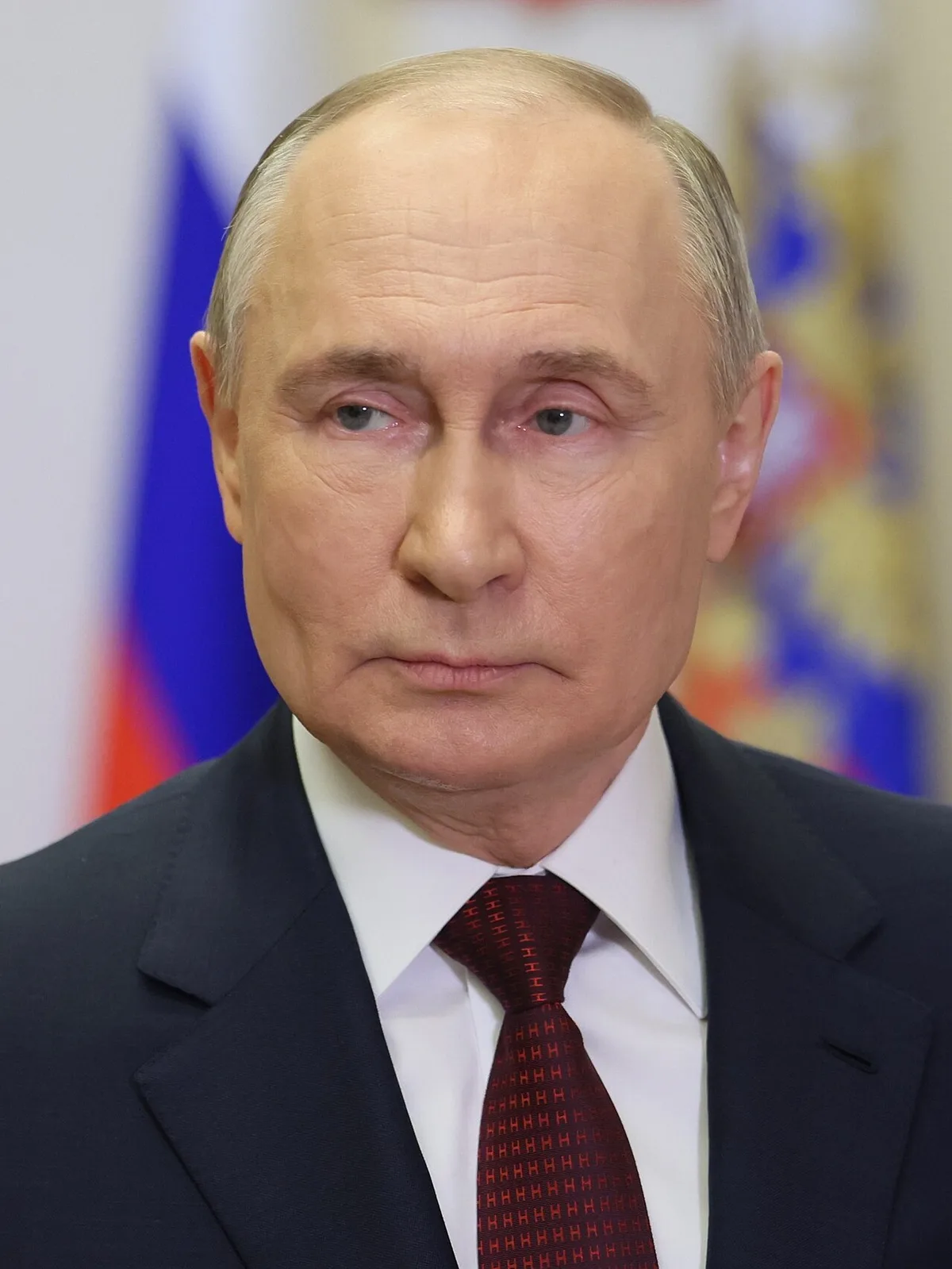
In December 2025 Kushner resurfaced as part of a high-stakes U.S. delegation in Trump's second administration. Alongside real-estate investor and special envoy Steve Witkoff, Kushner traveled to Moscow and met for nearly five hours with Russian President Vladimir Putin to discuss a revised U.S. peace proposal aimed at ending the war in Ukraine.
2026 Geneva negotiations and Operation Epic Fury
In early 2026, Steve Witkoff and Jared Kushner led high-stakes nuclear negotiations with Iranian officials in Geneva. British National Security Adviser Jonathan Powell, who attended the talks, characterized Tehran's proposal as "surprising" and substantial, suggesting a diplomatic breakthrough remained possible.
However, the negotiations collapsed amid allegations from diplomats and critics that Witkoff and Kushner had misrepresented Iran's positions to President Trump, specifically regarding Tehran's willingness to reduce its enriched uranium stockpile. Following the failure of the summit, the United States and Israel launched a joint military operation against Iran on February 28, 2026, known as Operation Epic Fury.
In the aftermath, The Guardian reported that a Gulf diplomat criticized Witkoff and Kushner's role, describing them as acting like "Israeli assets" and accusing them of "unorthodox and destructive diplomacy" that allegedly manipulated the President into the conflict. On March 20, 2026, Trump signaled a potential "winding down" of military operations in Iran, citing nearing completion of objectives, while Kushner and Witkoff were reported to be exploring a return to diplomacy based on previous Geneva frameworks.
Controversies
Allegations of nepotism
Kushner's appointment as Trump's senior advisor in the White House in January 2017 was questioned on the basis of a 1967 anti-nepotism law which forbids public officials from hiring family members, and explicitly one's son-in-law, in agencies or offices they oversee. The law was passed in response to President John F. Kennedy's decision to appoint his brother, Robert F. Kennedy, as attorney general in 1961. However, on January 20, 2017, the Department of Justice's Office of Legal Counsel issued an opinion stating the anti-nepotism law does not apply to appointments within the White House, after Kushner's lawyer, Jamie Gorelick claimed the 1967 law does not apply to the White House because it is not an 'agency'. Among other precedents, the OLC opinion invoked a 1993 D.C. Circuit Court ruling that enabled Hillary Clinton to serve within the White House during the Clinton administration. Kushner was sworn in on January 22, 2017 and was given the office which is physically the closest to the Oval Office.
Security clearance
On January 18, 2017, immediately after his appointment as senior advisor to President Trump, Kushner requested Top Secret security clearance, using "Standard Form 86 (SF86): Questionnaire for National Security Positions". The request omitted all of Kushner's contacts with foreign officials, including the meetings with Kislyak and Gorkov, though he quickly updated his filing to notify government officials that he would supplement his disclosure to provide the required information. Failure to disclose pertinent contacts can cause security clearances to be declined or revoked, and an intentional failure to disclose can result in imprisonment. Kushner's lawyers said that the omissions were "an oversight", and that "a member of [Kushner's] staff had prematurely hit the 'send' button" before the form was completed.
By July 2017, Kushner had updated his SF86, this time disclosing contacts with foreign nationals. This was the first time that government officials were made aware of the June 2016 Trump campaign–Russian meeting and Kushner's role in it.
On September 15, 2017, Carl Kline, the director of the personnel security office within the Executive Office of President Trump, recorded Kushner as having an interim Top Secret/SCI security clearance. Kushner and his wife were among at least 48 officials granted interim clearance giving them access to sensitive compartmented information (SCI): detailed accounts of intelligence sources and methods.
On February 27, 2018, in response to the Rob Porter scandal, White House chief of staff John Kelly downgraded Kushner's interim security clearance to "secret" status, along with other White House staffers working with interim security clearances. White House sources said that part of the reason Kushner had not yet been granted permanent security clearance was that he was under investigation by Robert Mueller.
Kushner finally received permanent Top Secret security clearance on May 23, 2018. In January 2019, Trump told The New York Times that he had not intervened to grant Kushner's security clearances. On February 8, 2019, Kushner's wife Ivanka also denied that Trump had intervened to grant her or Kushner's security clearances. However, on February 28, 2019, CNN (citing three anonymous sources) and The New York Times (citing four anonymous sources) reported that in May 2018 Trump ordered Kelly to grant Kushner a top-secret clearance, which Kelly contemporaneously documented in an internal memo. Reportedly, this was the first time any U.S. president had intervened in such a way. Carl Kline later testified before the House Oversight and Government Reform Committee that there had been no external intervention in the decision to restore Kushner's clearance.
Conflicts of interest
While serving in the first Trump administration, Kushner retained ownership of businesses, which drew criticism from government ethics experts who said it created conflicts of interest.
After his appointment as Senior Advisor to Donald Trump (in January 2017), Kushner resigned as head of his family's real-estate firm, Kushner Companies, and partially divested himself of some of its assets, including all his stake in Thrive Capital, a venture capital firm co-founded by his brother, all common stock holdings and over 35 other investments, and his stake in 666 Fifth Avenue. However, he did not actually sell off his assets or set up a blind trust with outside management. Instead, he transferred ownership of some of his assets to his brother and to a trust overseen by his mother rather than selling off his assets to a third party or setting up a blind trust with outside management. The New York Times reported that Kushner managed to retain "the vast majority of his interest in Kushner Companies. His real estate holdings and other investments are worth as much as $761 million." Disclosures he was required to make show that Kushner still receives millions of dollars a year in income from rent collected by his assorted real estate portfolio.
After her father was elected president, global sales of Ivanka Trump merchandise surged. On April 6, 2017, the same day that Kushner and Ivanka dined with Chinese president Xi Jinping and his wife at a dinner hosted by the president at Mar-a-Lago, the Chinese government provisionally approved three new trademarks for the Ivanka Trump brand giving it monopoly rights to sell Ivanka Trump brand jewelry, bags and spa services in the world's second-largest economy. Ivanka applied for the trademarks in 2016 due to concerns about the proliferation of knock off and counterfeits goods being sold under her name in China as her father's presidential campaign progressed.
In March 2026, Representative Robert Garcia and Senator Ron Wyden sent letters to the White House seeking information on Jared Kushner's business dealings in the Middle East. The lawmakers cited reports that Kushner's private equity firm, Affinity Partners, was soliciting billions of dollars in investments from regional governments while he simultaneously served as a negotiator for the administration in the same region. In April 2026, Dem. Jamie Raskin has opened a sweeping investigation that details, Affinity partners had amassed $6.16 billion in assets, including $1.2 billion made in 2025 alone.
Use of WhatsApp for White House duties
While a White House official, Kushner used WhatsApp to conduct government business, raising concerns among cybersecurity experts that sensitive government communications could be vulnerable to exploitation by foreign governments and hackers. Saudi crown prince Mohammed bin Salman was reportedly one of the individuals that Kushner contacted through WhatsApp; in January 2020, UN investigators said that there was evidence that bin Salman was involved in the hacking of Jeff Bezos's phone through WhatsApp communications, advising that Kushner and others in contact with the Crown Prince should take measures to protect their communications. Kushner reportedly used WhatsApp to communicate with his coronavirus team during March and April 2020. Ethics watchdogs have since confirmed that Kushner turned over his WhatsApp records prior to departing the White House, and that these records have been acquired in full by the National Archives and Records Administration.
Pardoning white collar criminals
Upon his suggestion and the Aleph Institute, several white collar criminals have been pardoned; for example in 2020 Philip Esformes, who defrauded Medicare for about $1.3 billion.
Secret Service protection
Jared Kushner was in the list of 13 family members and three Cabinet appointees, who were granted security for an additional six months after Donald Trump left the White House, a dispensation which had also been granted to Sasha and Malia Obama.
In May 2021, four months after Donald Trump had vacated the Presidency, the Daily Beast reported Kushner's Secret Service security team accompanied him to Abu Dhabi, United Arab Emirates, incurring US State Department costs of $12,950. Kushner cited the requirement of high security for which a total of 50 "room nights" at $259 each were booked between May 5 and 14 at Abu Dhabi's Ritz-Carlton hotel. Ethics watchdogs raised concerns of financial connections between Kushner and the UAE, citing that former Senior Advisor to the US president was believed to be "particularly manipulable" by the UAE. A month before Trump left office, Kushner's last overseas trip cost US taxpayers around $24,335 in hotel costs alone.
Gaza displacement controversy
In February 2024, during an appearance at the Harvard Kennedy School, Kushner described the Gaza Strip as "valuable waterfront property" and suggested relocating Palestinian civilians to the Negev desert or Egypt while the territory was "cleaned up", saying "I think that’s a better option, so you can go in and finish the job." In February 2025, U.S. president Donald Trump promoted a Gaza Strip takeover proposal that involved transforming Gaza into a luxury resort, widely linked in media coverage to Kushner's remarks.
The comments drew international criticism. Human rights observers and Palestinian officials have said that Kushner's proposals would amount to forced displacement or ethnic cleansing. The redevelopment vision, which involved large-scale relocation of Gazans, was condemned by Palestinian civillians, leaders, Arab governments, and international rights groups, and organizations such as the United Nations, as being both unrealistic and contrary to international law.
Personal life
Kushner has a younger brother, Joshua, and two sisters, Dara and Nicole. He married Ivanka Trump in a Jewish ceremony on October 25, 2009. They had met in 2005 through mutual friends. Kushner and Ivanka (who converted to Judaism in 2009) are Modern Orthodox Jews, keep a kosher home, and observe the Jewish Shabbat. They have three children, a daughter born in July 2011 and two sons, born in October 2013 and March 2016.
In 2004, Kushner's father pleaded guilty to eighteen felony counts of tax fraud, election violations, and witness tampering. (He retaliated against his own sister who was a cooperating witness in the case.) The case against Charles Kushner was prosecuted by Chris Christie, who later became Governor of New Jersey and, for a period was part of Donald Trump's election campaign team in 2016. Christie subsequently claimed that Jared Kushner was responsible for having him fired as revenge for sending his father to prison.
In 2017, federal disclosures suggested Kushner and his wife Ivanka Trump had assets worth at least $240 million, and as much as $740 million. They also have an art collection, estimated to be worth millions, that was not mentioned in the financial disclosures initially. The United States Office of Government Ethics has said that the updated disclosures comply with the regulations and laws.
Kushner was diagnosed with thyroid cancer in October 2019 and underwent treatment for it during the first Trump administration, he recounts in his political memoir. In August 2022 he underwent a second thyroid surgery. Kushner appeared in the 2022 documentary Unprecedented.
In September 2025, Forbes reported Kushner to be a billionaire.
Selected publications
Kushner, Jared (March 14, 2021). "Opinion: Opportunity Beckons in the Mideast". The Wall Street Journal. ISSN 0099-9660. Retrieved June 9, 2022.
Kushner, Jared (2022). Breaking History: a White House memoir. New York: HarperCollins. ISBN 978-0-06-322148-2. OCLC 1319741976.