
_(cropped).jpg?width=400)


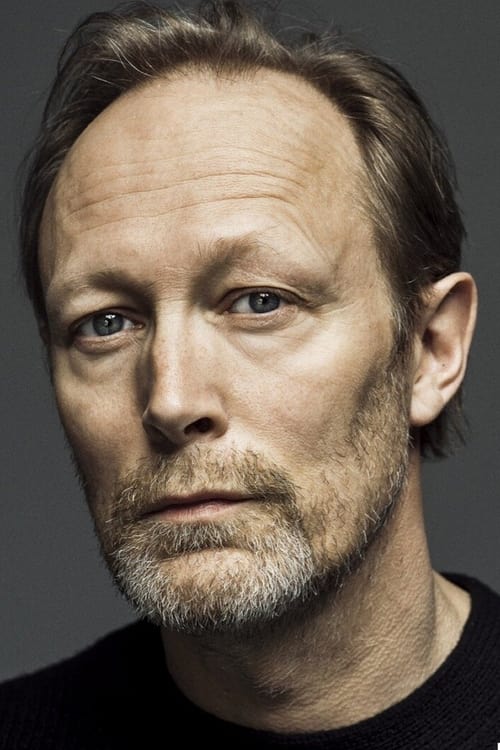
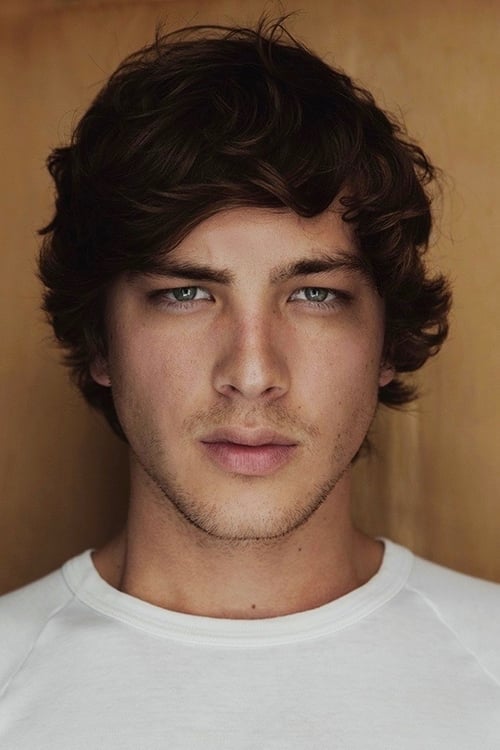

.jpg?width=400)


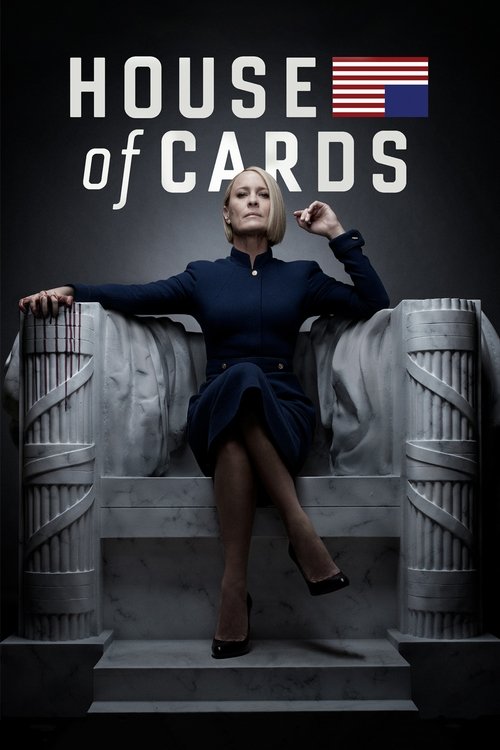
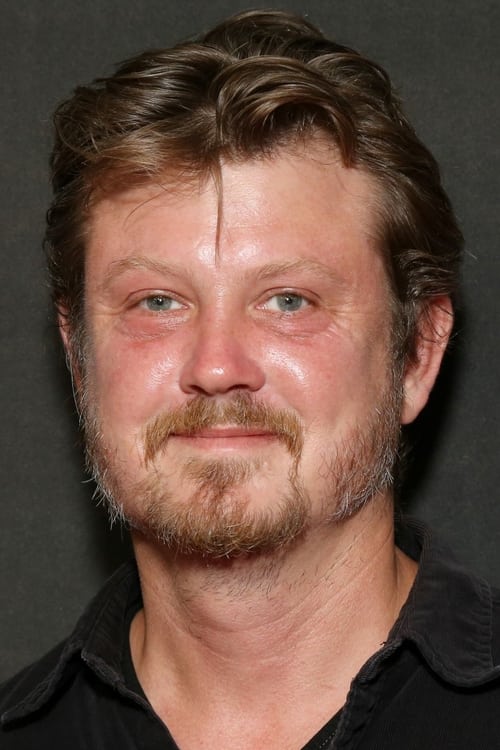
House of Cards is an American political thriller television series created by Beau Willimon for the streaming service Netflix. It is based on the 1989 novel of the same title by Michael Dobbs and an adaptation of the eponymous 1990 British television series by Andrew Davies, also from the novel. The first 13-episode season was released on February 1, 2013. House of Cards is the first TV series to have been produced by a studio for Netflix. It was also one of the first TV series that was released in a binge format where all the episodes were available simultaneously.
House of Cards is set in Washington, D.C., and is the story of Frank Underwood (Kevin Spacey), an immoral politician and Democrat from South Carolina's 5th congressional district and his equally ambitious wife Claire Underwood (Robin Wright). Frank is passed over for appointment as Secretary of State but remains House Majority Whip so he initiates an elaborate plan to attain power, aided by Claire. The series deals with themes of ruthless pragmatism, manipulation, betrayal, and power.
House of Cards received highly positive reviews and numerous award nominations, including 33 Primetime Emmy Award nominations, among them Outstanding Drama Series, Outstanding Lead Actor for Spacey, and Outstanding Lead Actress for Wright. It is the first original online-only streaming television series to receive major Emmy nominations. The show also earned eight Golden Globe Award nominations, with Wright winning for Best Actress – Television Series Drama in 2014 and Spacey winning for Best Actor – Television Series Drama in 2015.
In 2017, following allegations of sexual misconduct against Spacey, Netflix terminated its relationship with him. The sixth and final season was produced and released in 2018 without his involvement.
Contents
Plot
Frank Underwood (Kevin Spacey), a South Carolina congressman who is also one of the top Democrats in congress, is incensed when the newly elected president Garrett Walker (Michel Gill) reneges on his promise to make Frank the secretary of state in the new administration. With the help of his wife Claire (Robin Wright) and devoted chief of staff Doug Stamper (Michael Kelly), Frank attempts to influence all affairs surrounding the Walker administration. He also initiates a sexual relationship with reporter Zoe Barnes (Kate Mara), which he uses to manipulate the headlines and Zoe uses to obtain breaking stories. Frank shepherds an education bill through congress in an attempt to appear indispensable in the eyes of Walker. After the bill is passed, he masterminds a gubernatorial campaign in Pennsylvania with embattled congressman Peter Russo (Corey Stoll) as the candidate. The campaign implodes when Russo, an alcoholic, relapses and delivers a drunken interview. When Russo decides to come clean about his role in Underwood's schemes, Frank kills Russo and stages his death as a suicide. Firmly ingrained in Walker's inner circle, Frank suggests that dissatisfied Vice President Jim Matthews (Dan Ziskie), the former governor, return to his role in Pennsylvania. Although ultimately hesitant, Walker and Matthews agree. Frank is hopeful that Walker will select him as vice president, but Walker wants Underwood to vet billionaire Raymond Tusk (Gerald McRaney). In actuality, Tusk is enlisted to vet Frank and will only offer his recommendation to Walker if Frank agrees to influence affairs as vice president. Frank agrees to consider his proposals but makes no promises; Underwood is subsequently selected to become vice president.
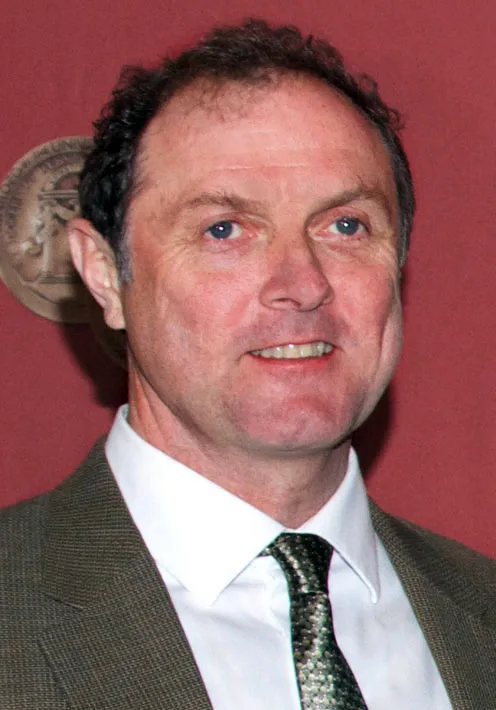
Meanwhile, Zoe becomes suspicious regarding Frank's involvement in Russo's failed campaign. After confiding that Russo's death may have been a murder, Frank pushes Zoe in front of a subway train and she is killed instantly. The news devastates her colleagues, including Lucas Goodwin (Sebastian Arcelus) and Tom Hammerschmidt (Boris McGiver). Meanwhile, Underwood becomes vice president and sets out to diminish Tusk's influence over the president. In the midst of an energy crisis, Underwood proposes an aggressive trade policy with China. Tusk, who has significant business connections with the Chinese, is unwilling to cooperate with Walker and Underwood's policies and is shunned from the White House. Meanwhile, Republican candidates see a surge in campaign donations before the midterms. In actuality, this is the result of a money laundering operation out of a Missouri casino, with Tusk funneling Chinese money to Republican candidates. Frank is able to get the Chinese to stop the flow of money by having Walker agree to the building of a bridge in the U.S. He also seeks to neutralize Tusk by leaking the existence of the money laundering operation. The proximity to the White House creates an avalanche of controversy and solicitor general Heather Dunbar (Elizabeth Marvel) is assigned to investigate the administration's involvement. Walker finally realizes that Frank has implicated him in these dealings and alienates him from the White House. Tusk is issued a subpoena and ultimately lies that Walker had full knowledge of the money laundering operation, sensing that it would be more advantageous to him to align himself with Frank rather than Walker. With the House set to vote on Articles of Impeachment, Walker resigns and Underwood is sworn in as president.
Cast and characters
Kevin Spacey as Francis J. "Frank" Underwood, a Democrat from South Carolina's 5th congressional district. He is House Majority Whip in season one, Vice President of the United States in season two, 46th President of the United States in seasons three to five, and the First Gentleman of the United States in season five.
Robin Wright as Claire Underwood, Frank's wife. She runs the Clean Water Initiative, a nongovernmental organization, in season one before giving it up to become Second Lady of the United States in season two. She then becomes United States Ambassador to the United Nations in season three and First Lady of the United States in seasons three to five. In season five, she is briefly acting President of the United States before becoming Vice President of the United States and finally, becomes the 47th President of the United States at the end of the season.
Michael Kelly as Douglas "Doug" Stamper, Underwood's unwaveringly loyal White House Chief of Staff and confidant. He is temporarily replaced by Remy Danton as chief of staff after his injury for most of season three, but returns as his new chief of staff at the end of the season.
Jayne Atkinson as Catherine "Cathy" Durant, a Democratic Senator from Louisiana and Secretary of State.
Corey Stoll as Peter Russo, a Democratic congressman from Pennsylvania's 1st congressional district and recovering addict. (season 1; guest season 4)
Kate Mara as Zoe Barnes, a reporter for The Washington Herald (and later Slugline). She forms an intimate relationship with Frank Underwood, her political informant, who in turn uses her as a mouthpiece to leak stories to the press and irk his political rivals. (season 1; guest seasons 2 and 4)
Sandrine Holt as Gillian Cole, the leader of a grass-roots organization called World Well that provides clean water to developing countries. (season 1; guest season 2)
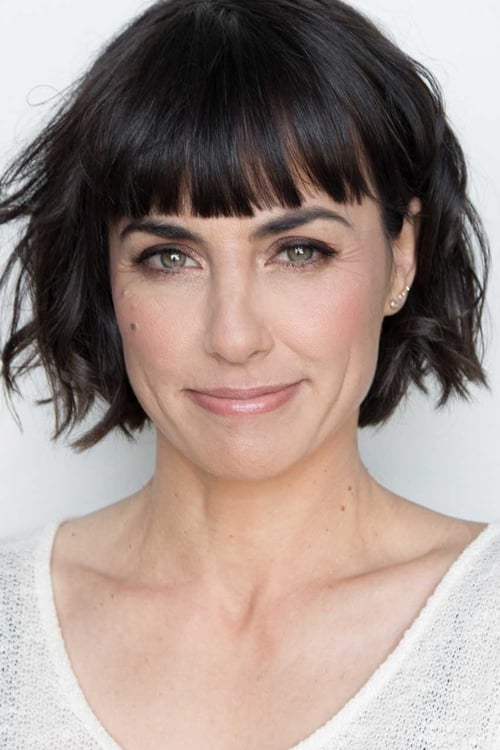
Kristen Connolly as Christina Gallagher, a congressional staffer and personal assistant to President Walker, and lover to Peter Russo. (seasons 1–2)
Production
Conception
The series played a role as one of the earliest shows to launch in the "streaming era". Independent studio Media Rights Capital (MRC), founded by Mordecai Wiczyk and Asif Satchu, producer of films such as Babel, purchased the rights to House of Cards with the intention to create a series. While finishing production on his 2008 film The Curious Case of Benjamin Button, David Fincher's agent showed him House of Cards, a BBC series starring Ian Richardson. Fincher was interested in producing a potential series with Eric Roth. Fincher said that he was interested in doing television because of its long-form nature, adding that working in film does not allow for complex characterizations the way that television allows. "I felt for the past ten years that the best writing that was happening for actors was happening in television. And so I had been looking to do something that was longer form," Fincher stated.
MRC approached different networks about the series, including HBO, Showtime and AMC, but Netflix, hoping to launch its own original programming, outbid the other networks. Ted Sarandos, Netflix's chief content officer, looked at the data of Netflix users' streaming habits and concluded that there was an audience for Fincher and Spacey. "It looked incredibly promising," he said, "kind of the perfect storm of material and talent". In finding a writer to adapt the series, Fincher stated that they needed someone who could faithfully translate parliamentary politics to Washington." Beau Willimon, who has served as an aide to Chuck Schumer, Howard Dean and Hillary Clinton, was hired and completed the pilot script in early 2011. Willimon saw the opportunity to create an entirely new series from the original and deepen its overall story.
The project was first announced in March 2011, with Kevin Spacey attached to star and serve as an executive producer. Fincher was announced as director for the first two episodes, from scripts by Willimon. Netflix ordered 26 episodes to air over two seasons.
Spacey called Netflix's model of publishing all episodes at once a "new perspective". He added that Netflix's commitment to two full seasons gave the series greater continuity. "We know exactly where we are going," he said. In a speech at the Edinburgh International Television Festival, he also noted that while other networks were interested in the show, they all wanted a pilot, whereas Netflix—relying solely on their statistics—ordered the series directly. In January 2016, show creator, executive producer and showrunner Beau Willimon's departure following season 4 was announced. He was replaced by Frank Pugliese and Melissa James Gibson, both of whom had begun writing for the series in season 3.
Casting
Fincher stated that every main cast member was their first choice. In the first read through, he said "I want everybody here to know that you represent our first choice—each actor here represents our first choice for these characters. So do not fuck this up." Spacey, whose last regular television role was in the series Wiseguy, which ran from 1987 until 1990, responded positively to the script. He then played Richard III at The Old Vic, which Fincher said was "great training". Spacey supported the decision to release all of the episodes at once, believing that this type of release pattern will be increasingly common with television shows. He said, "When I ask my friends what they did with their weekend, they say, 'Oh, I stayed in and watched three seasons of Breaking Bad or it's two seasons of Game of Thrones." He was officially cast on March 18, 2011. Robin Wright was approached by Fincher to star in the series when they worked together in The Girl with the Dragon Tattoo. She was cast as Claire Underwood in June 2011. Kate Mara was cast as Zoe Barnes in early February 2012. Mara's sister, Rooney, worked with Fincher in The Girl with the Dragon Tattoo, and when Kate Mara read the part of Zoe, she "fell in love with the character" and asked her sister to "put in a word for me with Fincher." The next month, she got a call for an audition.
Filming
Principal photography for the first season began in January 2012 in Harford County, Maryland, on the Eastern seaboard of the United States. Filming of exterior scenes in 2013 centered primarily in and around the city of Baltimore, Maryland, which is about 40 miles (64 km) northeast of Washington, D.C.
Among the numerous exteriors filmed in Baltimore, but set in Washington, D.C., are: Francis and Claire Underwood's residence, Zoe Barnes' apartment, Freddy's BBQ Rib Joint, The Clean Water Initiative building where Claire works, The Washington Herald offices, the Washington Opera House, the Secretary of State's building, Hotel Cotesworth, The Georgetown Hotel, Werner's Bar, Tio Pepe's, the DuPont Circle Bar, as well as scenes set in other locations, including Peter Russo's campaign rally in Pennsylvania and The Sentinel (military academy)'s Francis J. Underwood Library and Waldron Hall in South Carolina.
Most of the interior scenes in House of Cards are filmed in a large industrial warehouse, which is located in Joppa, Maryland, also in Harford County, which is about 17 miles (27 km) northeast of Baltimore. The warehouse is used for the filming of some of the most iconic scenes of the series, such as the full-scale reconstruction of most of the West Wing of the White House, including the Oval Office, the Congressional offices and corridors, the large 'Slugline' open-plan office interior, and domestic interiors such as the large townhouse rooms of the Underwood residence and a large loft apartment. Extensive filming for season 5 was also done at the Maryland Historical Society in Mount Vernon, Baltimore.
The series uses green screen to augment the live action, inserting views of outdoor scenes in windows and broadcast images on TV monitors, often in post-production. The Production Designer, Steve Arnold, also describes in detail the use of a three-sided green screen to insert street scenes outside car windows, with synchronized LED screens above the car (and out of camera shot), that emit the appropriate light onto the actors and parts of the car, such as window frames: "All the driving in the show, anything inside the vehicle is done on stage, in a room that is a big three-sided green screen space. The car does not move, the actors are in the car, and the cameras are set up around them. We have very long strips of LED monitors hung above the car. We had a camera crew go to Washington, D.C., to drive around and shoot plates for what you see outside when you're driving. And that is fed into the LED screens above the car. So as the scene is progressing, the LED screens are synched up to emit interactive light to match the light conditions you see in the scenery you're driving past (that will be added in post). All the reflections on the car windows, the window frames and door jambs is being shot while we're shooting the actors in the car. Then in post the green screens are replaced with the synced up driving plates, and it works really well. It gives you the sense of light passing over the actors' faces, matching the lighting that is in the image of the plate".
Final season and firing of Spacey
On October 11, 2017, The Baltimore Sun reported that House of Cards had been renewed for a sixth season and that filming would begin by the end of October 2017. On October 29, actor Anthony Rapp publicly stated that lead actor Spacey had made a sexual advance on him at a 1986 party when Rapp was 14. The following day, Netflix announced that the upcoming sixth season of House of Cards would be its last. Multiple sources stated that the decision to end the series was made prior to Rapp's accusation, but the announcement nevertheless caused suspicions for its timing. The following day, it was announced that production on the season would be temporarily suspended, according to an official joint statement from Netflix and MRC, "to give us time to review the current situation and to address any concerns of our cast and crew". On November 3, 2017, Netflix announced that they would no longer be associated with Spacey in any capacity whatsoever. On December 4, 2017, Ted Sarandos, Netflix's chief content officer, announced that production would restart in 2018 with Robin Wright in the lead, and revealed that the final season of the show would now consist of eight episodes. Spacey was removed from the cast and as executive producer with several unannounced projects involving the actor being canceled, resulting in Netflix losing 39 million dollars. In 2019, the last related criminal charges remaining against him were dropped.
On December 24, 2018, Spacey posted an unofficial short film titled Let Me Be Frank to his YouTube channel, in which, in-character as Francis "Frank" Underwood, he denied the allegations and stated that his character was not in fact dead. The video has been described in the media as "bizarre", "extraordinarily odd", "unsettling", and "alarming"; several actors—including Patricia Arquette, Ellen Barkin, and Rob Lowe—have criticized and ridiculed it on Twitter. As of September 2020, the video has over 12 million views, with 277,000 likes and 74,000 dislikes. Spacey posted a follow-up short film to Let Me Be Frank, titled KTWK (Kill Them with Kindness), to his YouTube channel on December 24, 2019. On Christmas Eve 2020, Spacey uploaded a third video, 1-800 XMAS, where he briefly addresses the audience as Frank before breaking character to address mental health issues coming from the COVID-19 pandemic, ending with a caption listing the National Suicide Prevention Hotline. After a three-year hiatus, Spacey released a fourth video, Being Frank with Tucker on Christmas Eve 2023 featuring conservative political commentator Tucker Carlson, presented as an episode of The Tucker Carlson Interview, where he addressed his exit from Netflix, media coverage, and the 2024 United States presidential election, as well as teasing a run for the presidency and breaking the fourth wall to privately address the audience as in the series.
Release
Broadcast
In Australia, where Netflix was not available prior to 2015, the series was broadcast on Showcase, premiering on May 7, 2013. Australian subscription TV provider Foxtel, and owner of Showcase, offered the entire first season to Showcase subscribers via their On Demand feature on Foxtel set-top boxes connected to the internet, as well as through their Xbox 360, Internet TV, and mobile (Foxtel Go) services. Although the entire season was made available, it maintained its weekly timeslot on Showcase. Season two returned to Showcase on February 15, 2014. As with season one, the entire season was made available on demand to Showcase subscribers while also retaining a weekly timeslot. The series has also been made available to non-Foxtel subscribers through Apple's Apple TV service. Prior to Netflix's Australian launch on March 28, 2015, Netflix renounced Showcase's rights to House of Cards, with season 3 premiering on Netflix at launch.
In New Zealand, where Netflix was unavailable prior to 2015, season 1 premiered on TV3 in early 2014, followed immediately by season 2. Netflix launched in New Zealand on March 24, 2015, and unlike Australia (which had Netflix launch on the same day) where House of Cards season 3 was available at launch, the series was initially unavailable.
In India, where Netflix was unavailable prior to January 2016, House of Cards premiered on February 20, 2014, on Zee Café. Seasons 1 and 2 were aired back-to-back. The channel aired all 13 episodes of season 3 on March 28 and 29, 2015. This marked the first time that an English-language general entertainment channel in India aired all episodes of the latest season of a series together. The move was intended to satisfy viewers' urge to binge-watch the season. Although Netflix launched in India in January 2016, House of Cards was not available on the service until March 4. All episodes of season 4 had their television premiere on Zee Café on March 12 and 13, 2016.
House of Cards was acquired by Canadian superstation CHCH for broadcast beginning September 13, 2017, making the program available throughout Canada on cable and free-to-air in CHCH's broadcast region, which includes portions of the United States. However, the show was removed from the CHCH primetime schedule two months later, following the sexual assault allegations towards Kevin Spacey.
House of Cards began airing in the United Kingdom on September 19, 2018, on Virgin TV Ultra HD, a newly established UHD/4K entertainment channel.
Home media
Season 1 was released on DVD and Blu-ray Disc by Sony Pictures Home Entertainment in region 1 on June 11, 2013, season 2 was released on June 17, 2014, season 3 was released on July 7, 2015, season 4 was released on July 5, 2016, season 5 was released on October 3, 2017, and season 6 was released on March 5, 2019.
Reception
Critical response
The first season received positive reviews from critics. On Rotten Tomatoes, the first season holds a rating of 87%, based on 47 reviews, with an average rating of 8.1/10. The site's consensus reads, "Bolstered by strong performances—especially from Kevin Spacey—and surehanded direction, House of Cards is a slick, engrossing drama that may redefine how television is produced." On Metacritic, the first season has a score of 76 out of 100, based on 25 critics, indicating "generally favorable reviews".
USA Today critic Robert Bianco praised the series, particularly Spacey's and Wright's lead performances, stating "If you think network executives are nervous, imagine the actors who have to go up against that pair in the Emmys." Tom Gilatto of People Weekly lauded the first two episodes, calling them "cinematically rich, full of sleek, oily pools of darkness". In The Denver Post, critic Joanne Ostrow said the series is "[d]eeply cynical about human beings as well as politics and almost gleeful in its portrayal of limitless ambition". She added: "House of Cards is a wonderfully sour take on power and corruption."
Writing in The New York Times, critic Alessandra Stanley noted that the writing in the series sometimes fails to match the high quality of its acting: "Unfortunately Mr. Spacey's lines don't always live up to the subtle power of his performance; the writing isn't Shakespeare, or even Aaron Sorkin, and at times, it turns strangely trite." Nevertheless, she lauded House of Cards as an entertainment that "revels in the familiar but always entertaining underbelly of government". Andrew Davies, the writer of the original British TV series, stated that Spacey's character lacks the "charm" of Ian Richardson's, while The Independent praised Spacey's portrayal as a more "menacing" character, "hiding his rage behind Southern charm and old-fashioned courtesy." Randy Shaw, writing for The Huffington Post, criticized House of Cards for glorifying "union bashing and entitlement slashing within a political landscape whose absence of activist groups or anyone remotely progressive resembles a Republican fantasy world". Critics such as Time television critic James Poniewozik and Hank Stuever of The Washington Post compare the series to Boss. Like the British show and novel of the same name, many critics have noted that it is heavily influenced by both Macbeth and Richard III. In addition, some critics find elements of Othello, such as Iago's bitter ire.
The second season received positive reviews from critics. On Rotten Tomatoes the season has a rating of 83%, based on 48 reviews, with an average rating of 7.9/10. The site's critical consensus reads, "House of Cards proves just as bingeworthy in its second season, with more of the strong performances, writing, and visual design that made the first season so addictive." On Metacritic the season has a score of 80 out of 100, based on 25 critics, indicating "generally favorable reviews".
Accolades
Across its run, House of Cards received 56 Primetime Emmy nominations (7 wins), eight Golden Globe nominations (two wins), and a 2013 Peabody Award.
For its first season, House of Cards received nine nominations for the 65th Primetime Emmy Awards in 2013, to become the first original online-only streaming television series to receive major nominations. Among House of Cards' nine nominations, "Chapter 1" received four nominations for the 65th Primetime Emmy Awards and 65th Primetime Creative Arts Emmy Awards becoming the first webisode (online-only episode) of a television series to receive a major Primetime Emmy Award nomination: Outstanding Directing for a Drama Series for David Fincher. This episode also received several Creative Arts Emmy Award nominations, including Outstanding Cinematography for a Single-Camera Series, Outstanding Single-Camera Picture Editing for a Drama Series, and Outstanding Music Composition for a Series (Original Dramatic). Although Primetime Emmy Award for Outstanding Lead Actor in a Drama Series is not a category that formally recognizes an episode, Spacey submitted "Chapter 1" for consideration to earn his nomination. At the Primetime Creative Arts Emmy Award presentation, "Chapter 1" and Eigil Bryld earned the Primetime Emmy Award for Outstanding Cinematography for a Single-Camera Series, making "Chapter 1" the first Emmy-awarded webisode. At the Primetime Emmy Awards ceremony, Fincher won for Outstanding Directing for a Drama Series for directing the pilot episode "Chapter 1" in addition to the pair of Creative Arts Emmy Awards, making "Chapter 1" the first Primetime Emmy-awarded webisode. None of the Emmy awards were considered to be in major categories.
For the 71st Golden Globe Awards, House of Cards received four nominations. Among those nominations was Wright for Golden Globe Award for Best Actress – Television Series Drama for her portrayal of Claire Underwood, which she won. In so doing she became the first actress to win a Golden Globe Award for an online-only streaming television series.
For its second season, House of Cards received 13 Primetime Emmy Award nominations, including Outstanding Drama Series, Kevin Spacey for Outstanding Lead Actor in a Drama Series, Robin Wright for Outstanding Lead Actress in a Drama Series, Kate Mara for Outstanding Guest Actress in a Drama Series, and Reg E. Cathey for Outstanding Guest Actor in a Drama Series. At the 72nd Golden Globe Awards, the series was nominated for Best Drama Series and Wright was nominated for Best Drama Actress, while Spacey won for Best Drama Actor.