Development
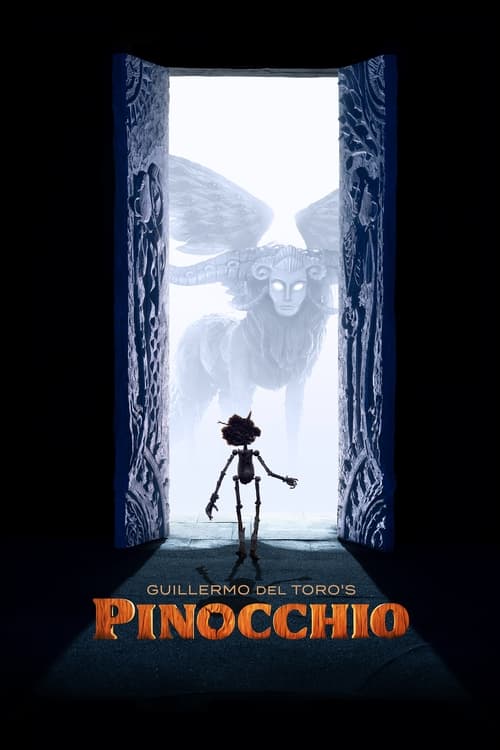
In 2008, Guillermo del Toro announced that his next project, a darker adaptation of the Italian novel The Adventures of Pinocchio (1883), was in development. He has called Pinocchio his "passion project", stating: "No art form has influenced my life and my work more than animation, and no single character in history has had as deep of a personal connection to me as Pinocchio", and "I've wanted to make this movie for as long as I can remember". When he was a child, del Toro saw and liked Walt Disney's 1940 animated film adaptation in Guadalajara, Mexico, partially because he felt it was like a "horror movie" in its own way due to a few intense moments it included. Since his teen years, he had longed to make his own version of the story. In 2003, del Toro discovered Gris Grimly's illustrations for the 2002 edition of Carlo Collodi's book, portraying Pinocchio as a puppet with a long, pointed nose and spindly limbs, with gestures that del Toro felt captured the energy of an unruly but otherwise goodhearted puppet. He concluded that Grimly's illustrations reflected the setting he had in mind for his own, more somber version of Collodi's tale. When del Toro asked Grimly why Pinocchio looked the way he did, Grimly said it was because Geppetto was drunk when he made him. This thought evolved into an important part of Geppetto's backstory.
On February 17, 2011, it was announced that Grimly and Mark Gustafson would co-direct a stop-motion animated Pinocchio film written by del Toro and his long-time collaborator Matthew Robbins, and that it would be visually based on Grimly's designs. Del Toro would produce the film along with The Jim Henson Company and Pathé. Grimly devised Pinocchio's look for the film, depicting him as unfinished wood. Though Grimly was initially set to direct the film and del Toro was set to produce it, on May 17, 2012, del Toro took over as director. He then teamed up with Gustafson, a stop-motion veteran who had experience in similar stop-motion features like Fantastic Mr. Fox (2009), to assist him in achieving his ambitious vision for the project. In February 2012, del Toro released some concept art of Pinocchio, Geppetto, the Talking Cricket, Mangiafuoco and the Fox and the Cat. On July 30, 2012, it was announced that the film would be produced and animated by ShadowMachine. It was originally scheduled to be released in 2013 or 2014, but went into development hell, with no further information forthcoming about it for years.
On January 23, 2017, Patrick McHale was announced to co-write the script with del Toro. On August 31, 2017, del Toro told IndieWire at the 74th Venice International Film Festival that the film would need a budget increase of $35 million or it would be cancelled. On November 8, 2017, he reported that the project was not happening because no studios were willing to finance it. At one point, Matthew Robbins considered making a 2D-animated version of the film with French artist Joann Sfar to bring the costs down, but del Toro decided that it had to be stop-motion, even if the higher budget made it harder to get it greenlit. On October 22, 2018, it was announced that the film had been revived, with Netflix acquiring it, and Pathé no longer involved.
Almost all the years of development were spent by del Toro and Gustafson defining the designs for the principal characters, basing them on either Grimly's designs or letting del Toro's frequent collaborator Guy Davis, who joined the project as co-production designer with art director Curt Enderle, to design them. They then gave the animation models to England's Mackinnon & Saunders stop-motion puppet firm, which is considered by del Toro to be the "best in the world", and they fabricated the designs of Pinocchio, Geppetto, Sebastian J. Cricket, Count Volpe, and Spazzatura the Monkey. Most of the key characters have mechanical heads to create facial expressions, but for Pinocchio, a metal 3-D printed puppet, 3000 replacement faces were used.
The antagonist Count Volpe is a combination of Mangiafuoco and the Fox from the original story. Mangiafuoco was originally supposed to appear in the movie as an antagonist, but he was removed halfway through production as del Toro disliked the character and thought he was a cliché; as a character model had already been made for Mangiafuoco, to not waste the model, Mangiafuoco's original design was used as a background character for Volpe's circus as a strongman. The Cat, who was shown in a concept art, was replaced by Spazzatura, while the Land of Toys was replaced with an Italian kids training camp. At first, the fairy with blue hair was a dead girl from the same cemetery where Carlo was buried. This was changed into two angel-like beings, which ended up as the two sisters of life and death, and Carlo was no longer buried in a cemetery; their design as supernatural winged beings with multiple eyes harkens back to the biblical seraphim as well as to the Angel of Death from Hellboy II: The Golden Army (2008).





.jpg?width=400)