Preservation and archives
Several parties are recipients or heirs of different parts of Parks's archival record.
The Gordon Parks Foundation
After his passing, Genevieve Young established the Gordon Parks Foundation in Pleasantville, New York (formerly in Chappaqua, New York) reports that it "permanently preserves the work of Gordon Parks, makes it available to the public through exhibitions, books, and electronic media." The organization also says it "supports artistic and educational activities that advance what Gordon described as 'the common search for a better life and a better world.'" That support includes scholarships for "artistic" students, and assistance to researchers. Their headquarters includes an exhibition space with rotating photography exhibits, open free to the public, with guided group tours available by arrangement. The foundation admits "qualified researchers" to their archive, by appointment. The foundation collaborates with other organizations and institutions, nationally and internationally, to advance its aims.
The Gordon Parks Museum/Center
The Gordon Parks Museum/Center in Fort Scott, Kansas, holds dozens of Parks's photos and various belongings, both given to the museum by Parks, and bequeathed to the museum by him upon his death. The collection includes "awards and medals, personal photos, paintings and drawings of Gordon, plaques, certificates, diplomas and honorary doctorates, selected books and articles, clothing, record player, tennis racket, magazine articles, his collection of Life magazines and much more." The museum has also separately received some of Parks's cameras, writing desk and photos of him.
Library of Congress, Washington, D.C.
The Library of Congress (LOC) reports that, in 1995, it "acquired Parks' personal collection, including papers, music, photographs, films, recordings, drawings and other products of his... career."
The LOC was already home to a federal archive that included Parks's first major photojournalism projects—photographs he produced for the Farm Security Administration (1942–43), and for the Office of War Information (1943–45).
In April 2000, the LOC awarded Parks its accolade "Living Legend", one of only 26 writers and artists so honored by the LOC. The LOC also holds Parks's published and unpublished scores, and several of his films and television productions.
National Film Registry
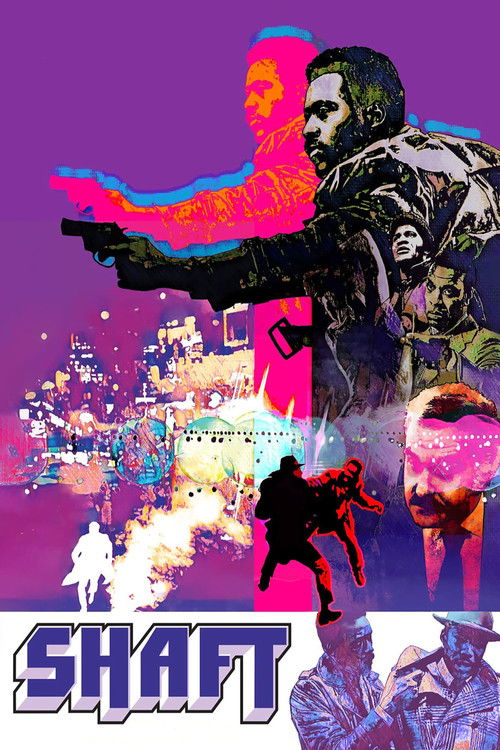
Parks's autobiographical motion picture, The Learning Tree, and his African-American anti-hero action-drama Shaft, are both permanently preserved as part of the National Film Registry of the Library of Congress. The Learning Tree was one of the original group of 25 films first selected by the LOC for the National Film Registry.
National Archives, Washington, D.C.
The National Archives hold the film My Father, Gordon Parks (1969: archive 306.8063), a film about Parks and his production of his autobiographical motion picture, The Learning Tree, along with a print (from the original) of Solomon Northup's Odyssey, a film made by Parks for a Public Broadcasting System telecast about the ordeal of a slave. The Archives also hold various photos from Parks's years in government service.
Smithsonian Institution, Washington, D.C.
The Smithsonian Institution has an extensive list of holdings related to Parks, particularly photos.
Wichita State University
In 1991, Wichita State University (WSU), in Wichita, the largest city in Parks's home state of Kansas, awarded him its highest honor for achievement: the President's Medal. However, in the mid-1990s, after Parks entrusted WSU with a collection of 150 of his famous photos, WSU—for various reasons (including confusion as to whether they were a gift or loan, and whether the university could adequately protect and preserve them)—returned them, stunning and deeply upsetting Parks. A further snub came from Wichita's city officials, who also declined the opportunity to acquire many of his papers and photos.
By 2000, however, WSU and Parks had healed their division. The university resumed honoring Parks and accumulating his work. In 2008, the Gordon Parks Foundation selected WSU as repository for 140 boxes of his photos, manuscripts, letters and other papers. In 2014, another 125 of his photos were acquired from the foundation by WSU, with help from Wichita philanthropists Paula and Barry Downing, for display at the university's Ulrich Museum of Art.
Kansas State University
The Gordon Parks Collection in the Richard L. D. and Marjorie J. Morse Department Special Collections at Kansas State University primarily documents the creation of his film The Learning Tree. The Marianna Kistler Beach Museum of Art at Kansas State University holds a collection of 204 Gordon Parks photographs as well as artist files and artwork documentation. This collection is made up of 128 photographs that were chosen and gifted by Parks in 1973 to K-State, after receiving an honorary doctor of letters degree from the university in 1970. The gift included black and white images printed from negatives made between 1949 and 1970 and stored in the LIFE magazine archives; the donation also included color photographs printed from negatives in the artist's private collection. The K-State gift is the first known set of photographs specifically selected by Parks for a public institution. The collection also includes a group of 73 photographs printed after two residences by Parks in Manhattan, Kansas. Parks first returned for a residency in 1984, sponsored by the local newspaper The Manhattan Mercury for its centennial; he returned for another in 1985, initiated by the Manhattan Arts Council and sponsored by the city and various community organizations and individuals. Seventy-three photographs printed after these visits were transferred from the Manhattan Arts Center to K-State in 2017. The photographs are of locations in and around Manhattan, including churches and historic homes and K-State architecture and students.