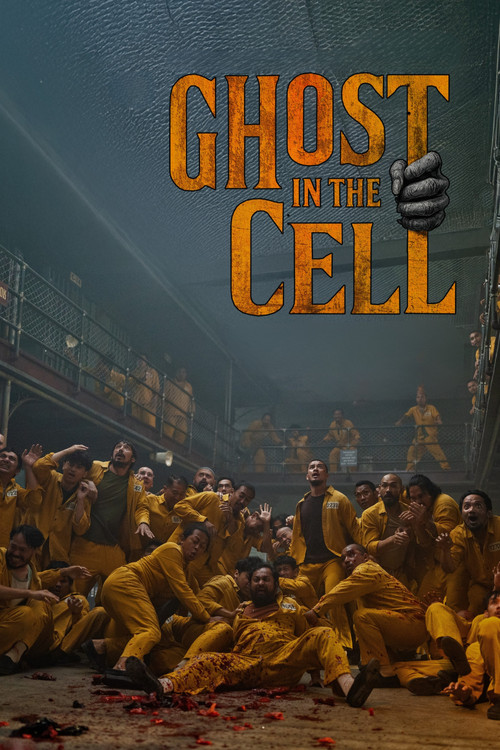










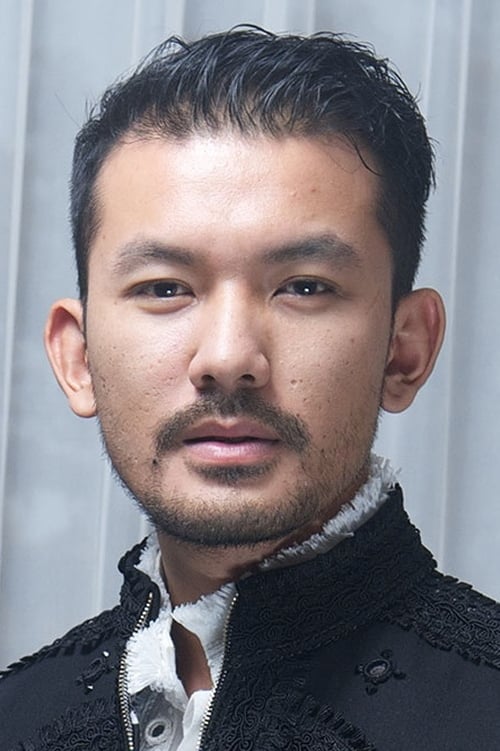


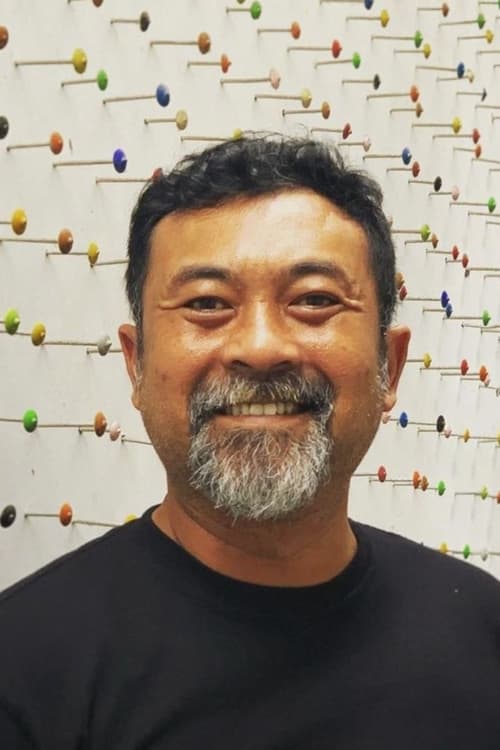

Ghost in the Cell is a 2026 Indonesian comedy horror film written and directed by Joko Anwar. The film stars Endy Arfian, Abimana Aryasatya, Yoga Pratama, and Aming. The film was produced by Tia Hasibuan under the banner of Come and See Pictures and premiered at the Berlin International Film Festival on 13 February 2026, before being screened in Indonesian cinemas on 16 April 2026.
Contents
Plot
The movie opens with journalist Dimas working late at night editing his latest article about an illegal nickel mining operation in Borneo, where several workers have died under mysterious circumstances. He then sends the finished article to his boss, who calls him into his office and harshly criticizes the article. He reveals that the paper is struggling economically and he thinks that covering the workers' deaths will undermine the paper's reputation as a serious economic publication, so he sharply orders Dimas to rewrite the article. After Dimas leaves, the boss has an argument with his wife on the phone, further worsening his mood. As he turns away from the windows, his reflection instead stays still, showing a disturbing figure. He is then killed by an off-screen figure stabbing him multiple times with his pen. Dimas's colleague then finds Dimas standing in the office, horrified, as his boss's corpse hangs from the celing fan.
The perspective then shifts to Labuhan Angsana prison, where the inmates live with daily problems, oppression from prison officials, as well as hostility and violence among fellow prisoners. We are introduced to the main characters of the movie: Anggoro, who keeps having time added to his sentence for standing up for other prisoners in front of prison guards; Six, who is not religious but is supposedly able to see ghosts; Wildan, a devout Muslim; Pendi, previously a professor; and their friend Irfan.
One day, Dimas arrives to the prison with a group of new inmates, after having been condemned for the murder of his boss. The day after, one of the most violent prisoners is alone in the showers when he sees a figure which looks like him except his face has no eyes and is instead covered in black dots. The figure attacks him and kills him, leaving him horribly mutilated in the showers. Shortly after, another prisoner dies a similar death after discovering that his wife has betrayed him.
Six reveals to the rest of the group that he can now see auras and that he saw the second prisoner's aura as red moments before he was killed. Wildan explains to the group that a red aura signifies a negative, angry moood, and the group figures out that there is a ghost in the prison, killing off prisoners with the most negative aura one by one. They then resolve to keep their aura positive by praying or practicing art such as dancing. One of the other prisoners hears this conversation, so the rumour that prisoners can avoid being killed by praying and dancing quickly spreads. After the prison's dance teacher is murdered by the ghost after angrily dismissing the lesson because the inmates were not paying attention, the prisoners realize that no matter how positive they keep their aura, there will always be one prisoner with the least positive aura who is going to get killed.
Anggoro then asks the other prisoners to work together in order to stop the ghost once and for all. They figure out that Dimas has brought the ghost with him from Borneo, where the workers were dying in very similar ways, being mutilated and hung to trees. They then speculate that the prisoners' deaths are just a way for the ghost to recharge itself, but it still has to find the person that it actually wants to kill, and that this person must be close to Dimas for the ghost to be able to kill them.
One of the guards reveals to the prisoners that in the politicians' block of the prison, where corrupt politicians live in luxurious single cells, there is one of the politicians responsible for the illegal mining operation that Dimas was investigating. The prisoners infiltrate the block, trying to get close to the politician. In order for the ghost to attack him though they have to make his aura negative, which the professor manages to do by calling him on the phone and reminding him of his early days as a young and honest politician, and pointing out how far he is from those ideals right now. The ghost finally attacks the politician, killing him, and the prisoners know that it is finally satisfied because Six can now see Dimas' aura as well, indicating that the ghost has left his body.
Six months later, Dimas says a final goodbye to the prisoners, as new CCTV footage has emerged which exonerated him from his boss' murder, as he was not in the room when it happened, and so he is leaving the prison as a free man. He tells them that he is going back to Borneo in order to bring the ghost back home.
Cast
Endy Arfian as Dimas
Abimana Aryasatya as Anggoro
Yoga Pratama as Six
Mike Lucock as Wildan
Danang Suryonegoro as Irfan
Lukman Sardi as Pendi
Kiki Narendra as Sapto
Bront Palarae as Jefri
Aming as Tokek
Tora Sudiro as Anton
Arswendy Beningswara as Prakasa
Morgan Oey as Bimo
Haydar Salishz as Donald
Dewa Dayana as Prakasa muda
Marissa Anita as istri Endy
Rio Dewanto as Endy
Radja Nasution as Bibin
Almanzo Konoralma as Buki
Faiz Vishal as Vijay
Jaisal Tanjung as Bambang
Ho Yuhang as Rendra
Magistus Miftah as Novilham
Release
Ghost in the Cell premiered at the 2026 Berlin International Film Festival before becoming a box office success in Indonesia following its local release on April 16, 2026.
Reception
Critical response
John Lui of The Straits Times, described Joko Anwar's Ghost in the Cell as a bloody horror-comedy that uses a corrupt Jakarta prison as a metaphor for Indonesian society. Lui praised the film's blend of dark comedy, graphic practical effects, and sharp political satire, noting how its supernatural premise critiques systemic inequality, official hypocrisy, and institutional abuse.
Shandy Pradana of IDN Times, rated Ghost in the Cell 4.5 out of 5, highlighted as Joko Anwar's most daring and unhinged film to date, receiving praise for its fearless genre blending. The review commended the film's integration of dark slapstick comedy, intense practical gore, and sharp socio-political commentary set within a high-security prison. It noted that beneath its chaotic and absurd supernatural premise, the narrative delivers a meaningful exploration of institutional abuse, human nature under confinement, and systemic corruption, bolstered by strong ensemble performances.
Gisella Keilsa of CNN Indonesia, rated Ghost in the Cell 4 out of 5 and praised for its energetic blend of graphic horror, dark comedy, and social critique. The review noted that the prison setting effectively serves as an allegory for real-world corruption and systemic injustice, supported by solid ensemble performances and a compelling narrative style.
Agnes Veronica Lasut of Radio Republik Indonesia (RRI), praised as a unique and highly entertaining entry in Indonesian genre cinema that successfully merges horror, action, and comedy. The critic highlighted the film's strong narrative pacing and visual execution, emphasizing how the claustrophobic prison setting intensifies both the horror elements and the dark comedic situations. It noted that the story effectively uses supernatural events to deliver a subtle critique of human nature, solidarity, and societal flaws, while commending the cast for their solid character portrayals and seamless chemistry.
Muhammad Saddam Amtael Soerawijaya of Popmama, praised as a uniquely entertaining horror-comedy that delivers lighthearted entertainment while maintaining emotional depth and moral lessons. The critic highlighted the film's ability to blend intense jump scares and supernatural horror with relatable family themes and humorous character dynamics among the prison inmates. The critic noted that, beneath its gory premise and comedic moments, the story offers meaningful reflections on redemption, solidarity, and the importance of empathy, making it an engaging and thought-provoking viewing experience for audiences.