

George Reeves (born George Keefer Brewer; January 5, 1914 – June 16, 1959) was an American actor. He was best known for portraying Clark Kent/Superman in the television series Adventures of Superman (1952–1958).
His death by gunshot at age 45 remains controversial. The official finding was suicide, but some believe that he was murdered or the victim of an accidental shooting.
Contents
Early life
Reeves was born in Woolstock, Iowa, the son of Donald Carl Brewer and Helen Lescher. Reeves was born five months into their marriage. When the couple separated, soon after Reeves's birth, Reeves and his mother moved from Iowa to Ashland, Kentucky, to stay with relatives for a time and then to her home in Galesburg, Illinois.
Later, Reeves's mother, who was of German descent, moved to California to stay with her sister. There, by 1920, she had met and married Frank Joseph Bessolo (according to that year's federal census). Reeves's father married Helen Schultz in 1925. Reeves reportedly never saw his father again. In 1927, when Reeves was 13, Frank Bessolo adopted him, and the boy took his stepfather's last name, becoming George Bessolo. The Bessolos’ marriage lasted 15 years, ending in divorce, with the couple separating while Reeves was away visiting relatives. When he returned, his mother told him his stepfather had died by suicide. According to biographer Jim Beaver, Reeves did not know for several years that Bessolo was still alive. Bessolo actually died March 4, 1944, at age 51, when his adopted son was well into his movie career.
Reeves began acting and singing in high school and continued performing on stage as a student at Pasadena Junior College.
Acting career
While studying acting at the Pasadena Playhouse, Reeves met his future wife, Ellanora Needles, great-great-granddaughter of John Robinson, who had been a circus magnate and founder of the John Robinson Circus. They married on September 22, 1940, in San Gabriel, California, at the Church of Our Savior. They had no children and divorced 10 years later.
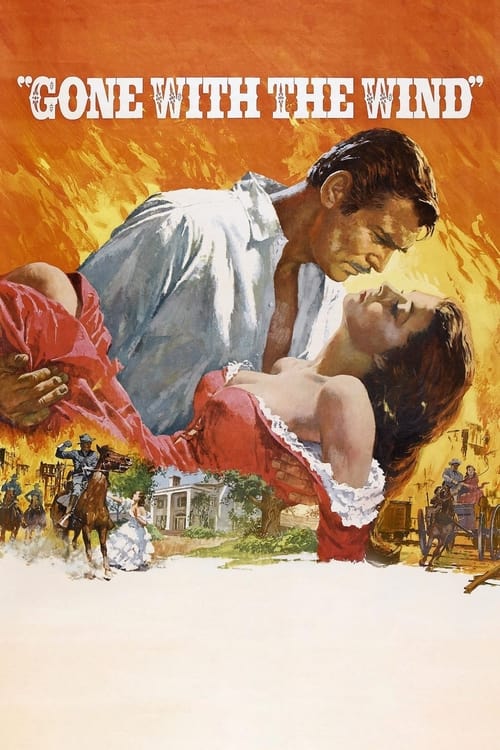
Reeves's film career began in 1939 when he was cast as Stuart Tarleton (incorrectly listed in the film's credits as Brent Tarleton), one of Scarlett O'Hara's suitors in Gone with the Wind. It was a minor role, but he and Fred Crane were in the film's opening scene. (Reeves and Crane both dyed their hair red to portray the Tarleton twins.) After Gone with the Wind was filmed, Reeves returned to the Pasadena Playhouse and was given the lead role in the play Pancho. This part directly led to his being contracted to Warner Brothers. Warner had him change his professional name to George Reeves. His Gone with the Wind screen credit reflects the change. Between the start of production on Gone With the Wind and its release 12 months later, several films on his Warner contract were made and released, making Gone With the Wind his first film role, but his fifth film release.
He starred in a number of two-reel short subjects and appeared in several films, including two with future President of the United States Ronald Reagan and three with James Cagney (Torrid Zone, The Fighting 69th, and The Strawberry Blonde). These roles did little to advance Reeves's career, and his contract with Warners was dissolved by mutual consent.
Released from his Warner contract, he signed a contract with Twentieth Century-Fox but was released after only a handful of films, one of which was the Charlie Chan movie Dead Men Tell. Twentieth Century-Fox loaned him to producer Alexander Korda to co-star with Merle Oberon in Lydia, a box-office failure, after which he freelanced, looking to find work in westerns. His friend Teddi Sherman introduced him to her father, producer Harry Sherman, who asked Reeves to take a screen test with Teddi for the Hopalong Cassidy films. Reeves and Sherman impressed the casting director by performing seven pages of script in a single take without pause. Reeves appeared in five Hopalong Cassidy westerns before being cast as Lieutenant John Summers opposite Claudette Colbert in So Proudly We Hail! (1942), a war drama for Paramount Pictures, which signed Reeves up for two films a year.
Superman
In June 1951, Reeves was offered the role of Superman in a new television series titled Adventures of Superman. He was initially reluctant to take the role because, like many actors of his time, he considered television unimportant and believed few would see his work. The half-hour films were shot on tight schedules; at least two shows were made every seven days. According to commentaries on the Adventures of Superman DVD sets, multiple scripts were filmed simultaneously and out of sequence to take advantage of the standing sets; for example, all the "Perry White's office" scenes for three or four episodes would be shot the same day, and the various "apartment" scenes would also be done consecutively.
Reeves's career as Superman had begun with Superman and the Mole Men, a film intended both as a B-picture and as the pilot for the TV series. Immediately after completing it, Reeves and the crew began production of the first season's episodes, all shot over 13 weeks in the summer of 1951. The series went on the air the following year, and Reeves was amazed at becoming a national celebrity. In 1952, the struggling ABC Network purchased the show for national broadcast, which gave him greater visibility.
The Superman cast members had restrictive contracts preventing them from taking other work that might interfere with the series. Except for the second season, the Superman schedule was brief (13 shows shot two per week, a total of seven weeks out of a year), but all had a "30-day clause", which meant that the producers could demand their exclusive services for a new season on four weeks' notice. This prevented long-term work on major films with long schedules, stage plays that might lead to a lengthy run, or any other series work.
Reeves, however, was able to leverage his new role and earn additional income by making numerous personal appearances. He had affection for his young fans and took his role-model status seriously. He avoided smoking cigarettes where children could see him and eventually quit smoking. He kept his private life discreet, including a romantic relationship with Toni Mannix, wife of Metro-Goldwyn-Mayer general manager Eddie Mannix.
In the 2006 documentary Look, Up in the Sky: The Amazing Story of Superman, Jack Larson said that, when he first met Reeves, he told him that he enjoyed his performance in So Proudly We Hail! According to Larson, Reeves said that if Mark Sandrich had not died, he would not be there in "this monkey suit". According to Larson, Reeves also said he would feel better about the role if he knew he had any adult fans; he never learned that Adventures of Superman had adult fans even during its original broadcast run. However, the book Flights of Fancy: The Unauthorized but True Story of Radio & TV's Adventures of Superman by Michael Hayde challenges Larson's claim, asserting that Reeves knew almost from the beginning that adults were enjoying the show and that he generally enjoyed the Superman role.
Death
Reeves died of a gunshot wound to the head, in the upstairs bedroom of his home at 1579 Benedict Canyon Drive in Benedict Canyon between 1:30 and 2:00 a.m. on June 16, 1959, according to the Los Angeles Police Department (LAPD) report.
Leonore Lemmon and other party guests were in the home at the time. Lemmon told the police that she was in the living room with the guests at the time of the shooting, but hearsay statements from Fred Crane, Reeves's friend and colleague from Gone with the Wind, put Lemmon either inside or in direct proximity to Reeves's bedroom. According to Crane (who was not present), Bill Bliss had told Millicent Trent after the shot rang out, while Bliss was having a drink, that Leonore Lemmon came downstairs and said, "Tell them I was down here, tell them I was down here!"
A number of questionable physical findings were reported by investigators and others. No fingerprints were recovered from the gun. No gunpowder residue was found on Reeves's hands. (Some sources contend that it may not have been sought, as gunshot residue testing was not routinely performed at the time.) The bullet that killed Reeves was recovered from the bedroom ceiling, and the spent shell casing was found under his nude body. Two additional bullets were discovered embedded in the bedroom floor. All three bullets had been fired from the weapon found at Reeves's feet, though all witnesses agreed they heard only one gunshot, and there was no sign of forced entry or other physical evidence that a second person was in the room. Despite the unanswered questions, Reeves's death was officially ruled a suicide, based on witness statements, physical evidence at the scene, and the autopsy report.
In contemporaneous news articles, Lemmon attributed Reeves's alleged suicide to depression caused by his "failed career" and inability to find more work. The report made by the LAPD states, "[Reeves was] ... depressed because he couldn't get the sort of parts he wanted." Newspapers and wire-service reports quoted LAPD Sergeant V. A. Peterson as saying: "Miss Lemmon blurted, 'He's probably going to go shoot himself.' A noise was heard upstairs. She continued, 'He's opening a drawer to get the gun.' A shot was heard. 'See there — I told you so!'"
Reeves is interred at Mountain View Cemetery and Mausoleum in Altadena, California. In 1960, Reeves was awarded a star on the Hollywood Walk of Fame on Hollywood Boulevard for his contributions to the television industry. In 1985, he was posthumously named one of the honorees by DC Comics in the company's 50th anniversary publication Fifty Who Made DC Great.
Controversy
Reeves's mother thought it was premature and peremptory to rule the death a suicide, and retained attorney Jerry Giesler to petition for a reinvestigation of the case as a possible homicide. The findings of a second autopsy, conducted at Giesler's request, were the same as the first, except for a series of bruises of unknown origin about the head and body. A month later, having uncovered no evidence contradicting the official finding, Giesler announced that he was satisfied that the gunshot wound had been self-inflicted and withdrew.
Actors Alan Ladd and Gig Young were reportedly skeptical of the official determination. Reeves's friend Rory Calhoun told a reporter "No one in Hollywood believed the suicide story." In their book Hollywood Kryptonite, Sam Kashner and Nancy Schoenberger make a case for the involvement of MGM vice president and fixer Eddie Mannix. Reeves had been having an affair with his wife, Toni Mannix. Others suggested that Eddie Mannix, rumored to have Mafia ties, ordered Reeves killed. In June 2025, People noted that Reeves had ended his affair with Toni to begin an affair with Leonore Lemmon.
In popular culture
The 2006 film Hollywoodland starred Ben Affleck as Reeves and Diane Lane as Toni Mannix. Adrien Brody plays Louis Simo, a fictional private investigator with a working class Italian American background and an obsession with chasing fame and fortune. Simo is partially inspired by actual private detective Milo Speriglio, who was hired by Reeves's mother to investigate her son's death. The film's fictionalized investigation suggests four possible explanations:
An accidental shooting by an angry and intoxicated Leonore Lemmon during an argument.
A contract killing arranged by Eddie Mannix, who is also hinted to have sabotaged Reeves' efforts to found his own production company, in retaliation for breaking Toni's heart.
A revenge killing by a jealous and heartbroken Toni Mannix, who allegedly still had the house keys and knew a separate way in and out of the upstairs room; covered up afterwards by Eddie Mannix out of loyalty and genuine love for his wife.
A suicide rooted in Reeves' belief that his acting career was over and he was also a failure in his personal life.
While seeking to remain open-ended, the film implies that suicide is the most likely explanation for Reeves's death. This climactic realization devastates Brody's character, but also causes him to reevaluate his own priorities in life, which ultimately causes him to cease chasing celebrity status and focus instead upon his neglected role as a family man.
A computer graphics version of Reeves as Superman appears in the DC Extended Universe film The Flash (2023). The use of the computer graphics rendering was criticized by some fans.