Filming
"Chicago is what I am," said Hughes. "A lot of Ferris is sort of my love letter to the city. And the more people who get upset with the fact that I film there, the more I'll make sure that's exactly where I film. It's funny—nobody ever says anything to Woody Allen about always filming in New York. America has this great reverence for New York. I look at it as this decaying horror pit. So let the people in Chicago enjoy Ferris Bueller."
For the film, Hughes got the chance to take a more expansive look at the city he grew up in. "We took a helicopter up the Chicago River. This is the first chance I'd really had to get outside while making a movie. Up to this point, the pictures had been pretty small. I really wanted to capture as much of Chicago as I could, not just the architecture and the landscape, but the spirit." Shooting began in Chicago on September 9, 1985. In late October 1985, the production moved to Los Angeles, and shooting ended on November 22. The Von Steuben Day Parade scene was filmed on September 28. Scenes were filmed at several locations in downtown Chicago and Winnetka (Ferris's home, his mother's real estate office, etc.). Many of the other scenes were filmed in Northbrook, Illinois, including at Glenbrook North High School. The exterior of Ferris's house is located at 4160 Country Club Drive, Long Beach, California, which, at the time of filming, was the childhood home of Judge Thad Balkman.
The modernist house of Cameron Frye is located in Highland Park, Illinois. Known as the Ben Rose House, the main building (1954) was designed by A. James Speyer, and the pavilion (1974) by David Haid. It was once owned by photographer Ben Rose, who had a car collection in the pavilion. In the film, Cameron's father is portrayed as owning a Ferrari 250 GT California in the same pavilion. According to Lake Forest College art professor Franz Shulze, during the filming of the scene where the Ferrari crashes out of the window, Haid explained to Hughes that he could prevent the car from damaging the rest of the pavilion. Haid fixed connections in the wall and the building remained intact. Haid said to Hughes afterward, "You owe me $25,000," and which Hughes paid. In the DVD commentary for the film, Hughes mentions that they had to remove every pane of glass from the house to film the car crash scene, since every pane was weakened by age and had acquired a similar tint, hence replacement panels would be obvious. Hughes added that they were able to use the house because producer Ned Tanen knew the owner because they were both Ferrari collectors.
According to Hughes, the scene at the Art Institute of Chicago was "a self-indulgent scene of mine—which was a place of refuge for me, I went there quite a bit, I loved it. I knew all the paintings, the building. This was a chance for me to go back into this building and show the paintings that were my favorite." The museum had not been shot in, until the producers of the film approached them. "I remember Hughes saying, 'There are going to be more works of art in this movie than there have ever been before,'" recalled Jennifer Grey. Among notable works featured in this scene include A Sunday Afternoon on the Island of La Grande Jatte (Georges Seurat, 1884), during which Cameron struggles to find his identity in the face of one of the children in the painting, and America Windows (Marc Chagall, 1977), in front of which Ferris and Sloane have a romantic moment.
A passionate Beatles fan, Hughes makes multiple references to them and John Lennon in the script. While filming, Hughes listened to their self-titled 1968 album every single day for 56 days. Hughes also pays tribute to his childhood hero Gordie Howe with Cameron's Detroit Red Wings jersey. "I sent them the jersey," said Howe. "It was nice seeing the No. 9 on the big screen." Ruck later explained the significance of Cameron wearing the Detroit Red Wings jersey. "John [Hughes] had spent some of his boyhood in Detroit...(and) had decided that Cameron had a horrible relationship with his father, but a great relationship with his grandfather, who lived in Detroit and would take Cameron to Red Wings games," Ruck said. "That's all it was, and it was never explained in the movie."
In the film, Ferris convinces Cameron to borrow his father's rare 1961 Ferrari 250 GT California Spyder. "The insert shots of the Ferrari were of the real 250 GT California," Hughes explains in the DVD commentary. "The cars we used in the wide shots were obviously reproductions. There were only 100 of these cars, so it was way too expensive to destroy. We had a number of replicas made. They were pretty good, but for the tight shots I needed a real one, so we brought one in to the stage and shot the inserts with it."
Prior to filming, Hughes learned about Modena Design and Development that produced the Modena Spyder California, a replica of the Ferrari 250 GT. Hughes saw a mention of the company in a car magazine and decided to research them. Neil Glassmoyer recalls the day Hughes contacted him to ask about seeing the Modena Spyder:
The first time he called I hung up on him because I thought it was a friend of mine who was given to practical jokes. Then he called back and convinced me it really was him, so Mark and I took the car to his office. While we were waiting outside to meet Hughes this scruffy-looking fellow came out of the building and began looking the car over; we thought from his appearance he must have been a janitor or something. Then he looked up at a window and shouted, 'This is it!' and several heads poked out to have a look. That scruffy-looking fellow was John Hughes, and the people in the window were his staff. Turned out it was between the Modena Spyder and a Porsche Turbo, and Hughes chose the Modena.
Automobile restorationist Mark Goyette designed the kits for three reproductions used in the film and chronicled the whereabouts of the cars today:
"Built by Goyette and leased to Paramount for the filming. It's the one that jumps over the camera, and is used in almost every shot. At the end of filming, Paramount returned it to Goyette, with the exhaust crushed and cracks in the body. "There was quite a bit of superficial damage, but it held up amazingly well," he said. He rebuilt it, and sold it to a young couple in California. The husband later ran it off the road, and Goyette rebuilt the front end for him. That owner sold it in the mid-90s, and it turned up again around 2000, but hasn't emerged since."
"Sold to Paramount as a kit for them to assemble as their stunt car, they did such a poor job that it was basically unusable, aside from going backwards out the window of Cameron's house. Rebuilt, it ended up at Planet Hollywood in Minneapolis and was moved to Planet Hollywood in Cancún when this one was closed." The car was later sold by Heritage Auctions on December 17, 2022, for $337,000 and is now in a private collection in Massachusetts.
"Another kit, supposed to be built as a shell for the out the window scene, it was never completed at all, and disappeared after the film was completed. Goyette thinks he once heard it was eventually completed and sold off, but it could also still be in a back lot at Paramount."
One of the "replicars" was sold by Bonhams on April 19, 2010, at the Royal Air Force Museum at Hendon, United Kingdom for £79,600 (equivalent to £122,960 in 2025) and is on display at the Henry Ford Museum in Dearborn, Michigan. Another "replicar" used in the movie, serial number 001, referenced as the "hero car" that Goyette stated "hasn't emerged since" was sold at the 2020 Scottsdale Barrett-Jackson Collector Car Auction on January 18, 2020, for US$396,000 (equivalent to $492,645 in 2025).
The "replicar" was "universally hated by the crew," said Ruck. "It didn't work right." The scene in which Ferris turns off the car to leave it with the garage attendant had to be shot a dozen times because it would not start. The car was built with a real wheel base, but used a Ford V8 engine instead of a V12.
At the time of filming, the original 250 GT California model was worth $350,000. Since the release of the film, it has become one of the most expensive cars ever sold, going at auction in 2008 for $10,976,000 (equivalent to $16,413,107 in 2025) and more recently in 2015 for $16,830,000 (equivalent to $22,859,785 in 2025).
The vanity plate of Cameron's dad's Ferrari spells NRVOUS and the other plates seen in the film are homages to Hughes's earlier works, VCTN (National Lampoon's Vacation), TBC (The Breakfast Club), MMOM (Mr. Mom), as well as 4FBDO (Ferris Bueller's Day Off).
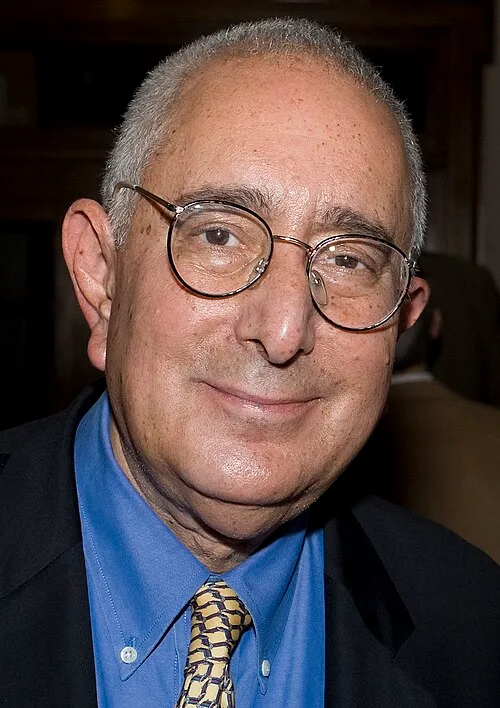
Ben Stein's famous monotonous lecture about the Smoot–Hawley Tariff Act was not originally in Hughes's script. Stein, by happenstance, was lecturing off-camera to the amusement of the student cast. "I was just going to do it off camera, but the student extras laughed so hard when they heard my voice that (Hughes) said do it on camera, improvise, something you know a lot about. When I gave the lecture about supply-side economics, I thought they were applauding. Everybody on the set applauded. I thought they were applauding because they had learned something about supply-side economics. But they were applauding because they thought I was boring. ... It was the best day of my life," Stein said.
The parade scene took multiple days of filming; Broderick spent some time practicing the dance moves. "I was very scared," Broderick said. "Fortunately, the sequence was carefully choreographed beforehand. We worked out all the moves by rehearsing in a little studio. It was shot on two Saturdays in the heart of downtown Chicago. The first day was during a real parade, and John got some very long shots. Then radio stations carried announcements inviting people to take part in 'a John Hughes movie'. The word got around fast and 10,000 people showed up! For the final shot, I turned around and saw a river of people. I put my hands up at the end of the number and heard this huge roar. I can understand how rock stars feel. That kind of reaction feeds you."
Broderick's moves were choreographed by Kenny Ortega (who later choreographed Dirty Dancing). Much of it had to be scrapped, though, for Broderick had injured his knee badly during the scenes of running through neighbors' backyards. "I was pretty sore", Broderick said. "I got well enough to do what you see in the parade there, but I couldn't do most of Kenny Ortega's knee spins and things like that that we had worked on. When we did shoot it, we had all this choreography and I remember John would yell with a megaphone, 'Okay, do it again, but don't do any of the choreography', because he wanted it to be a total mess." "Danke Schoen" was somewhat choreographed but for "Twist and Shout", Broderick said, "we were just making everything up." Hughes explained that much of the scene was spontaneously filmed. "It just happened that this was an actual parade, which we put our float into—unbeknownst to anybody, all the people on the reviewing stand. Nobody knew what it was, including the governor."
Wrigley Field is featured in two interwoven and consecutive scenes. In the first scene, Rooney is looking for Ferris at a pizza joint while Harry Caray's voice announces the action of a ballgame that is being shown on TV. From the play-by-play descriptions, the uniforms, and the player numbers, this game has been identified as the June 5, 1985, game between the Atlanta Braves and the Chicago Cubs.
In the next scene, Sloane, Cameron, and Ferris are in the left field stands inside Wrigley. Ferris flexes his hand in pain after supposedly catching the foul ball. During this scene, the characters enjoy the game and joke about what they would be doing if they had played by the rules. All these "in the park" shots, including the one from the previous scene where Ferris catches the foul ball on TV, were filmed on September 24, 1985, at a game between the Montreal Expos and the Cubs. During the 1985 season, the Braves and the Expos both wore powder blue uniforms during their road games so, with seamless editing by Hirsch, it is difficult to distinguish that the game being seen and described in the pizza joint is not only a different game but also a different Cubs' opponent from the one filmed inside the stadium. On October 1, 2011, Wrigley Field celebrated the 25th anniversary of the film by showing it on three giant screens on the infield.