Plot
In 1300 B.C., Moses, a general in the household of the Egyptian royal family, prepares to attack an encamped Hittite army with Prince Ramesses at Kadesh. A High Priestess divines a prophecy, which she relates to Ramesses's father, Seti I. Seti reveals it to Moses and Ramesses: one of them will save the other during the battle and go on to become a great leader. Moses then saves Ramesses, leaving both men troubled.
Moses departs for Pithom to meet with Viceroy Hegep, who oversees the Hebrew slaves. Upon his arrival, he sees Joshua being lashed and is appalled by the other slaves' harsh conditions. Moses helps Joshua and learns that Nun is looking for him. Upon finding the old man, he discovers his true origins; born during the extermination of the Jewish heirs, the infant Moses was saved by his sister Miriam, a servant of Pharaoh's daughter. Moses is stunned at this and leaves angrily; unbeknownst to him, two Hebrews overhear Nun's story and report it to the Viceroy.
Seti dies, and Ramesses is anointed as the new Pharaoh, Ramesses II. Hegep reveals Moses's true lineage to curry favor, but Ramesses is unconvinced. At the urging of Queen Tuya, he interrogates Miriam, who denies being Moses's sister. When Ramesses threatens to cut off her arm, Moses intervenes and confirms he is a Hebrew. Although Tuya wants Moses killed, Ramesses sentences him instead to exile. Before leaving Egypt, Moses meets with his adopted mother and Miriam, who refer to him by his birth name of Moshe. Following a journey into the desert where he kills two men sent to murder him, Moses comes to Midian where he meets Zipporah and her father, Jethro. He becomes a humble shephard, marries Zipporah, and has a son, Gershom.
Years later, Moses is injured in a rockslide. Through a burning bush, he hears a voice telling him to free the Hebrews with the guidance of a boy, a messenger of the God of Abraham called Malak. Moses reveals his past to Zipporah and tells her what he has been asked to do. She opposes his leaving, but Moses departs regardless.
In Egypt, Moses reunites with Nun and Joshua and meets his brother Aaron for the first time. Moses confronts Ramesses, demanding the Hebrews be released from servitude. Ramesses refuses and mocks the existence of God; when Moses threatens him, he declares that Hebrew slaves will be put to death until Moses is killed. With no other recourse, Moses organizes a Hebrew insurgency to resist the Egyptians. Malak then declares to Moses that ten plagues will affect Egypt to demonstrate God's power.
Despite the horror of the first nine plagues, Ramesses does not free the Hebrews, even oppressing his own people to silence their complaints. Moses is horrified to learn that the tenth plague will be the death of all firstborn children but follows through with the plan, instructing the Hebrews to mark their doors with lambs' blood. That night, all of Egypt's firstborn children die, including Ramesses's infant son. Devastated, Ramesses allows the Hebrews to leave.
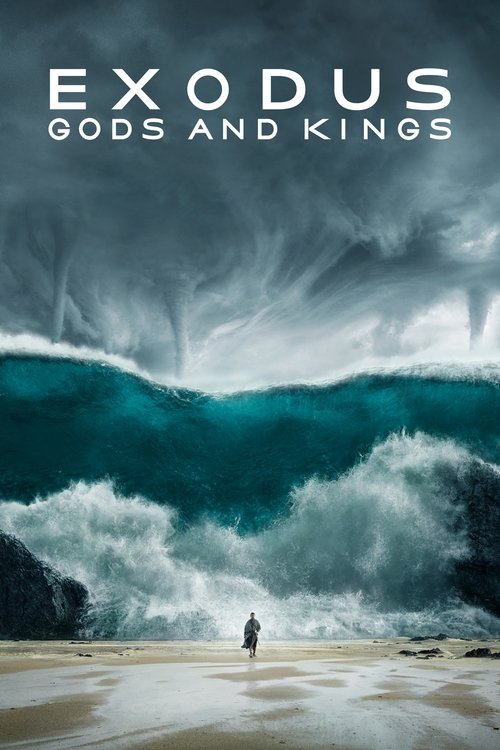
Moses guides his people towards the Red Sea. Still grieving his son, Ramesses assembles his army and gives chase. After making their way through a dangerous mountain pass, the Hebrews find the ocean too deep to cross. Uncertain about what to do, Moses stops for the night in despair and flings his sword into the sea. A comet then crashes into the sea, and by morning, it has separated into a path. The Egyptians catch up on their horses and chariots; Moses stays behind to fight while his people run for their lives. The Sea reverts, drowning the majority of the Egyptians who are still crossing. Ramesses survives and can only lament what he has lost. Moses leads the Hebrews back to Midian, where he reunites with Zipporah and Gershom. At Mount Sinai, he receives the Ten Commandments.
Forty years later, an elderly Moses is riding with the Ark of the Covenant. Unsure that the Hebrews will ever reach the promised land, Moses notices Malak walking beside them in the desert.










.jpg?width=400)