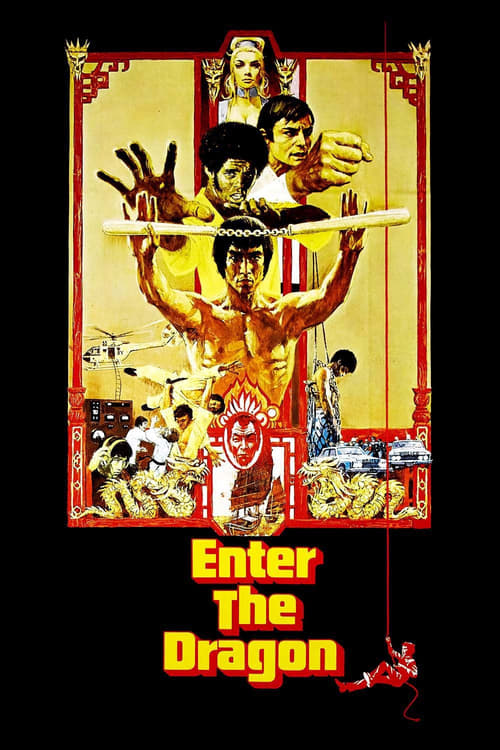
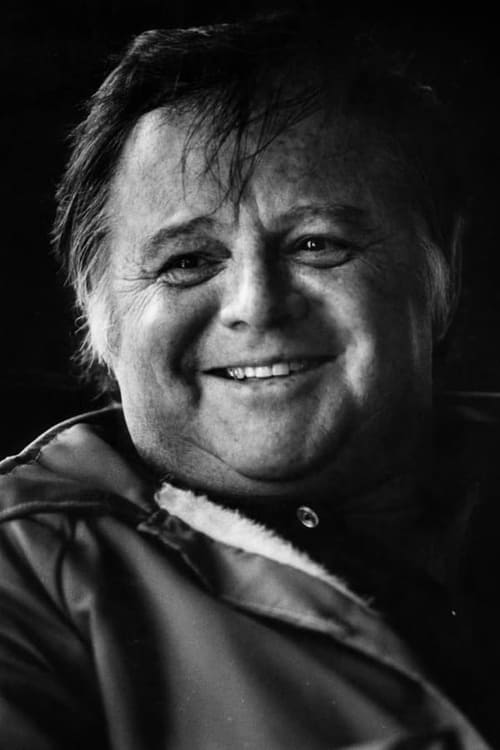
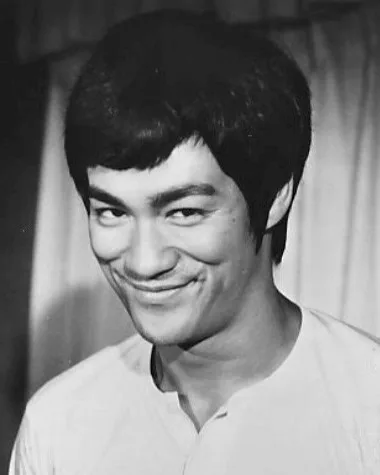
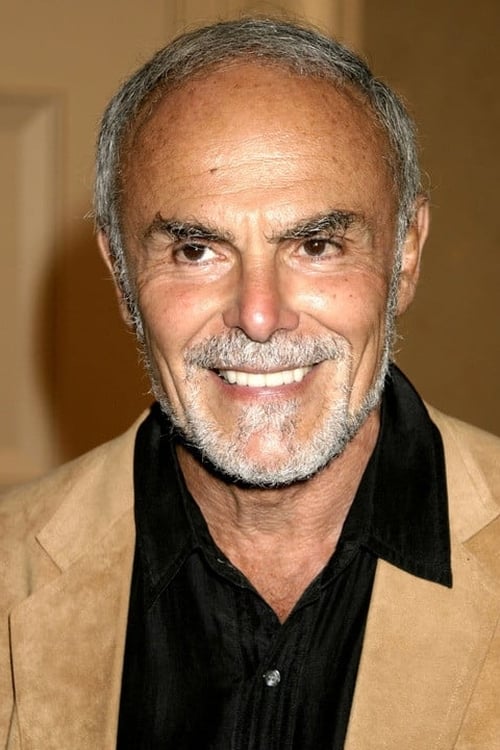
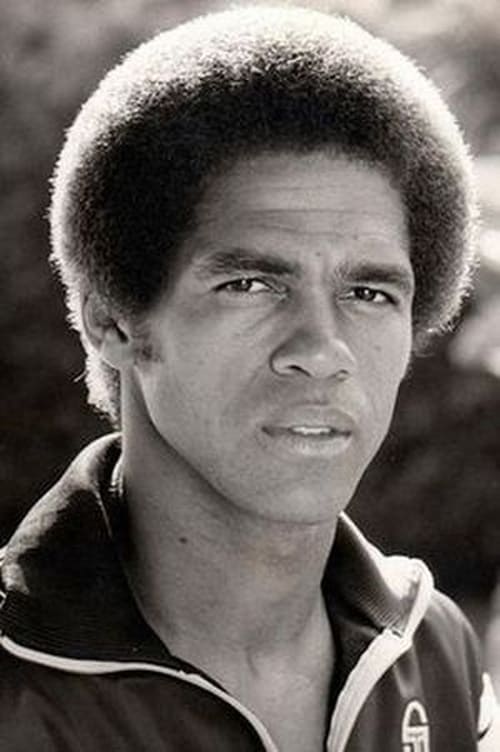
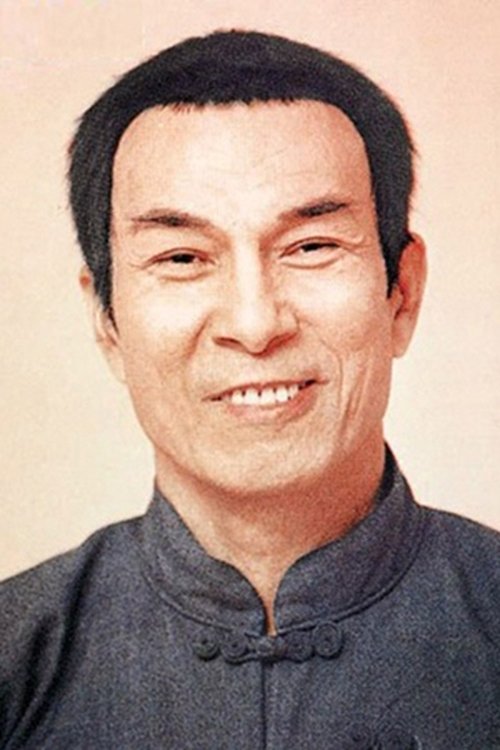

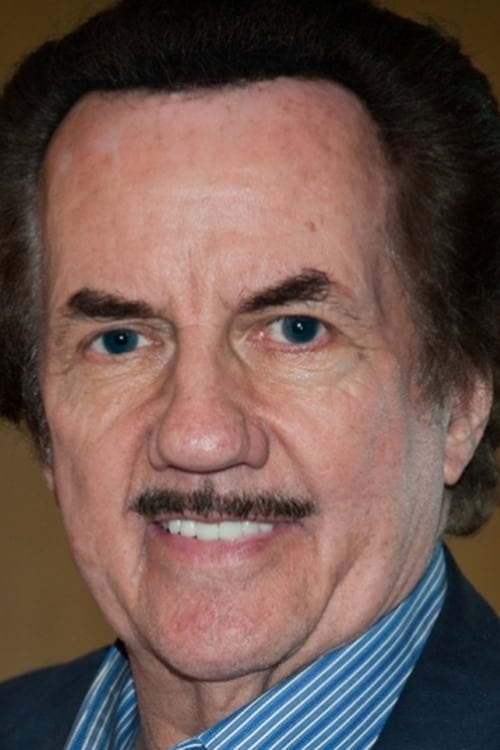


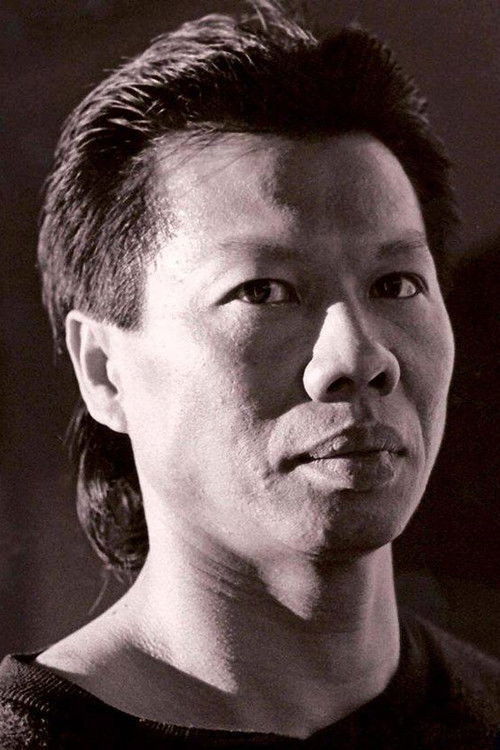
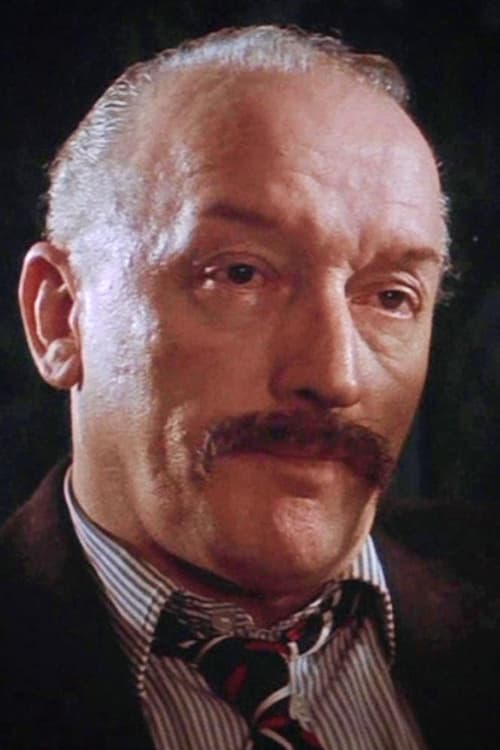
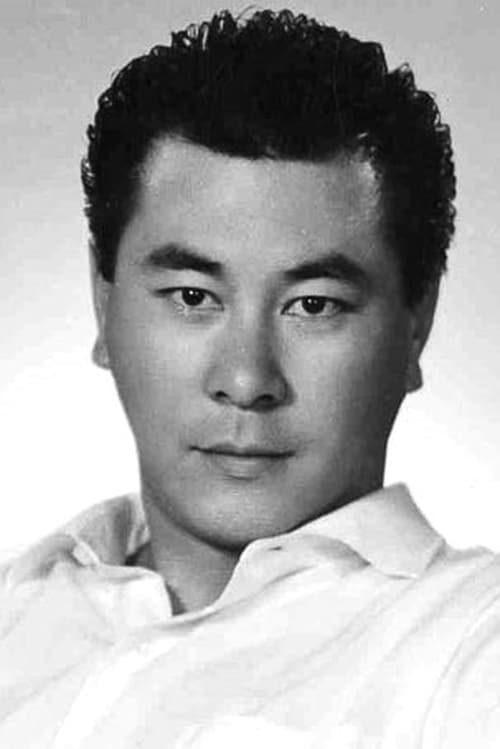

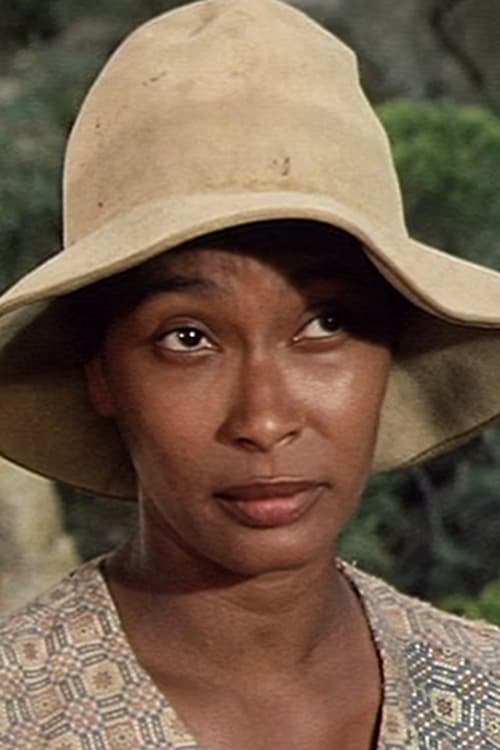
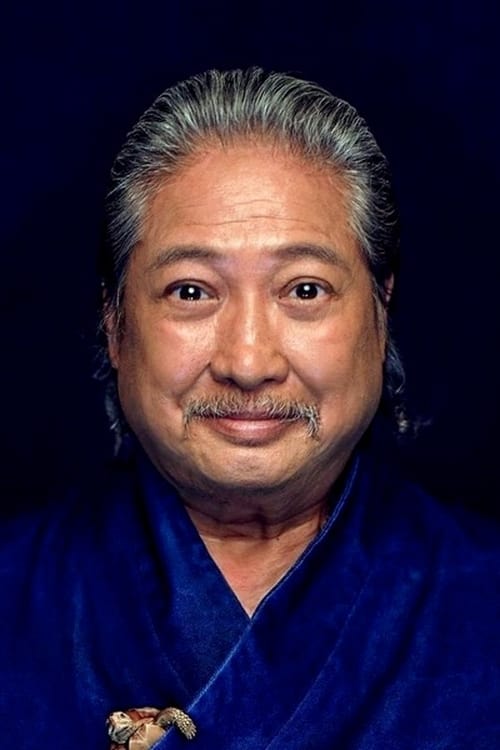
Enter the Dragon or fully titled as Enter the Dragon: The Deadly Three is a 1973 martial arts film directed by Robert Clouse and written by Michael Allin. The film stars Bruce Lee, John Saxon, Ahna Capri, Bob Wall, Shih Kien, and Jim Kelly. Enter the Dragon was Bruce Lee's final completed film appearance before his death on 20 July 1973 at the age of 32. An American-Hong Kong co-production, the film premiered in Hong Kong on 26 July 1973, six days after Lee's death, and in Los Angeles on 19 August 1973.
Enter the Dragon grossed an estimated $400 million worldwide (equivalent to an estimated $2 billion adjusted for inflation as of 2022) against a budget of $850,000. It is the most successful martial arts film ever and is widely regarded as one of the greatest martial arts films of all time. In 2004, it was selected for preservation in the United States National Film Registry by the Library of Congress as being "culturally, historically, or aesthetically significant". Among the first films to combine martial arts action with spy film elements and the emerging blaxploitation genre, its success led to a series of similar productions combining the martial arts and blaxploitation genres. The film's themes have generated scholarly debate about the changes taking place within post-colonial Asian societies following the end of World War II.
Enter the Dragon is also considered one of the most influential action films of all time, with its success contributing to mainstream worldwide interest in the martial arts as well as inspiring numerous fictional works, including action films, television shows, action games, comic books, manga, and anime.
Contents
Plot
Lee, a martial artist and instructor from the Shaolin temple, is approached by British intelligence agent Braithwaite, who asks for his help in an undercover mission to investigate Han, a suspected crime lord, who was one of the students in the Shaolin temple.
Since Han's island is only partly in British jurisdiction, they are unable to conduct any formal investigations into Han's involvement in drug trafficking and prostitution. Han's only connection to the outside world is his martial arts school, where he holds a tournament that invites fighters from across the world to compete. Lee agrees to help Braithwaite, believing his efforts will redeem the honor of the Shaolin temple that was tarnished by Han. His mission is to gather evidence that will prove Han's involvement in illegal activities, which will prompt the authorities to raid the island. While Lee will be mostly be on his own and unarmed during this mission, Braithwaite informs him that they have planted a covert agent on the island, Mei-Ling, who they have lost contact with. Shortly before his departure, Lee also learns that Han's bodyguard O'Hara is responsible for the death of his sister Su-Lin.
Joining Lee are other competitors, including Roper, an American playboy and gambler who is indebted and on the run from the mob; Williams, an African-American activist who is on the run after defending himself against racist police officers in Los Angeles; and Parsons, an arrogant and overconfident New Zealander. They are all taken from Hong Kong harbour to Han's island on a motorised junk; on the way, Lee humiliates Parsons in return for abusing one of the crew.
On the evening of their arrival, all of the tournament competitors attend a banquet, where Han himself appears and greets them. Lee spots Mei-Ling among Han's entourage. After the banquet, Han's assistant Tania goes to each of the competitor's rooms to offer them girls for the night. Williams chooses several women, while Roper chooses Tania as a mutual attraction grows between them. Lee chooses Mei Ling, who is able to brief him on the island and what's been happening. Mei-Ling has been unable to escape Han's observation in the palace, but lets Lee know that the girls are slowly disappearing over time.
On the first day of the tournament, Parsons is selected to fight Williams. Williams defeats him easily, and Parsons is never seen again. Roper is selected to fight Liu, one of the other visitors, and also defeats him.
Production
Development
Due to the success of his earlier films, Warner Bros. started a co-production with Bruce Lee's Concord Production Inc., co-distribution to Raymond Chow's Golden Harvest. They brought in producers Fred Weintraub and Paul Heller's Sequoia Pictures (a production house affiliated with Warner Bros.). The film was produced on a tight production budget of $850,000. Fighting sequences were staged by Bruce Lee.
The screenplay title was originally named Blood and Steel. Bruce Lee came up with the name Enter the Dragon and was intending to use it for The Way of the Dragon but surrendered the title to Warner Bros. Heller produced a treatment inspired by the comic strip Terry and the Pirates and hired screenwriter Michael Allin to develop it into a screenplay. Allin conceived of the film as an homage to James Bond. The story features heroic protagonists who are Asian, White, and Black, as the producers wanted a film that would appeal to the widest possible international audience.
Pre-production
Lee and Allin did not get along, and Weintraub told Lee that he would fire Allin but did not actually do so. Lee perceived the film as a cheap B-movie that would serve as a transitional film to introduce his talents and style to Hollywood. Lee's role was originally conceived as a straightforward Chinese version of James Bond. Lee rejected this because of Bond's status as a symbol of British imperialism and convinced the producers to re-conceive of his character as a Shaolin monk. Lee insisted on re-titling the film Enter the Dragon, to considerable resistance from the studio.
The scene in which Lee states that his style is "Fighting Without Fighting" is based upon a famous anecdote involving the 16th century samurai Tsukahara Bokuden.
All of the actors were hired at low wages. Rod Taylor was first choice for playing the down-on-his-luck martial artist Roper. Director Robert Clouse had already worked with Taylor in the 1970 film Darker than Amber. However, Taylor was dropped after Bruce Lee deemed him to be too tall for the role. John Saxon, who was a black belt in Judo and Shotokan Karate (he studied under grandmaster Hidetaka Nishiyama for three years), became the preferred choice. During contractual negotiations, Saxon's agent told the film's producers that if they wanted him they would have to change the plot so that the character of Williams is killed instead of Roper. They agreed and the script was changed. In a six decade career, the character would become one of Saxon's best known roles.
Rockne Tarkington was originally cast in the role of Williams. However, he unexpectedly dropped out days before the production was about to begin in Hong Kong. Producer Fred Weintraub knew that karate world champion Jim Kelly had a training dojo in Crenshaw, Los Angeles, so he hastily arranged a meeting. Weintraub was immediately impressed, and Kelly was cast in the film. The success of Kelly's appearance launched his career as a star: after Enter the Dragon, he signed a three-film deal with Warner Bros. and went on to make several martial arts-themed blaxploitation films in the 1970s.
Filming
Jackie Chan has uncredited roles as various guards during the fights with Lee. However, Yuen Wah was Lee's main stunt double for the film, responsible for the gymnastics stunts such as the cartwheels and jumping back flip in the opening fight.
Sammo Hung also has an uncredited role in the opening fight scene against Lee at the start of the film.
Lee originally wanted to cast Chuck Norris as Han's bodyguard, O'Hara; Bob Wall was the second choice. A rumour surrounding the making of Enter The Dragon claims that Wall did not like Bruce Lee and that their fight scenes were not choreographed. However, Wall has denied this, stating he and Lee were good friends. In one of their fight scenes, Lee injured his hand on a shattered bottle held by Wall, which angered Lee.
The production hired prostitutes to play Han's harem. The visibility of their roles led the actresses to demand higher wages, which then led the stuntmen to consider striking, because they were paid less.
The film was shot on location in Hong Kong. In keeping with local film-making practices, scenes were filmed without sound: dialogue and sound effects were added or dubbed in during post-production. Bruce Lee, after he had been goaded or challenged, fought several real fights with the film's extras and some set intruders during filming. The scenes on Han's Island were filmed at a residence known as Palm Villa near the coastal town of Stanley. The villa is now demolished and the area heavily redeveloped around Tai Tam Bay where the martial artists were filmed coming ashore.
Soundtrack
Argentinian musician Lalo Schifrin composed the film's musical score. While Schifrin was widely known at the time for his jazz scores, he also incorporated funk and traditional film score elements into the film's soundtrack. He composed the score by sampling sounds from China, Korea, and Japan. The soundtrack has sold over 500,000 copies, earning a gold record.
Release
Theatrical
Studio executives were impressed by the quality of the film and the earlier surprise success of Five Fingers of Death, which demonstrated a market for kung fu films. Enter the Dragon was heavily advertised in the United States before its release. The budget for advertising was over US$1 million. It was unlike any promotional campaign that had been seen before, and was extremely comprehensive. To advertise the film, the studio offered free Karate classes, produced thousands of illustrated flip books, comic books, posters, photographs, and organised dozens of news releases, interviews, and public appearances for the stars. Esquire, The Wall Street Journal, Time, and Newsweek all wrote stories on the film.
Enter the Dragon was one of the most successful films of 1973. Upon release in Hong Kong, the film grossed HK$3,307,536, which was huge business for the time, but less than Lee's previous 1972 films Fist of Fury and The Way of the Dragon.
In North America, the film was receiving offers of US$500,000 (equivalent to $3,600,000 in 2025) from American distributors by April 1973 for the distribution rights, several months before release. Upon its limited release in August 1973 in four theatres in New York, the film entered the weekly box office charts at number 17 with a gross of $140,010 (equivalent to $1,020,000 in 2025) in 3 days. Upon its expansion the following week, it topped the charts for two weeks. Over the next four weeks, it remained in the top 10 while competing with other kung fu films, including Lady Kung Fu, The Shanghai Killers and Deadly China Doll which held the top spot for one week each.
In October, Enter the Dragon regained the top spot in its eighth week. It sold 14.1 million tickets and grossed $25,000,000 (equivalent to $180,000,000 in 2025) from its initial American release, making it the year's fourth highest-grossing film in the market. It was repeatedly re-released throughout the 1970s, with each re-release entering the top five in the box office charts. The film's US gross had increased to $100 million by 1982, and more than $120 million (equivalent to $740 million adjusted for inflation) by 1998.
In the UK, the film initially monopolised several London West End cinemas for five weeks, before becoming a sellout success across Britain and the rest of Europe. In England, it grossed over $2.5 million. In Spain, it was the seventh top-grossing film of 1973, selling 2,462,489 tickets. In France, it was one of the top five highest-grossing films of 1974 (above two other Lee films, The Way of the Dragon at number 8 and Fist of Fury at number 12), with 4,444,582 ticket sales. In Germany, it was one of the top 10 highest-grossing films of 1974, with 1.7 million ticket sales. In Greece, the film earned $1,000,000 (equivalent to $7,300,000 in 2025) in its first year of release.
Home media
Enter the Dragon has remained one of the most popular martial arts films since its premiere and has been released numerous times worldwide on multiple home video formats. For almost three decades, many theatrical and home video versions were censored for violence, especially in the West. In the UK alone, at least four different versions have been released. Since 2001, the film has been released uncut in the UK and most other territories. Most DVDs and Blu-rays come with a wide range of extra features in the form of documentaries, interviews, etc. In 2013, a second, remastered HD transfer appeared on Blu-ray, billed as the "40th Anniversary Edition".
In 2020, new 2K digital restorations of the theatrical cut and special edition were included as part of the Bruce Lee: His Greatest Hits box set by The Criterion Collection (under licensed from Warner Bros. Home Entertainment through the physical home media joint venture in US and Canada named Studio Distribution Services and Fortune Star Media Limited), which featured all of Lee's films, as well as Game of Death II. In 2023 Warner Bros. Home Entertainment released a 4K restored version with HDR and Dolby Atmos audio track on 4K Blu-Ray disc as part of the movies 50th anniversary.
Reception
Upon release, the film initially received mixed reviews from several critics, including a favourable review from Variety magazine. The film eventually went on to be well received by most critics, and it is widely regarded as one of the best films of 1973. Critics have referred to Enter the Dragon as "a low-rent James Bond thriller", a "remake of Dr. No" with elements of Fu Manchu. J.C. Maçek III of PopMatters wrote, "Of course the real showcase here is the obvious star here, Bruce Lee, whose performance as an actor and a fighter are the most enhanced by the perfect sound and video transfer. While Kelly was a famous martial artist and a surprisingly good actor and Saxon was a famous actor and a surprisingly good martial artist, Lee proves to be a master of both fields."
Many acclaimed newspapers and magazines reviewed the film. Variety described it as "rich in the atmosphere", the music score as "a strong asset" and the photography as "interesting". The New York Times gave the film a rave review: "The picture is expertly made and well-meshed; it moves like lightning and brims with color. It is also the most savagely murderous and numbing hand-hacker (not a gun in it) you will ever see anywhere."
The film holds an 88% approval rating on the review aggregation website Rotten Tomatoes based on 78 reviews, with an average rating of 7.80/10. The site's critical consensus reads, "Badass to the max, Enter the Dragon is the ultimate kung-fu movie and fitting (if untimely) Bruce Lee swan song." On Metacritic, it has a weighted average score of 83 out of 100 based on reviews from 16 critics, indicating "universal acclaim". In 2004, the film was deemed "culturally significant" by the Library of Congress and selected for preservation in the National Film Registry.
Enter the Dragon was selected as the best martial arts film of all time, in a 2013 poll of The Guardian and The Observer critics. The film also ranks No. 474 on Empire magazine's 2008 list of The 500 Greatest Movies of All Time.
Enter the Dragon has been parodied and referenced in places such as the 1976 film The Pink Panther Strikes Again, the satirical publication The Onion, the Japanese game-show Takeshi's Castle, and the 1977 John Landis comedy anthology film The Kentucky Fried Movie (in its lengthy "A Fistful of Yen" sequence, basically a comedic, note for note remake of Dragon) and also in the film Balls of Fury. It was also parodied on television in That '70s Show during the episode Jackie Moves On with regular character Fez taking on the Bruce Lee role. Several clips from the film are comically used during the theatre scene in The Last Dragon. Lee's martial arts films were broadly lampooned in the recurring Almost Live! sketch Mind Your Manners with Billy Quan. Ram Gopal Varma directed the martial-arts film Ladki: Dragon Girl after being heavily inspired by the film.


