Musical equipment
When Dunn was 16, he bought his first bass guitar, a Kay 162 electric bass. About a year later, he acquired his first Fender Precision Bass, with sunburst body, rosewood fingerboard, and gold anodized pickguard. He lost that bass when Otis Redding and members of the Bar-Kays were killed in a plane crash, and the bass was on loan to bassist James Alexander. Dunn's second Fender bass was a 1959 Fender Precision Bass, with sunburst body, one-piece maple neck and gold anodized pickguard; he owned it until his death. Throughout his life, Dunn believed this was a 1958 model, but after his death, his son Jeff had work done on it, and the neck was inscribed "4-59," putting the date definitively as 1959. During the 1960s, he used a nearly identical 1959 model, but it was outfitted with a rosewood fretboard. He was an avid user of thick La Bella flatwound strings, as was James Jamerson.
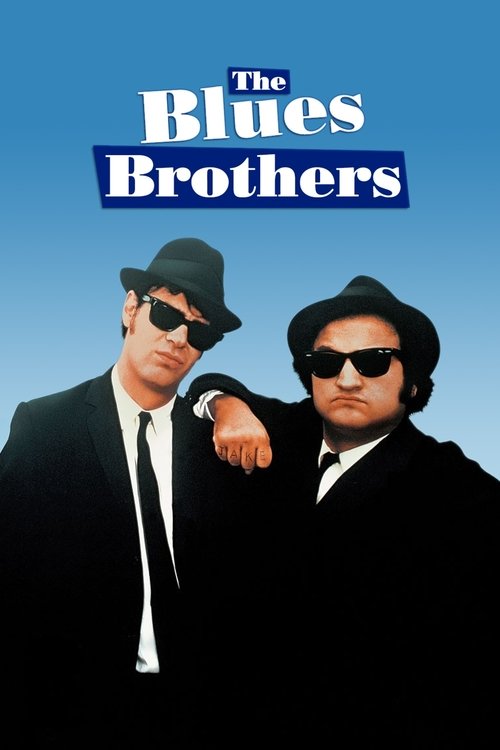
While filming The Blues Brothers, Dunn used a sunburst early '70s Fender Precision bass with a rosewood fretboard and a "tortoiseshell" pickguard. He also used a red 1966 Precision in some of the scenes, a bass stamped "Demo" on the back, which was later fitted with a late '60s Jazz Bass neck. It was a combination that was popular with other top-level players, including Carl Radle, and Billy Cox. This "Jazzision" became the basis for a Skyline Series signature bass made by the Chicago bass company Lakland nearly 20 years later. Dunn also used a white late-70s Precision Bass when performing Minnie the Moocher with Cab Calloway.
In 1980, with the popular Blues Brothers Band touring regularly, Fender gave Dunn a new bass to try, the company's first active electronics equipped model, the Precision Bass Special. His bass (serial number E0xx009) was finished in his favorite color, Candy Apple Red, with a matching headstock, and featured a one-piece maple neck, and gold hardware. He played this bass briefly, before gifting it to a friend.
In the mid-1980s, after nearly three decades, Dunn switched from Fender instruments, and became an endorser for Mississippi-based Peavey. He played their "Dyna Bass" model – finished in his favorite red – on stage and in the studio for a number of years. Over the decades, he was given various basses by friends and admirers, which included models by Travis Bean, Rickenbacker, Gibson, custom builders, and others, but his everyday instrument was always his Precision.
In 1998, Dunn collaborated with Fender to produce a signature Precision Bass: a candy apple red model based on the late 1950s style, with a gold anodized pickguard, split coil humbucking pickup, maple neck, and vintage hardware for a limited production of 200 instruments. The Bass was offered only for a limited time. The Dunn family has serial numbers XXX001, XXX002, and XXX003 in their collection. #002 is currently on display at the Hard Rock Cafe in Orlando, Florida.
Fellow studio legend Bob Glaub introduced Dunn to the people at Lakland, and based on his "Jazzision" bass from the Blues Brothers movie, the company's Duck Dunn signature model was released (later available as the model 44-64 Custom). Dunn played his final shows on one of these basses, and that bass remains with his son Jeff, complete with sweat streaks from his final moments of playing. Some of Dunn's basses are displayed at Hard Rock Cafe locations, some are in museums (like the Rock & Roll Hall of Fame in Cleveland), and others are in the hands of private collectors.
Over the years, Dunn played through an Ampeg Portaflex, or "Fliptop", B-15 combo (so named for its head that flipped over to store in the cabinet), as well as a Kustom 200 stack, and a Fender rig. He is best known for his use of an Ampeg SVT head and the company's matching 8×10" cabinet through his endorsement deal with Ampeg.