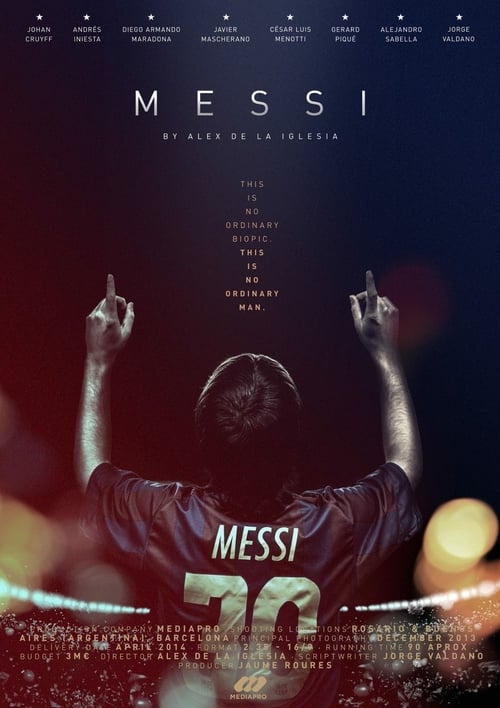
Diego Armando Maradona (30 October 1960 – 25 November 2020) was an Argentine professional football player and manager. Widely regarded as one of the greatest players in history, he was one of the two joint winners of the FIFA Player of the Century award, alongside Pelé.
Maradona was seen as an advanced playmaker who operated in the classic number 10 position. He was known for his vision, passing, ball control, and dribbling skill, and was known as a free kick specialist. His small stature gave him a low centre of gravity and allowed him to manoeuvre better than most other players. His presence and leadership on the field had a great effect on his team's performance, and he was given the nickname El Pibe de Oro ("The Golden Boy").
Maradona played for Argentinos Juniors, Boca Juniors, Barcelona, Napoli, Sevilla and Newell's Old Boys during his club career. He led Napoli to their first Serie A league title, and their second three years later; he was later banned from the club for taking cocaine. He was the first player to set the world record transfer fee twice: in 1982 when he transferred to Barcelona for £5 million, and in 1984 when he moved to Napoli for £6.9 million.
In his international career with Argentina, Maradona earned 91 caps and scored 34 goals. He played in four editions of the FIFA World Cup, including the 1986 World Cup, where he led Argentina to victory as captain and won the Golden Ball as the tournament's best player. In the 1986 World Cup quarter final, he scored both goals in a 2–1 victory over England. His first goal was an unpenalized handling foul known as the "Hand of God", while his second goal came after a 60-metre (66 yd) dribble past five England players; it was voted "Goal of the Century" by FIFA.com voters in 2002.
Maradona became the manager of the Argentina national team in November 2008, and departed after the 2010 World Cup. He coached the United Arab Emirates (UAE) club Al Wasl during the 2011–12 season, and was the chairman of the Belarusian club Dynamo Brest for several months in 2018. He also coached the UAE club Fujairah (2017–2018), the Mexican club Dorados (2018–2019) and the Argentine club Gimnasia de La Plata (2019–2020). Maradona died on 25 November 2020.
Contents
Early life
Maradona was born on 30 October 1960, at the Policlínico Evita Hospital in Lanús, Buenos Aires Province, to a poor Roman Catholic family. He was raised in Villa Fiorito, a shantytown on the southern outskirts of Buenos Aires. His father, also named Diego Maradona, worked at a chemicals factory. His mother, Dalma Salvadora Franco, was of Italian and Croatian descent. Maradona's parents grew up in Esquina in the north-east province of Corrientes, and moved to Buenos Aires in the 1950s. Maradona's two younger brothers, Hugo and Raúl, both became professional footballers. He also had four older sisters.
Maradona received his first football as a gift at age three and quickly became devoted to the game. At age eight, he was spotted by a talent scout while he was playing at Estrella Roja, his local club. In March 1969, Maradona was recommended to Los Cebollitas (The Little Onions), the junior team of Buenos Aires's Argentinos Juniors club, by his friend Gregorio Carrizo, who had already been recruited by coach Francis Gregorio Cornejo. Cornejo later remarked that the eight-year-old Maradona played football like an adult. Maradona became a star for the Cebollitas, and as a 12-year-old ball boy he entertained spectators with his ball skills during the halftime breaks of Argentinos Juniors' first division games. During 1973 and 1974, Maradona led the Cebollitas to two Evita Tournament victories and 141 undefeated games in a row, playing alongside Adrian Domenech and Claudio Rodríguez on what is regarded as the best youth team in the history of Argentine football. Maradona named Brazilian playmaker Rivellino and Manchester United winger George Best among his inspirations growing up.
Club career
Argentinos Juniors
On 20 October 1976, Maradona made his professional debut for Argentinos Juniors, ten days before his 16th birthday. He became the youngest player in the history of the Argentine Primera División, and entered the match against Talleres de Córdoba wearing the number 16 jersey. A few minutes into the match, Maradona kicked the ball through the legs of Juan Domingo Cabrera, a nutmeg that would become symbolic of his talent. After the game, Maradona said: "That day I felt I had held the sky in my hands." Thirty years later, Cabrera recalled Maradona's debut: "I was on the right side of the field and went to press him, but he didn't give me a chance. He made the nutmeg and when I turned around, he was far away from me."
Maradona scored his first two goals as a professional against the Marplatense club San Lorenzo on 14 November 1976, two weeks after turning 16. He made 11 appearances in his debut season. During the 1977 season, he scored 19 goals in 49 matches, and began to attract the attention of other South American clubs. In the 1978 season, he scored 26 goals in 35 matches; to the surprise of many, he was not selected for the 1978 World Cup by coach César Luis Menotti. In 1979, Maradona scored 26 goals in 26 games, and finished as the top scorer in both the Metropolitan and Nacional tournaments. In 1980, he scored 43 goals in 45 appearances and was the top scorer during four consecutive tournaments. In total, Maradona spent five years at Argentinos Juniors, scoring 115 goals in 167 appearances.
Boca Juniors
Maradona completed a US$4-million transfer to the Argentine club Boca Juniors in February 1981. He had received offers from other clubs, including River Plate, which offered to make him their highest paid player. However, River ultimately dropped their bid due to their large payroll and desire to retain Daniel Passarella and Ubaldo Fillol. Maradona made his debut for Boca on 22 February against Talleres de Córdoba, scoring twice in a 4–1 win. On 10 April, he played his first Superclásico against River Plate at La Bombonera stadium. Boca defeated River 3–0 with Maradona scoring once. Despite the distrustful relationship between Maradona and Boca Juniors manager Silvio Marzolini, Boca won the 1981 league title.
Barcelona
In 1982, Maradona transferred to Barcelona for a then-world record fee of £5 million ($7.6 million). According to Barcelona player Lobo Carrasco, Maradona’s teammates were so amazed by his ball control that they simply stood by and watched him dribble during an early training session. During the 1982–83 season, under coach César Luis Menotti, Barcelona won the Copa del Rey and the Copa de la Liga, defeating their longtime rivals Real Madrid in both tournaments. In the final of the Copa del Rey, Maradona assisted Víctor Muñoz's goal in a 2–1 win. In the first leg of the Copa de la Liga finals at Estadio Santiago Bernabéu in Madrid, he assisted Carrasco's goal and then scored one himself as the game ended in a 2–2 draw. Maradona became the first Barcelona player to receive a standing ovation at the Bernabéu. Three days later, Barcelona won the second leg against Real Madrid 2–1, with Maradona scoring from a penalty kick. In September 1983, a tackle by Andoni Goikoetxea of Athletic Bilbao caused a fracture in Maradona's left ankle.
During the 1984 Copa del Rey Final against Athletic Bilbao in Madrid, Bilbao fans taunted Maradona with racist insults related to his father's Indigenous ancestry. After receiving another rough tackle from Goikoetxea and being confronted by Bilbao's Miguel Sola after Barcelona lost 1–0, Maradona headbutted Sola. He then elbowed a Bilbao player in the face and kneed another in the head, knocking him unconscious. Goikoetxea kicked Maradona in the chest, and a brawl ensued between the Barcelona and Bilbao squads. The brawl played out in front of King Juan Carlos of Spain and 100,000 spectators in the stadium, with more than half of Spain watching on television. Spectators began throwing objects at players, coaches and photographers, and sixty people were injured. It was the final Barcelona game for Maradona, who was known for his disputes with Barcelona executives, particularly club president Josep Lluís Núñez. Following the brawl, Maradona was transferred to the Italian club Napoli for £6.9 million ($10.48 million), another world record fee at the time. During Maradona's two seasons at Barcelona, he scored 38 goals in 58 appearances.
Napoli
On 5 July 1984, Maradona was presented as a Napoli player in front of 75,000 spectators at the Stadio San Paolo in Naples, Italy. Sports journalist David Goldblatt wrote that Napoli fans viewed Maradona as a "saviour". A local newspaper wrote that although Naples lacked a "mayor, houses, schools, buses, employment and sanitation, none of this matters because we have Maradona". Prior to Maradona's arrival, Italian football was dominated by teams from the north and centre of the country, such as AC Milan, Juventus, Inter Milan and Roma, and no team in the south of the Italian Peninsula had ever won a league title. When Maradona joined Napoli, the club was facing relegation from the top-tier Serie A league.
Maradona soon inherited the captain's armband from Napoli veteran defender Giuseppe Bruscolotti, and quickly became an adored star among the club's fans; in his time there he elevated the team to the most successful era in its history. Maradona played for Napoli at a period when north–south tensions in Italy were at a peak due to a variety of issues, notably the economic differences between the two.
Led by Maradona, Napoli won their first ever Serie A Championship in 1986–87. Goldblatt described the celebrations in Naples as "a round-the-clock carnival which ran for over a week". Murals of Maradona were painted on the city's ancient buildings, and newborn children were named after him. The same year, Napoli won the 1987 Coppa Italia final 4–0 on aggregate against Atalanta, with Maradona assisting Ciro Muro's goal in a 3–0 home victory in the first leg. In total, Maradona scored seven goals in ten matches during the competition. Shortly before the 1986 World Cup, he appeared for Tottenham Hotspur in a testimonial match for Osvaldo Ardiles against Internazionale.
The following season, the team's prolific attacking trio, formed by Maradona, Bruno Giordano, and Careca, was later dubbed the "Ma-Gi-Ca" (magical) front-line. Despite the team's failing to defend their league title, losing out to AC Milan after a collapse in the final four matches, Maradona was the Serie A top scorer in the 1987–88 season with 15 goals, and was the all-time leading goalscorer for Napoli, with 115 goals, until his record was broken by Marek Hamšík in 2017. He was also the top scorer for that season's Coppa Italia, scoring six goals, despite being eliminated in the quarter-finals by Torino, with Maradona's two goals in the second leg not enough to prevent the elimination. In the 1988–89 season, Napoli finished runner-up in the league and in the Coppa Italia, losing on aggregate to Sampdoria in the final; in the first leg, Maradona assisted Alessandro Renica's goal in a 1–0 home win, but Napoli were defeated 4–0 in the second leg. However the team avenged these runner-up finishes with the UEFA Cup title, won over two legs in the final against Stuttgart. During the second leg of the quarterfinals against rivals Juventus, Maradona scored a penalty, and Napoli eventually qualified to the next round after extra time. During the first leg of the finals, Maradona scored from a penalty in a 2–1 home victory and later assisted Careca's match-winning goal, while in the second leg on 17 May—a 3–3 away draw—he assisted Ciro Ferrara's goal with a header.
Late career
After serving a 15-month ban for failing a drug test for cocaine, Maradona left Napoli in 1992. Despite interest from Real Madrid and Marseille, he signed for Sevilla, where he stayed for one year. In 1993, he played for Newell's Old Boys and in 1995 he returned to Boca Juniors for two years. In 1996, he played in a friendly match for Toronto Italia alongside his brother Raul, against the Canadian National Soccer League All-Stars. In 2000, Maradona captained Bayern Munich against the German national team in a farewell exhibition game for Lothar Matthäus. Maradona was himself given a testimonial match on 10 November 2001, played between an all-star World XI team and the Argentina national team at La Bombonera. Maradona scored twice from penalty kicks during his team's 6–3 victory.
International career
Debut at age 16
Maradona made his full international debut at age 16, against Hungary, on 27 February 1977, only four months after his professional debut for Argentinos Juniors.
He was left off the Argentine squad for the 1978 World Cup on home soil by coach César Luis Menotti who felt he was too young at age 17. On 3 November 1978, just a few days after turning 18, Maradona played for the U20 Argentina team in a friendly match against Franz Beckenbauer's New York Cosmos, scoring twice in a 2–1 win.
1979 World Youth Championship and Copa América
At age 18, Maradona played the 1979 FIFA World Youth Championship in Japan and emerged as the star of the tournament, shining in Argentina's 3–1 final win over the Soviet Union, scoring a total of six goals in six appearances in the tournament. On 2 June 1979, Maradona scored his first senior international goal in a 3–1 win against Scotland at Hampden Park.
He went on to play for Argentina in two 1979 Copa América ties during August 1979, a 2–1 loss against Brazil and a 3–0 win over Bolivia in which he scored his side's third goal. Speaking thirty years later on the impact of Maradona's performances in 1979, FIFA President Sepp Blatter stated, "Everyone has an opinion on Diego Armando Maradona, and that's been the case since his playing days. My most vivid recollection is of this incredibly gifted kid at the second FIFA U-20 World Cup in Japan in 1979. He left everyone open-mouthed every time he got on the ball." Maradona and his compatriot Lionel Messi are the only players to win the Golden Ball at both the FIFA U-20 World Cup and FIFA World Cup. Maradona did so in 1979 and 1986, which Messi emulated in 2005 and 2014 (and again in 2022).
Maradona appeared at the 1979 Copa América, where Argentina had a poor performance, being knocked out in the first round. Maradona exited the tournament having scored once in a 3–0 victory against Bolivia.
1982 FIFA World Cup
Maradona played his first World Cup tournament in 1982 in his new country of residence, Spain. Argentina played Belgium in the opening game of the 1982 Cup at the Camp Nou in Barcelona. Maradona did not perform to expectations, as Argentina, the defending champions, lost 1–0. Although the team convincingly beat both Hungary and El Salvador in Alicante to progress to the second round, there were internal tensions within the team, with the younger, less experienced players at odds with the older, more experienced players. With a team that also included such players as Mario Kempes, Osvaldo Ardiles, Ramón Díaz, Daniel Bertoni, Alberto Tarantini, Ubaldo Fillol and Daniel Passarella, the Argentine side was defeated in the second round by Brazil and by eventual winners Italy. The Italian match is renowned for Maradona being aggressively man-marked by Claudio Gentile, as Italy beat Argentina at the Sarrià Stadium in Barcelona, 2–1.
Maradona played in all five matches without being substituted, scoring twice against Hungary. He was fouled repeatedly in all five games and particularly in the last one against Brazil at the Sarrià, a game that was blighted by poor officiating and violent fouls. With Argentina already down 3–0 to Brazil, Maradona's temper eventually got the better of him and he was sent off with five minutes remaining for a serious retaliatory foul against Batista.
1986 FIFA World Cup
Maradona captained Argentina to victory at the 1986 World Cup in Mexico. He played every minute of every Argentina game, scoring five goals and serving five assists. His first three assists came in Argentina's opening match, a 3–1 win over South Korea. His first goal of the tournament came in a 1–1 draw against Italy in the second group match. In the final group match, Maradona assisted Jorge Burruchaga's goal in a 2–0 win over Bulgaria. Argentina defeated Uruguay 1–0 in the first knockout round, a match that Maradona described as his best performance of the tournament.
Argentina's quarter-final match against England was played four years after the Falklands War, a conflict between Argentina and the United Kingdom. Argentina won the match 2–1, with Maradona scoring two goals. He scored the first goal by striking the ball with his hand. After the match, Maradona said the goal was scored "a little with the head of Maradona and a little with the hand of God". The goal, which had been allowed to stand by the referee, became known as the "Hand of God". In 2005, Maradona admitted that he had hit the ball with his hand on purpose, that his head did not touch the ball, and that he immediately knew the goal was illegitimate.
Four minutes after the Hand of God, Maradona scored his second goal, which was later voted by FIFA as the greatest goal in the history of the World Cup. He received the ball in his own half, and with 11 touches ran more than half the length of the field, dribbling past six English players, including goalkeeper Peter Shilton, before kicking the ball into the net. The goal was voted "Goal of the Century" in a 2002 online poll conducted by FIFA. In Argentina's semi-final victory against Belgium, Maradona scored two more goals. In the final, West Germany attempted to contain him by double-marking him, but in the 84th minute he served the assist to Burruchaga's game-winning goal. Argentina defeated West Germany 3–2 at the Estadio Azteca, with Maradona lifting the World Cup trophy as captain. During the tournament, Maradona scored or assisted ten of Argentina's 14 goals (71%) and was fouled 53 times—a World Cup record. He won the Golden Ball as the best player of the tournament by a unanimous vote. A statue of him scoring the Goal of the Century was later erected at the entrance to the Estadio Azteca.
Writing for Sportsnet, John Molinaro said that Maradona single-handedly won the 1986 World Cup for Argentina, while Roger Bennett of ESPN FC said Maradona delivered the most "virtuoso" performance in World Cup history. Kevin Baxter of the Los Angeles Times and Steven Goff of The Washington Post described Maradona's performance as one of the greatest performances in the history of tournament football. Russell Thomas of The Guardian referred to the Goal of the Century as arguably the greatest individual goal in history, while Molinaro called it "pure art" and possibly the greatest goal in football history. In reference to the Goal of the Century and the Hand of God goals, the French newspaper L'Équipe described Maradona as "half-angel, half-devil".
1987 and 1989 Copa América
At the 1987 Copa América in Argentina, Maradona scored three goals in four matches, including two goals in a 3–0 victory against Ecuador. Argentina lost the semi-final 1–0 against eventual champions Uruguay. At the 1989 Copa América in Brazil, Maradona provided an assist for Claudio Caniggia's goal in a 1–0 win over Uruguay in the first round. Argentina finished the tournament in third place.
1990 FIFA World Cup
At the 1990 World Cup in Italy, Maradona captained Argentina to a second consecutive World Cup final. His performance was hampered by an ankle injury that required injections of painkillers. In Argentina's second group match, a 2–0 win over the USSR, Maradona blocked a shot inside the box with his hand, which went unnoticed by the referee. The incident was compared to his "Hand of God" goal during the 1986 World Cup. In Argentina's final group match, Maradona assisted Pedro Monzón's goal from a corner kick in a 1–1 draw against Romania. In the round of 16 match against Brazil, Maradona served the assist for Claudio Caniggia's goal as Argentina achieved a 1–0 victory. The semi-final against Italy—played at Maradona's club stadium in Naples—went to a penalty shoot-out after a 1–1 draw. Maradona scored his penalty kick, which put Argentina through to the final, where they lost 1–0 to West Germany. The only goal came from a controversial penalty kick scored by Andreas Brehme. At the end of the match, Maradona burst into tears and blamed the referee for the loss.
1993 Artemio Franchi Cup
On 24 February 1993, Maradona returned to the national team when Argentina played the 1993 Artemio Franchi Cup against Denmark in Mar del Plata. Argentina won 5–4 in a penalty shoot-out after a 1–1 draw.
1994 FIFA World Cup
At the 1994 World Cup in the United States, Maradona failed a drug test for ephedrine and was expelled from the tournament for doping after two games. In the first game, he scored once as Argentina defeated Greece 4–0. The second game, a 2–1 victory over Nigeria, was his last game for Argentina. Maradona assisted both of Argentina's goals from free kicks. Argentina were subsequently eliminated in the round of 16 by Romania. According to Maradona, his personal trainer Daniel Cerrini ran out of the supplement "Ripped Fast" after the game against Greece and bought the similarly named "Ripped Fuel" believing it to be an equal substitute, unaware it contained ephedrine.
Unofficial international matches
Maradona played for an Argentina squad against the World XI in 1979 to mark the first anniversary of Argentina's first World Cup victory. He played for a squad representing the Americas against the World in a UNICEF fundraiser soon after the 1986 World Cup. A year later, he captained the "Rest of the World" against the English Football League XI to celebrate the league's centenary, reportedly securing a £100,000 appearance fee.
Player profile
Style of play
Described as a "classic number 10" in the media, Maradona was a traditional playmaker who usually played in a free role, either as an attacking midfielder behind the forwards, or as a second striker in a front–two, although he was also deployed as an offensive–minded central midfielder in a 4–4–2 formation on occasion. He was renowned for his dribbling ability, vision, close ball control, passing and creativity, and is considered to have been one of the most skilful players in the sport. On his ball control, Michel Platini stated, "Diego was capable of things no one else could match. The things I could do with a football, he could do with an orange." He had a compact physique, and with his strong legs, low center of gravity, and resulting balance, he could withstand physical pressure well while running with the ball, despite his small stature, while his acceleration, quick feet, and agility, combined with his dribbling skills and close control at speed, allowed him to change direction quickly, making him difficult for opponents to defend against.
On his dribbling ability, former Dutch player Johan Cruyff saw similarities between Maradona and Lionel Messi with the ball seemingly attached to their boot. His physical strengths were illustrated by his two goals against Belgium in the 1986 World Cup. Although he was known for his penchant for undertaking individual runs with the ball, he was also a strategist and an intelligent team player, with excellent spatial awareness, as well as being highly technical with the ball. He was effective in limited spaces, and would attract defenders only to quickly dash out of the melee (as in the second goal against England in 1986), or give an assist to a free teammate. Being short, but strong, he could hold the ball long enough with a defender on his back to wait for a teammate making a run or to find a gap for a quick shot. He showed leadership qualities on the field and captained Argentina in their World Cup campaigns of 1986, 1990 and 1994. While he was primarily a creative playmaker, Maradona was also known for his finishing and goalscoring ability. Former Milan manager Arrigo Sacchi also praised Maradona for his defensive work-rate off the ball in a 2010 interview with Il Corriere dello Sport.
The team leader on and off the field – he would speak up on a range of issues on behalf of the players – Maradona's ability as a player and his overpowering personality had a major positive effect on his team, with his 1986 World Cup teammate Jorge Valdano stating:
Maradona was a technical leader: a guy who resolved all difficulties that may come up on the pitch. Firstly, he was in charge of making the miracles happen, that's something that gives team-mates a lot of confidence. Secondly, the scope of his celebrity was such that he absorbed all the pressures on behalf of his team-mates. What I mean is: one slept soundly the night before a game not just because you knew you were playing next to Diego and Diego did things no other player in the world could do, but also because unconsciously we knew that if it was the case that we lost then Maradona would shoulder more of the burden, would be blamed more, than the rest of us. That was the kind of influence he exercised on the team.
Reception
Maradona is widely regarded as the best player of his generation. He is considered one of the greatest players of all time by pundits, players, and managers, and by some as the best player ever. Known as one of the most skilful players in the game, he is regarded as one of the greatest dribblers and free kick takers in history. A precocious talent in his youth, in addition to his playing ability, Maradona also drew praise from his former manager Menotti for his dedication, determination, and the work-ethic he demonstrated in order to improve the technical aspect of his game in training, despite his natural gifts, with the manager noting: "I'm always cautious about using the word 'genius'. I find it hard to apply that even to Mozart. The beauty of Diego's game has a hereditary element – his natural ease with the ball – but it also owes a lot to his ability to learn: a lot of those brushstrokes, those strokes of 'genius', are in fact a product of his hard work. Diego worked very hard to be the best." Maradona's former Napoli manager – Ottavio Bianchi – also praised his discipline in training, commenting: "Diego is different to the one that they depict. When you got him on his own he was a very good kid. It was beautiful to watch him and coach him. They all speak of the fact that he did not train, but it was not true because Diego was the last person to leave the pitch, it was necessary to send him away because otherwise he would stay for hours to invent free kicks." However, although, as Bianchi noted, Maradona was known for making "great plays" and doing "unimaginable" and "incredible things" with the ball during training sessions, and would even go through periods of rigorous exercise, he was equally known for his limited work-rate in training without the ball, and even gained a degree of infamy during his time in Italy for missing training sessions with Napoli, while he often trained independently instead of with his team.
Pelé scored more goals. Lionel Messi has won more trophies. Both have lived more stable lives than the overweight former cocaine addict who tops this list, whose relationship with football became increasingly strained the longer his career continued. If you've seen Diego Maradona with a football at his feet, you'll understand.
In a 2019 documentary film on his life, Diego Maradona, Maradona confessed that his weekly regime consisted of "playing a game on Sunday, going out until Wednesday, then hitting the gym on Thursday." Regarding his inconsistent training regimen, the film's director, Asif Kapadia, commented in 2020: "He had a metabolism. He would look so incredibly out of shape, but then he'd train like crazy and sweat it off by the time matchday came along. His body shape just didn't look like a footballer, but then he had this ability and this balance. He had a way of being, and that idea of talking to him honestly about how a typical week transpired was pretty amazing." He also revealed that Maradona was ahead of his time in the fact that he had a personal fitness coach – Fernando Signorini – who trained him in a variety of areas, in addition to looking after his physical conditioning, adding: "While he [Maradona] was in a football team he had his own regime. How many players would do that? How many players would even know to think like that? 'I'm different to anyone else so I need to train at what I'm good at and what I'm weak at.' Signorini is very well read and very intelligent. He would literally say, 'This is the way I'm going to train you, read this book.' He would help him psychologically, talk to him about philosophy, and things like that." Moreover, Maradona was notorious for his poor diet and extreme lifestyle off the pitch, including his use of illicit drugs and alcohol abuse, which along with personal issues, his metabolism, medication that he was prescribed, and periods of inactivity due to injuries and suspensions, led to his significant weight–gain and physical decline as his career progressed; his lack of discipline and difficulties in his turbulent personal life are thought by some in the sport to have negatively impacted his performances and longevity in the later years of his playing career.
Retirement and tributes
Hounded for years by the press, Maradona once fired a compressed-air rifle at reporters whom he claimed were invading his privacy. This quote from former teammate Jorge Valdano summarises the feelings of many:
He is someone many people want to emulate, a controversial figure, loved, hated, who stirs great upheaval, especially in Argentina... Stressing his personal life is a mistake. Maradona has no peers inside the pitch, but he has turned his life into a show, and is now living a personal ordeal that should not be imitated.
In 1990, the Konex Foundation from Argentina granted him the Diamond Konex Award, one of the most prestigious culture awards in Argentina, as the most important personality in sports in the last decade in his country. In April 1996, Maradona had a three-round exhibition boxing match with Santos Laciar for charity. In 2000, he published his autobiography Yo Soy El Diego ("I am The Diego"), which became a bestseller in Argentina. Two years later, Maradona donated the Cuban royalties of his book to "the Cuban people and Fidel".
In 2000, he won FIFA Player of the Century award which was to be decided by votes on their official website, their official magazine and a grand jury. Maradona won the Internet-based poll, garnering 53.6% of the votes against 18.53% for Pelé. In spite of this, and shortly before the ceremony, FIFA added a second award and appointed a "Football Family" committee composed of football journalists that also gave to Pelé the title of best player of the century to make it a draw. Maradona also came fifth in the vote of the IFFHS (International Federation of Football History and Statistics). In 2001, the Argentine Football Association (AFA) asked FIFA for authorization to retire the jersey number 10 for Maradona. FIFA did not grant the request, even though Argentine officials have maintained that FIFA hinted that it would.
Maradona has topped a number of fan polls, including a 2002 FIFA poll in which his second goal against England was chosen as the best goal ever scored in a World Cup; he also won the most votes in a poll to determine the All-Time Ultimate World Cup Team. On 22 March 2010, Maradona was chosen number 1 in 'The Greatest 10 World Cup Players of All Time' by the London-based newspaper The Times. Argentinos Juniors named its stadium after Maradona on 26 December 2003. In 2003, Maradona was employed by the Libyan footballer Al-Saadi Gaddafi, the third son of Colonel Muammar Gaddafi, as a "technical consultant", while Al-Saadi was playing for the Italian club, Perugia, which was playing in Serie A at the time.
Managerial career
Club management
Maradona began his managerial career alongside his former Argentinos Juniors teammate Carlos Fren. The pair led the Argentina club Mandiyú of Corrientes in 1994, and Racing Club in 1995. In 2011, Maradona became the manager of the Dubai club Al Wasl FC in the United Arab Emirates, and was fired the following year. In 2013, he became a "spiritual coach" at the Argentine club Deportivo Riestra. He left Deportiva in 2017 to become the head coach of the UAE second division club Fujairah, but departed at the end of the season after failing to secure automatic promotion. In May 2018, Maradona was announced as the new chairman of Belarusian club Dynamo Brest. In September 2018, he was appointed manager of the Mexican second division club Dorados. In June 2019, after Dorados failed to secure promotion to the Mexican top tier, Maradona's lawyer announced that he would be stepping down from the role, citing health reasons.
On 5 September 2019, Maradona was unveiled as the new head coach of Gimnasia de La Plata, signing a contract until the end of the season. After two months in charge he left the club on 19 November. However, two days later, Maradona rejoined the club as manager saying that "we finally achieved political unity in the club". Maradona insisted that Gabriel Pellegrino remain club president if he were to stay with Gimnasia de La Plata. However it was still not clear if Pellegrino, who declined to run for re-election, would stay on as club President. Originally scheduled to be held on 23 November, the election was delayed 15 days. On 15 December, Pellegrino, who was encouraged by Maradona to seek re-election, was re-elected to a three-year term. Despite having a bad record during the 2019–20 season, Gimnasia renewed Maradona's contract on 3 June 2020 for the 2020–21 season. In November 2020, Maradona died in post. His coaching staff resigned from the club following his death.
International management
After the resignation of Argentina national team coach Alfio Basile in 2008, Maradona immediately proposed his candidacy for the vacant role. According to several press sources, his major challengers included Diego Simeone, Carlos Bianchi, Miguel Ángel Russo, and Sergio Batista. On 29 October 2008, AFA chairman Julio Grondona confirmed that Maradona would be the head coach of the national team. On 19 November, Maradona managed Argentina for the first time when they played against Scotland at Hampden Park in Glasgow, which Argentina won 1–0.
After winning his first three matches as the coach of the national team, he oversaw a 6–1 defeat to Bolivia, equalling the team's worst ever margin of defeat. With two matches remaining in qualifiers for the 2010 World Cup, Argentina was in fifth place and faced the possibility of failing to qualify, but victory in the last two matches secured qualification. At a post-game press conference after Argentina's qualification, Maradona told members of the media to "suck it and keep on sucking it". FIFA responded by giving him a two-month ban on all footballing activity and a CHF 25,000 fine. The friendly match scheduled to take place at home to the Czech Republic on 15 December, during the period of the ban, was cancelled. The only match Argentina played during Maradona's ban was a friendly match against Catalonia, which they lost 4–2.
At the 2010 FIFA World Cup, Argentina won all three of their group stage matches. After their elimination from the tournament following a 4–0 loss to Germany in the quarter-finals, Maradona said he was considering leaving his position as manager. On 27 July, the Argentine Football Association announced that its board had unanimously decided not to renew Maradona's contract.
Personal life
Family
Maradona married his long-time fiancée Claudia Villafañe on 7 November 1989 in Buenos Aires. They had two daughters, Dalma Nerea (born in 1987) and Gianinna Dinorah (born in 1989). Gianinna married Argentine footballer Sergio Agüero and gave birth to Maradona's grandson, Benjamín. Maradona and Villafañe divorced in 2004. According to Dalma Nerea, her parents remained on friendly terms. They travelled together to Naples for a series of homages in June 2005 and were seen together at the 2006 World Cup. During the divorce proceedings, Maradona admitted that he was the father of Diego Sinagra, who was born in Naples in 1986. Diego Sinagra met Maradona for the first time in May 2003 after tricking his way onto a golf course in Italy where Maradona was playing. Sinagra played professional football until 2020. After the divorce, Villafañe embarked on a career as a theatre producer. Maradona's mother died on 19 November 2011 at age 81, and his father died on 25 June 2015 at age 87.
In 2014, Maradona denied allegations that he assaulted his girlfriend, Rocío Oliva. In 2017, he bought her a house in Bella Vista, and in 2018 they separated. Maradona's great-nephew Hernán López is also a professional footballer.
Health
From the mid-1980s until 2004, Maradona was addicted to cocaine. He allegedly began using the drug in Barcelona in 1983. By the time he was playing for Napoli, the addiction was interfering with his ability to play football. Maradona was banned from football in both 1991 and 1994 for abusing drugs.
Maradona had a tendency to put on weight and suffered increasingly from obesity, at one point weighing 280 lb (130 kg). He was obese from the end of his playing career until undergoing gastric bypass surgery in a clinic in Cartagena, Colombia, on 6 March 2005. His surgeon said that Maradona would follow a liquid diet for three months in order to return to his normal weight. When Maradona resumed public appearances shortly thereafter, he displayed a notably thinner figure.On 29 March 2007, Maradona was treated for hepatitis and effects of alcohol abuse at a hospital in Buenos Aires. He was released on 11 April, then readmitted two days later. In the following days, there were constant rumours about his health, including three false claims of his death within a month. After being transferred to a psychiatric clinic specializing in alcohol-related problems, Maradona was discharged on 7 May. The following day, Maradona appeared on Argentine television and stated that he had quit drinking and had not used drugs in two and a half years. During the 2018 World Cup match between Argentina and Nigeria, Maradona was seen behaving erratically. Following the match, he collapsed and was treated by paramedics; he later attributed his behavior to consumption of wine. In January 2019, he underwent surgery after a hernia caused internal bleeding in his stomach.
In 2026, during the trial of Maradona's medical team for medical negligence, Maradona's psychologist Carlos Diaz stated that he had been diagnosed with both bipolar disorder and narcissistic personality disorder during his lifetime.
Political views
Maradona was ideologically left-wing. He supported the establishment of an independent Palestinian state and condemned Israel's military strikes in the Gaza Strip during the 2014 Israel–Gaza conflict, saying: "What Israel is doing to the Palestinians is shameful." He became friends with Cuban president Fidel Castro while receiving treatment on the island, with Castro stating, "Diego is a great friend and very noble, too. There's also no question he's a wonderful athlete and has maintained a friendship with Cuba to no material gain of his own." Maradona had a portrait of Castro tattooed on his left leg and one of Fidel's second in command, fellow Argentine Che Guevara on his right arm. In his autobiography, El Diego, he dedicated the book to various people, including Castro. He wrote: "To Fidel Castro and, through him, all the Cuban people." In 1990, he visited Lenin's Mausoleum in Red Square.
Maradona voiced support for Bolivia's president Evo Morales and was also a supporter of former Venezuelan President Hugo Chávez. In 2005, he came to Venezuela to meet Chávez, who received him in the presidential Miraflores Palace. After the meeting, Maradona said that he had come to meet a "great man" (un grande, which can also mean "a big man", in Spanish), but had instead met a gigantic man (un gigante). He also stated, "I believe in Chávez, I am a Chavista. Everything Fidel does, everything Chávez does, for me is the best." Maradona was Chávez's guest of honour at the opening game of the 2007 Copa América held in Venezuela. In a 2017 interview, Maradona praised Russian president Vladimir Putin and considered him, along with Chavez and Castro, to be among the best political leaders in the world, stating: "Putin is a man who can bring peace to many in this world. He's a phenomenon; simply a phenomenon".
Many sportsmen claim to be champions of the people, but Maradona's populism is underwritten by his itinerary—the proletarian strongholds of Buenos Aires, Naples, and now Havana.
In 2004, Maradona participated in a protest against the U.S.-led war in Iraq. Maradona declared his opposition to what he identified as imperialism, particularly during the 2005 Summit of the Americas in Mar del Plata, Argentina. There he protested George W. Bush's presence in Argentina, wearing a T-shirt labelled "STOP BUSH" (with the "s" in "Bush" being replaced with a swastika) and referring to Bush as "human garbage". In August 2007, Maradona went further, making an appearance on Chávez's weekly television show Aló Presidente and saying, "I hate everything that comes from the United States. I hate it with all my strength." By December 2008, Maradona seemed to adopt a more positive U.S. attitude and expressed admiration for Bush's successor, then-President-elect Barack Obama, for whom he had great expectations. However, in 2017, Maradona was critical of President Donald Trump and called him "a cartoon character".
Failure to pay tax
In March 2009, Italian officials announced that Maradona still owed the Italian government €37 million in local taxes, €23.5 million of which was accrued interest on his original debt. They reported that at that point, Maradona had paid only €42,000, two luxury watches and a set of earrings. He was posthumously cleared of the accusations in January 2024 by the Supreme Court of Cassation.
Death
On 2 November 2020, Maradona was admitted to a hospital in La Plata, sent by his doctor for anemia, dehydration, depression, and for not being willing to eat; however, his condition was said to be not serious. A day later, he underwent emergency brain surgery to treat a subdural hematoma. On 6 November, he was sedated after suffering from "withdrawal symptoms from alcohol dependency". He was released on 12 November and was supervised by doctors as an outpatient. On 25 November 2020, Maradona suffered cardiac arrest and died in his sleep at his home in Dique Luján, Buenos Aires Province, Argentina.
An autopsy confirmed that he did not have any alcohol or narcotic drugs in his body at the time of death. However, it did confirm that his kidneys and liver were damaged and that his heart weighed almost twice that of a normal heart and was completely covered in fat and blood clots. A medical board described the care of Maradona after he was discharged from the hospital as "inadequate, deficient and reckless". He was in a "prolonged agonizing period" for 12 hours before his death and was not monitored. As a result, seven health professionals were charged with simple homicide; the trial was set for March 2026, although it was later postponed to 14 April 2026. Following a mistrial which resulted in the original legal proceedings being voided in May 2025, a second criminal trial would begin as scheduled on 14 April 2026.
Maradona's coffin – draped in Argentina's national flag and three Maradona number 10 shirts (Argentinos Juniors, Boca Juniors and Argentina) – lay in state at the Presidential Palace, the Casa Rosada, with mourners filing past his coffin. On 26 November, Maradona's wake, which was attended by tens of thousands of people, was cut short by his family as his coffin was relocated from the rotunda of the Presidential Palace after fans took over an inner courtyard and also clashed with police. The same day, a private funeral service was held and Maradona was buried next to his parents at the Jardín de Bella Vista cemetery in Bella Vista, Buenos Aires.
Tributes
In a statement on social media, the Argentine Football Association expressed "its deepest sorrow for the death of our legend", adding: "You will always be in our hearts." President Alberto Fernández announced three days of national mourning. UEFA and CONMEBOL announced that every match in the Champions League, Europa League, Copa Libertadores, and Copa Sudamericana would hold a moment of silence prior to kickoff. Boca Juniors' game was postponed in respect to Maradona. Other confederations followed suit, with every fixture observing a minute of silence, starting with the AFC Champions League's fixtures. In addition to the minute of silence in Serie A, an image of Maradona was projected on stadium screens in the 10th minute of play.
In Naples, the Stadio San Paolo – officially renamed Stadio Diego Armando Maradona on 4 December 2020 – was illuminated at night in honour of Maradona, with numerous fans gathering outside the stadium placing murals and paintings as a tribute. Both Napoli owner Aurelio De Laurentiis and the mayor of Naples Luigi de Magistris expressed their desire to rename their stadium after Maradona, which was unanimously approved by Naples City Council. Prior to Napoli's Europa League match against Rijeka the day after Maradona's death, all of the Napoli players wore shirts with "Maradona 10" on the back of them, before observing a minute of silence. Many celebrities both in football and outside football also paid tribute to Maradona.
On 27 November 2020, the Aditya School of Sports in Barasat, Kolkata, India named their cricket stadium after Maradona. Three years earlier Maradona had conducted a workshop with 100 kids in the stadium and played a charity match at the same venue with former Indian cricket captain, Sourav Ganguly. The AFA announced that the 2020 Copa de la Liga Profesional, which is the debut season of Copa de la Liga Profesional, would be renamed Copa Diego Armando Maradona. On 28 November, Pakistan Football Federation's main cup National Challenge Cup honoured Maradona along with Wali Muhammad. In a rugby union test match between Argentina and New Zealand on 28 November, as the All Blacks lined up to perform the haka their captain Sam Cane presented a black jersey with Maradona's name and his number 10. On 29 November, compatriot Lionel Messi scored in Barcelona's 4–0 home win over Osasuna in La Liga, dedicating his goal to Maradona by revealing a Newell's Old Boys shirt worn by the latter under his own, and subsequently pointing to the sky. On 30 November, after Boca Juniors opened the scoring against Newell's Old Boys at La Bombonera, the club's players paid an emotional tribute by laying a Maradona jersey in front of his private suite where his daughter Dalma was present.
Aftermath
In May 2021, seven medical professionals were charged with homicide over Maradona's death, in violation of their duties, and could face between eight and 25 years in prison if convicted. On 25 June, psychiatrist Agustina Cosachov was summoned by the Prosecution Office of San Isidro and faced a formal questioning, where she agreed to answer more than 100 queries regarding the medical treatment given to Maradona in that medical field. After seven hours of questioning, Cosachov's lawyer Vadim Mischanchuk addressed the press and denied that Cosachov's prescription medication could have worsened Maradona's heart condition, and Cosachov further denied any responsibility in the death. On 28 June, multiple arrest warrants were requested by a plaintiff lawyer against Cosachov, personal doctor Leopoldo Luque, psychologist Carlos Díaz, and doctor Nancy Forlini in direct connection with Maradona's alleged negligent death. On 1 July, the prosecutors in the case refused to ask a judge to issue arrest warrants against all the aforementioned professionals, on the basis that they considered the request had been a media stunt ("incursión mediática") for the case, coinciding with personal doctor Luque's interrogation.
In June 2022, a judge ruled that eight medical personnel should face trial for criminal negligence and homicide in regards to Maradona's death. On 18 April 2023, the Court of Appeals and Guarantees of San Isidro upheld the June 2022 ruling where eight medical personnel, including physician Luque and psychiatrist Cosachov, should face trial on the charge of "simple homicide with malice aforethought". The accused face between eight and 25 years in prison if found guilty.
In September 2024, a criminal court in San Isidro, set the trial date for Luque, Cosachov, and other medical personnel to start on 11 March 2025. In May 2025, a mistrial was declared after one of the judges hearing the case recused after she appeared in a documentary featuring the issue. The retrial of seven health care professionals connected with Maradona's death would begin on 14 April 2026.
In popular culture
In Argentina, Maradona is considered a cultural icon. Among the earliest book-length studies of his sociological significance was Gustavo Bernstein's Maradona, Iconografía de la patria (1997), which presents Maradona as a national myth and a symbol of Argentine identity. The author noted that "No one embodies our essence better. No one bears our emblem more nobly... Argentina is Maradona, Maradona is Argentina."
Concerning the idolatry that exists in his country, former teammate Jorge Valdano said:
At the time that Maradona retired from active football, he left Argentina traumatized. Maradona was more than just a great footballer. He was a special compensation factor for a country that in a few years lived through several military dictatorships and social frustrations of all kinds. Maradona offered to Argentines a way out of their collective frustration, and that's why people there love him as a divine figure. In leading his nation to the 1986 World Cup, and in particular his performance and two goals in the quarter-final against England, Guillem Balagué writes: "That Sunday in Mexico City, the world saw one man single-handedly – in more than one sense of the phrase – lift the mood of a depressed and downtrodden nation into the stratosphere. With two goals in the space of four minutes, he allowed them to dare to dream that they, like him, could be the best in the world. He did it first by nefarious and then spellbindingly brilliant means. In those moments, he went from star player to legend."
Since 1986, it has been common for Argentines abroad to hear Maradona's name as a token of recognition, even in remote places. The Tartan Army sing a version of the Hokey Cokey in honour of the Hand of God goal against England. In the Argentine film El hijo de la novia ("Son of the Bride"), somebody who impersonates a Catholic priest says to a bar patron, "They idolized him and then crucified him." When a friend scolds him for taking the prank too far, the fake priest retorts, "But I was talking about Maradona." Maradona is the subject of the film The Road to San Diego (2006), though he himself only appears in archive footage. Maradona was included in many cameos in the Argentine comic book El Cazador de Aventuras. After it was shut down, the authors started a short-lived comic book titled El Die, using Maradona as the main character. Several online Flash games were dedicated to Maradona.
Career statistics
Maradona made 680 appearances and scored 345 goals for club and country combined, with a goalscoring average of 0.51.
Honours
Boca Juniors
Argentine Primera División: 1981 Metropolitano
Barcelona
Copa del Rey: 1982–83
Copa de la Liga: 1983
Napoli
Serie A: 1986–87, 1989–90
Coppa Italia: 1986–87
Supercoppa Italiana: 1990
UEFA Cup: 1988–89
Argentina U20
FIFA World Youth Championship: 1979
Argentina
FIFA World Cup: 1986
Artemio Franchi Cup: 1993
Individual
Argentine Primera División top scorers: 1978 Metropolitano, 1979 Metropolitano, 1979 Nacional, 1980 Metropolitano, 1980 Nacional
FIFA World Youth Championship Golden Ball: 1979
FIFA World Youth Championship Silver Shoe: 1979
Olimpia de Oro: 1979, 1986
Guerin Sportivo World Player of the Year: 1979, 1986, 1987
Argentine Football Writers' Footballer of the Year: 1979, 1980, 1981, 1986
El Mundo South American Footballer of the Year: 1979, 1980, 1986, 1989, 1990, 1992
Works
Maradona, Diego Armando (2000). Yo Soy el Diego [I Am the Diego] (in Spanish). Planeta Pub. Corp. ISBN 84-08036-74-2.
Maradona, Diego (2016). México 86 : así ganamos la copa : mi mundial, mi verdad (in Spanish) (1st ed.). Barcelona: Debate. ISBN 978-84-9992-627-8. OCLC 953395867.