Historical accuracy
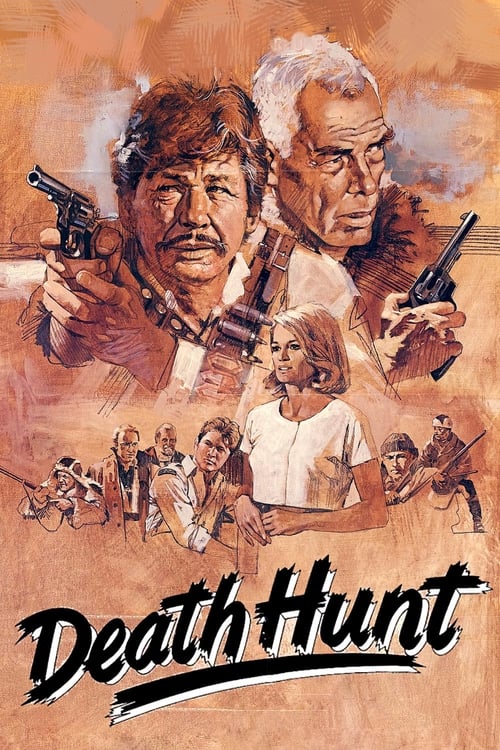
Death Hunt bears little resemblance to the true story of the manhunt of Albert Johnson, the reputed "Mad Trapper of Rat River". Johnson was eventually killed after a remarkable and highly publicized pursuit over several weeks. Of special note was that Johnson eluded his RCMP pursuers in the dead of winter in the lower Arctic, crossing the Richardson Mountains in the process, a feat previously considered impossible. On February 17, 1932, Johnson was finally surrounded by Mounties on the frozen Eagle River and shot and killed.
"Albert Johnson was a hero in that he survived a physical ordeal," said the film's producer Murray Shostak. "The story isn't twisted. We're not making a documentary."
World War I veteran Wop May was a bush pilot flying a Bellanca aircraft who was involved in the hunt for Johnson. Contrary to the film, May, who was portrayed as "Captain Tucker", did not wildly shoot at everyone, including the posse on the ground, nor did he get shot down. May was unscathed and lived until 1952. "There was no heavy so we elected to make it the airplane," said producer Al Ruddy. "It represents the twentieth century."
In the film numerous men are shot and killed by Johnson, but during the real manhunt this never occurred. Constable Millen was shot and killed by Johnson and was the only police officer killed by Johnson during the manhunt. Two other RCMP officers whom Johnson shot survived.
Carl Weathers was a black character working for the Mounties. Murray Shostak, the Canadian producer, said, "If you notice closely, he is not wearing the Mountie stripe on his pants. He's a sidekick."
In the film Johnson was presented as a World War I veteran, with Captain Tucker providing Johnson's military service record to Millen and the other RCMP officers. According to researcher Frank W. Anderson, virtually nothing is known of Albert Johnson before his arrival at Fort McPherson on July 9, 1931. To this day, the Mad Trapper's true identity has never been established.
Bronson said about the character, "There are many men who have gone to Canada and most of them have gone because they want to be alone.... [many want to] escape from their wives. I'm not saying that's what Albert Johnson did, though... The more I read about Albert Johnson the more I felt he should be made sympathetic."
"We never set out to depict this as an accurate history of Canada," said Shostak. "You try to make it as dramatic and entertaining as possible.... We don't hide it [the fact the film was shot in Canada]. We say that it takes place in Canada and in that sense we've been more nationalistic than a lot of Canadian producers.... In the past five or 10 years, producers have been making a real effort to avoid having their films identified as Canadian because there is a silly theory that Americans won't go see films not shot in America.... We talk about Edmonton and Toronto in the film, and in most respects this is more of a Canadian film than most certified Canadian films."
"The truth is often interred with the bones," said Lee Marvin, quoting William Shakespeare in Hamlet. "But you've got to think of the audience... The closest it gets [to the facts] is the snow. But it's not a documentary. Documentaries show at little theatres and at schools. I loved the movie. I've never seen so many rotten people in one film. There's not a saving grace in anybody."